
Newsletter Parashat Vayera

בס״ד
Moor Lane - Logo.JPG

image.png
ק׳ ק׳ שׁערי תפילה
Have a look at our website 
******
image.png
*****
🕯️שבת🕯️

לוח זמני תפילה לחורף תשפ״ז

Winter Timetable 5787 – 2026/27

מוצאי שבת

ערבית
)
מוצ“ש(

שקיעה

מנחה שבת

סוף זמן קריאת שמע

הדלקת נרות

מנחה וקבלת שבת

תאריך

שבת פרשת

Shabbat

Ends

Arbit

Sunset

Minha

Shema before

Candle Lighting,

Minha &

Kabbalat Shabbat

Date

Parasha

PM

PM

PM

PM

AM

PM


5:30

5:26

4:37

4:00

9:29

4:25

30/31 Oct

וירא


🕯️WINTER TIMES FOR SHABBAT MORNING🕯️

שבת

קרבנות

8:45 am
הודו

9:00 am

******

THIS MOTZAE SHABBAT

PHOTO-2026-10-27-07-05-08.jpg

******

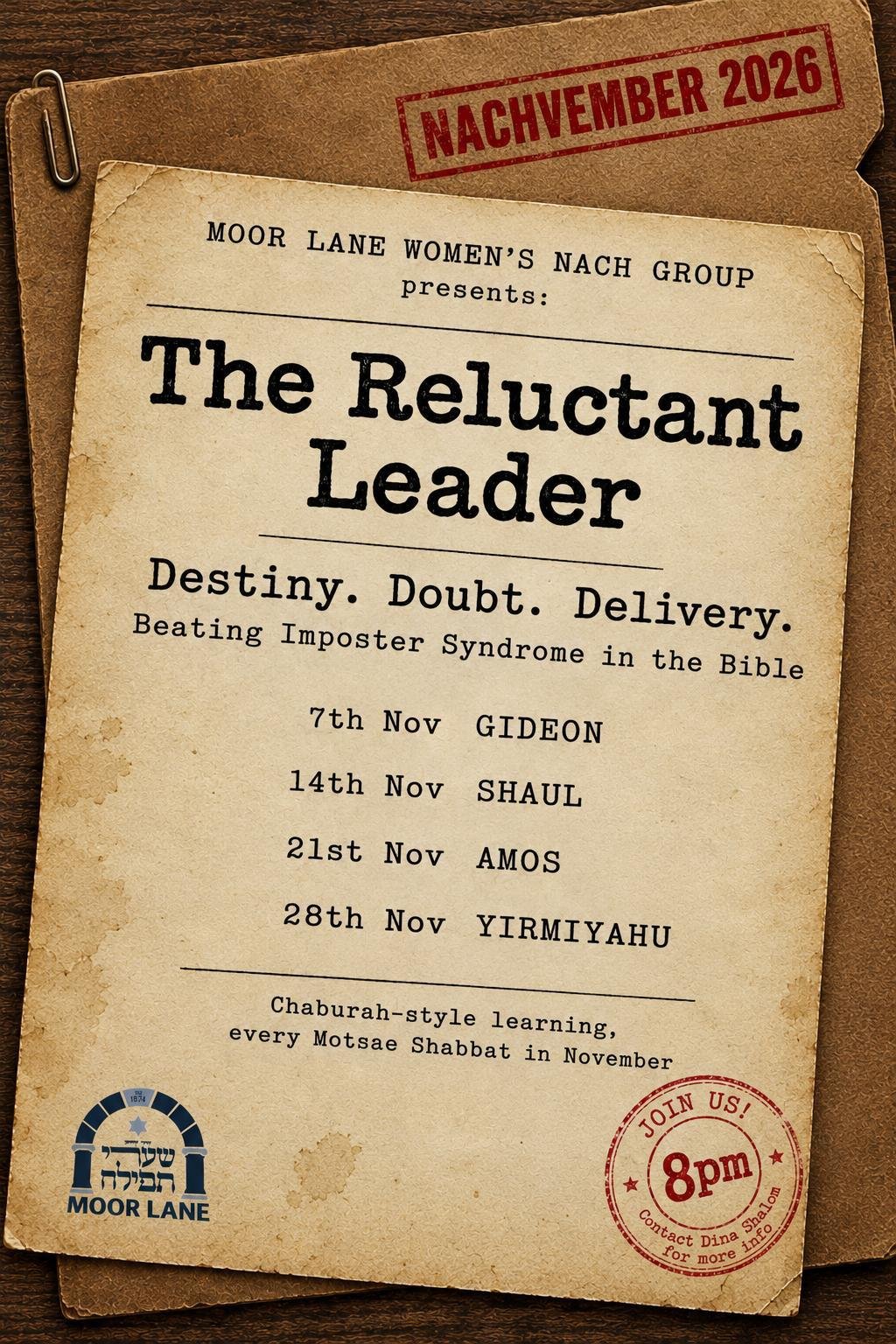
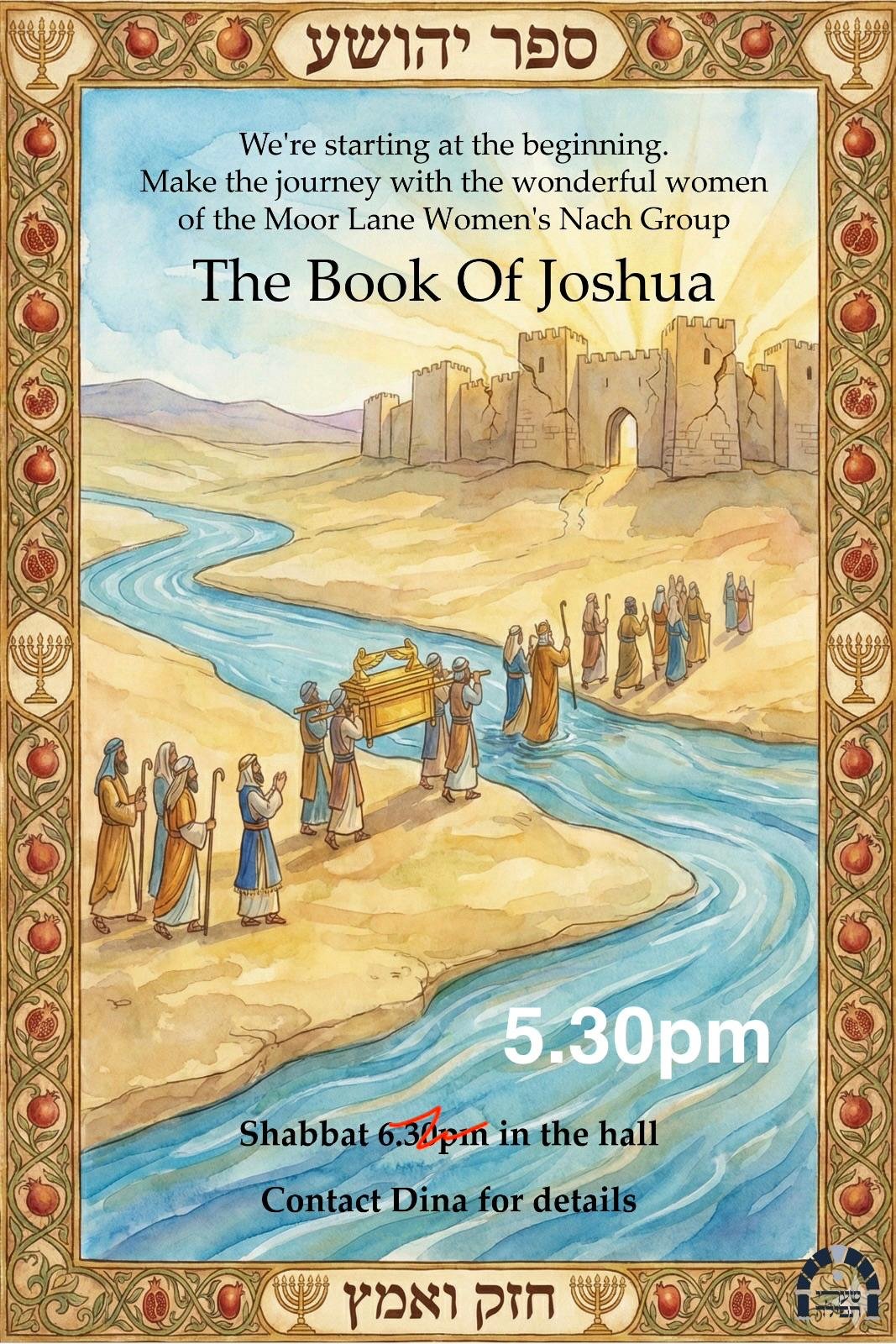
🪉Moor Lane Women’s Nach Group🪉

NO SHIUR THIS WEEK 
BUT GET READY for 
NACHVEMBER 2026
PHOTO-2026-10-26-22-02-52.jpg
Save the DATES!!!

***********

📜
Parasha Overview

Three days after performing brit mila on himself, Avraham is visited by Hashem. When three angels appear in human form, Avraham rushes to show them hospitality by bringing them into his tent, despite this being the most painful time after the operation. Sarah laughs when she hears from them that she will bear a son next year. Hashem reveals to Avraham that He will destroy Sodom, and Avraham pleads for Sodom to be spared. Hashem agrees that if there are fifty righteous people in Sodom He will not destroy it. Avraham “bargains” Hashem down to ten righteous people. However, not even ten can be found. Lot, his wife and two daughters are rescued just before sulfur and fire rain down on Sodom and her sister cities. Lot’s wife looks back and is turned into a pillar of salt. Lot’s daughters fear that as a result of the destruction there will be no husbands for them. They decide to get their father drunk and through him to perpetuate the human race. From the elder daughter, Moav is born, and from the younger, Ammon.

Avraham moves to Gerar where Avimelech abducts Sarah. After Hashem appears to Avimelech in a dream, he releases Sarah and appeases Avraham. As promised, a son, Yitzchak, is born to Sarah and Avraham. On the eighth day after the birth, Avraham circumcises him as commanded. Avraham makes a feast the day Yitzchak is weaned. Sarah tells Avraham to banish Hagar and Hagar's son Yishmael because she sees in him signs of degeneracy. Avraham is distressed at the prospect of banishing his son, but Hashem tells him to listen to whatever Sarah tells him to do. After nearly dying of thirst in the desert, Yishmael is rescued by an angel, and Hashem promises that he will be the progenitor of a mighty nation.

Avimelech enters into an alliance with Avraham when he sees that Hashem is with him. In a tenth and final test of Avraham, Hashem instructs Avraham to take Yitzchak, who is now 37, and to offer him as a sacrifice. Avraham does this, in spite of ostensibly aborting Jewish nationhood and contradicting his life-long preaching against human sacrifice. At the last moment, Hashem sends an angel to stop Avraham. Because of Avraham’s unquestioning obedience, Hashem promises him that even if the Jewish People sin, they will never be completely dominated by their foes. The Torah portion concludes with the genealogy and birth of Rivka.

Ohr Somayach Institutions www.ohr.edu
*******
image.png

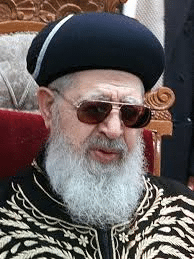
Halachot from Maran Rabbi Ovadia Yosef Ztz'l

ביקור חולים

לפני כעשרים שנה, דיבר איתנו מרן רבינו עובדיה יוסף זצוק”ל בענין “הלכה יומית”, ואמר לנו שלדעתו נכון שמידי פעם נלמד עניני הלכה שמשולבים בהם גם עניני מוסר. ועתה נדבר בעניני מצות ביקור חולים.

בגמרא במסכת בבא מציעא (דף ל:) אמרו, “וְהוֹדַעְתָּ לָהֶם אֶת הַדֶּרֶךְ יֵלְכוּ בָהּ”, (שמות יח), זו מצות ביקור חולים. ובמסכת סוטה (יד.) אמרו, נאמר בתורה, “אַחֲרֵי ה' אֱלֹהֵיכֶם תֵּלֵכוּ”, וכי אפשר לו לאדם ללכת אחרי השכינה? והלא נאמר “כי ה' אלהיך אש אוכלה הוא”?, אלא הלך (לך) אחר מדותיו של הקדוש ברוך הוא. מה הוא מלביש ערומים, שנאמר “ויעש ה' אלהים לאדם ולאשתו כתנות עור וילבישם”, אף אתה הלבש ערומים, (למי שאין לו כדי לקנות בגדים). מה הקדוש ברוך הוא ביקר חולים, שנאמר “וירא ה' אליו באלוני ממרא”, אף אתה בקר חולים. מה הקדוש ברוך הוא ניחם אבלים, שנאמר “ויהי אחרי מות אברהם ויברך אלהים את יצחק בנו”, אף אתה נחם אבלים. כללו של דבר, שחובה עלינו לנהוג במדת החסד ובמידת גמילות חסדים, ובודאי שבכלל זה מצות ביקור חולים.

וענין מצוה זו, כי על ידי הליכתו אצל החולה, עומד מקרוב על צרכי החולה להושיט לו כל עזרה אפשרית, אם חסר לו דבר ממאכל ומשקה או תרופות, או בעצה נבונה ונכונה כמו שנאמר “ותשועה ברוב יועץ”, או בנקיון הבית כמו שהזכירו בגמרא במסכת נדרים (דף מ.) “מעשה בתלמידו של רבי עקיבא שחלה ולא נכנסו חכמים לבקרו, נכנס רבי עקיבא לבקרו, ובשביל שכיבד וריבץ לפניו (שרבי עקיבא ניקה וסידר את סביבתו של תלמידו החולה), אמר לו (התלמיד לרבי עקיבא), רבי החייתני! יצא רבי עקיבא ודרש, כל מי שאינו מבקר את החולה כאילו שופך דמים”. (ובהלכה הבאה נרחיב עוד מענין זה).

ואפילו אם החולה שוכב בבית וישנם רופאים ואחיות המטפלים בו במסירות, כתב מרן רבינו עובדיה יוסף זצוק”ל, שבכל זאת מצוה להכנס אליו לבקרו ולעודדו ולחזקו, וכמו שאמרו בגמרא במסכת נדרים (מ.) בן גילו נוטל אחד מששים בחוליו. ופירש המאירי שהכונה שאם המבקר את החולה אוהב אותו, שביקורו ערב על החולה מצד האישיות שבאה לבקרו, מיקל חוליו מעליו. וזו לשון הרמב”ם (פרק יד מהלכות מלכים הלכה ד), “ביקור חולים מצוה על הכל, ואפילו גדול מבקר את הקטן, ואפילו הרבה פעמים ביום, ובלבד שלא יטריח. וכל המבקר את החולה כאילו נטל חלק מחוליו והיקל מעליו, וכל שאינו מבקר כאילו שופך דמים”.

ומדבריו מבואר גם כן שישגיחו המבקרים היטב שלא להטריח על החולה יותר מדאי. והדבר מצוי לעתים כאשר בני המשפחה באים לבקר את היולדת סמוך ללידתה, מרוב שמחתם מהלידה, ובכך הם מכבידים לעיתים על היולדת הזקוקה למנוחה, ומטרידים אותה שלא לתועלתה, דבר שאינו בכלל ביקור חולים, אלא להיפך. אלא ישגיחו היטב לדאוג למנוחתה ותועלתה.

בגמרא במסכת נדרים, אמר רב, כל המבקר את החולה ניצול מדינה של גהינם שנאמר (בתהלים פרק מא), “אַשְׁרֵי מַשְׂכִּיל אֶל דָּל (דל הוא החולה, כמו שהוכיחו בגמרא), בְּיוֹם רָעָה יְמַלְּטֵהוּ ה'” (רעה היא דינה של גיהנם). והקדוש ברוך הוא משלם שכר על כך גם בעולם הזה, שנאמר בהמשך: “ה' יִשְׁמְרֵהוּ וִיחַיֵּהוּ וְאֻשַּׁר בָּאָרֶץ וְאַל תִּתְּנֵהוּ בְּנֶפֶשׁ אֹיְבָיו”. וביארו בגמרא, ה' ישמרהו, מיצר הרע, ויחייהו, מן היסורים, ואושר בארץ, שיהיו הכל מתכבדין בו, ואל תתנהו בנפש אויביו, שיזדמנו לו רעים (חברים) טובים ולא יזדמנו לו חברים רעים.


The Mitzvah of Visiting the Sick

Approximately twenty years ago, Maran Rabbeinu Ovadia Yosef zt”l had spoken to us regarding the “Halacha Yomit” project and told us that it is prudent for us to occasionally discuss Halacha topics combined with ideas of Mussar as well. As such, let us now discuss the laws of visiting the sick.

The Gemara (Baba Metzia 30b) states that the verse “And you shall notify them of the way through which they must walk” (Shemot 18) refers to the Mitzvah of visiting the sick. The Gemara (Sotah 14a) states: The Torah states “After Hashem your G-d shall you walk”. Can one walk behind Hashem’s presence? Does the Torah not say, “For Hashem your G-d is a consuming fire”? Rather, this means that one must follow the attributes of Hashem. Just as He dresses the naked, as the verse states, “And Hashem made for the man and his wife leather tunics and he dressed them,” so should you dress the naked. Just as Hashem visited the sick, as the verse states, “And Hashem appeared to him in the plains of Mamre,” so should you visit the sick. Just as Hashem consoled mourners, as the verse states, “And it was after Avraham died and Hashem blessed his son, Yitzchak,” so should you console mourners. The general rule is that we must act with the attributes of loving kindness to others which certainly includes the Mitzvah of visiting the sick.

The idea behind this Mitzvah is that by going to visit the sick, one is able to see from up close all of the infirm individual’s necessities such that one will be able to offer any necessary help, such as food, drink, medications, or even wise advice, as the verse states, “In the multitude of counsellors, there is salvation.” Another issue one might help with is cleaning around the house. Indeed, the Gemara (Nedarim 40a) recounts that once, a student of Rabbi Akiva fell ill and none of the Sages came to visit him. Eventually, Rabbi Akiva came to visit his student and because he cleaned and straightened up the ill person’s surroundings, the student exclaimed, “My rabbi, you have given me life!” When Rabbi Akiva left, he expounded publicly, “Whoever does not visit the sick is tantamount to spilling his blood.” (In the following Halacha, we shall discuss this matter further.)

Even if the sick person is laying at home and being tended to by dedicated doctors and nurses, Maran zt”l writes that it is nevertheless a Mitzvah to visit him, strengthen his spirit, and to encourage him, as the Gemara (ibid.) states, “A member of the same fortune takes away one-sixtieth of his illness.” The Meiri explains that if the one visiting the ill individual loves him and the visit is appreciated by the ill person because of the personality of the one coming to visit him, this eases the illness from the individual. The Rambam (Chapter 14 of Hilchot Melachim, Halacha 4) states: “Everyone is obligated in the Mitzvah of visiting the sick. Even a great person must visit a simple person, even several times a day, as long as this is not a burden on the ill person. Anyone who visits the sick is tantamount to having taken a portion of his illness and easing his plight. Anyone who does not visit the sick is tantamount to spilling his blood.”

We see from the words of the Rambam that those visiting the sick must take care not to overburden the ill individual. This is a common occurrence when family members come to visit a woman who has just given birth as a result of their great joy of the birth of the new baby. At times, such visits can burden the new mother who requires rest and relaxation and such visits are not beneficial to her at all. This is not included in the Mitzvah of visiting the sick and is actually just the opposite. The family and friends should look out for her rest and well-being.

The Gemara (ibid.) states that Rav said that whoever visits the sick shall be saved from the judgment of Gehinnom, as the verse (Tehillim 41) states, “Praiseworthy is he who considers the poor (“poor” refers to the sick person as the Gemara there proves), Hashem shall save him on the day of evil (“evil” refers to the judgment of Gehinnom).” Hashem likewise rewards one for this even in this world, as the verse (ibid.) states, “Hashem shall preserve him and keep him alive, let him be called happy in the land and do not deliver him unto the greed of his enemies.” The Gemara explains that “Hashem shall preserve him” from the Evil Inclination “and keep him alive” from suffering, “And let him be called happy in the land” that all shall be honored by this person “and do not deliver him unto the greed of his enemies” that good friends shall flock to this individual and not bad ones.

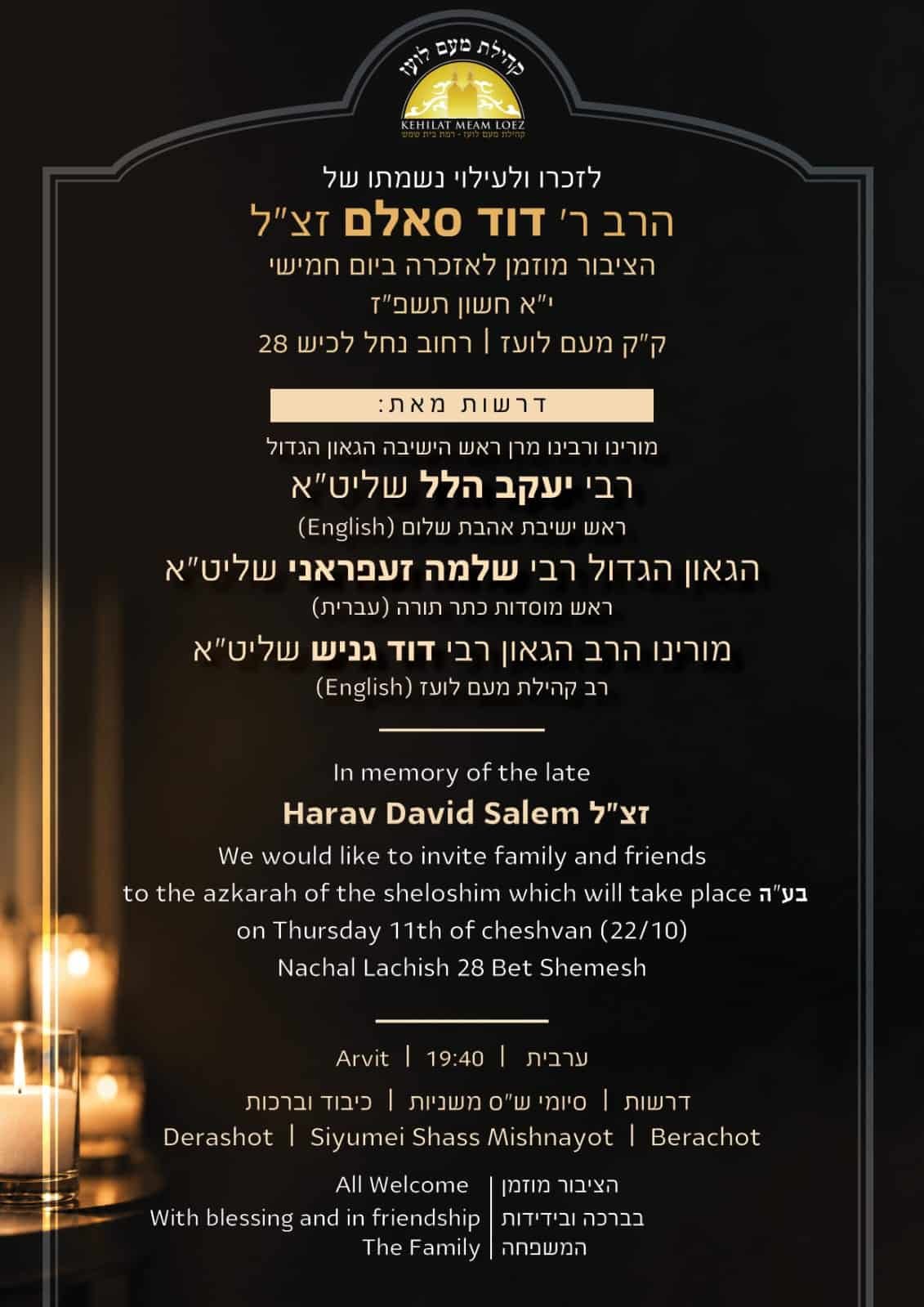
Newsletter Parashat Lech Lecha – Clocks Change – A Tribute to Mr D Salem a”h

בס״ד
Moor Lane - Logo.JPG

image.png
ק׳ ק׳ שׁערי תפילה
Have a look at our website 
******
image.png
*****
🕯️TOMORROW NIGHT🕯️
THURSDAY NIGHT
PHOTO-2026-10-15-19-18-46.jpg

image.png Zoom Link Below

****
image.png

Reminder 

THIS 

MOTZAE SHABBAT

we change the clocks 

1 HOUR BACK 

to 

WINTERTIME

*****
SUNDAY NIGHT
PHOTO-2026-10-21-08-44-42.jpg
image.png Zoom Link Below: 
****
🕯️שבת🕯️

לוח זמני תפילה לחורף תשפ״ז

Winter Timetable 5787 – 2026/27

מוצאי שבת

ערבית
)
מוצ“ש(

שקיעה

מנחה שבת

סוף זמן קריאת שמע

הדלקת נרות

מנחה וקבלת שבת

תאריך

שבת פרשת

Shabbat

Ends

Arbit

Sunset

Minha

Shema before

Candle Lighting,

Minha &

Kabbalat Shabbat

Date

Parasha

PM

PM

PM

PM

AM

PM


6:43

6:39

5:51

5:15

10:22

5:39

23/24 Oct

לך לך

*****

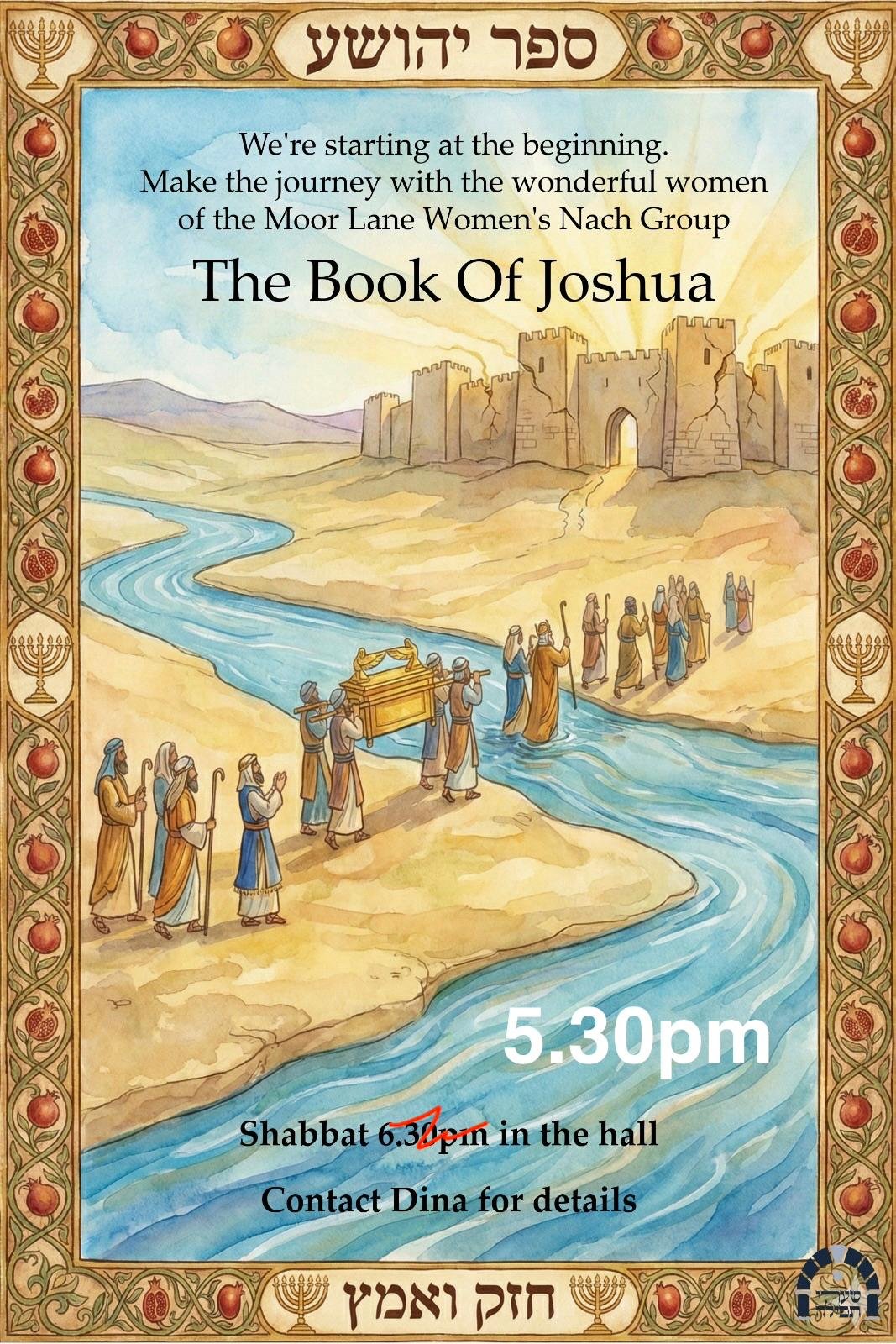
🪉Moor Lane Women’s Nach Group🪉

PHOTO-2026-10-14-09-55-06.jpg

THIS WEEK @ 5:30 pm

************

💷 Pledge Reminder 💷

If you received an Aliya ✡️ during the Yamim Noraim 📖 or over Succot 🌿

and pledged any money 💰 or would like to make a donation 💷

your the donation can be fulfilled in any of the following ways:  

 ·  ✉️ By post addressed to

'The Treasurer, Manchester Congregation of Spanish and Portuguese Jews, 

18 Moor Lane, Salford, Manchester M7 3WX'.

· 🤝 By hand to the treasurer or any member of the Mahamad.

·🫶 Anonymously – in the donations box in the Synagogue.

·🪙 Direct Debit to the shul's account  – for account details, please speak to the treasurer

 · 🏦Using this link charityextra.com/charity/moorlane

·💳Cheque made payable to 'Manchester Congregation of Spanish & Portuguese Jews'. 

Thank you all for your very generous donations

 & Tizke Lemitzvot

*********
📜
Parasha Overview

Ten generations have passed since Noach. Man has descended spiritually. In the year 1948 from Creation, Avram is born. By observing the world, Avram comes to recognize G-d’s existence, and thus merits G-d appearing to him. At the beginning of this week’s Torah portion, G-d tells Avram to leave his land, his relatives and his father's house and travel to an unknown land where G-d will make him into a great nation. Avram leaves, taking with him his wife Sarai, his nephew Lot, their servants, and those whom they converted to faith in G-d. When they reach the land of Canaan, G-d appears to Avram and tells him that this is the land that He will give to his descendants.

A famine ensues and Avram is forced to relocate to Egypt to find food. Realizing that his wife’s beauty would cause his death at the hand of the Egyptians, Avram asks her to say that she is his sister. Sarai is taken to Pharaoh, but G‑d afflicts Pharaoh and his court with severe plagues and she is released unmolested. Avram returns to Eretz Yisrael (Canaan) with much wealth given to him by the Egyptians. During a quarrel over grazing rights between their shepherds, Avram decides to part ways with his nephew Lot. Lot chooses to live in the rich but corrupt city of Sodom in the fertile plain of the Jordan. A war breaks out between the kings of the region and Sodom is defeated. Lot is taken captive. Together with a handful of his converts, Avram rescues Lot, miraculously overpowering vastly superior forces, but Avram demurs from accepting any of the spoils of the battle.

In a prophetic covenant, G-d reveals to Avram that his offspring will be exiled to a strange land where they will be oppressed for 400 years, after which they will emerge with great wealth and return to Eretz Yisrael, their irrevocable inheritance. Sarai is barren and gives Hagar, her Egyptian hand-maiden, to Avram in the hope that she will provide them with a child. Hagar becomes arrogant when she discovers that she is pregnant. Sarai deals harshly with her, and Hagar flees. On the instruction of an angel, Hagar returns to Avram and gives birth to Yishmael. The weekly portion concludes with G-d commanding Avram to circumcise himself and his offspring throughout the generations as a Divine covenant. G-d changes Avram’s name to Avraham, and Sarai’s name to Sarah. Hashem promises Avraham a son, Yitzchak, despite Avraham being ninety-nine years old and Sarah ninety. On that day, Avraham circumcises himself, Yishmael and his entire household.

Ohr Somayach Institutions www.ohr.edu

*******
image.png

Halachot from Maran Rabbi Ovadia Yosef Ztz'l

תליית בגד שנרטב מחמת גשמים, ויבוש בגד בסמוך למקור חום

בהלכות הקודמות ביארנו, כי אסור לתלות בגד רטוב כדי לייבשו בשבת.

ועתה נבאר את הדין, במקרה שנרטב הבגד בשבת מחמת איזו סיבה, כגון שנרטב מעיל הגשם מחמת הגשמים, והאדם רוצה לייבש את בגדו בשבת, האם מותר לו לעשות כן?

והנה כבר הסברנו, כי עיקר טעם האיסור בשטיחת בגדים לייבוש בשבת, הוא מטעם “מראית העין”, שגזרו חכמים שמא יחשדו בני אדם שזה שמייבש את בגדיו בשבת, כיבס אותם בשבת. ואם כן, במקרה שלפנינו, מותר יהיה לייבש את הבגד, באופן שיניחו אותו בצורה שאינה ניכרת שהיא לשם ייבוש, כגון שיתלו את הבגד על גבי כסא, כפי שהרבה בני אדם רגילים לתלותו תמיד, שאז אין בזה חשש שיחשבו שכיבס בגדו בשבת, ומותר לייבש את הבגד באופן כזה ללא חשש.

יבוש בגד בסמוך למקור חום

רבים נוהגים להניח בגדים שנרטבו בשבת, בסמוך לתנור הסקה וכדומה, כדי למהר את יבוש הבגד, וטעות היא בידם, כי יש בזה איסור גמור, שהרי המים הספוגים בבגדים מתחממים והולכים מחמת גודל החום שהתנור מפיץ, ומתוך כך, עלולים המים לבא לידי חום ש”היד סולדת בו” (כלומר, דרגת חום, בטמפרטורה של למעלה מארבעים מעלות), ונמצא שהמים מתבשלים בשבת, ומלאכת בישול היא מלאכה האסורה מן התורה. ולכן אסור בהחלט להניח בשבת בגד רטוב בסמוך למקור חום. ואין להקל בזה, אלא באופן שהמים לא יוכלו להתחמם לטמפרטורה כזו.

כמו כן מצוי שכאשר הבגדים תלויים כבר על גבי מתקן מיוחד לתליית כביסה, מקרבים מעט את המתקן למקור החום, שהוא תנור החימום, בכדי לזרז את ייבוש הבגדים, וגם בזה יש איסור גמור כמו שביארנו.

ולסיכום: בגד שנרטב במקרה בשבת, מותר לתלותו על גבי כסא וכדומה, באופן שאינו ניכר שהוא כדי לייבשו. ואסור בהחלט להניח בשבת בגד רטוב בסמוך לתנור חימום. כמו שביארנו.


Hanging Up a Garment Which Became Wet From the Rain and Drying a Garment Next to a Heat Source

In the previous Halachot we have discussed that one may not hang up a wet garment in order to dry it on Shabbat.

Let us now discuss a situation where a garment becomes wet in whatever manner, such as a raincoat becoming wet from the rain, and one wishes to dry this garment on Shabbat. Is this permissible or not?

We have already explained that the underlying reason behind the prohibition of spreading out clothing in order to dry it on Shabbat is because we are concerned about people suspecting the one drying the clothing on Shabbat that he laundered the clothing on Shabbat as well. Thus, regarding our scenario, one may dry the garment by placing it down in a way that it is not noticeable that one intends to dry it, such as by hanging it on the back of a chair, for many people hang their coats up this way all the time and no one will suspect him of laundering on Shabbat. It is therefore permissible to dry a garment in this way.

Drying Clothing Next to a Heat Source
Many people customarily place clothing next to a furnace, radiator, and the like in order to have it dry quickly but this is a mistake as this is completely forbidden, for the water absorbed in the garment evaporates as a result of the heat the furnace and as such, it is quite possible that the water will reach a temperature at which the hand recoils (over 104 degrees Fahrenheit) which constitutes the Torah prohibition of cooking on Shabbat. It is therefore absolutely forbidden to place a wet garment next to a heat source on Shabbat. There is only room for leniency when the water cannot reach this temperature.

It is also common for people to hang laundry on designated hanging devices meant for laundry and once the garments are already hanging there, some just move the hanging apparatus slightly towards the heat source in order to speed up the drying process. This is likewise completely forbidden based on what we have written above.

Summary: A garment that became wet on Shabbat in whatever manner may be hung on a chair and the like in a way that it is unnoticeable that one intends to dry it. It is absolutely forbidden to place a wet garment next to a space heater or radiator in order to dry it on Shabbat.

Newsletter Parashat Noach

בס״ד
Moor Lane - Logo.JPG

image.png
ק׳ ק׳ שׁערי תפילה
Have a look at our website 
******
image.png
*****
image.png
Mazal Tov to
Shoham & Talia Levy
on the safe arrival of 
a baby girl
May she grow healthy & strong in 
Torah, Mitzvot, Maasim Tovim 
& be a source of nachat to 
Hashem, her parents & family.
Moorlanenews
would like to use this opportunity 
to wish a massive 
Mazel Tov
to 
Shoham & Talia Levy
on the safe arrival of their baby daughter
****
🕯️שבת🕯️

לוח זמני תפילה לחורף
תשפ״ז

Winter Timetable 5787 – 2026/27

מוצאי שבת

ערבית
)
מוצ“ש(

שקיעה

מנחה שבת

סוף זמן קריאת שמע

הדלקת נרות

מנחה וקבלת שבת

תאריך

שבת פרשת

Shabbat

Ends

Arbit

Sunset

Minha

Shema before

Candle Lighting,

Minha &

Kabbalat Shabbat

Date

Parasha

PM

PM

PM

PM

AM

PM


6:58

6:54

6:07

5:30

10:16

5:55

16/17 Oct

נח


*****

🪉Moor Lane Women’s Nach Group🪉

PHOTO-2026-10-14-09-55-06.jpg

THIS WEEK @ 5:30 pm

************

💷 Pledge Reminder 💷

If you received an Aliya ✡️ during the Yamim Noraim 📖 or over Succot 🌿

and pledged any money 💰 or would like to make a donation 💷

your the donation can be fulfilled in any of the following ways:  

 ·  ✉️ By post addressed to

'The Treasurer, Manchester Congregation of Spanish and Portuguese Jews, 

18 Moor Lane, Salford, Manchester M7 3WX'.

· 🤝 By hand to the treasurer or any member of the Mahamad.

·🫶 Anonymously – in the donations box in the Synagogue.

·🪙 Direct Debit to the shul's account  – for account details, please speak to the treasurer

 · 🏦Using this link charityextra.com/charity/moorlane

·💳Cheque made payable to 'Manchester Congregation of Spanish & Portuguese Jews'. 

Thank you all for your very generous donations

 & Tizke Lemitzvot

*********
📜
Parasha Overview

It is now ten generations since the creation of the first man. Adam's descendants have corrupted the world with immorality, idolatry and robbery, and Hashem resolves to bring a flood which will destroy all the earth's inhabitants except for the righteous Noach, his family and sufficient animals to re-populate the world. Hashem instructs Noach to build an ark in which to escape the flood. After forty days and nights, the flood covers the entire earth, including the tops of the highest mountains. After 150 days the water begins to recede. On the 17th day of the 7th month, this ark comes to rest on Mount Ararat. Noach sends forth a raven and then a dove to ascertain if the waters have abated. The dove returns. A week later, Noach again sends the dove, which returns the same evening with an olive leaf in its beak. After seven more days, Noach once again sends forth the dove, which this time does not return. Hashem tells Noach and his family to leave the ark. Noach brings offerings to Hashem from the animals which were carried in the ark for this purpose. Hashem vows never again to flood the entire world and gives the rainbow as a sign of this covenant.

Noach and his descendants are now permitted to eat meat, unlike Adam. Hashem commands the Seven Universal Laws: The prohibitions against idolatry, adultery, theft, blasphemy, murder and eating the meat of a living animal, and the obligation to set up a legal system. The world's climate is established as we know it today.

Noach plants a vineyard and becomes intoxicated from its produce. Ham, one of Noach's sons, delights in seeing his father drunk and uncovered. Shem and Yefet, however, manage to cover their father without looking at his nakedness, by walking backwards. For this incident, Canaan is cursed to be a slave. The Torah lists the offspring of Noach's three sons from whom the seventy nations of the world are descended.

The Torah records the incident of the Tower of Bavel, which results in Hashem fragmenting communication into many languages and the dispersal of the nations throughout the world. The Torah portion concludes with the genealogy from Noach to Avram.

Ohr Somayach Institutions www.ohr.edu

*******
image.png

Halachot from Maran Rabbi Ovadia Yosef Ztz'l

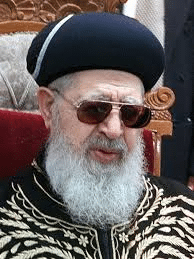
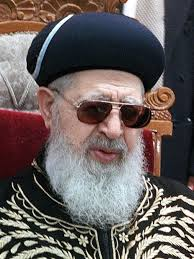
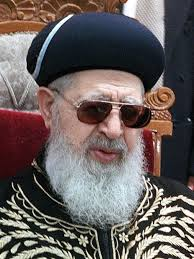
מרן רבינו עובדיה יוסף זצוק”ל – שלוש עשרה שנים לפטירתו

היום הוא יום ג' במרחשון, יום הסתלקותו של מרן רבינו הגדול, רבי עובדיה יוסף זכר צדיק וקדוש לברכה. כולנו תלמידיו, ולכן נאמר כמה דברים לזכרו ולעלוי נשמתו.

מרן זצ”ל, היה כידוע, בקי עצום בכל חדרי תורה. יש אומרים, שבקיאותו נבעה מכשרונותיו הברוכים, ויתכן שיש אמת בדבר. אבל יש לדעת, כי מרן זצ”ל, היה בולט בנקודה אחת, שהיא הציר המרכזי שעליו סובבים כל פרקי חייו. הוא דרש מעצמו בלי גבול! גם כשהיה נראה שהדבר בלתי אפשרי, מרן זצ”ל התאמץ, ומסר נפש ממש, עד שזכה לראות פרי בעמלו. ונספר כמה מקרים:

מרן זצ”ל, היה שוקד על תלמודו, בצורה שאין לה אח וריע. אנשים שהכירו אותו בעיקר דרך שיעוריו, ראו לפניהם תלמיד חכם חביב, נינוח, אך בעצמותו, היה הרב ממש חרד על כל רגע בחייו, לבל ילך לבטלה. מעולם לא ראו אותו יושב על כסא ולא עושה כלום! אף פעם הוא לא ישב ופשוט נח, או הרהר בדברים פשוטים. תמיד תמיד, היה עוסק בתורה, או עוסק בענין חיוני אחר. וכמאמר רבותינו (במסכת סוכה דף כח. לגבי רבן יוחנן בן זכאי): “וְלֹא מְצָאוֹ אָדָם יוֹשֵׁב וְדוֹמֵם, אֶלָּא יוֹשֵׁב וְשׁוֹנֶה”.

זכורני בערוב ימיו ממש, שהיה יושב במרפסת ביתו, כשכולו ממש שבור ורצוץ, חלש מאד, ואפילו הנשימה היתה קשה לו, בכל זאת, היה יושב ושונה שוב ושוב, משניות שזכר בעל פה. הוא היה חדור ועקבי כל ימיו, בחשיבות ניצול הזמן, כי הזמן, הוא הדבר היקר ביותר שיש לאדם.

רק בגלל גודל השקידה שלו על התורה הקדושה, זכה מרן זצ”ל להיקפים בלתי נתפסים בתורה. כל מי שמתמצא מעט, ומבין את היקף החומר הלימודי שהיה חקוק בשכלו של מרן, מבין שהדבר ממש בלתי אפשרי בדרך הטבע, אדם אחד לא מסוגל להקיף כמות ידע עצומה כל כך.

היתה לו זכות מיוחדת מן השמים, מאחר ועמל כל כך בתורה, מתוך עוני, מתוך מצור ומצוק, בימים קשים מאד, התורה השיבה לו את אהבתה, ונכנסה ללבו. זיכה אותו הקדוש ברוך הוא לזכור את לימודו, ולהגיע למדרגה אדירה בחכמת התורה, שבמובנים רבים לא היה לה אח וריע אפילו מאות בשנים לפניו.

הדברים הללו מפורשים בכמה מקומות בדברי רבותינו, ובכללם, בספר העקדה, (שער ו), שם כתב, וזו לשונו:

“שֶׁהוּא דָּבָר יָדוּעַ וְנִגְלָה לָעַיִן, כִּי שְׁלֵמוּת הַשָּׂגַת הַחָכְמָה, אִי אֶפְשָׁר לָאָדָם לְהַשִּׂיגָהּ אִם לֹא בְּעֵזֶר וְסִיּוּעַ אֱלוֹקִי”. מי שלומד תורה, התורה עצמה משקיעה בו, ומגדלת אותו!

אם כן, היה מרן זצ”ל גאון בתורה. לאדם גדול כל כך, מתאים הדבר, שישב בביתו, יעלה את חדושיו על הכתב, יפרסם פסקי הלכה, ולכל היותר, יאמר מידי פעם שיעור לפני תלמידי חכמים. אך מרן זצ”ל, יצא מן המסגרות שלו. וכדברי הגאון רבי שלמה זלמן אוירבך זצ”ל, זכה הרב עובדיה יוסף, שידע לסגור את הספר כאשר היה בכך צורך.

מרן זצ”ל השקיע כל ימיו, ממש מילדות, ועד ימיו האחרונים, כדי להספיק עוד ועוד להשפיע תורה ויראת שמים על הציבור. הוא היה באמת אוהב כל אחד ואחד מישראל, והיה ממש מוטרד ודואג, על כל יהודי שעדיין לא זכה להבין את ערכו הרם, להבין את משמעות החיים, ואת התפקיד המיוחד אליו הוא נועד. הוא הרגיש בכל נימי נפשו, שיש כאן אבדה גדולה! לכן הוא לא חס על זמנו, ולא על בריאותו, היה מכתת את רגליו בכל רחבי הארץ ובכל העולם, כדי להשמיע את דבר ה', כדי לחבב את התורה על העם, כדי להפוך אנשים עמי הארצות, שלא היה להם מושג בהלכה, להיות אנשי תורה, אנשים מורמים מעם.

סיפר לי תלמיד חכם גדול אחד, שבצעירותו היה גר ב”אור עקיבא”. בזמנו, לפני למעלה מארבעים שנה, היתה העיר מלאה באנשים טובים, אנשים אוהבי מסורת, אבל ידיעת ההלכה, היתה רחוקה מרובם. ידעו שיש בעולם מושג של “מוקצה”, אבל כמעט אף אחד לא ידע כי יש כמה סוגי מוקצה, ושהדינים ביניהם חלוקים זה מזה.

ידעו שיש ערך לתורה הקדושה. אבל ללכת מידי יום ללמוד תורה? דבר כזה, לא עלה כלל על דעתם. היו אותם אנשים, יושבים אפילו בימי שבת, ומשחקים במשך שעות במשחקי שש בש ודמקה וכדומה, ודנים ביניהם, על עניני פוליטיקה, וכך היו מעבירים את זמנם.

עד שהגיע אל העיר שליח ממרן זצ”ל. הלה הגיע אל העיר, והחל לומר שיעורי תורה. השיעורים היו על פי סדר החוברות “מן המעיין” שיצאו באותן השנים על ידי רשת “אל המעיין”  של מרן זצ”ל, וכן מתוך ספרים, כמו ספרי ילקוט יוסף שהחלו אז להתפרסם.

בסמוך לחג השבועות, דיבר אותו חכם בפני הציבור, על כך שאסור להדליק את אור החשמל ביום טוב. הציבור מאד הופתעו לשמוע את הדברים, כי מנהגם היה תמיד להקל בזה. הם החלו להתווכח עם הרב, עד שממש כל העיר החלה להתדיין ולהתווכח, האם מותר או אסור להדליק חשמל ביום טוב. במקום להתווכח, האם בגין יבחר שוב לראשות הממשלה או לא, החלו להתווכח על דברים רוחניים! על דברי הלכה!

החליטו פרנסי העיר ונכבדיה, גבאי בתי הכנסת ואחרים, להזמין את מרן זצ”ל בעצמו אל העיר, ואז ישאלו מפיו, האם מותר או אסור להדליק את אור החשמל ביום טוב.

כעבור כמה ימים, הגיע מרן זצ”ל אל העיר, ורבים רבים באו לשמוע את אמרי פיו, אנשים, נשים וטף. מרן נשאל שם, האם מותר להדליק אור חשמל ביום טוב? הוא ביאר את הסוגיא לפני הציבור, הסביר את ההבנה שהיתה מקובלת בצורת הפעולה של החשמל, (שהיו שחשבו שיש “אש” בתוך צינורות החשמל, והיא עוברת ממקום למקום), לאחר מכן הסביר את ההבנה הנכונה, ולכן העלה באופן ברור, שיש איסור בדבר. דבריו היו מתיישבים על הלב! דבריו נאמרו בהגיון צרוף! לכן, כל בני העיר קבלו את דבריו. וכך החלו ללמוד, עוד ועוד, לגדול בתורה, להפוך ליודעי תורה אמתיים. הדברים הללו שינו מן הקצה אל הקצה דור שלם, ועד סוף הדורות, ריבי רבבות בני אדם, ממש פשטו צורה ולבשו צורה, והכל בזכותו של מרן זצ”ל.

עלינו ללמוד ממרן זצ”ל, להעריך את עצמינו ואת החיים שלנו. להעריך את הזמן ולהאמין שיש בכוחינו לפעול רבות ונצורות. גם אנו יכולים ללמוד! גם אנו יכולים לזכות את הרבים! גם אנו יכולים לחנך את משפחתינו על ברכי התורה! גם אנו יכולים להיות אנשים מורמים מעם! גם אנו יכולות להיות נשים נעלות! כל אחד מסוגל למלא את תפקידו המיוחד לו.

כאן ב”הלכה יומית“, אנו משתדלים מאד, במשך עשרות שנים, לזכות את הרבים, ולהפיץ את דרכו המיוחדת של מרן זצ”ל. אנו לא כותבים רק פסקי הלכות, אלא מבארים את הדינים, את השורש שלהם, שזהו עיקר לימוד התורה, ובכך מתחדדת ההבנה בכל פרט ופרט. וכל זה מכוחו של מרן זצ”ל, שתמך בהפצת התורה בדרך זו, כי צפה בעינו הבדולח, את חשיבות הדברים.

לכן אנו פונים מכאן לכל לומדי ההלכה יומית, השתדלו בבקשה לתת כתף. אנו משקיעים בימים אלה בשיפור האתר בעזרת ה', הן מבחינת המראה שלו, והן מבחינת התוכן, אך אנו זקוקים לכם. כל אחד ואחת, יכולים לזכות את הרבים, על ידי המלצה לחבריכם ולקרוביכם, להרשם ולהצטרף ללומדי ההלכה יומית, שעל ידי לימוד זה, אנשים שהיו ריקים מתורה, נעשו ממש בעלי תורה, ובדרך של לימוד קצר, הבנתם ומעשיהם השתנו מן הקצה אל הקצה.

וזכות מרן זצ”ל תעמוד לכם ולנו, שימלא ה' כל משאלות לבכם לטובה, ושנזכה לראות בגאולה השלימה, ובתחיית המתים, אמן כן יהי רצון.


Maran Rabbeinu Ovadia Yosef zt”l on His Thirteenth Yahrzeit

Today is the Third of Marcheshvan, the anniversary of the passing of the luminary of our generation, Maran Rabbeinu Ovadia Yosef zt”l. As we are all his students, let us discuss some things in his memory of his holy soul.

Maran zt”l was, needless to say, an uncanny genius in all facets of Torah knowledge. Some claim that stemmed from his G-d-given talents and there may be truth to that. However, there is one point that all of the accomplishments of his life hinged on: He demanded endlessly from himself throughout his entire life! Even when things seemed impossible, Maran zt”l persevered until he witnessed the fruits of his labor. Let us recount some anecdotes that illustrate this:

Maran zt”l was completely engrossed in his learning all the time in a manner that was nearly unrivaled. Those who knew him from the classes he delivered saw a young man who was friendly and easy-going, but, in truth, he was always very meticulous about every moment of his life. No one had ever witnessed him sitting on a chair doing nothing. He would always delve in Torah studying and not let a second go by without it. As our Sages taught (Sukkah 28a) regarding Rabban Yochanan ben Zakkai, “No one ever saw him sitting idly; rather, he was always sitting and learning.”

Even when he was elderly, frail, ill, and every breath was labored, Maran zt”l sat on his porch reciting Mishnayot by heart. He was dependable and consistent in this way until his very last day, for he understood that this was the most precious thing in life.

Only because of his undying love and toil in Torah did he merit his tremendous erudition in Torah. Anyone who learns the works of Maran zt”l sees that the Torah knowledge contained in his mind was not humanly possible for one man to achieve on his own.

However, Maran zt”l enjoyed special Heavenly assistance that allowed him to reach this level as a result of his dedication to Torah amid terrible poverty, suffering, and difficulty and, as a result, the Torah reciprocated its love to him and entered his heart and mind. Hashem granted him the privilege of superhuman Torah recall and retention which, in many ways, was unmatched for hundreds of years.

This idea can be found in several works of our Sages, especially Rabbeinu Yitzchak Arama in his Sefer Ha’Akeda (Ch. 6), who writes:

“It is well-known and revealed that meriting complete knowledge of Torah requires special G-dly assistance.” When one studies Torah, the Torah itself invests in him and exalts him!

For a man as great in stature as Maran zt”l, it would have been appropriate for him to sit at home, write his Torah thoughts, publish his halachic works, and at most, go out once in a while to deliver Torah classes before great Torah scholars. However, Maran zt”l constantly went out of his comfort zone and taught Torah to the masses. In the words of Hagaon Harav Shlomo Zalman Auerbach zt”l, “Rav Ovadia Yosef merited knowing when to close his books when necessary.”

Maran zt”l invested his entire life, from his youth until his passing, teaching Torah, and fear of Heaven to the public. He loved every Jew dearly and it genuinely hurt him when any Jew did not yet comprehend his lofty level and his purpose in the world. He really felt with every fiber of his being that this was a tremendous loss! It was for this reason that he did not care about his time or health and he would travel all across Israel and throughout the globe to teach the word of Hashem to the Jewish nation and change total ignoramuses into people with a value and love for Torah and Halacha.

A great Torah scholar recounted that in his youth, he grew up in the city of Ohr Akiva. Approximately forty years ago, the town was filled with good, traditional Jews who were not so knowledgeable in Halacha. They were aware about the concept of Muktzeh on Shabbat, but they did not understand the fine details that separated the categories from one another.

They valued Torah, but setting daily times for Torah study was a foreign idea to them. These people would sit on Shabbat afternoon for long hours playing board games and chatting about politics.

This was all until an emissary of Maran zt”l arrived in the city and begin delivering Torah classes. He would teach them from Halacha works such as Yalkut Yosef and others which began being published at the time.

Before the Shavuot holiday that year, he explained to the audience how turning on electricity on Yom Tov is forbidden. The audience was shocked to hear this because, historically, they had acted leniently in this regard. It became such a hot topic of discussion that the entire city debated among themselves whether or not it was permitted to use electricity on Yom Tov. Instead of debating who would be elected Prime Minister next, the residents of the city were busy discussing Halacha topics!

The city council and other respected community members then decided to invite Maran zt”l to visit the town himself and they would pose the electricity on Yom Tov question to him.

Several days later, Maran zt”l arrived in the city, and many men, women, and children came to hear his pearls of wisdom. When asked whether it was permissible to use electricity on Shabbat, he explained the length and breadth of the topic. He delved into the historical understanding of how electricity worked (that there was already fire in the tubes and bulbs that was then just transferred from one place to another) but explained why that understanding was flawed due to the correct understanding of the reality of how electricity works. He then ruled that turning on electricity on Yom Tov was absolutely forbidden. Because he had explained it so beautifully and articulately, people understood and accepted his ruling. The people of the town then progressively began to study more and more and became learned in Torah and Halacha. These kinds of stories with Maran zt”l literally transformed an entire generation of Sephardic Jewry from one extreme to the other.

We, at Halacha Yomit continue to strive for decades now to disseminate the unique Torah path of Maran zt”l to the messes. We do not just write halachic rulings; we delve into their sources, the root of these laws, which is the primary focus of the Mitzvah of Torah study. This was truly the halachic method pioneered by Maran zt”l specifically for this generation.

We therefore would like to take the opportunity to ask the broader public to participate in our mission. We are investing tremendous amounts of time and resources into improving our website, both in terms of aesthetics and content. Each one of you can bring merit to the public by sharing the signup link to Halacha Yomit with family and friends and encouraging them to join this platform. We have seen repeatedly that people who were devoid of any Torah knowledge grew so much in Torah as a result of this service. Through a short daily study session, their understanding of the laws of the Torah and their behavior has changed drastically, from one extreme to the other.

May the merit of Maran zt”l protect us all and may Hashem grant all of your hearts’ wishes for the good. May we merit witnessing the Ultimate Redemption and the Resurrection of the Dead, Amen.

Newsletter Parashat Bereshit – Shabbat Mevarechim – Rosh Chodesh Mar Cheshvan – 7th October

בס״ד
Moor Lane - Logo.JPG

image.png
ק׳ ק׳ שׁערי תפילה
Have a look at our website 
******
image.png
****
image.png
Remembering those who were murdered on
Simchat Torah 5784 – 7th October 2023
image.png
****

image.png
שבת מברכים

THIS SHABBAT 

is  

שבת מברכים

Reminder
there will be NO derasha this week
& instead we will have the 
kahal recitation of Sefer Tehilim
****
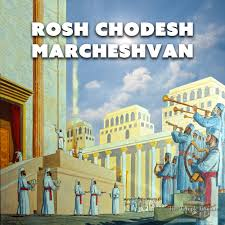
ראש חודש
image.png

image.png

Rosh Chodesh Mar-Cheshvan 

will be next

Motzae Shabbat – Sunday (11/10) 

& Monday (12/10)

******
Engagement Invitation

PHOTO-2026-10-06-22-11-41.jpg

image.png
Mazal Tov
to 
Betty Menashe 
& 
Meir Gottleib
on their engagement
שיזכו לבנות בית נאמן בישראל
Moorlanenews 
would like to wish 
Betty
a heartfelt Mazel Tov 
on her engagement
to 
Meir Gottleib
🌺🌺🌺
Moorlanenews
would like to use this opportunity
to wish a heartfelt 
Mazel Tov 
to our dear members and friends 
David & Rikki Menashe
on their daughter Betty's engagement
May Hashem send them much Beracha, 
good mazal, long, healthy life, 
and much nachat from the new couple 
and all their children.

*****
image.png

Mazal Tov

to

Gabriella Delmonte 

on the occasion of her Bat Mitzvah

🎉🎉🎉

Moorlanenews 

would like to wish
Gabriella שתח״י 
a massive mazal tov on celebrating her 
Bat Mitzvah 
May she continue to grow in 
Torah, Mitzvot Umaasim Tovim 

image.png
Mazal Tov 
to our dear members
 Paul & Laura Delmonte
on celebrating the 
bat mitzvah of their daughter.
May Hashem bless them with 
 long and healthy life 
and may they always have much nachat 
from Gabriella & all their children.
*****
ברוך דיין האמת
image.png
It is with immense sadness that we inform the kahal of the פטירה on the
2nd Tishri – 2nd day of Rosh Hashana of
אליעזר בן יצחק חי ע״ה
Grandfather of our dear member and friend Gadi Shalom נ״י
We wish him, his father, and all his family אריכות ימים
מן השמים תנוכמו

Biography
He came from Kurdistan to Israel. 
Exiled with many other Jews. 
His father was a silversmith. 
All the family jewellery was stolen, and all their property was taken, so they fled to Israel. 
He arrived in 1952 in his pyjamas and nothing else. 
He settled in a refugee camp in Israel.
From nothing, he built a business and an amazing family of 10 children. 
He also built his own house brick by brick all by himself.
He knew much of the Torah Baal Peh – Oral Torah.
 He and his late wife spoke in Aramaic, the language of the Gemara. 

Moorlanenews
wishes Gadi, his father and family עמו״ש 
מן השמים תנוחמו

*******

💷 Pledge Reminder 💷

If you received an Aliya ✡️ during the Yamim Noraim 📖 or over Succot 🌿

and pledged any money 💰 or would like to make a donation 💷

your the donation can be fulfilled in any of the following ways:  

 ·  ✉️ By post addressed to

'The Treasurer, Manchester Congregation of Spanish and Portuguese Jews, 

18 Moor Lane, Salford, Manchester M7 3WX'.

· 🤝 By hand to the treasurer or any member of the Mahamad.

·🫶 Anonymously – in the donations box in the Synagogue.

·🪙 Direct Debit to the shul's account  – for account details, please speak to the treasurer

 · 🏦Using this link charityextra.com/charity/moorlane

·💳Cheque made payable to 'Manchester Congregation of Spanish & Portuguese Jews'. 

Thank you all for your very generous donations

 & Tizke Lemitzvot

******

🕯️שבת🕯️

image.png

********

📜
Parasha Overview

In the beginning, Hashem creates the entire universe, including time itself, out of nothingness. This process of creation continues for six days. On the seventh day, Hashem rests, bringing into existence the spiritual universe of Shabbat, which returns to us every seven days. Adam and Chava — the human pair — are placed in the Garden of Eden. Chava is enticed by the serpent to eat from the forbidden fruit of the “Tree of Knowledge of Good and Evil,” and in turn gives the fruit to Adam. By absorbing “sin” into themselves, Adam and Chava render themselves incapable of remaining in the spiritual paradise of Eden and are banished. Death and hard work (both physical and spiritual) now enter the world, together with pain in childbirth. Now begins the struggle to correct the sin of Adam and Chava, which will be the subject of the history of the world.

Cain and Hevel, the first two children of Adam and Chava, bring offerings to Hashem. Hevel gives the finest of his flock, and his offering is accepted, but Cain gives inferior produce and his offering is rejected. In the ensuing quarrel, Cain kills Hevel, and is condemned to wander the earth. The Torah traces the genealogy of the other children of Adam and Chava, and the descendants of Cain until the birth of Noach. After the death of Sheit, mankind descends into evil, and Hashem decides that He will blot out man in a flood which will deluge the world. However, one person, Noach, finds favor with Hashem.

Ohr Somayach Institutions www.ohr.edu

********
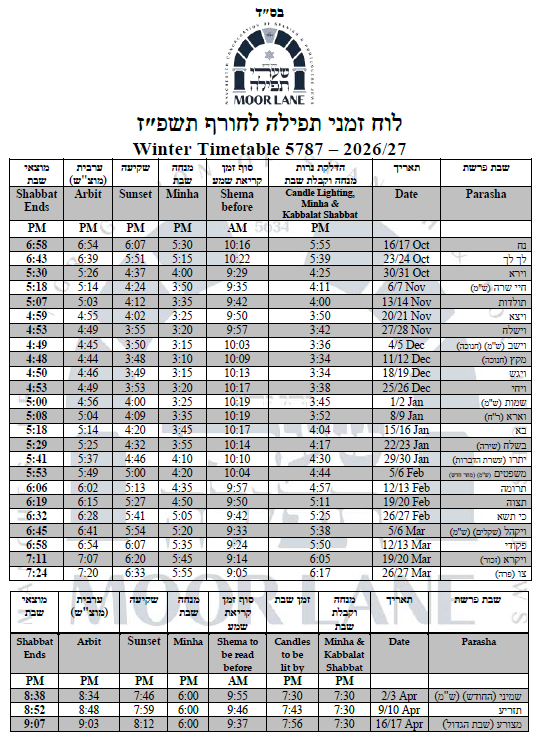
🗓️⛅🌦️🌨️❄️
Winter 5787 2026-2027
 TimeTable
Attached to this email
image.png
*******
image.png

Halachot from Maran Rabbi Ovadia Yosef Ztz'l

ספק אם אמר משיב הרוח

מתחילין לומר “משיב הרוח”

“משיב הרוח ומוריד הגשם”, הוא שבח להשם יתברך, שאנו אומרים אותו בימות החורף, בתפלת העמידה, בברכת “מחיה המתים”. וכפי שמופיע בכל הסידורים.

מתחילין לומר “משיב הרוח ומוריד הגשם” החל מתפילת מוסף של חג שמחת תורה, והזכרה זו, אינה שאלה ובקשה על הגשם, אלא היא שבח להשם יתברך, ולכן הזכרה זו נקראת “גבורות גשמים”, שמדברת מענין גבורותיו של השם יתברך בעולמו.

אבל שאלת “טל ומטר” שבברכת השנים, (כלומר, בברכת ברך עלינו, או ברכנו, שאומרים “ותן טל ומטר לברכה”), היא בקשה מהשם יתברך על הגשם. וישנם כמה הבדלים בהלכה, בין הזכרת גבורות גשמים שבברכת “אתה גבור”, לבין שאלת טל ומטר שבברכת השנים, והשינוי הראשון הוא, שמזכירין גבורות גשמים, כבר מתפילת מוסף של שמחת תורה, ואילו שאלת גשמים, אינה אלא מליל שבעה במרחשון.

מדוע מזכירים משיב הרוח בברכת מחיה המתים?

אמרו בגמרא (ברכות לג.), שמזכירין גבורות גשמים (“משיב הרוח”) בברכת “אתה גבור”, שהיא ברכת “מחיה המתים”, משום שהיא ברכה על תחיית המתים, ומתוך שירידת גשמים שקולה כנגד תחיית המתים, לפיכך קבעוה בתחיית המתים. ושאלת גשמים (“ותן טל ומטר לברכה”), קבעו בברכת השנים, משום שברכת השנים היא ברכה על פרנסה, וירידת גשמים גם היא ענין פרנסה לעולם.

מי ששכח להזכיר “משיב הרוח ומוריד הגשם”

מי ששכח להזכיר משיב הרוח ומוריד הגשם, ונזכר לאחר שסיים את ברכת “מחיה המתים”, יש לבאר, האם עליו לחזור לתחילת תפלת העמידה ולהתפלל שנית, או שהוא רשאי להמשיך בתפלתו. והנה הדין בזה הוא תלוי, שאם אמר “מוריד הטל” במקום “משיב הרוח ומוריד הגשם (כפי מנהג הספרדים בימות הקיץ), אינו חוזר לראש התפלה. כיון שאמר “מוריד הטל”.

אבל אם לא הזכיר כלל, לא “מוריד הטל”, ולא “משיב הרוח”, (כפי מנהג חלק מעדות האשכנזים בימות הקיץ), ונזכר בטעותו מיד לאחר שסיים את ברכת “מחיה המתים”, עליו לומר מיד “משיב הרוח ומוריד הגשם”, ואחר כך ימשיך בברכת “אתה קדוש”. ואם התחילה כבר בברכת “אתה קדוש”, ונזכר שלא אמר “משיב הרוח”, הרי אין לו תקנה, ועליו לחזור שוב לראש התפלה.

The Laws of Mentioning “Mashiv Ha’Ruach”

We Begin Reciting “Mashiv Ha’Ruach”
“Mashiv Ha’Ruach U’Morid Ha’Geshem” is a praise we recite to Hashem during the winter months within the “Mechayeh Ha’Metim” blessing of the Amidah as is printed in all Siddurim.

We begin reciting “Mashiv Ha’Ruach U’Morid Ha’Geshem” in the Mussaf prayer of Simchat Torah (outside of Israel from Shemini Atzeret). This recitation does not constitute a request or plea for rain; rather, it is merely meant as praise to Hashem and is therefore dubbed, “Powers of Rain.” The actual request for dew and rain can be found in the ninth blessing of the Amidah prayer referred to as the “Blessing of the Years” (Barech Aleinu). There are several halachic differences between mentioning the “Powers of Rain” in the second blessing of the Amidah prayer entitled, “Ata Gibor,” and the actual request for dew and rain in the ninth blessing. Firstly, whereas we begin mentioning the “Powers of Rain” from Mussaf of Shemini Atzeret, we do not actually request dew and rain until the night of the Seventh of Marcheshvan (outside of Israel from the night of the Fifth of December), as we shall discuss in following Halachot.

Why is “Mashiv Ha’Ruach” Mentioned in the “Mechayeh Ha’Metim” Blessing?
The Gemara (Berachot 33a) states that we mention the “Powers of Rain” in the “Ata Gibor” blessing for this blessing deals with the Resurrection of the Dead and since rainfall is tantamount to The Resurrection, our Sages thus established this sentence to be mentioned in the blessing dealing with The Resurrection. Our Sages established the actual request for rain in the “Blessing of the Years,” for this is a blessing regarding one’s livelihood and rainfall is a matter of sustenance for the entire world.

One Who Forgets to Mention “Mashiv Ha’Ruach”
If one forgets to recite “Mashiv Ha’Ruach” and becomes aware of his mistake only after concluding the “Mechayeh Ha’Metim” blessing, we must analyze whether one must return to the beginning of the Amidah prayer and begin it again or may one continue his prayer as usual. This law indeed depends on one important factor: If one inserted “Morid Ha’Tal” instead of “Mashiv Ha’Ruach” (as is the Sephardic custom during the summer months), one would not return to the beginning of the Amidah prayer since one has said “Morid Ha’Tal.” 

However, if one mentioned neither “Mashiv Ha’Ruach” nor “Morid Ha’Tal” (which is indeed customary among several Ashkenazi communities during the summer months), if one has not yet begun the “Ata Kadosh” blessing, one should recite “Mashiv Ha’Ruach U’Morid Ha’Geshem” between the “Mechayeh Ha’Metim” and “Ata Kadosh” blessings and then just continue his prayer as usual. If, however, one has already begun the “Ata Kadosh” blessing and only then realizes his mistake, one must begin his Amida prayer anew.