Newsletter – Shabuot 5783 – 2023

בס״ד
Moor Lane - Logo.JPG
ק׳ ק׳ שׁערי תפילה
image.png
Have a look at our website www.moorlane.info 
********
Wishing all our readers
חג שמח ושבת שלום
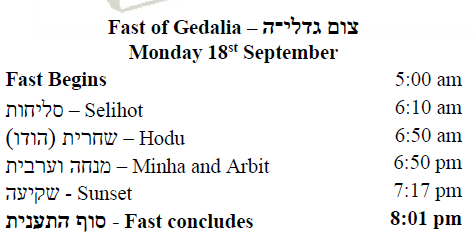
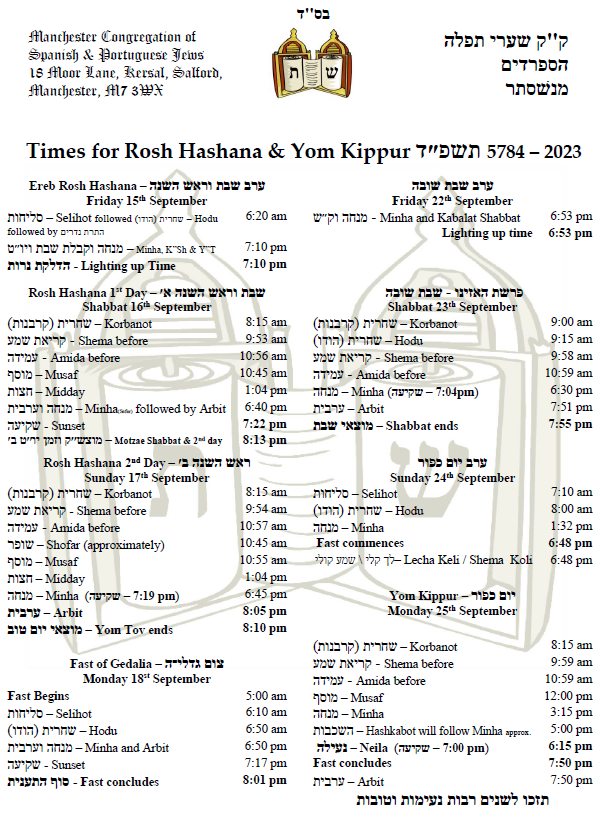
Shabuot Times Attached
image.png
Remember 
image.png
Eruv Tavshilin
Time table attached to this email
****
Minhagim

‘Aseret HaDiberot – The Ten Commandments

It is the minhag of all Jews from North Africa, as well as our brothers, the Ashkenazim, to stand up during the reading of the ‘Aseret HaDiberot (the Ten Commandments) on Shabu’ot, Shabat Yitro, and Shabat VaEthanan, to commemorate the time when Yisrael stood at Har Sinai as if we are once again welcoming the face of the Shekhina (Divine Presence) and accepting the Tora.[1]

However, Rambam[2] writes not to stand for the ‘aseret hadiberot because the heretics will claim, “we only attribute importance to these ten misvot as they are the only ones that are true; the rest of the Tora is not true,” has veshalom. The reason we continue to follow this minhag, is because the heretics at the time of Rambam were much different then the heretics of today as heretics of today do not make such claims.[3] Ribi Shalom Messas[4] is also of this opinion and explains further that whether we were to remain seated or we stood during the ‘aseret hadiberot it would not change the perception of the heretics; either way they would find ways to deny the Tora. Also, it is clear that since we continue to read the remainder of the parasha – and not solely the ‘aseret hadiberot – there is no reason to worry about such claims.[5] Ribi Yehuda ‘Ayash of Algeria is also of this opinion and writes that the claims of the heretics could only persuade an ignoramus of nowadays using such logic.[6] Furthermore, Maran HaHida[7] explains that since we make berakhot before and after each ‘aliya latora – and not just the ‘aliya of the ‘aseret hadiberot – we have no worry that heretics will make a claim that the rest of the Tora is untrue.

Maran HaHida[8] cautions us, however, to stand from the beginning of the ‘aliya in order to show that we stand for other pesuqim as well. He also adds that it is very important that if the majority of the congregation is standing, one is NOT allowed to sit, as this illustrates a belittlement of the ‘Aseret HaDiberot, G-d forbid. Nonetheless, the majority of Moroccan posqim write that the common minhag is to stand only upon reaching the ‘Aseret HaDiberot for we are not concerned about the claims of the heretics at all.[9]

It was the tradition to gather women together and read them these Ten Commandments, in Arabic “ ‘Asr Klmat,” along with its explanation according to Hazal.[10]

Certain parts of the parasha are read in a special tune, among them the ‘Aseret HaDiberot and the Shirat HaYam in order to ascribe special importance to these sections of the Tora as they speak about the high spiritual level of Bené Yisrael and not, has veshalom, to say that they are more important than the rest of the Tora.[11]


 The minhag of 

Spanish & Portuguese 
Synagogues & Communities 
is to STAND during 
the reading of the Aseret Hadiberot
Mekorot


[1] As the Tora says “they were standing at a distance.” This minhag is cited by Dibré Shalom VeEmet (Heleq 2, p.72). Sefer Mamlekhet Kohanim records that this was also the minhag in Djerba and mainland Tunisia, Noheg BeHokhma p.143, QS”A Toledano (Siman 442:9), Yehavé Da’at Hazan (Heleq 3, O”H, Siman 13), Maté Yehuda ‘Ayash (Siman 1:6), Dabar Shemuel by Ribi Shemuel Abuhab (Siman 276), Kapé Aharon (Siman 39), and Sedé Hemed (Kelalé HaPosqim, Siman 5:14). In Shemesh Umaghen (Heleq 1, O”H, Siman 57, p.130) Ribi Shalom Messas solidifies our custom to stand based on the fact that today we do not have the same type of heretics that they had in the times of Hazal and because of whom this minhag was spoken out fiercely against. Maran HaHida (LeDavid Emet Siman 7:5) further says that one should stand in order to stir feelings of fear and trepidation as were felt at Har Sinai.

 [2]In his handwritten responsa that was compiled along with approximately 367 other responses in 1934. (Siman 46).

 [3] Ribi Moshé Feinstein’s response, Igerot Moshé (Heleq 4, O”H Siman 22).

 [4] Shemesh Umaghen (Heleq 1, O”H Siman 57 p.130-1) and (Heleq 3, O”H Siman 55:3).

 [5] Maghen Abot (Siman 1, p.53-4): Diné Hashqamat HaBoqer.

 [6] Maté Yehuda (Siman 1:6).

 [7] LeDavid Emet (Siman 7:5).

 [8] Toub ‘Ayin (Siman 11).

 [9] Ribi Yehuda ‘Ayash of Algeria (Maté Yehuda Siman 1:6), Ribi Yishaq Hazan (Yehavé Da’atHeleq 3, Siman 13), Ribi Yosef Messas in Osar HaMikhtabim (Heleq 3, §1859), and HaMalakh Refael Berdugo as quoted by the QS”A of Ribi Refael Barukh Toledano (p.174), all say that the common minhag is to stand only once we reach the ‘Aseret HaDiberot. This is also the minhag of Tunisia (Mamlekhet Kohanim) and Libya (Netibot HaMa’arab, Shabu’ot §12).

 [10] This is to make the Tora more pleasant to them, and with this they should be more helpful to their husbands in facilitating their Tora learning. See Nahagu Ha’Am (Shabu’ot §5, p.57) as the source and for the lyrics in Arabic.

 [11] See Noheg BeHokhma (p.145 §13).
*****
Ice Cream 
2nd Day Shabuot
shav poster-1.png
*******
Women's Nach Group
22917.jpg
******
image.png
attached to this email
******
image.png
FRIDAY NIGHT SHIUR
A STORY AND A PERSPECTIVE ON THE HAFTARA 
 TEN MINUTES BEFORE MINCHA ON FRIDAY NIGHT
BY RABBI SCHLAMA
******
Summer
Shabbat Afternoon 
image.png
Avot Ubanim 5:00 pm
*****
image.png
Azharot 5:40 pm
*****
image.png
Mincha 6:00 pm
**********

Here are seven reasons why we read the Megillah of Ruth on Shavuos:

  1. The events occurred during the harvest season. Shavuos is the harvest festival.
  2. Ruth was a convert to Judaism. Conversion is an individual Kabbalas HaTorah.
  3. Ruth the Moabite was permitted to marry Boaz, based on a drasha (a teaching of the Oral Law) of the verse, “A Moabite may not marry into the Congregation of Hashem” (Devarim 23:4). This hints at the unity between the Written Torah and the Oral Torah.
  4. David Hamelech was born on Shavuos. The Megillah of Ruth concludes with David's lineage.
  5. To teach the greatness of gemillus chassadim – acts of loving-kindness.
  6. To teach that the Torah is acquired only through affliction and poverty.
  7. The name “Ruth” has the numerical value of 606. At Har Sinai the Jewish People accepted 606 mitzvos, in addition to the 7 Noachide Laws which were incumbent upon them already.
*****
Q & A on Megilat Rut
Questions
  1. Who wrote the Book of Ruth?
  2. During which historical period did the events of the Megillah of Ruth occur?
  3. Who was Naomi's husband?
  4. After she returned from Moav, by what name did Naomi ask to be called?
  5. How was Boaz related to Naomi?
  6. Into what did Boaz tell Ruth to dip her bread?
  7. Why is Elimelech's brother referred to as Ploni Almoni and not by his real name?
  8. With what object did Boaz redeem Elimelech's property?
  9. The people and the elders blessed Ruth that she should be like whom?
  10. What was Ruth's relationship to King David?
Answers
  1. The Prophet Samuel (Bava Batra 14b).
  2. During the era of the Shoftim, the Judges. Boaz was the shofet at the time (1:1).
  3. Elimelech. (1:2).
  4. Mara (1:20).
  5. He was her husband's brother's son. (2:1, Rashi).
  6. Vinegar (2:14).
  7. Since he didn't want to redeem his brother's property and thereby discharge his family duty (Rashi 4:1).
  8. With a shoe (according to the Targum, a glove) (4:8).
  9. Like Rachel and Leah (4:11).
  10. She was his great-grandmother: Ruth, Oved, Yishai, David (4:22).
*****
image.png
 

Halachot from Hacham Ovadia Yosef זצק״ל

ברכות הנהנין וקריאת שמע בליל שבועות

בהלכה
הקודמת
הזכרנו את מנהג תיקון ליל שבועות, שנוהגים
להשאר ערים כל הלילה ולעסוק בתורה
.

קריאת
תיקון “קריאי מועד

ראשית
נבאר לגבי מה שכתבנו, שנכון לקרוא בליל שבועות את התיקון הנדפס בספר קריאי מועד
.

הנה
אף על פי שכן הוא מנהג הספרדים, וכמו שכתבו רבותינו המקובלים, מכל מקום אותם
הנוהגים ללמוד בלילה ספר המצות להרמב”ם, ולשמוע שיעורי תורה, יש להם על מה
שיסמכו, בפרט אם נראה לרבנים הנמצאים באותו מקום שהתועלת היוצאת מלימוד זה מרובה
יותר, כגון אותם סדרי לימוד הנערכים במקומות שיושביהם רחוקים מן הדת, ויש לעוררם
ולקרבם בדברי תורה נעימים, להטות למוסר אזניהם
. ובקריאת התיקון
נראה שלא תצא תועלת כל כך
.

וכתב
מרן רבינו שליט”א
(בספרו על הלכות יום טוב עמוד שיא), שרבים
מגאוני אשכנז, ובהם הגאון ראי”ה קוק, נהגו ללמוד בליל שבועות בספר המצות
להרמב”ם. וכן בבית הכנסת של מרן שליט”א, נוהג ללמד ברבים ממדרשי
חז”ל וביאורי הלכות (מלבד קריאת התיקון
). ומכל מקום במקום
שהציבור קוראים את התיקון מספר קריאי מועד, לא נכון לשנות מכלל הציבור, ויש לקרוא
התיקון כמו שכתבו המקובלים
.

ברכה
על מאכל ומשקה בליל שבועות

העוסקים
בתורה בלילה, ומגישים בפניהם מדי פעם בפעם תה או קפה וכדומה, עליהם לברך בפעם
הראשונה שישתו, ואחר כך אינם חוזרים לברך שוב בכל פעם. ואפילו אם יש שהות של יותר
משעה ורבע בין שתיה לשתיה, אין לברך שנית, כי נפטרו מן הברכה בפעם הראשונה שבירכו
.

וטוב
לכוין בפירוש בתחילה, שדעתו לפטור בברכתו את כל מה שיוגש לפניו בלילה
.

אמנם
הדבר ברור, שאם יצא מבית הכנסת החוצה, ובחזרתו הוגשו לפניו שוב משקאות
,
עליו
לחזור ולברך שנית, כי היציאה מבית הכנסת נחשבת “היסח הדעת”, ושוב אינו
נפטר בברכתו הראשונה. (חזו”ע עמוד שיא
).

קריאת
שמע

יש
לקרוא קריאת שמע בליל שבועות, לפני זמן חצות הלילה. כפי שנהגו בבתי הכנסת. (שם
).

ברכות
השחר וברכות התורה

אין
לברך ברכות השחר אלא אחרי “עלות השחר” (וזמן עלות השחר מודפס בלוחות
השנה). ואף מי שלא ישן כל הלילה, רשאי לברך ברכות התורה בעלות השחר. ומלבד ברכות
התורה, יש לברך את כל ברכות השחר, כולל ברכת “אלקי נשמה”, מלבד ברכת
על נטילת
ידיים”, שמי שלא ישן בלילה, נוטל ידיו בלא ברכה. (וברכת “אשר יצר”
יש לברך, רק למי שהוצרך לברכה זו, כפי הדין בכל ימות השנה
)

Blessings of
Enjoyment and Keri’at Shema on the Night of Shavuot

In
the
previous
Halacha
we have discussed the order of learning for the night of
Shavuot during which it is customary to remain awake all night and study Torah.

Reading the Order of the “Keri’eh Mo’ed”

Let us first discuss that which we have mentioned that it is proper to read the
order of learning for the night of Shavuot which is printed in the Sefer
Keri’eh Mo’ed.

Although this is indeed the custom of Sephardic Jewry based on the writing of
the Mekubalim, nevertheless, those who customarily learn the Rambam’s Sefer
Ha’Mitzvot or listen to Torah lectures on this night have on whom to rely. This
is especially true if the rabbis in a specific place feel that such a learning
schedule is more beneficial for the congregation, for instance, if the learning
is being held in a location where most of the audience is not particularly
religious in which case it is important to draw them closer with pleasant words
of Torah as opposed to merely reading the order of Shavuot which may not be so
constructive for them.

Maran Shlit”a writes (in his Chazon Ovadia-Yom Tov, page 311) that many great
Ashkenazi luminaries, among them Hagaon Harav Avraham Yitzchak HaKohen Kook
zt”l customarily learned the
Rambam’s Sefer
Ha’Mitzvot on the night of Shavuot. Similarly, in the synagogue
of Maran Shlit”a, he customarily publicly expounds some Midrashim of our Sages
as well as some pertinent Halachot (in addition to reading the order of
Shavuot). Nevertheless, in a place where the congregation is reading from the
Sefer Keri’eh Mo’ed, it is improper to deviate from the congregation’s custom
and one should indeed read along with them as per the custom of the Mekubalim.


Blessings on Food and Drink on the Night of Shavuot

Those who delve in Torah all night and are occasionally served tea, coffee, and
the like, they must recite a blessing before the first time they drink and then
they no longer repeat the blessing every other time. Even if there is a pause
of an hour and a quarter between each drinking, one does not recite the
blessing again, for he has fulfilled his obligation with the blessing he has
recited the first time.

It is preferable though that one have specific intention the first time he
blesses that his blessing should exempt any other item brought before him.

However, if one leaves the synagogue and goes outside and when he returns he is
served beverages once again, he must recite another blessing, for leaving the
synagogue constitutes an interruption and he is no longer exempted by his
original blessing (See Chazon Ovadia ibid.).


Keri’at Shema
One should recite Keri’at Shema before halachic midnight on the night of
Shavuot as is customary in all synagogues. (ibid.)

The Morning Blessings (Birkot Ha’Shachar) and the Blessings on the Torah
One should only recite the morning blessings after dawn (the time for which is
printed in various calendars). Even one who has not slept all night may recite
the Blessings on the Torah after dawn. Besides for reciting the Blessings of
the Torah, one should recite all of the Morning Blessings, including “Elokai
Neshama,” besides for the blessing of “Al Netilat Yadayim,” for one who has not
slept at night washes his hands in the morning without reciting this blessing.
(Regarding the “Asher Yatzar” blessing, only one who has used the facilities
should recite this blessing as is the case during the rest of the year.)

Newsletter Parashat Bamidbar

בס״ד
Moor Lane - Logo.JPG
ק׳ ק׳ שׁערי תפילה
image.png
Have a look at our website www.moorlane.info 
*****
image.png
This  שבת  is שבת מברכים
Reminder there will be NO derasha
instead we will have the 
kahal recitation of Sefer Tehilim
*****
image.png
This מוצאי שבת / SUNDAY 21st May
*****
Sign UP!!!!
image.png
Save the date
Sunday 2nd July
******
SUNDAY 21st May
Shavuot Breakfast-1 (1).png
****
Ice Cream 
2nd Day Shabuot
shav poster-1.png
******
Shabuot Times Attached
image.png
Time table attached to this email
*****

לוח זמני תפלה לקיץ תשפ״ג

Summer Timetable 5783 – 2023

מוצאי שבת

ערבית

)מוצ”ש(

סוף זמן קראת שמע

זמן שבת

פלג מנחה (תה״ד)

פלג מנחה (לבוש)

מנחה וקבלת שבת

תאריך

שבת פרשת

Shabbat

Ends

Arbit

Shema to be read before

Candles to be
lit by


Earliest Candle lighting

Minha & Kabbalat Shabbat*

Date

Parasha

PM

PM

AM

PM

PM

PM

PM


10:18

10:14

9:03

8:54

8:08

7:29

7:20

19/20 May

במדבר (מחר חודש) (ש''מ)

For those not in the Bet Hakeneset, but wishing to bring in Shabbat with the Kahal, candles should be lit about 30 minutes after the time listed for Minha and Kabbalat Shabbat, unless the time listed in the ‘latest candle lighting’ column is earlier, when candles MUST be lit by that time, in all cases.

******
image.png
FRIDAY NIGHT SHIUR
A STORY AND A PERSPECTIVE ON THE HAFTARA 
 TEN MINUTES BEFORE MINCHA ON FRIDAY NIGHT
BY RABBI SCHLAMA
******
Summer
Shabbat Afternoon 
image.png
Avot Ubanim 5:00 pm
*****
image.png
Pirke Avot 5:50 pm
*****
image.png
Mincha 6:00 pm
*****
Women's Nach Group 
PHOTO-2023-04-18-23-00-41.jpg
**********
Q & A on Parashat Bamidbar
  1. Why were the Jewish People counted so frequently?
    1:1 – They are very dear to G-d.
  2. What documents did the people bring when they were counted?
    1:18 – They brought birth records.
  3. What determined the color of the tribal flags?
    2:2 – Each tribe's flag was the color of that tribe's stone in the breastplate of the kohen gadol.
  4. What is the difference between an “ot” and a “degel”?
    2:2 – An “ot” is a flag, i.e. a colored cloth that hangs from a flagpole. A degel is a flagpole.
  5. How do we see that the Jews in the time of Moshe observed techum Shabbat – the prohibition against traveling more than 2,000 amot on Shabbat?
    2:2 – G-d commanded them to camp no more than 2,000 amot from the Ohel Moed. Had they camped farther, it would have been forbidden for them to go to the Ohel Moed on Shabbat.
  6. What was the signal for the camp to travel?
    2:9 – The cloud over the Ohel Moed departed and the kohanim sounded the trumpets.
  7. What was the sum total of the counting of the 12 tribes?
    2:32 – 603,550.
  8. Why are Aharon's sons called “sons of Aharon and Moshe”?
    3:1 – Since Moshe taught them Torah, it's as if he gave birth to them.
  9. Who was Nadav's oldest son?
    3:4 – Nadav had no children.
  10. Which two people from the Book of Esther does Rashi mention in this week's Parsha?
    3:7 – Bigtan and Teresh.
  11. Why did the levi'im receive ma'aser rishon?
    3:8 – Since the leviim served in the Mishkan in place of everyone else, they received tithes as “payment.”
  12. Which groups of people were counted from the age of one month?
    3:15, 40 – The leviim, and the firstborn of Bnei Yisrael.
  13. Name the first descendant of Levi in history to be counted as an infant.
    3:15 – Levi's daughter Yocheved was born while the Jewish People were entering Egypt. She is counted as one of the 70 people who entered Egypt.
  14. Who assisted Moshe in counting the levi'im?
    3:16 G-d.
  15. Why did so many people from the tribe of Reuven support Korach in his campaign against Moshe?
    3:29 – The tribe of Reuven was encamped near Korach, and were therefore influenced for the worse. This teaches that one should avoid living near the wicked.
  16. Why did so many people from the tribes of Yehuda, Yissachar and Zevulun become great Torah scholars?
    3:38 – The tribes of Yehuda, Yissachar and Zevulun were encamped near Moshe, and were therefore influenced for the good. This teaches that one should seek to live near the righteous.
  17. In verse 3:39 the Torah states that the total number of levi'im was 22,000. The actual number was 22,300. Why does the Torah seem to ignore 300 levi'im?
    3:39 – Each levi served to redeem a first-born of the Jewish People. Since 300 leviim were themselves firstborn, they themselves needed to be redeemed, and could therefore not redeem others.
  18. The firstborn males of the Jewish People were redeemed for five shekalim. Why five shekalim?
    3:46 – To atone for the sale of Yosef, Rachel's firstborn, who was sold by his brothers for five shekalim (20 pieces of silver.)
  19. During what age-span is a man considered at his full strength?
    4:2 – Between the ages of 30 and 50.
  20. As the camp was readying itself for travel, who was in charge of covering the vessels of the Mishkan in preparation for transport?
    4:5 – The Kohanim.
*****
image.png
 

Halachot from Hacham Ovadia Yosef זצק״ל

מנהגי חג השבועות

חלוקת שעות החג
בגמרא
במסכת ביצה (דף טו:) אמר רבי יהושע, מצות יום טוב, חציו לה' וחציו לכם
,
כלומר
שיש לחלק את הזמן ביום טוב, מחציתו לאכילה ושתיה וכדומה מעניני שמחת החג, ומחציתו
ללימוד התורה ותפילה, וכן פסק הרמב”ם (בפ”ו מהלכות יום טוב
(.

שטיחת
ענפים בבית הכנסת ובבית

כתב
הרמ”א (בהגה סימן תצד סעיף ג.) נוהגים לשטוח עשבים בשבועות, בבית הכנסת
ובבתים זכר לשמחת מתן תורה. ורבים מרבותינו האחרונים הביאו סימוכין למנהג זה, שיש
בו גם זכר למה שאמרו בגמרא (שבת פח:) כל דיבור שיצא מפי הקדוש ברוך הוא, נתמלא
העולם כולו ריח בשמים, כמו שנאמר “שפתותיו שושנים נוטפות מור עובר”. וכן
נוהגים להעמיד ענפי אילנות בבית הכנסת ובבתים, לרמוז למה שאמרו רבותינו במסכת ראש
השנה (טז.) בעצרת (היינו חג השבועות) נידונים על פירות האילן
.

אולם,
בספר חיי אדם, הביא שהגאון רבי אליהו מוילנא ביטל מנהג זה, משום שעכשיו נוהגים
הגויים להעמיד ענפי אילנות בימי חגיהם, ואם כן יש בזה איסור משום ובחוקותיהם לא
תלכו. אולם מרן הרב עובדיה יוסף שליט”א כתב, שהגאון מוילנא ביטל מנהג זה,
משום שהוא נמשך בזה לשיטתו שיש איסור משום ובחוקותיהם לא תלכו, בכל מנהגי הגויים,
אבל לשיטת המהר”י קולון ועוד פוסקים רבים, אין איסור זה נוהג אלא בחוק
שנוהגים הגויים בדרך חוק, דהיינו דבר שהוא בלי טעם, (שאז יש לחוש בו משום דרכי
האמורי ושיש בו שמץ עבודת כוכבים), או דבר שנהגו בו הגויים לשם פריצות וכדומה, אבל
במנהג שיש בו טעם אחר, כגון לבוש שלובשים אותו רופאים גויים, כדי שיהיה ניכר שהם
רופאים וכדומה, אין איסור לנהוג בו, ולכן יש להניח למנהג זה שיתקיים, שמנהג ישראל
תורה, ובפרט שמנהג זה הוא קדום מאד ונזכר גם בדברי חז”ל. (וכבר
הזכרנו
חילוק
נוסף בעניין חוקות הגויים בהלכה שעסקה בשאלת החיוב ללכת עם כיפה על הראש
).

מאכלי
חלב

כתב
עוד הרמ”א, שנוהגים בכמה מקומות לאכול מאכלי חלב ביום חג השבועות, והוסיפו
האחרונים שיש נוהגים לאכול גם דבש וחלב, לרמוז על מתן תורתינו שנמשלה לדבש וחלב,
ויש נותנים טעם למנהג מאכלי חלב בחג השבועות, מפני שבעשרת הדברות נתגלו לאבותינו
כל חלקי התורה ומצוותיה, וכמו שכתב רב סעדיה גאון שבעשרת הדברות כלולות כל מצוות
התורה, וכשירדו ישראל מההר אל בתיהם אחר מתן תורה
, לא מצאו מה
לאכול תיכף, זולת מאכלי חלב, כי לבשר היו צריכים הכנה רבה
, לשחוט בסכין
בדרך בלי פגם כאשר ציוה ה', ולנקר החלב וגיד הנשה, ולמלוח הבשר ולהדיחו, ועוד ועוד
עניינים רבים הקשורים לכשרות המאכלים. ולכן היו זקוקים למאכלי חלב, ואנו עושים זכר
לזה. ונאמרו אודות מנהג זה עוד טעמים אחרים
.

ומכיוון
שעל פי ההלכה אסור לאכול מאכלי חלב אחרי מאכלי בשר עד שיעברו שש שעות
(כפי שביארנו
בהלכות
בשר וחלב), לכן מנהגינו לאכול מאכלי חלב, ואחרי קינוח והדחה כמשפט (דהיינו אכילת
מעט פת וכדומה, ושתיית משקה, כפי
שביארנו
גם
כן בהלכות בשר בחלב,) אוכלים מאכלי בשר. ומצוה לאכול ביום טוב בשר בהמה, לקיים בזה
מצות שמחת החג, וכמו שאמרו במסכת חגיגה (ח:), אין שמחה אלא בבשר בהמה, וכן ישתה
יין לשמחת החג, אבל יזהרו להימנע משחוק וקלות ראש
, לפי שאין השחוק
והקלות ראש שמחה אלא הוללות, ולא נצטווינו אלא על שמחה שיש בה עבודת היוצר. אלא
ישמחו ביום טוב בדברים המותרים כגון לשורר בפה שירות ותשבחות להשם יתברך, וכן יש
להשתדל לעסוק בתורה ביום החג, וכתב מרן הרב שליט”א, שנכון ללמוד בספר המצוות
של הרמב”ם, ונכון גם כן לקרות בספר תהילים, כי פטירת אדונינו דוד המלך הייתה
ביום חג השבועות
.

מי
שאינו יכול לקיים את שמחת החג בבשר, מטעמי בריאות או כשרות, יקיים מצות שמחתו בבשר
עוף. וכל מה שאמרנו שאין שמחה אלא בבשר ויין, היינו לאנשים, אבל הנשים יש לשמחן
בבגדים יפים או תכשיטים נאים וכדומה. ויש לשמח את הילדים בקליות ואגוזים וממתקים
וכדומה
.

שמחת
עניים

נאמר
בתורה (דברים טז) ושמחת בחגך אתה ובנך ובתך והלוי והגר והיתום והאלמנה אשר בקרבך.
לפיכך חייב אדם לשמח עמו ברגל את העניים והאביונים והאלמנות והיתומים, והיא חובה
קדושה

Customs of the Shavuot Holiday

Division of the Holiday Hours
The Gemara in Masechet Beitzah (15b) tells us: “Rabbi Yehoshua says: The
Mitzvah of the holiday is half for Hashem and half for you.” This means that
one should apportion his time on Yom Tov half for eating, drinking, and other
Yom Tov festivities and half for Torah learning and prayer. The Rambam (Chapter
6 of Hilchot Yom Tov) rules likewise.

Adorning the Synagogue and One’s Home with Plants

The Rama writes (in his notation on Chapter 494, Section 3) that it is
customary to scatter plants throughout the synagogue and one’s home on the
holiday of Shavuot in commemoration of the joy of the giving of the Torah. Many
Acharonim bring another source for this custom based on the Gemara in Masechet
Shabbat (88b) which states that after every commandment uttered by Hashem, the entire
world was filled with a fragrant smell, as the verse states, “His lips are like
roses dripping with passing myrrh.” It is likewise customary to lay tree
branches in the synagogue and in one’s home in order to hint to the Gemara in
Masechet Rosh Hashanah (16a) that on Shavuot we are judged regarding the fruits
of the tree.


However, the Sefer Chayei Adam writes that Rabbeinu Eliyahu of Vilna
discontinued this custom, for nowadays, the non-Jews place tree branches in
their homes during their holiday. This therefore constitutes the prohibition to
follow the practices of the non-Jews. Nevertheless, Maran Harav Ovadia Yosef
Shlit”a writes that the Gaon of Vilna writes that this constitutes the
prohibition to follow the practices of the non-Jews in accordance with his own
opinion that this prohibition applies to all non-Jewish practices. However,
according to Rabbeinu Yosef Cologne and many other Poskim who rule likewise,
this prohibition only applies to those practices which are observed which have
no reason behind them (for only then are we concerned about “Emorite ways” and
the possibility of idolatrous rituals) or to those customs which are observed
for immoral purposes and the like. Nonetheless, if it is a custom which is
observed for a specific reason, such as if a garment is worn by non-Jewish
doctors in order for them to be recognizable as doctors, a Jewish doctor may
follow this custom and wear the garment as well. Therefore, this custom may
indeed be observed, for the custom of the Jewish people is law, especially when
the custom in question is very ancient and quoted by our Sages.

Eating Dairy Foods

The Rama (ibid.) continues and writes that several places have the custom to
eat dairy foods on the day of Shavuot. Some Acharonim add that it is customary
to eat milk and honey together as
well hinting to the acceptance of our holy
Torah which is compared to milk and honey. Some explain that the reason for
eating dairy foods on Shavuot is because when our forefathers were given the
Ten Commandments, the rest of the Torah and its commandments were revealed to
them as well (as Rav
Sa’adia Gaon writes that all of the Mitzvot are included
in the Ten Commandments). When the Jewish people returned to their homes after
receiving the Torah, they did not find anything ready to eat besides for dairy
items, for eating meat now involved much preparation including slaughtering the
animal with a knife free of imperfections, removing the forbidden fats and
sinews, salting the meat and washing it off as well as many other laws
pertaining to the kosher dietary laws. They therefore made due with dairy
foods; we eat dairy items in commemoration of this. Many other reasons are
given for this custom.


Since Halacha prohibits eating dairy foods for six hours after eating meat, we
therefore customarily eat the dairy foods first and only after washing one’s
mouth out in accordance with Halacha by eating some bread and drinking some
beverages do we eat meat. One should eat meat on Yom Tov in order to fulfill
the Mitzvah of joy of Yom Tov, as the Gemara in Masechet Chagiga (8b) states
that one experiences true joy only by eating meat. One should likewise drink
wine in honor of the joy of Yom Tov. One should nevertheless abstain from
frivolity and unruliness, for we have only been commanded to experience a joy
through which one can serve Hashem. One should rejoice by performing
permissible actions, such as singing the praises of Hashem and his holy Torah.
One must likewise try his utmost to learn Torah during the day of Shavuot as well.
Maran Harav Shlit”a writes that one should also learn from the Rambam’s Sefer
Ha’Mitzvot. It is also proper to recite Tehillim on this day, for the holiday
of Shavuot marks the anniversary of the passing of King David.

If one is unable to fulfill the Mitzvah of rejoicing on Yom Tov with beef due
to health or kashrut concerns, he should fulfill his obligation with chicken
instead. Regarding what we have said that true joy only comes through consuming
meat and wine, this only applies to men; women, however, should be gladdened
with nice clothing, jewelry, and the like. Children should be gladdened with
nuts, sweets, and the like.

Gladdening the Needy The Torah (Devarim 16) states: “And you shall be
glad during your holiday; you, your son, your daughter, the Levite, the
convert, the orphan, and the widow in your midst.” One must therefore gladden
the hearts of the poor, widows, and orphans during the holiday as well and this
is a truly important obligation


Newsletter Parashat Behar Bechukotai

בס״ד
Moor Lane - Logo.JPG
ק׳ ק׳ שׁערי תפילה
image.png
Have a look at our website www.moorlane.info 
******
Sign UP!!!!
image.png
Save the date
Sunday 2nd July
****

לוח זמני תפלה לקיץ תשפ״ג

Summer Timetable 5783 – 2023

מוצאי שבת

ערבית

)מוצ”ש(

סוף זמן קראת שמע

זמן שבת

פלג מנחה (תה״ד)

פלג מנחה (לבוש)

מנחה וקבלת שבת

תאריך

שבת פרשת

Shabbat

Ends

Arbit

Shema to be read before

Candles to be
lit by


Earliest Candle lighting

Minha & Kabbalat Shabbat*

Date

Parasha

PM

PM

AM

PM

PM

PM

PM


10:03

9:59

9:09

8:42

7:57

7:20

7:10

12/13 May

בהר־בחקותי

For those not in the Bet Hakeneset, but wishing to bring in Shabbat with the Kahal, candles should be lit about 30 minutes after the time listed for Minha and Kabbalat Shabbat, unless the time listed in the ‘latest candle lighting’ column is earlier, when candles MUST be lit by that time, in all cases.
******
image.png
FRIDAY NIGHT SHIUR
A STORY AND A PERSPECTIVE ON THE HAFTARA 
 TEN MINUTES BEFORE MINCHA ON FRIDAY NIGHT
BY RABBI SCHLAMA
******
Summer
Shabbat Afternoon 
image.png
Avot Ubanim 5:00 pm
*****
image.png
Pirke Avot 5:50 pm
*****
image.png
Mincha 6:00 pm
*****
Women's Nach Group 
PHOTO-2023-04-18-23-00-41.jpg
**********
Q & A on Parashat Behar – Bechukotai

All references are to the verses and Rashi's commentary, unless otherwise stated.

Behar

  1. Why does the Torah specify that the laws of shemita were taught on Har Sinai?
    25:1 – To teach us that just as Shemitta was taught in detail on Har Sinai, so too, all the mitzvot were taught in detail on Har Sinai.
  2. If one possesses shemita food after it is no longer available in the field, what must he do with it?
    25:7 – Remove it from his property and declare it ownerless.
  3. The Torah commands, “You shall sanctify the fiftieth year.” How is this done?
    25:10 – At the beginning of the year the Beit Din declares, “This year is kadosh (sanctified).”
  4. Which two “returns” are announced by the shofar during yovel?
    25:10 – The return of the land to its original owner, and the “return” (freedom) of the slave from slavery.
  5. From where does the yovel year get its name?
    25:10 – From the sounding of the shofar. A ram's horn is called a yovel.
  6. What prohibitions are derived from the verse “v'lo tonu ish et amito — a person shall not afflict his fellow”?
    25:17 – One may not intentionally hurt people's feelings, nor give bad advice while secretly intending to reap benefit.
  7. What is the punishment for neglecting the laws of shemita?
    25:18 – Exile.
  8. If shemita is observed properly, how long is the crop of the sixth year guaranteed to last?
    25:21,22 – From Nissan of the sixth year until Sukkot of the ninth year.
  9. After selling an ancestral field, when can one redeem it?
    25:24 – After two years following the sale, until yovel. At the beginning of yovel it returns to the family automatically.
  10. Under what circumstance may one sell ancestral land?
    25:25 – Only if one becomes impoverished.
  11. If a home in a walled city is sold, when can it be redeemed?
    25:29 – Only within the first year after the sale. Afterwards, even in yovel, it does not return.
  12. What does the word “days” mean in this week's Parsha?
    25:29 – The days of an entire year.
  13. What is considered a walled city?
    25:29 – A city that has been surrounded by a wall since the time of Yehoshua.
  14. Why does the Torah say in 26:46 “Torot” (plural) and not “Torah” (singular)?
    25:35 – A non-Jew who lives in Eretz Yisrael and accepts upon himself not to worship idols.
  15. To what is one who leaves Eretz Yisrael compared?
    25:38 – To one who worships idols.
  16. If a person says “The leg of this animal shall be an olah offering” the animal is sold and sacrificed as an olah offering. What is the status of the money received for the animal?
    25:38 – The prohibition against taking interest is accompanied by the phrase, “I am the L-rd your G-d who took you out of Egypt.” Rashi explains that just as Hashem discerned in Egypt between those who were firstborn and those who were not, so too will Hashem discern and punish those who lend with interest, pretending they are acting on behalf of others.
  17. List three prohibitions which demonstrate the dignity with which one must treat a Jewish indentured servant.
    25:39-43 –
    1.Do not make him perform humiliating tasks.
    2.Do not sell him publicly.
    3.Do not make him perform unnecessary jobs.
  18. Who supports the family of the Jewish indentured servant during his years of servitude?
    25:41 – His master.
  19. If a Jew is sold as a servant to a non-Jew, does he go free after six years?
    25:54 – No. If he is not redeemed with money, he must wait until the yovel to go free.
  20. Where is it permitted to prostrate oneself on a stone floor?
    26:1 – In the Mikdash.

Bechukotai

  1. To what do the words “bechukotai telechu” (walk in My statutes) refer?
    26:3 – Laboring in Torah learning.
  2. When is rain “in its season?”
    26:4 – At times when people are not outside (e.g., Shabbat nights).
  3. What is the blessing of “v'achaltem lachmechem l'sova” (and you shall eat your bread to satisfaction)?
    26:5 – You will only require a little bread to be completely satisfied.
  4. What is meant by the verse “and a sword will not pass through your land”?
    26:6 – No foreign army will travel through your land on their way to a different country.
  5. Mathematically, if five Jewish soldiers can defeat 100 enemy soldiers, how many enemy soldiers should 100 Jewish soldiers be able to defeat?
    26:4 – Two thousand.
  6. How much is “revava“?
    26:4 – Ten thousand.
  7. Which “progression” of seven transgressions are taught in Chapter 26, and why in that particular order?
    26:14,15 – Not studying Torah, not observing mitzvot, rejecting those who observe mitzvot, hating Sages, preventing others from observing mitzvot, denying that G-d gave the mitzvot, denying the existence of G-d. They are listed in this order because each transgression leads to the next.
  8. What is one benefit which the Jewish People derive from the Land of Israel's state of ruin?
    26:32 – No enemy nation will be able to settle in the Land of Israel.
  9. What was the duration of the Babylonian exile and why that particular number?
    26:35 – 70 years. Because the Jewish People violated 70 Shemitta and yovel years.
  10. How many years did the Jewish People sin in Israel up till the time the northern tribes were exiled?
    26:35 – 390 years.
  11. In verse 26:42, the name Yaakov is written with an extra “vav.” From whom did Yaakov receive this extra letter and why?
    26:42 – In five places in the Torah, Yaakov's name is written with an extra “vav” and in five places the name Eliyahu is missing a “vav.” Yaakov “took” these vavs as a pledge that Eliyahu will one day come and announce the redemption of Yaakov's children.
  12. What positive element is implied by the words “and I will bring them into the land of their enemies?”
    26:41 – G-d Himself, so to speak, will bring them into their enemies' land. This means that even when the Jews are in exile, G-d will supply them with leaders who inspire them to keep the Torah. This guards the Jews from assimilating into the host culture.
  13. In verse 26:42, why is the word “remember” not used in connection with the name of Yitzchak?
    26:42 – Because the image of Yitzchak's ashes (who was prepared to be brought as an offering) upon the altar is always before G-d.
  14. Why does the Torah say in 26:46 “Torot” (plural) and not “Torah” (singular)?
    26:46 – To teach that both the Written Torah and the Oral Torah were given to Moshe on Har Sinai.
  15. What happens when a poor person dedicates the value of a man to the Beit Hamikdash and doesn't have sufficient funds to fulfill his vow?
    27:8 – The person whose value was donated goes before the kohen, who sets the obligation according to the poor person's ability to pay.
  16. If a person says, “The leg of this animal shall be an olah offering” the animal is sold and sacrificed as an olah offering. What is the status of the money received for the animal?
    27:9 – The money is “chullin,” meaning it does not have “holy” status, except for the value of the animal's leg which does have “holy” status.
  17. If a person dedicates his ancestral field to the Beit Hamikdash and fails to redeem it before yovel what happens to the field?
    27:16 – It becomes the property of the kohanim who are on rotation at the beginning of yovel.
  18. Where must “ma'aser sheini” be eaten?
    27:30 – In Jerusalem.
  19. When a person redeems “ma'aser sheini” what happens to the food? What happens to the redemption money?
    27:31 – The food becomes permissible to him outside of Jerusalem. The redemption money must be brought to Jerusalem and used to purchase food to be eaten there.
  20. How does a person tithe his animals?
    27:32 – He passes them through a door individually and he marks every tenth animal with a rod smeared with red dye.
*****
image.png
 

Halachot from Maran Rabbi Ovadia Yosef Ztz'l

לפום צערא
אגרא

שנינו בפרקי אבות (פרק ה משנה כב): “בן הא
הא (שם של חכם שהיה מן התנאים) אומר
:
לפום צערא אגרא”.
כלומר, לפי גודל הצער – השכר. שבעולם הבא, כששוקלים את מעשי האדם, לדעת מהו השכר
המגיע לו, לא שוקלים את הדברים אך ורק לפי חשיבות המצוה, שאם היא מצוה גדולה, יקבל
שכר גדול, ואם היא מצוה “קטנה” יקבל שכר מועט, אלא שוקלים את כל הטורח
שהיה לאדם בכל מצוה ומצוה, שאם התגבר הרבה בכדי לכבוש את יצרו, יקבל שכר גדול על
מעשיו, ואם טרחתו היתה מועטת, גם שכרו מועט יותר
.

מעשה ביהודי סוחר, שנסע בעגלה למסחרו, ובהיותו בדרך,
השמים התקדרו בעבים, וירד שלג כבד
,
והאיש תעה מדרך השכל, כי המסילה
כוסתה בשלג, ואבד ממנו מנוס עד שעה מאוחרת בלילה
.

הרגיש האיש בעצמו שהוא עומד לקפוא מקור, החליט
לעזוב את העגלה, וצעד ברגל שעה ארוכה עד שראה אור נוצץ, והגיע לשם כל עוד נפשו בו.
וזה היה ביתו של הרב, שישב באותה שעה ושקד על תלמודו לפני האח המבוערת. וכשדפק
האיש על דלתו של הרב
,
מיהר הרב, קם ממקומו, וסידר עבורו
שמיכות חמות, ומשקה מהביל, והשיב את רוחו
.

בבוקר, כשקמו איש לדרכו, שאל האיש את הרב, אדוני
הרב, עינך הרואות את גודל צערי ועמלי בעולם הזה בכדי להביא טרף לביתי, מה עם העולם
הבא שלי, לכל הפחות יהיה לי עולם הבא
?

ענה לו הרב, מה תדבר?, אם
העולם הזה שאינו אלא כפרוזדור לפני העולם הבא, שהוא פלטרין של מלך, ואפילו כך אינך
מצליח להשיג לך שלוה עם כל הזמן שאתה משקיע למענו, קל וחומר העולם הבא, שאם
לא יטרח האדם בערב שבת, מה יאכל בשבת? וכי עולם הבא הוא הפקר? עליך לעמול, לקנות
תורה ומצות ומעשים טובים, ואז תקנה לך עולם הבא, כמו שאמרו, “קנה לו דברי
תורה, קנה לו חיי עולם הבא
“.

וכן מובא במדרש, מעשה ברבי שמעון בן לקיש, שהיה
יושב ועמל כל היום כולו בתורה במערה אחת בטבריה. והיה סוחר כדים אחד, שהיה דואג
בכל יום להכין כד אחד מלא מים לרבי שמעון בן לקיש, בכדי שיהיה לו במה ליטול את
ידיו ולשתות
.

יום אחד, ישב עם רבי שמעון ואמר לו, רבי, הזוכר
אתה שהיינו אני ואתה הולכים לבית ספר אחד?, כלומר, הלא אנו חברי ילדות, האם זוכר
אתה?, הוסיף אותו סוחר ואמר לרבי שמעון, אתה זכית להיות חכם בתורה, ואני לא זכיתי,
התפלל עלי שיהיה חלקי עמך לחיי העולם הבא. אמר לו רבי שמעון בן לקיש, ומה אתפלל
עליך? הרי תבא לעולם הבא עם בני אומנותך, שכל איש ואיש אין מושיבין אותו לעולם הבא
אלא עם בני אומנותו
.

כלומר, לא תועיל ברכת רבי שמעון בן לקיש, על אדם
שאינו טורח לזכות בחיי העולם הבא
,
ומי שכל טרחתו היתה במסחר בכדים,
אף אם כל עסקו היה ביושר ובאמונה, לא ישב לעולם הבא, אלא עם סוחרי כדים כמוהו,
שהיה מסחרם באמונה, אבל לא היו אלא סוחרי כדים
.

וממעשיות אלו יש ללמוד מוסר השכל בפרט בזמנינו,
שכל אדם ואדם טורח כל היום כולו בפרנסתו ובהשגת כל עניני העולם הזה, ורק אחרי
עשרות בשנים, כשכבר תש כחו, הוא מתפנה מעסקיו, ורואה כי כילה ימיו לריק, ועתה אין
לו קנין רוחני, והוא לומד ומקיים מצות ברמה נמוכה, כילד בבית הספר. ולכן כל אדם
צריך להתעורר משנתו
,
ולהיות חרוץ במלאכתו, מלאכת שמים,
להזהר להתמיד בעלייה בעבודת ה', בקיום המצות ובקביעת עתים לתורה וללימוד ההלכה,
ובשכר זאת אל חי נעלם, יתן שכרו מושלם, לזכות לחיי העולם הבא, עם שאר נפשות
הצדיקים והחסידים
.

Reward Depends on Suffering

Our Sages teach us in Pirkei Avot (Chapter 5, Mishnah
22): “Ben Heh Heh (the name of one of the Tannaic Sages) says: Based on how
much one suffers is one rewarded.” In the World to Come, when one’s actions are
scrutinized to determine how much reward one deserves, one’s actions are not
only weighed based on the importance of the Mitzvah, i.e. if it is a great
Mitzvah one will receive great reward and if it is a “small” Mitzvah one will
receive less reward; rather, the difficulty one endured while performing every
single Mitzvah is weighed so that if one needed to garner much inner-strength
in order to overcome one’s evil inclination, one’s reward will be great whereas
if one troubled himself only minimally, one’s reward will also be minimal.

A story is recounted about a certain Jewish businessman
who was once travelling by wagon to do business. While on the way, the sky
darkened and a heavy snow fell causing this man to lose his way, for the road
was completely covered with snow; he traveled off the beaten path until it was
finally very late at night.

The man felt as though he was beginning to become
frostbitten so he decided to leave his wagon and he started trekking by foot
for many long hours until he saw some light in the distance and when he arrived
at this house, he was barely alive. This happened to have been the house of the
rabbi who was up late at night studying Torah by candlelight. When the rabbi
heard the knock at the door, he quickly let the man in and prepared him warm
blankets and a steaming beverage to restore him to health.

In the morning when the men were about to part ways, the
businessman turned to the rabbi and told him, “Honored rabbi, you can clearly
see how much suffering I must endure in order to sustain my family, what shall
be with my share in the World to Come? Will I have a share in it?”

The rabbi answered, “What do you mean? If in this world,
which is considered only the entrance hall before the World to Come which is
considered the King’s palace you have difficulty attaining peace and
tranquility with all of the efforts you invest in it, how much more so
regarding the World to Come, if one does not prepare on Erev Shabbat, what
shall one eat on Shabbat? Do you think that the World to Come is a free ride?
You must toil to acquire Torah, Mitzvot, and good deeds in order to secure your
place in the World to Come, as our Sages taught, ‘If one has acquired Torah, he
has acquired himself eternal life.’”

A similar concept is brought down by the Midrash that
Rabbi Shimon ben Lakish would sit and toil in Torah all day long in a certain
cave in Teveria (Tiberias). There was a certain jug merchant who would make
sure to prepare a jug of water for Rabbi Shimon ben Lakish every day so that he
would be able to purify his hands and drink.

Once, this merchant sat with Rabbi Shimon at which point
he asked him, “Rabbi, do you remember that we were childhood friends and we
even studied in the same school? While you have merited becoming an outstanding
Torah scholar, I have not. Please pray for me that I should share in your share
in the World to Come!” Rabbi Shimon replied, “How can I pray for you? Your
share in the World to Come will be with members of your own trade, for in the
World to Come, every person is seated with the other members of his own trade,”
meaning that the blessing of Rabbi Shimon ben Lakish would not help someone who
did not strive to acquire himself a great share in the World to Come. Even one
who is a jug merchant and whose business is run with integrity and honesty will
only merit sitting in the World to Come with other honest jug merchants, but
jug merchants nonetheless.

From the above incidents one can learn an important
lesson, especially for our days, in that every person struggles every day to
earn a living and reach other materialistic goals and only after a few decades,
when one is already old and weak, does one free himself from his prior
dealings, at which point he realizes that all of his materialistic pursuits
were for naught and he is devoid of any spiritual assets and his Torah learning
and Mitzvot observance are at a low level, like a schoolboy. Thus, every person
must arouse himself from his slumber and work diligently in the work of Heaven
and always be certain to ascend in levels of service of Hashem through
fulfilling the Mitzvot and setting established times for Torah study
(especially Halacha). In this merit, Hashem will reward one handsomely and
grant one a generous share in the World to Come together with all of the
righteous and pious souls of Israel.


Newsletter Parashat Emor

בס״ד
Moor Lane - Logo.JPG
ק׳ ק׳ שׁערי תפילה
image.png
Have a look at our website www.moorlane.info 
******

לוח זמני תפלה לקיץ תשפ״ג

Summer Timetable 5783 – 2023

מוצאי שבת

ערבית

)מוצ”ש(

סוף זמן קראת שמע

זמן שבת

פלג מנחה (תה״ד)

פלג מנחה (לבוש)

מנחה וקבלת שבת

תאריך

שבת פרשת

Shabbat

Ends

Arbit

Shema to be read before

Candles to be
lit by


Earliest Candle lighting

Minha & Kabbalat Shabbat*

Date

Parasha

PM

PM

AM

PM

PM

PM

PM


9:48

9:44

9:15

8:30

7:46

7:10

7:00

5/6 May

אמור

For those not in the Bet Hakeneset, but wishing to bring in Shabbat with the Kahal, candles should be lit about 30 minutes after the time listed for Minha and Kabbalat Shabbat, unless the time listed in the ‘latest candle lighting’ column is earlier, when candles MUST be lit by that time, in all cases.

Summer
Shabbat Afternoon 
image.png
Avot Ubanim 5:00 pm
*****
image.png
Pirke Avot 5:50 pm
*****
image.png
Mincha 6:00 pm
*****
Women's Nach Group 
Returns THIS Shabbat
PHOTO-2023-04-18-23-00-41.jpg
******
Lag BaOmer
THIS TUESDAY
PHOTO-2023-05-02-20-11-24.jpg
******
Q & A on Parashat Emor
  1. Which male descendants of Aharon are exempt from the prohibition against contacting a dead body?
    21:1 – Challalim – those disqualified from the priesthood because they are descended from a relationship forbidden to a kohen.
  2. Does a kohen have an option regarding becoming ritually defiled when his unmarried sister passes away?
    21:3 – No, he is required to do so.
  3. How does one honor a kohen?
    21:8 – He is first in all matters of holiness. For example, a kohen reads from the Torah first, and is usually the one to lead the blessings before and after meals.
  4. How does the Torah restrict the Kohen Gadol with regard to mourning?
    21:10-12 – He may not allow his hair to grow long, nor attend to his close relatives if they die, nor accompany a funeral procession.
  5. The Torah states in verse 22:3 that one who “approaches holy objects” while in a state of tumah (impurity) is penalized with excision. What does the Torah mean by “approaches”?
    22:3 – Eats.
  6. What is the smallest piece of a corpse that is able to transmit tumah?
    22:5 – A piece the size of an olive.
  7. Who in the household of a kohen may eat terumah?
    22:11 – He, his wife, his sons, his unmarried daughters and his non-Jewish slaves.
  8. If the daughter of a kohen marries a “zar” she may no longer eat terumah. What is a zar?
    22:12 – A non-kohen.
  9. What is the difference between a neder and a nedavah?
    22:18 – A neder is an obligation upon a person; a nedavah is an obligation placed upon an object.
  10. May a person slaughter an animal and its father on the same day?
    22:28 – Yes. The Torah only prohibits slaughtering an animal and its mother on the same day.
  11. How does the Torah define “profaning” the Name of G-d?
    22:32 – Willfully transgressing the commandments.
  12. Apart from Shabbos, how many days are there during the year about which the Torah says that work is forbidden?
    23:7-36 – Seven.
  13. How big is an omer?
    23:10 – One tenth of an eipha.
  14. On what day do we begin to “count the omer”?
    23:15 – On the 16th of Nissan.
  15. Why do we begin counting the omer at night?
    23:15 – The Torah requires counting seven complete weeks. If we begin counting in the daytime, the seven weeks would not be complete, because according to the Torah a day starts at nightfall.
  16. How does the omer differ from other minchah offerings?
    23:16 – It was made from barley.
  17. The blowing of the shofar on Rosh Hashanah is called a “zichron teruah” (sound of remembrance). For what is it a reminder?
    23:24 – The akeidas (binding of) Yitzchak.
  18. What is unusual about the wood of the esrog tree?
    23:40 – It has the same taste as the fruit.
  19. Who was the father of the blasphemer?
    24:10 – The Egyptian killed by Moshe (Shemos 2:12).
  20. What is the penalty for intentionally wounding one's parent?
    24:21 – Death.
*****
image.png
 

Halachot from Maran Rabbi Ovadia Yosef Ztz'l

ל”ג ול”ד לעומר

מה אירע ביום
ל”ג לעומר
?

יום
חמישי הקרוב הבא עלינו לטובה, (כלומר, מיום רביעי בערב), הוא יום ל”ג לעומר,
שעושים בו שמחה יתירה, ולא אומרים בו תחנון (וידוי ונפילת אפיים
),
משום
שהוא יום שנתגלו בו סתרי תורה, ובו ניצול רבי שמעון בר יוחאי מעונש מיתה, ובו
התחיל רבי עקיבא ללמד את חמשת תלמידיו שהפיצו את התורה בכל העולם, וכמו
שהארכנו
כבר
בביאור הדברים, מדברי הפוסקים, רבינו האר”י ומרן החיד”א
.

מנהגי
אבלות בל”ג לעומר

כל
מנהגי האבלות שנוהגים בהם בימי העומר (מחמת פטירתם של תלמידי רבי עקיבא
),
וכגון
מה שנהגו שלא לשאת אשה, ושלא להסתפר ולהתגלח וכיוצא בזה, נחלקו הפוסקים אם יש
להזהר בדברים אלה עד יום ליל ל”ג לעומר, או שיש להזהר בכל אלו עד ליום
ל”ד לעומר (כלומר, ביום ל”ד לעומר בבוקר
).

ומנהג
האשכנזים, שהם נושאים נשים החל מליל ל”ג לעומר, מפני שהם סוברים שתלמידי רבי
עקיבא פסקו למות ביום ל”ג לעומר, וכך פסק הרמ”א (סימן תצ”ג), שכך
כתבו כמה ראשונים (ומהם בעל ספר המנהיג), שקבלה בידם שביום ל”ג פסקו מלמות,
ואף בליל ל”ג לעומר יש מהאשכנזים שנוהגים להקל לשאת אשה
.

אבל
מנהג הספרדים ובני עדות המזרח, שאין נושאין נשים, ולא מסתפרים, עד ליום ל”ד
לעומר בבוקר, כלומר, בשנה זו (תשע”ב), ביום ששי הבא עלינו לטובה בבוקר
.

והטעם
שאנו נזהרים בזה עד ליום ל”ד לעומר, מבואר על פי מה שכתב בספר המנהיג (דף עב
עמוד ב, חיברו רבי אברהם ברבי נתן הירחי הראב”ן, שחי בלוניל ונפטר בשנת
תתקע”ה 1215) בשם רבינו זרחיה הלוי (הרז”ה בעל המאור) שמצא כתוב בספר
קדמון הבא מספרד, שכל תלמידי רבי עקיבא מתו “מפסח ועד פרוס עצרת”, ומאי
פרוס
, (כלומר, מה הכוונה “בפרוס”?), פורסא, פלגא (דהיינו
“פרוס” פירושו חצי מהתקופה שקודמת לשבועות) כדתנן, (כמו ששנינו), שואלין
בהלכות הפסח קודם הפסח שלושים יום, ופלגא דידהו, (וחצי משלושים יום), דהיינו
ט”ו יום קודם עצרת (קודם חג השבועות). וכן כתבו עוד מרבותינו הראשונים,
וביארו שאם נסיר חמשה עשר מארבעים ותשעה יום שבין פסח לעצרת נשארו שלושים וארבעה
ימים, ומכל מקום ביום ל”ד לעומר בבוקר, כבר מותר לשאת אשה משום שמקצת היום
ככולו לענין אבילות, וכיון שכבר עבר קצת מיום ל”ד אין צריך יותר לנהוג אבילות

The 33rd and 34th Days of the Omer

What Happened on the 33rd
Day of the Omer?


This coming Thursday (meaning beginning from Wednesday night), G-d willing,
will be the 33
rd day of the Omer (commonly known as Lag BaOmer),
which is celebrated amid great joy and when Tachanun (confessional prayer found
after the
Amida prayer) is omitted for it marks the day when the secrets of the
Torah were revealed, Rabbi Shimon bar Yochai was saved from his death sentence,
and Rabbi Akiva started teaching his five students that would eventually spread
the Torah to the rest of the world. This is based on the words of the Poskim,
the Ari HaKadosh, and Maran HaChida.

Mourning Customs on the 33rd Day of the Omer

Regarding all of the customs of mourning that have been customarily observed
during the Omer period (due to the passing of the students of Rabbi Akiva), for
instance, abstaining from getting married, taking haircuts, and shaving, there
is a dispute among the Poskim whether these customs must be observed until the
33
rd day of the Omer or until the 34th day of the Omer
(i.e. the morning of the 34
th).


The custom of the Ashkenazim is to permit weddings beginning from the night of
the 33
rd of the Omer, for they are of the opinion that Rabbi Akiva’s
disciples finished dying on the 33
rd of the Omer. This is indeed the
ruling of the Rama (Chapter 493) in the name of several Rishonim (including the
author of the Sefer HaManhig) who have accepted by way of oral tradition that
the students of Rabbi Akiva stopped dying on the 33
rd day of the
Omer. Some Ashkenazim have the custom to permit weddings even from the night of
the 33
rd of the Omer. Nevertheless, the Sephardic custom is to
abstain from getting married or taking haircuts until the morning of the 34
th
day of the Omer, which falls out this year, 5772, on this coming Friday
morning, G-d willing.

The reason why we customarily abstain from these things until the 34th
of the Omer is based on the words of the Sefer HaManhig (page 72b, authored by
Rabbeinu Avraham bar Natan HaYarchi, the
Ra’avan, who lived in Lonil and passed
away in the year 4975 [1215]) in the name of Rabbeinu Zerachya HaLevi (the
Razah, Ba’al HaMaor) who found in an early manuscript found in Spain, that all
of Rabbi Akiva’s students passed away from Pesach until “Half of Shavuot,” and
this refers to half of the period prior to Shavuot, which is thirty days, as
the Mishnah tells us, “One must begin to inquire about the laws of Pesach
thirty days before the holiday”; thus, half of thirty is fifteen days before
the holiday of Shavuot. Several other Rishonim write accordingly. Thus, if we
subtract fifteen from the forty-nine days between Pesach and Shavuot, the
difference is thirty-four. Nevertheless, beginning from the morning of the 34
th
day of the Omer, it is already permissible to hold weddings, for regarding
mourning, the rule is, “A portion of the day is considered like the entire
day,” and since some of the 34
th day has already passed, one need
not continue to observe the mourning customs


Newsletter Parashat Achare – Kedoshim

בס״ד
Moor Lane - Logo.JPG
ק׳ ק׳ שׁערי תפילה
image.png
Have a look at our website www.moorlane.info 
******

לוח זמני תפלה לקיץ תשפ״ג

Summer Timetable 5783 – 2023

מוצאי שבת

ערבית

)מוצ”ש(

סוף זמן קראת שמע

זמן שבת

פלג מנחה (תה״ד)

פלג מנחה (לבוש)

מנחה וקבלת שבת

תאריך

שבת פרשת

Shabbat

Ends

Arbit

Shema to be read before

Candles to be
lit by


Earliest Candle lighting

Minha & Kabbalat Shabbat*

Date

Parasha

PM

PM

AM

PM

PM

PM

PM


9:32

9:28

9:23

8:18

7:35

7:01

6:45

28/29 Apr

אחרי־קדושים

For those not in the Bet Hakeneset, but wishing to bring in Shabbat with the Kahal, candles should be lit about 30 minutes after the time listed for Minha and Kabbalat Shabbat, unless the time listed in the ‘latest candle lighting’ column is earlier, when candles MUST be lit by that time, in all cases.
Summer

image.png

Shabbat Afternoon 
image.png
Avot Ubanim 5:00 pm
image.png
Pirke Avot 5:50 pm
image.png
Mincha 6:00 pm 
*****
Women's Nach Group 
Returns THIS Shabbat
PHOTO-2023-04-18-23-00-41.jpg
******
image.png
******
Q & A on Parashat Achare – Kedoshim
Achare
  1. Why does the Torah emphasize that Parshas Acharei Mos was taught after the death of Aaron's sons?
    16:1 – To strengthen the warning not to enter the Kodesh Kodashim except on Yom Kippur.
  2. What is the punishment for a Kohen Gadol who inappropriately enters the Kodesh Kodashim?
    16:2 – Death.
  3. How long did the first Beis Hamikdash exist?
    16:3 – 410 years.
  4. What did the Kohen Gadol wear when he entered the Kodesh Kodashim?
    16:4 – Only the four linen garments worn by an ordinary Kohen.
  5. How many times did the Kohen Gadol change his clothing and immerse in the mikveh on Yom Kippur?
    16:4 – Five times.
  6. How many times did he wash his hands and feet from the Kiyor (copper laver)?
    16:4 – Ten times.
  7. The Kohen Gadol offered a bull Chatat to atone for himself and his household. Who paid for it?
    16:6 – The Kohen Gadol.
  8. One of the goats that was chosen by lot went to Azazel. What is Azazel?
    16:8 – A jagged cliff.
  9. Who is included in the “household” of the Kohen Gadol?
    16:11 – All the Kohanim.
  10. For what sin does the goat Chatat atone?
    16:16 – For unknowingly entering the Beit Hamikdash in the state of tumah.
  11. After the Yom Kippur service, what is done with the four linen garments worn by the Kohen Gadol?
    16:23 – They must be put into geniza and not be used again.
  12. Where were the fats of the Chatat burned?
    16:25 – On the outer Mizbe'ach.
  13. Who is solely responsible for attaining atonement for the Jewish People on Yom Kippur?
    16:32 – The Kohen Gadol.
  14. From one point in history, installation of the Kohen Gadol through anointing was no longer used but was conducted by donning the special garments of that office. From when and why?
    16:32 – Anointing ceased during the kingship of Yoshiahu. At that time, the oil of anointing was hidden away.
  15. What is the penalty of karet?
    17:9 – One's offspring die and one's own life is shortened.
  16. Which categories of animals must have their blood covered when they are slaughtered?
    17:13 – Non domesticated kosher animals and all species of kosher birds.
  17. When a person eats a kosher bird that was improperly slaughtered (a neveilah), at what point does he contract tumah?
    17:15 – When the food enters the esophagus.
  18. The Torah commands the Jewish People not to follow the “chukim” of the Canaanites. What are the forbidden “chukim”?
    18:3 – Their social customs.
  19. What is the difference between “mishpat” and “chok”?
    18:4 – A “mishpat” conforms to the human sense of justice. A “chok” is a law whose reason is not given to us and can only be understood as a decree from Hashem.
  20. May a man marry his wife's sister?
    18:18 – Yes, but not during the lifetime of his wife.
Kedoshim
  1. Why was Parshat Kedoshim said in front of all the Jewish People?
    19:2 – Because the fundamental teachings of the Torah are contained in this Parsha.
  2. Why does the Torah mention the duty to honor one's father before it mentions the duty to honor one's mother?
    19:3 – Since it is more natural to honor one's mother, the Torah stresses the obligation to honor one's father.
  3. Why is the command to fear one's parents followed by the command to keep Shabbat?
    19:3 – To teach that one must not violate Torah law even at the command of one's parents.
  4. Why does Shabbat observance supersede honoring parents?
    19:3 – Because the parents are also commanded by Hashem to observe Shabbat. Parents deserve great honor, but not at the “expense” of Hashem's honor.
  5. What is “leket”?
    19:9 – “Leket” is one or two stalks of grain accidentally dropped while harvesting. They are left for the poor.
  6. In Shemot 20:13, the Torah commands “Do not steal.” What does the Torah add when it commands in Vayikra 19:11 “Do not steal”?
    19:11 – The Torah in Vayikra prohibits monetary theft. In Shemot it prohibits kidnapping.
  7. “Do not do wrong to your neighbor” (19:13). To what “wrong” is the Torah referring?
    19:13 – Withholding wages from a worker.
  8. By when must you pay someone who worked for you during the day?
    19:13 – Before the following dawn.
  9. How does Rashi explain the prohibition “Don't put a stumbling block before a sightless person”?
    19:13 – Don't give improper advice to a person who is unaware in a matter. For example, don't advise someone to sell his field, when in reality you yourself wish to buy it.
  10. In a monetary case involving a poor person and a rich person, a judge is likely to wrongly favor the poor person. What rationale does Rashi give for this?
    19:15 – The judge might think: “This rich person is obligated to give charity to this poor person regardless of the outcome of this court case. Therefore, I'll rule in favor of the poor person. That way, he'll receive the financial support he needs without feeling shame.”
  11. When rebuking someone, what sin must one be careful to avoid?
    19:17 – Causing public embarrassment.
  12. It's forbidden to bear a grudge. What example does Rashi give of this?
    19:18 – Person A asks person B: “Can I borrow your shovel?” Person B says: “No.” The next day, B says to A: “Can I borrow your scythe?” A replies: “Sure, I'm not stingy like you are.”
  13. The Torah forbids tattooing. How is a tattoo made?
    19:28 – Ink is injected into the skin with a needle.
  14. How does one fulfill the mitzvah of “hadarta p'nei zaken”?
    19:32 – By not sitting in the seat of elderly people, and by not contradicting their statements.
  15. What punishment will never come to the entire Jewish People?
    20:3 – “Karet” — being spiritually “cut off.”
  16. What penalty does the Torah state for cursing one's parents?
    20:9 – Death by stoning.
  17. When the Torah states a death penalty but doesn't define it precisely, to which penalty is it referring?
    20:10 – Chenek (strangulation).
  18. What will result if the Jewish People ignore the laws of forbidden relationships?
    20:22 – The land of Israel will “spit them out.”
  19. Which of the forbidden relationships listed in this week's Parsha were practiced by the Canaanites?
    20:23 – All of them.
  20. Is it proper for a Jew to say “I would enjoy eating ham”?
    20:26 – Yes.
  21.                                               *****
image.png
 

Halachot from Maran Rabbi Ovadia Yosef Ztz'l

דין המסופק אם ספר ספירת העומר

ביארנו
כבר
, כי מי ששכח לספור יום אחד ספירת העומר,
אינו רשאי לברך שוב על ספירתו בימים הבאים. וטעם הדבר, לפי שנחלקו רבותינו
הראשונים, אם מצות ספירת העומר היא מצוה אחת ארוכה הנמשכת במשך ארבעים ותשעה ימי
העומר, או שמא ספירת העומר בכל יום ויום היא מצוה בפני עצמה. שאם נאמר שבכל יום
ויום הספירה היא מצוה בפני עצמה, הרי שאז, גם מי שלא ספר יום אחד, יוכל להמשיך
בספירתו
, שהרי
בכל יום הספירה היא מצוה בפני עצמה, ואין שייכות בין הספירה של ליל אמש לספירה של
היום. וכשם שמי שלא הניח תפילין (ח”ו) יום אחד, בודאי שעליו להניח תפילין
ביום שלמחרתו, כי אין שייכות כלל בין העדר הנחת התפילין יום אחד, להמשך קיום המצוה
בימים הבאים. מה שאין כן אילו נאמר שמצות ספירת העומר היא מצוה אחת ארוכה, שאז, מי
ששכח לספור את העומר יום אחד, לא יוכל להמשיך עוד בספירת העומר, שהרי מרגע שאיבד
את הספירה יום אחד, הפסיד את המצוה בשלמותה, ואינו סופר עוד. וזו היא שיטת בעל
הלכות גדולות, הסובר שמי שלא ספר ספירת העומר יום אחד, אינו ממשיך בספירתו בימים
הבאים
.

ולענין הלכה,
מכיון שדעת רוב רבותינו הראשונים אינה כדעת בעל הלכות גדולות, לכן מי ששכח לספור
ספירת העומר יום אחד, חייב להמשיך ולספור את העומר בימים הבאים. אולם מכיון שאיסור
ברכה לבטלה הוא חמור מאד, שיש בו הזכרת שם שמים לשוא, לכן אנו נוקטים להלכה,
שלענין ברכת “על ספירת העומר”, יש לחוש לדעת בעל הלכות גדולות, ומי ששכח
לספור את העומר יום אחד, אינו ממשיך לברך בכל יום על הספירה, אלא הוא סופר בלא
ברכה, וכפי הכלל הגדול שבידינו, “ספק ברכות להקל
“.

ומעתה לנדון
שלנו, מאחר שנתבאר שאנו חוששים לענין הברכה לדעתו של בעל הלכות גדולות, לכאורה היה
נראה שאדם המסתפק אם ספר ספירת העומר (או שהוא מסופק אם ספר בצורה נכונה וכיוצא
בזה, וכגון אדם שהתפלל ביחידות, וכעת הוא מסופק אם ספר נכון), אף על פי שימשיך
לספור את העומר בכל יום, מכל מקום אינו רשאי לברך על הספירה, שהרי יש לנו לחוש
לדעת בעל הלכות גדולות, שמי ששכח יום אחד, אינו ממשיך לספור את העומר
.

אולם לענין
הלכה, אין הדין כן, כי רק באופן שאדם יודע בודאות ששכח לספור את העומר, אז יש לנו
לחוש לדעתו של בעל הלכות גדולות, ולכן אינו ממשיך לספור
בברכה”, אך
אם אין הדבר ודאי, רק ספק, אין לחוש באופן כזה לשיטת בעל הלכות גדולות, שהרי בלאו
הכי רוב הראשונים לא פסקו כמותו. ולכן העיקר להלכה, שמי שמסתפק אם ספר את העומר
בליל אמש, ממשיך לספור את העומר בברכה
.

ולסיכום: המסופק אם ספר בליל אמש ספירת העומר, ממשיך לספור
בימים הבאים בברכה. ורק אם ידוע לו בודאות שלא ספר לילה אחד, או שספר בצורה
שגוייה, שוב לא יברך על ספירתו

One who is in Doubt Whether or Not He Counted the Omer

We
have already explained
that one who has forgotten to count the Omer
one day during the counting period may no longer count with a blessing on the
subsequent days. The reason for this is because the Rishonim disagree as to
whether the Mitzvah of counting the Omer is one long Mitzvah that spans along
forty-nine days or every day of counting the Omer possesses its own Mitzvah. If
we were to say that every day of counting possesses its own separate Mitzvah,
even if one were to forget one full day of counting, he would still be able to
continue counting the following night, for every day of counting is its own
Mitzvah and there is no correlation between today's counting and yesterday's.
Similarly, if one were to, G-d forbid, not don Tefillin one day, he would
surely still be obligated to don then the next day, for there is no connection
between today's lack of donning Tefillin and continuing to fulfill this Mitzvah
on subsequent days. However, if we say that the Mitzvah of counting the Omer is
one long Mitzvah, if one forgets to count one day, he may no longer continue
counting, for the moment he misses the counting of that specific day, he has
lost the opportunity to fulfill the Mitzvah in its completion, and he no longer
counts. This is indeed the opinion of the Ba'al Halachot Gedolot who holds that
if one missed counting one day of the Omer, he no longer counts on subsequent
days.

Halachically speaking, however, since most Rishonim disagree with the position
of the Ba'al Halachot Gedolot, if one forgets to count one day of the Omer, he
does indeed continue to count on the subsequent nights. Nevertheless, since the
prohibition of reciting a blessing in vain is very severe as it entails
uttering Hashem's name in vain, we thus hold that regarding the blessing of
“Al Sefirat Ha'Omer,” the opinion of the Ba'al Halachot Gedolot must
be taken into consideration and one who has forgotten to count one day of the
Omer does not continue to recite the blessing upon counting on subsequent
nights; rather, he continues to count without reciting a blessing beforehand,
as per the rule of, “When in doubt, do not bless”.

Regarding our scenario, since we have just established that regarding the
blessing we are concerned about the opinion of the Ba'al Halachot Gedolot, it
would seem that if one is in doubt whether he counted the Omer or not (or if he
is in doubt if he counted correctly, for instance, if one prayed alone, not
with a Minyan, and is now uncertain if he counted the correct number), although
he would continue to count on subsequent nights, he would nevertheless not be
allowed to recite a blessing upon counting, for we must consider the opinion of
the Ba'al Halachot Gedolot who holds that when one forgets to count one day, he
does not continue to count the Omer.

However, halachically speaking, this is not so, for only if one is certain that
he has forgotten to count one day do we say that he needs to be concerned about
the opinion of the Ba'al Halachot Gedolot, and should continue counting without
reciting a blessing. However, if one is uncertain whether he counted or not, he
need not be concerned about the opinion of the Ba'al Halachot Gedolot, for in
any case, most Rishonim disagree with his opinion. Therefore, the Halacha
follows that if one is uncertain whether he counted the Omer on the previous
night or not, he will indeed continue to count the Omer on subsequent nights
with a blessing.

Summary: If one is uncertain whether or not he counted the Omer on the
previous night, he does continue counting on subsequent nights with a blessing.
Only if one is certain that he has forgotten to count one night, or that he has
counted incorrectly, will he no longer recite a blessing upon counting on
subsequent nights


Newsletter Parashat Tazria – Metzora – Shabbat Rosh Chodesh

בס״ד
Moor Lane - Logo.JPG
ק׳ ק׳ שׁערי תפילה
image.png
Have a look at our website www.moorlane.info 
**********
image.png
This Thursday night / Friday 
& Shabbat
This Shabbat is Shabbat Rosh Chodesh
(1) Say half Halel
(2) 2 Sefarim
i) Tazria – Metzora
ii) Rosh Chodesh
(3) Haftara of Rosh Chodesh
******

לוח זמני תפלה לקיץ תשפ״ג

Summer Timetable 5783 – 2023

מוצאי שבת

ערבית

)מוצ”ש(

סוף זמן קראת שמע

זמן שבת

פלג מנחה (תה״ד)

פלג מנחה (לבוש)

מנחה וקבלת שבת

תאריך

שבת פרשת

Shabbat

Ends

Arbit

Shema to be read before

Candles to be
lit by


Earliest Candle lighting

Minha & Kabbalat Shabbat*

Date

Parasha

PM

PM

AM

PM

PM

PM

PM


9:17

9:13

9:31

8:05

7:24

6:51

6:45

21/22 Apr

תזריע־מצורע) רח(


For those not in the Bet Hakeneset, but wishing to bring in Shabbat with the Kahal, candles should be lit about 30 minutes after the time listed for Minha and Kabbalat Shabbat, unless the time listed in the ‘latest candle lighting’ column is earlier, when candles MUST be lit by that time, in all cases.

Summer 
Shabbat Afternoon 
image.png
Avot Ubanim Summer Term
Returns THIS WEEK 5:00 pm
Pirke Avot 5:50 pm
Mincha 6:00 pm 
*****
Women's Nach Group 
Returns THIS Shabbat
PHOTO-2023-04-18-23-00-41.jpg
*****
Sunday Morning Breakfast & Shiur
image.png
****
Q & A on Parashat Tazria – Metzora
Tazria
  1. When does a woman who has given birth to a son go to the mikveh?
    12:2 – At the end of seven days.
  2. After a woman gives birth, she is required to offer two types of offerings. Which are they?
    12:6 – An olah and a chatat.
  3. What animal does the woman offer as a chatat?
    12:6 – A tor (turtle dove) or a ben yona (young pigeon).
  4. Which of these offerings makes her tahor (ritual purity)?
    12:7 – The chatat.
  5. Which of the sacrifices does the woman offer first, the olah or the chatat?
    12:8 – The chatat.
  6. Who determines whether a person is a metzora tamei (person with ritually impure tzara'at) or is tahor?
    13:2 – A kohen.
  7. If the kohen sees that the tzara'at has spread after one week, how does he rule?
    13:5 – The person is tamei.
  8. What disqualifies a kohen from being able to give a ruling in a case of tzara'at?
    13:12 – Poor vision.
  9. Why is the appearance of tzara'at on the tip of one of the 24 “limbs” that project from the body usually unable to be examined?
    13:14 – The tzara'at as a whole must be seen at one time. Since these parts are angular, they cannot be seen at one time.
  10. On which days is a kohen not permitted to give a ruling on tzara'at?
    13:14 – During the festivals; and ruling on a groom during the seven days of feasting after the marriage.
  11. In areas of the body where collections of hair grow (e.g., the head or beard), what color hair is indicative of ritual impurity?
    13:29 – Golden.
  12. In areas of the body where collections of hair grow, what color hair is indicative of purity?
    13:37 – Any color other than golden.
  13. If the kohen intentionally or unintentionally pronounces a tamei person “tahor,” what is that person's status?
    13:37 – He remains tamei.
  14. What signs of mourning must a metzora display?
    13:45 – He must tear his garments, let his hair grow wild, and cover his lips with his garment.
  15. Why must a metzora call out, “Tamei! Tamei! “?
    13:45 – So people will know to keep away from him.
  16. Where must a metzora dwell?
    13:46 – Outside the camp in isolation.
  17. Why is a metzora commanded to dwell in isolation?
    13:46 – Since tzara'at is a punishment for lashon hara (evil speech), which creates a rift between people, the Torah punishes measure for measure by placing a division between him and others.
  18. What sign denotes tzara'at in a garment?
    13:49 – A dark green or dark red discoloration.
  19. What must be done to a garment that has tzara'at?
    13:52 – It must be burned
  20. If after washing a garment the signs of tzara'at disappear entirely, how is the garment purified?
    13:58 – Through immersion in a mikveh.
Metzora
  1. When may a metzora not be pronounced tahor?
    14:2 – At night.
  2. In the midbar, where did a metzora dwell while he was tamei?
    14:3 – Outside the three camps.
  3. Why does the metzora require birds in the purification process?
    14:4 – Tzara'at comes as a punishment for lashon hara. Therefore, the Torah requires the metzora to offer birds, who chatter constantly, to atone for his sin of chattering.
  4. In the purification process of a metzora, what does the cedar wood symbolize?
    14:4 – The cedar is a lofty tree. It alludes to the fact that tzara'at comes as a punishment for haughtiness.
  5. During the purification process, the metzora is required to shave his hair. Which hair must he shave?
    14:9 – Any visible collection of hair on the body.
  6. What is unique about the chatat and the asham offered by the metzora?
    14:10 – They require n'sachim (drink offerings).
  7. In the Beit Hamikdash, when the metzora was presented “before G-d” (14:11), where did he stand?
    14:11 – At the gate of Nikanor.
  8. Where was the asham of the metzora slaughtered?
    14:13 – On the northern side of the mizbe'ach.
  9. How was having tzara'at in one's house sometimes advantageous?
    14:34 – The Amorites concealed treasures in the walls of their houses. After the conquest of the Land, tzara'at would afflict these houses. The Jewish owner would tear down the house and find the treasures.
  10. When a house is suspected as having tzara'at, what is its status prior to the inspection by a kohen?
    14:36 – It is tahor.
  11. What happens to the vessels that are in a house found to have tzara'at?
    14:36 – They become tamei.
  12. Which type of vessels cannot be made tahor after they become tamei?
    14:36 – Earthenware vessels.
  13. Where were stones afflicted with tzara'at discarded?
    14:40 – In places where tahor objects were not handled
  14. When a house is suspected of having tzara'at, a kohen commands that the affected stones be replaced and the house plastered. What is the law if the tzara'at:
    a. returns and spreads;
    b. does not return;
    c. returns, but does not spread?

    a. 14:44-45 – It is called “tzara'at mam'eret,” and the house must be demolished;
    b. 14:48 – the house is pronounced tahor;
    c. 14:44 – The house must be demolished.

  15. When a person enters a house that has tzara'at, when do his clothes become tamei?
    14:46 – When he remains in the house long enough to eat a small meal.
  16. What is the status of a man who is zav (sees a flow):
    a. two times or two consecutive days;
    b. three times or three consecutive days?
    15:2 –
    a. He is tamei;
    b. He is tamei and is also required to bring a korban.
  17. A zav sat or slept on the following: a). a bed; b) a plank; c) a chair; d) a rock.
    If a tahor person touches these things what is his status?
    15:4-5 – Only a type of object that one usually lies or sits upon becomes a transmitter of tumah when a zav sits or lies on it. A tahor person who subsequently touches the object becomes tamei and the clothes he is wearing are also tmei'im. Therefore:
    a. tamei;
    b. tahor;
    c. tamei;
    d. tahor.
  18. What does the Torah mean when it refers to a zav who “has not washed his hands”?
    15:11 – One who has not immersed in a mikveh.
  19. When may a zav immerse in a mikveh to purify himself?
    15:13 – After seven consecutive days without a flow.
  20. What is the status of someone who experiences a one-time flow?
    15:32 – He is tamei until evening.
*****
image.png  

Halachot from Maran Rabbi Ovadia Yosef Ztz'l

תספורת, גילוח הזקן, בימי
הספירה

שלא להסתפר בימי הספירה
פשט
המנהג שלא להסתפר בימי ספירת העומר, למנהג האשכנזים עד יום ל”ג לעומר
, ולמנהג הספרדים עד יום
ל”ד לעומר בבוקר. (וכפי שנתבאר לעניין נישואין בימי הספירה). ויש מהספרדים
שמיקלים לענין תספורת כמנהג האשכנזים, שבל”ג לעומר כבר מסתפרים, והמיקלים בזה
(אף מבני עדות המזרח), יש להם על מה שיסמוכו
.

גילוח
הזקן

החרדים
לדבר ה' נזהרים בענין תספורת בימי הספירה אף לענין גילוח הזקן, אלא שיש מיקלים בזה
למי שמצטער הרבה כשאינו מגלח זקנו, משום שכתב הרדב”ז שבענין כזה שאינו בתורת
חובה ממש מתקנת חכמים, אלא מנהג בלבד, כל שיש צער כזה יש להקל. אולם ראוי מאוד
להחזיק במנהג זה שנהגו בו אבותינו משנים קדמוניות
, שלא לגלח את הזקן בימי הספירה, (ובפרט יש להחמיר בזה
עד ראש חודש אייר
).

דין
הנשים במנהג זה

נשים, אינן בכלל האיסור לענין
תספורת בימי הספירה, שהרי אף לענין אבלות ממש על אחד מהקרובים שנפטר, (שלאיש אבל
אסור להסתפר כל שלשים יום של אבלותו) פסק מרן השלחן ערוך שנשים אינן בכלל איסור זה
ומותרות בתספורת תוך שלשים יום
. ואם כן
כל שכן לענין מנהג האבלות בימי ספירת העומר, שאשה אינה צריכה להזהר שלא להסתפר.
והוא הדין גם כן לענין ימי בין המצרים מאחרי שבעה עשר בתמוז
, שאיסור התספורת שייך באנשים בלבד, אבל נשים מותרות
להסתפר
.

Taking Haircuts and Shaving during the Omer Period

Abstaining from Taking
Haircuts during the Omer
It has become customary among the Jewish nation to refrain from taking haircuts
during the Omer counting period: According to the Ashkenazi custom, until the
33
rd day of the Omer and according to the Sephardic custom, until
the morning of the 34
th day of the Omer (as we have already
explained regarding getting married during the Omer). Some Sephardic
individuals act leniently with regards to haircuts in accordance with the
Ashkenazi custom, i.e. taking haircuts beginning from the 33
rd day
of the Omer. Those who act leniently in this regard (even Sephardic
individuals) have on whom to rely.

Shaving

Those who are truly G-d-fearing customarily abstain from shaving their beard
during the Omer period as well. However, there are those who rule leniently for
individuals who are truly distressed as a result of not shaving their beard,
for the Radbaz writes regarding such matters which are not actual obligations
as a result of an edict of our Sages and is merely a custom, in a case of such
distress, there is room for leniency. Nevertheless, it is indeed correct and
proper to follow this custom which was observed by our ancestors for many generations
with regards to refraining from shaving one’s beard during the Omer period (it
is especially worthy to be stringent until Rosh Chodesh Iyar).


The Status of Women Regarding these Laws

Women are not included in the prohibition of taking haircuts during the days of
the Omer, for even with regards to actual mourning for a relative who has
passed away (for which a male mourner must abstain from taking a haircut for
the entire thirty-day mourning period), Maran HaShulchan Aruch rules that women
are not included in this prohibition and are permitted to take haircuts during
the thirty-day mourning period. If so, this would certainly apply to the
mourning customs observed during the Omer period in that a woman need not
abstain from taking a haircut. The same would apply to the three week period
between the Seventeenth of Tammuz and the Ninth of Av that the prohibition to
take haircuts applies to men alone, however, women are permitted to take
haircuts.

Newsletter – Shevii & Shemini Shel Pesach – Parashat Shemini – Shabbat Mevarechim

בס״ד
Moor Lane - Logo.JPG
ק׳ ק׳ שׁערי תפילה
image.png
Have a look at our website www.moorlane.info 
**********
image.png
image.png
image.png
image.png
both attached to this email
******

לוח זמני תפלה לקיץ תשפ״ג

Summer Timetable 5783 – 2023

מוצאי שבת

ערבית

)מוצ”ש(

סוף זמן קראת שמע

זמן שבת

פלג מנחה (תה״ד)

פלג מנחה (לבוש)

מנחה וקבלת שבת

תאריך

שבת פרשת

Shabbat

Ends

Arbit

Shema to be read before

Candles to be
lit by


Earliest Candle lighting

Minha & Kabbalat Shabbat*

Date

Parasha

PM

PM

AM

PM

PM

PM

PM


9:03

8:59

9:39

7:52

7:13

6:41

6:45

14/15 Apr

שׁמיני (ש''מ)


For those not in the Bet Hakeneset, but wishing
to bring in Shabbat with the Kahal, candles should be lit about 30 minutes
after the time listed for Minha and Kabbalat Shabbat, unless the time
listed in the 
‘latest candle lighting’ column is earlier, when candles
MUST be lit by that time, in all cases.

**********
Q & A on Parashat Shemini
  1. What date was “yom hashemini”?
    9:1 – First of Nissan.
  2. Which of Aharon's korbanot atoned for the Golden Calf?
    9:2 – The calf offered as a korban chatat.
  3. What korbanot did Aharon offer for the Jewish People?
    9:3,4 – A he-goat as a chatat, a calf and a lamb for an olah, an ox and a ram for shelamim, and a mincha.
  4. What was unique about the chatat offered during the induction of the Mishkan?
    9:11 – It's the only example of a chatat offered on the courtyard mizbe'ach that was burned.
  5. When did Aharon bless the people with the birkat kohanim?
    9:22 – When he finished offering the korbanot, before descending from the mizbe'ach.
  6. Why did Moshe go into the Ohel Mo'ed with Aharon?
    9:23 – For one of two reasons: Either to teach Aharon about the service of the incense, or to pray for the Shechina to dwell with Israel.
  7. Why did Nadav and Avihu die?
    10:2 – Rashi offers two reasons: Either because they gave a halachic ruling in Moshe's presence, or because they entered the Mishkan after drinking intoxicating wine.
  8. Aharon quietly accepted his sons' death. What reward did he receive for this?
    10:3 – A portion of the Torah was given solely through Aharon.
  9. What prohibitions apply to a person who is intoxicated?
    10:9-11 – He may not give a halachic ruling. Also, a kohen is forbidden to enter the Ohel Mo'ed, approach the mizbe'ach, or perform the avoda.
  10. Name the three chatat goat offerings that were sacrificed on the day of the inauguration of the Mishkan.
    10:16 – The goat offerings of the inauguration ceremony, of Rosh Chodesh, and of Nachshon ben Aminadav.
  11. Which he-goat chatat did Aharon burn completely and why?
    10:16 – The Rosh Chodesh chatat: Either because it became tamei, or because the kohanim were forbidden to eat from it while in the state of aninut (mourning).
  12. Why did Moshe direct his harsh words at Aharon's sons?
    10:16 – Out of respect for Aharon, Moshe directed his anger at his sons and not directly at Aharon.
  13. Moshe was upset that Aharon and his sons did not eat the chatat. Why?
    10:17 – Because only when the kohanim eat the chatat are the sins of the owners atoned.
  14. Why did G-d choose Moshe, Aharon, Elazar and Itamar as His messengers to tell the Jewish People the laws of kashrut?
    11:2 – Because they accepted the deaths of Nadav and Avihu in silence.
  15. What are the signs of a kosher land animal?
    11:3 – An animal whose hooves are completely split and who chews its cud.
  16. How many non-kosher animals display only one sign of kashrut? What are they?
    11:4,5,6,7 – Four: Camel, shafan, hare, and pig.
  17. If a fish sheds its fins and scales when out of the water, is it kosher?
    11:12 – Yes.
  18. Why is a stork called chasida in Hebrew?
    11:19 – Because it acts with chesed (kindness) toward other storks.
  19. The chagav is a kosher insect. Why don't we eat it?
    11:21 – We have lost the tradition and are not able to identify the kosher chagav.
  20. What requirements must be met in order for water to maintain its status of purity?
    11:36 – It must be connected to the ground (i.e., a spring or a cistern).
*****
image.png  

Halachot from Maran Rabbi Ovadia Yosef Ztz'l

מצות ספירת העומר

מצות ספירת העומר
כתוב בתורה (ויקרא כא טו): וספרתם לכם ממחרת השבת מיום הביאכם את עומר
התנופה שבע שבתות תמימות תהיינה. וקבלו חז”ל (במסכת מנחות דף סה:) שפירוש
“ממחרת השבת” הוא מחרת יום טוב הראשון של פסח שהוא יום שבתון (ואליו
הכוונה במילים “ממחרת השבת”, ממחרת ליום ראשון של פסח שהוא יום שבתון,
לכן מיד במוצאי יום טוב ראשון של פסח אחרי תפילת ערבית מתחילים לספור ספירת
העומר). ומצות עשה מן התורה לספור ספירת העומר החל מליל ט”ז בניסן עד גמר
שבעה שבועות שהם ארבעים ותשעה ימים
.

ספירת העומר – מצוה מדרבנן או מן התורה?
ומכל מקום הואיל ונאמר (דברים טז ט): שבעה שבועות תספר לך “מהחל חרמש
בקמה” תחל לספור שבעה שבועות, דהיינו משעת קצירת העומר, ובזמן הזה שבית המקדש
חרב אין לנו קצירת העומר ולא קרבן העומר, לכן אין מצות ספירת העומר בזמן הזה אלא
מדברי סופרים זכר למקדש. ולכן בנוסח “לשם יחוד” שנוהגים לומר קודם ספירת
העומר נכון להשמיט ממנו מה שאומרים “כמו שכתוב בתורה וספרתם לכם וכו'”
שהרי מצות ספירת העומר אינה מן התורה. (ואף שבאמת לדעת הרמב”ם והראבי”ה
אין שייכות בין מצות ספירת העומר לקצירת העומר, ולדעתם מצות ספירת העומר מן התורה
אף בזמן זה, מכל מקום אין אנו פוסקים כדבריהם, אלא כדעת מרן השלחן ערוך שקבלנו
הוראותיו, שפסק שספירת העומר מדרבנן, שכן דעת רב האי גאון והתוספות והרא”ש
והעיטור והרשב”א והר”ן ועוד)
.

השוכח לספור יום אחד
מצות ספירת העומר, היא מצוה בכל יום ויום מימי הספירה, ולכן אנו מברכים
עליה בכל יום ויום קודם הספירה
.

אולם לדעת בעל הלכות גדולות, מי ששכח לספור ספירת העומר יום אחד, שוב אינו
יכול להמשיך בספירת העומר, הואיל ואי אפשר לספור בדילוג (שכן הסופר אחד שנים ארבעה
אינו סופר נכון, כמו כן השוכח יום אחד, שוב אין לו תקנה והמשך הספירה שלו אינו
נחשב לספירה). ואנו נוקטים להלכה, שגם אם שכח יום אחד לספור ספירת העומר, ימשיך
עוד בספירת שאר הימים, מכיון שכל יום הוא מצוה בפני עצמה שאינה תלויה בשאר הימים.
רק הואיל וכלל גדול בידינו “ספק ברכות להקל”, לכן לענין הברכה אנו
חוששים לסברת בעל הלכות גדולות
.

נמצא אם כן, שמי ששכח יום אחד לספור ספירת העומר, ימשיך בשאר הימים לספור
כדרכו, רק מכאן ולהבא אינו מברך על הספירה

קטן שהגדיל בימי הספירה
כתב מרן רבינו עובדיה יוסף זצ”ל (בשו”ת יביע אומר ח”ג
או”ח סימן כז), אודות ילד, שמלאו לו שלוש עשרה שנה בתוך ימי הספירה. שמאחר
והימים שספר לפני שנעשה בר מצוה, היו בעודו קטן, שלא היה עדיין מחוייב במצות מן
התורה כמו גדול, לכן, הרי זה דומה למי שעד עתה לא ספר ספירת העומר, ואינו יכול
להמשיך לספור בברכה בשאר הימים. והאריך בדין זה מאד, והביא ראיות לדבריו. וגדולי
הדור הקודם התווכחו הרבה בדין זה. אולם להלכה יש להורות, שקטן שנעשה בר מצוה בתוך
ימי הספירה, ימשיך לספור “בלא ברכה
“.

זמן הספירה, ודין הנשים
זמן ספירת העומר בלילה, ומכל מקום אם שכח לספור בלילה יספור ביום שאחריו
בלי ברכה, ואחר כך יוכל להמשיך לספור בכל לילה ולילה בברכה
.

אשה הסופרת ספירת העומר, לא תברך על הספירה. ולמנהגינו, אין הנשים סופרות
ספירת העומר. והטעם בזה מבואר על פי דברי המקובלים
.

The Mitzvah of Counting the Omer

The Torah states (Vayikra 21, 15): “And you shall
count for yourselves, from the day following the Shabbat, from the day the
waved Omer offering is brought, seven complete weeks shall they be.” Our Sages
(Menachot 65b) have a tradition that the “day following the Shabbat” refers to
the day following the first day of Pesach which is a holiday. (This is what is
meant by the words, “the day following the Shabbat,” i.e. the day following the
first day of Pesach which is a holiday, also known as “Shabbaton.” Therefore,
on the night following the first day of Pesach following Arvit, we immediately
begin counting the Omer.) It is a Torah commandment to count the Omer beginning
from the Sixteenth of Nissan until the end of seven weeks, which is a period of
forty-nine days.

Counting the Omer-A Torah or Rabbinic
Commandment

Nevertheless, since the Torah also states (Devarim 16, 9), “You shall count for
yourselves seven weeks, from when the sickle begins to strike the standing
stalks shall you begin to count these seven weeks,” which means from the time
the Omer offering was harvested and unfortunately nowadays when the Bet
Hamikdash no longer stands, we have neither the harvesting of or bringing of
the Omer offering. Thus, this Mitzvah of counting the Omer is only rabbinic in
commemoration of the services performed in the Bet Hamikdash. Therefore, in the
Leshem Yichud” text customarily recited before counting the Omer, one
should omit the phrase, “As the Torah states, ‘And you shall count for
yourselves’” etc. for the Mitzvah of counting the Omer is no longer a Torah
commandment. (Although according to the opinion of the Rambam and the Ra’avaya
there is no correlation between the Mitzvah of counting the Omer and the
harvesting the Omer and according to them the Mitzvah of counting the Omer is a
Torah commandment even nowadays, nonetheless, we do not rule this way and the
Halacha in this matter follows Maran Ha’Shulchan Aruch, whose rulings we have
accepted, who rules that counting the Omer is only a rabbinic commandment nowadays,
for this is indeed the opinion of Rav Hai Gaon, Tosafot,  Rosh,
 Itur,  Rashba, Ran, and others).

One Who Forgets to Count One Day

The Mitzvah of counting the Omer is a Mitzvah during every single day of the
counting period, and for this reason we recite a blessing on it before counting
every single day.

However, according to the opinion of the Ba’al
Halachot Gedolot, if one has forgotten to count the Omer on one day during the
counting period he can no longer continue to count the Omer since it is not
possible to count by skipping (for if one counts one, two, four, he has counted
incorrectly; thus, if one missed counting one day he can no longer rectify this
and what he counts from now on is not considered counting at all). Halachically
speaking, we hold that even if one has forgotten to count one day of the Omer,
he may in fact continue to count the rest of the days for every day is a
separate Mitzvah regardless of the other days. Nevertheless, since we always
follow the great rule of “when in doubt, do not bless,” regarding the blessing
we are concerned about the opinion of the Ba’al Halachot Gedolot. Therefore, if
one forgets to count one day of the Omer, one should continue to count the rest
of the days as usual; however, from now on he should not recite the blessing
before counting.

A Child who Turns Thirteen during the
Omer

Maran Rabbeinu Ovadia Yosef zt”l  discusses (in his
Responsa Yabia Omer, Volume 3, Orach Chaim, Chapter 27) the Halacha regarding a
child who turns thirteen years old during the Omer period. Since the days he
has counted until this point were counted when he was still a child and not
halachically obligated to perform the Mitzvot like an adult, his status is
similar to one who has not counted the Omer until now and thus does not
continue to count with a blessing on subsequent nights. He speaks lengthily and
brings a great many sources to support his view. The luminaries of the previous
generation debated this matter at length. Nevertheless, halachically speaking,
a child who turns thirteen years old during the Omer should continue to count
on the subsequent night without reciting a blessing.

The Time for the Counting and the Laws
of Women and Counting the Omer

The appropriate time for counting the Omer is at night; however, if one forgets
to count at night, one may count throughout the day without reciting a blessing
before counting, in which case one may continue counting on all subsequent
nights while reciting a blessing.

Women who count the Omer should not recite a
blessing before counting. According to our custom though, women do not count
the Omer at all. The reason for this is discussed by the Mekubalim.

Pesach 5783

בס״ד
Moor Lane - Logo.JPG
ק׳ ק׳ שׁערי תפילה
image.png
Have a look at our website www.moorlane.info 
*******
image.png
**********
image.png

A
Brief Guide to the Sedarim and Pesach

by 

Rabbi Stamler

Chamets
– no owning: Mechirat chametz is serious: 100% in my mind that it belongs to
that person. If going to a different time zone, tell the Rabbi.

1)               
Bedika:
remember alcoholic drinks,
Whiskey. Beer.vodka
can be grain based;
cereal Pasta. Spaghetti. Couscous.

2)               
Malt
and products containing malt like malt vinegar, and many cereals like
cornflakes, rice-krispies. Glucose is often
חמץ.

3)               
Regular
flour. Products containing flour like powdered soups and liquorice. Barley cup.

4)               
Kitniyot
like rice etc can be owned even if according to your minhag it is not eaten.

5)               
Ordering
before Pesach   or post Pesach delivery
is allowed. Best to arrange delivery for 4 hours after the end of Pesach.

6)               
The בְּדִיקָה
Tue
night should be made as soon after 8.34pm as possible.

7)               
A car, offices
require
בְּדִיקָה.

8)               
Most don’t
require
בְּדִיקָה
on Sefarim but any Sefer that may have been used around food should not be
brought to the table on
פֶּסַח.

Ø  Birkonim
and Zemirot should be put away and sold with the
חָמֵץ.

9)               
Any furniture
or appliances that can be moved (and sometimes are) should be moved and
checked.

10)             
A box in Shul
should be checked if one sometimes places sweets or other food there.

11)             
buggies,
suitcases, brief-cases, school bags,

12)             
backpacks, purses,
hoover bags, hand bags,

drawers,
freezer, garage, rubbish bins,

locker, lunch
boxes, perfumes, medicines.


MEDICINES
WHICH ARE ESSENTIAL TO AVOID DETERIORATION OF A POTENTIALLY LIFE-THREATENING
CONDITION MAY BE TAKEN. Preplanning to find kosher-for-Pesach alternatives
should be done where feasible. ‘Hakohol’ has an extensive listing of medicinal
products.

13)             
Pockets can be
checked prior to night of 14th

14)             
Clothing
coming from the dry cleaners does not have to be checked, because any large item
would have been found and removed and any crumbs are no longer edible.

15)             
Freshly
laundered clothing does not have to be checked for crumbs but it is a good idea
to make sure there isn't any packaged food in the pockets.

16)             
Clothing that
MAY be worn on
פֶּסַח that are not freshly laundered must be
checked thoroughly including removal of all crumbs.

17)             
Clothing that
will definitely not be worn on
פֶּסַח, need to be checked so that there will be
no large pieces of
חָמֵץ left there.

18)             
חָמֵץ
may not be fed to an animal or a pet on
פֶּסַח.
Therefore, cages need to be cleaned and checked.

19)             
All koshering
of keilim to be done by 10.17 Wed erev Pesach

20)             
Remember to
say
כל
חמירא
twice, once at night and once in morning, preferably after
burning before 11.42 Wed

21)             
Eruv tavshilin
-allows to cook on Fri 2nd day not Thur 1st day. Ideally
Fri cooking should be done so that it is edible before Shabbat comes in e.g.
cholent, hot water. A ben-Eretz Yisrael does not need to make eruv tavshilin.


Lail Haseder

22)             
One may not
start the Seder until after
צאת הכוכבים-stars out 8.36pm

23)             
2nd
night 8.44 no preparation from 1st to 2nd day


One
should have in mind to be Yotzai the 5 Mitzvos of: 

1) ארבע כוסות-the 4 cups (מְדְרַבָּנָן) including Kiddush
 2) סיפור יציאת מצרים – telling the story of the exodus of Mitzrayim (מִדְאוֹרַייתָא)

3) Matzah (מִדְאוֹרַייתָא) 

4) Marror (nowadays מְדְרַבָּנָן).

5) Hallel (מְדְרַבָּנָן)

24)             
Leaning:, 4
cups,  matsa,  korech , afikoman, Sefardi women lean, [Ashkenazi
women generally do not].

 קַדֵשׁ

25)             
Order of
preference when choosing a wine?  1)
Better quality 2) Red over white (because red wine is usually considered higher
quality and because red wine reminds us of the
מַכָּה
of
דָם).   

Hence, a better-quality white wine is preferred over a lesser quality red wine.

26)             
The Cup should be
filled by other Seder participants to show freedom and royalty.

27)             
Cup should be
large enough to hold a Reviit.

          The opinions of a Reviit range between
2.9 fl. oz and 5.27 fl oz .  86 -150 cc

Therefore: 

Kiddush of שַׁבָּת which is מִדְאוֹרַייתָא
and should have a minimum of 4.4 fl. oz.

The other 3 cups (and the 1st when it’s not Shabbos) are מְדְרַבָּנָן
and 2.9 fl. oz. is enough.

28)             
The cup should
be filled to the top.

29)             
Most of a Reviit
must be drunk (even of a large cup). So do not use a very large cup.

30)             
At least a full
Reviit
(=2.9 oz) of the last cup (the 4th cup) should be drunk
(not just most of a Reviit=1.5 fl. oz), so that a Bracha Acharona  ‘al hagefen’ can be said.

31)             
Rov Reviit-most
of a Reviit is approx. an average mouthful.

32)             
Women are also
חייב
in 4 cups.

33)             
A child who is
old enough to understand
יְצִיאַת מִצְרַיִם should have his own cup.

34)             
The wine
should be drunk within the normal time it takes to drink a Reviit ( 2
sips with a break in-between – about a few seconds).

If that is not possible then the maximum time is three minutes.
If it took more than nine minutes to drink the wine one must drink another cup within
the correct time-span.

35)             
The wine
should be drunk while reclining on the left side.

36)             
A lefty should
also lean to his/her left side.

כַּרְפַּס

37)             
Karpas must be
a vegetable that we recite a
בּוֹרֵא פְּרִי הָאַדָמָה
on.

38)             
When reciting
the
בְּרָכָה
of
בּוֹרֵא
פְּרִי הָאַדָמָה
one should also have in mind the Marror
that will be eaten later.

39)             
One should
preferably eat less than a Kezayit of Karpas.   

מַגִיד

40)             
The הגדה
is not said while reclining,
 but with
respect and reverence.

41)             
The story of
the
הגדה
should be explained to the children to fulfill the Mitzvah of
וְהִגַדְתָּ
לְבִנְךָ
.

42)             
Women are also
obligated in
הגדה. Even someone who is busy (or falls
asleep) must ensure to hear from R` Gamliel (the three things that must be
said-Peach, Matzah, Marror) until
גָאַל יִשְׂרָאֵל
i.e., until after the 2nd cup.

מוֹצִיא

43)             
There should
preferably be no talking after the
בְּרָכוֹת
are made on the
מצה until after כּוֹרֵך
(the sandwich). This is because the
בְּרָכוֹת
on
the
מַצָה
are also for
כּוֹרֵך (which is the correct way to eat the מַצָה
according to Hillel).

מַצָה

44)             
The מַצָה
must be eaten
בְּכְדֵי אַכִילַת פְּרַס – the amount of time it takes to eat a פרס
(portion).

The opinions regarding the length of בְּכְדֵי אַכִילַת
פְּרַס
range from 2 min. to 9 min. [Rav Ovadia Yosef gave a time of6
or 7 minutes.]

Preferably the מצה should be eaten within 2 to 3 minutes.

45)             
Someone who
can't chew or eat the
מצה may do one of two things

1) Grind the מצה into small pieces (even into flour).

2) Soak the מצה in cold water to soften it.

מָרוֹר

46)             
The preferred
Marror is Romaine Lettuce.

However one should not use lettuce (especially romaine) unless one is capable
of properly checking it for insects. Lettuce stalks [which are more easily
checked] or horseradish avoid this problem.

47)             
מָרוֹר
should not be soaked in water for 24 hours (and not is saltwater or vinegar even
for 18 minutes).

48)             
The מָרוֹר
is dipped into the Charoset and the excess is shaken off. Also for korech.

The מָרוֹר
should be held while saying the
בְּרָכָה.

49)             
מָרוֹר is not eaten leaning.

כּוֹרֵךְ
Leaning

שֻׁלְחָן
עוֹרֵךְ

50)             
One should
become full when eating the Afikomon. Therefore, care should be taken not to
overeat during the meal but rather to leave room to become filled by eating the
Afikomon.

51)             
It is
preferable to finish the meal in time to eat the Afikomon before
חַצוֹת
(Halachic midnight) 1.12.

צָפוּן

52)             
A large כְּזַיִת
of Afikoman is eaten (
בְּכְדֵי אַכִילַת פְּרַס
as above) reclining on the left side.

53)             

One should not drink after the Afikomon, aside for water and the last 2 cups. Coffee
should be avoided unless needed to keep
wake to relate nisim and hilchot
pesach.

54)             
If one did eat
after the Afikomon, he/she must again eat a
כְּזַיִת
of
מַצָה
for Afikoman.

הַלֵל

55)             
Say Hallel
with enthusiasm, The 4 verses of
הוֹדוּ לַיי כִּי טוֹב
should be said responsively as is done in
בית הכנסת
(i.e., The master of the house says a verse and everyone else responds
הוֹדוּ
לַיי כִּי טוֹב…..
).

Similarly
אָנָּא יי….. should be said responsively as is done in בית הכנסת.

56)             
After the full
Hallel is said the 4th cup is drunk while reclining on the left
side.

57)             
If forgot to
recline, he should not drink another cup (but may recline and continue drinking
the wine left in his cup).

58)             
A full רְבִיעִית
(2.9 oz) of the 4th cup should be drunk in order to be able to say a
בְּרָכָה
אַחֲרוֹנָה
.


General

59)             
The whole
way through Pesach you should ensure to eat a kezayit at meals you wash for.


TEFILOT REMINDERS OVER פסח


  1. On 1st
    day
    פסח we
    stop saying
    משיב הרוח ומוריד הגשם at מוסף.
  2. On חול
    המועד פסח
    we
    say 
    ברכנו and not ברך עלינו
  3. All
    the way through
    פסח we
    say
    יעלה ויבא in
    birkat hamazon, and in the weekday
    שמנה עשרה of חול המועד. If forgotten, in amida one must go
    back, not birkat Hamazon of chol hamoed.
  4. We
    say
    הלל שלם
    [full
    הלל]
    on the first two days of
    פסח.
  5. We
    say
    הלל בדילוג
    [half
    הלל]
    on the last six days of
    פסח.
  6. We
    say
    מוסף
    all eight days of
    פסח.


Day
two: people from
ארץ ישראל visiting חוץ לארץ who are only
keeping one day

have to be careful not to do melacha, even in private.

May
we merit to do all the mitsvot properly and in simcha, and to also very soon be
able to do the missing ones
לשנה הבאה בירשלים .

**********
image.png  

Halachot from Maran Rabbi Ovadia Yosef Ztz'l
שאלה: כמה שיעורי “כזית” מצה צריך לאכול בליל פסח?

תשובה: בליל הסדר חובה לאכול סך הכל שלשה שיעורי “כזית” של מצה. וכל כזית הוא שיעור של קרוב לשלשים גרם מצה. ומכל מקום יש מקום להחמיר לאכול ארבעה שיעורים של מצה, או חמישה, כמו שנבאר.

סדר ליל פסח

סדר ליל פסח שסידר רבינו רש”י הקדוש הוא כך: קדש. ורחץ. כרפס. יחץ. מגיד. רחצה. מוציא מצה. מרור. כורך. שלחן עורך. צפון. ברך. הלל. נרצה.

בקערת ליל הסדר מניחים שלוש מצות, וכשמגיעים בסדר ליל פסח ל”יחץ“, לוקח בעל הבית את המצה האמצעית מבין השלוש, ובוצע אותה לשתי חתיכות. ומניח את החלק הקטן בין שתי המצות, ואת החלק הגדול נותן לאחד מבני הבית שישמור אותה ל”אפיקומן”. כמו שיבואר.

ה”כזית” הראשון

כשמגיעים בסדר ל”מוציא מצה“, לוקח בעל הבית את שלשת המצות המוכנות בקערת ליל הסדר, ששתי המצות השלימות מונחות מלמעלה ומלמטה, וביניהן מונחת המצה הפרוסה שחצה אותה לשנים כשהגיע ל“יחץ”, ואוחז את המצות בידו ומברך “המוציא לחם מן הארץ”, ולאחר מכן מברך “על אכילת מצה”. ונוהגים שאחרי שמברך המוציא, שומט מידיו את המצה השלישית המונחת מלמטה, ומברך על אכילת מצה רק על המצה העליונה ועל המצה הפרוסה האמצעית. ובעל הבית אוכל כזית אחת מכל מצה.

נמצא שבעל הבית אוכל שני שיעורי כזית כבר באכילה זו. אחד מן המצה העליונה ואחד מן המצה האמצעית. אבל שאר בני הבית, שאין להם מספיק לאכול שני שעורים ממצות אלו שבידיו של בעל הבית, נותן להם בעל הבית מעט מכל מצה, ומצרף להם ממצות אחרות הנמצאות איתו עד שיגיעו לשיעור כזית אחד. ודי להם לכל הדעות בשיעור כזית אחד בלבד. נמצא כי שאר בני הבית אינם אוכלים באכילה זו אלא כשיעור כזית אחד בלבד. וגם בעל הבית אם מאיזו סיבה לא אכל שיעור של פעמיים כזית, יצא בדיעבד ידי חובתו. ולקוצר הזמן לא נוכל להרחיב את הדיבור ולהסביר את טעמי דין זה.

הכזית השני

לאחר מכן כשמגיע ל”כורך”, לוקח “כזית” מן המצה השלישית שבקערת ליל הסדר, וכורכה עם כזית מרור (חסה), וטובלה בחרוסת ואומר: “זכר למקדש כהלל”, ואוכלם ביחד בהסיבה. (כלומר, כשהוא מוטה על צד שמאל). נמצא שעד כאן אוכל בעל הבית שלש פעמים שיעור כזית, ושאר בני הבית אוכלים עד כאן שני שיעורים של כזית.

הכזית השלישי

כשמגיע בסעודתו ל”צפון”, לאחר גמר כל הסעודה, אוכלים מן המצה השמורה אצל אחד המסובים ל”אפיקומן”. ובעל הבית אוכל מאותה המצה שיעור “כזית” נוסף. (ולשאר בני הבית נותן ממצה אחרת שאיתו ומצרף להם מעט מן המצה שהיתה מוכנה מראש לאפיקומן). וגם מצה זו צריך שיאכלה בהיסבה, וצריך להזהר מאד לאכלה בהסיבה, שאם לא אכלה בהסיבה, לא יצא ידי חובתו ויצטרך לאכול כזית נוספת, ועלולה אכילתו להיות אכילה גסה, שגם באכילה כזו אינו יוצא ידי חובתו כפי שביארנו כבר.

ויש מחמירים לאכול כ”צפון” כשיעור שני זיתים, אחד זכר לקרבן פסח ואחד זכר למצה שהיו אוכלים עם קרבן פסח. נמצא שבעל הבית עד כאן אכל חמישה שיעורי כזית אם הוא מחמיר על עצמו, ואם לאו אינו אוכל אלא שיעור ארבע זיתים. ושאר בני הבית אוכלים ארבע זיתים אם הם מחמירים על עצמם, ואם לאו, אינם אוכלים אלא שיעור של שלשה זיתים.

ולסיכום: ב”מוציא מצה” אוכל בעל הבית שיעור כשני זיתים של מצה. ושאר בני הבית שאינם אוכלים מן המצה של בעל הבית אוכלים כזית אחת. וב”כורך” אוכל כל אחד כזית מצה. ומ”צפון” אוכל כל אחד כזית אחד, ויש מחמירים לאכול שיעור של שני זיתים מצה.

Question: How many “Kezayit”s (olive’s volume) of Matzah must one consume during the Pesach Seder?

Answer: One is obligated to eat altogether three “Kezayit”s of Matzah during the Pesach Seder. Every Kezayit amounts to approx. 30 grams of Matzah. Nevertheless, there is room for stringency to eat four or even five “Kezayit”s of Matzah, as we shall now explain.

The Order of the Seder Night
The order for the night of Pesach established by the great and holy Rashi, which we have already discussed, is as follows: Kadesh, Urchatz, Karpas, Yachatz, Magid, Rochtza, Motzi, Matzah, Maror, Korech, Shulchan Orech, Tzafun, Barech, Hallel, Nirtzah.

Three Matzot are placed on top of the Seder plate. Upon reaching the part of the Seder entitled, “Yachatz,” the head of the household takes the middle Matzah and splits it into two pieces. He keeps the smaller of the two pieces and the larger of the two pieces is kept for the “Afikomen.”

The First Kezayit
Upon reaching the part of the Seder entitled, “Motzi-Matzah,” the head of the household takes the three Matzot already prepared on the Seder plate. The top and bottom Matzot are whole and the middle Matzah is the one which was broken in half during “Yachatz.” He holds these Matzot in his hands and proceeds to recite the blessing of “Hamotzi Lechem Min Ha’aretz” followed by the blessing of “Al Achilat Matzah.” It is customary that after one recites the blessing of “Hamotzi,” one lets go of the bottom Matzah and continues to recite “Al Achilat Matzah” while holding only the top whole Matzah and the middle split Matzah. The head of the household must then eat a Kezayit of each Matzah.

 Thus far, the head of the household will have already eaten two “Kezayit”s during this part of the Seder. However, the other members of the household, who do not have enough to eat two “Kezayit”s from the Matzot of the head of the household should be given a small piece of the head of the household’s Matzah and he will then supplement that with other Matzot that he has until it reaches the amount of a Kezayit. Regarding the members of the household who do not eat a Kezayit from the head of the household’s Matzot, they do not need to be eating two “Kezayit”s; rather, one Kezayit is sufficient according to all opinions. It turns out that the other members of the household (excluding the head of the household) are only eating one Kezayit at this point in the Seder. Even if the head of the household, for whatever reason, did not eat his allotted two “Kezayit”s and has only eaten one Kezayit, he has fulfilled his obligation. Due to time constraints, we will not be able to elaborate on the reasons behind this law any further.

The Second Kezayit
Afterwards, upon reaching the part of the Seder entitled, “Korech,” one takes a Kezayit from the third Matzah on the Seder plate and wraps a Kezayit of Maror in it and then he dips it in Charoset, after which one recites, “Zecher La’Mikdash Ke’Hillel,” and then eats this while leaning on one’s left side. At this point, the head of the household has eaten three “Kezayit”s of Matzah and the rest of the members of the household have eaten only two “Kezayit”s.

The Third Kezayit
Upon reaching the part of the Seder entitled, “Tzafun,” which is after concluding the festive meal, the Matzah hidden under the tablecloth is eaten as the “Afikomen” and another Kezayit must be eaten from this Matzah. (For the other family members, the Seder leader hands out other Matzot in addition to a small piece of the designated “Afikomen” Matzah.) One must be very careful to eat this Matzah while leaning as well, for if one did not, one has not fulfilled one’s obligation and will need to eat another Kezayit of Matzah while leaning. This may very well lead to a point of excessive eating which can also be a cause of not fulfilling this Mitzvah, as we have already explained.

Some act stringently and eat two “Kezayit”s during “Tzafun,” one in commemoration of the Pesach offering and one in commemoration of the Matzah that was eaten with it. At this point, the head of the household will have eaten five “Kezayit”s of Matzah if he acts more stringently, and if not, he will only haven eaten four. The other members of the household will have eaten four “Kezayit”s if they act more stringently, and if they not, they will have only eaten three,

*********

ברוך דיין האמת

ברוך דיין האמת

image.png
We regret to inform the kahal of the פטירה of 
Mr Godfrey Kesler – Godol ben Dovid Ha Levi ע״ה 
who passed away in hospital after a short sudden illness yesterday. 

He is the father of our dear member and friend
Mr David Kesler נ״י
&
Mrs Deborah (Debbie) Verber and Karin Millson 
who will be sitting Shiva as below.
The Levaya
will take place TODAY 
Tuesday 4th April at 5.30pm 
at Failsworth Cemetery.

Shiva
 will be at 13 Castle Hill Road, Prestwich, Manchester, M25 0FR.

Mancha & Maariv 
TONIGHT ONLY, Tuesday 4th April – at 7.40pm.

Shacharit
Due to the Fast of the First Born tomorrow morning, 
Shacharit will be at 7am at The Shrubberies Shul, Wednesday 5th April.

Visiting Times will be: 
Wednesday 5th April – between 10am – 12.30pm

The family will be getting up from Shiva tomorrow afternoon, 
however due to the very short Shiva there will be an additional visiting time after the Shiva on
 Sunday 9th April between 10am – 12.30pm and 2pm – 4pm at the above address.
מן השמים תנוחמו

Newsletter Parashat Tzav – Shabbat Hagadol

בס״ד
Moor Lane - Logo.JPG
ק׳ ק׳ שׁערי תפילה
image.png
Have a look at our website www.moorlane.info 
*****
This Shabbat is
image.png
*****
Attached to this email
image.png
image.png
&
image.png
image.png
******
image.png
PDF attached 
*****
image.png
image.png
Form attached to this email
Completed forms can be handed directly to
Mordechai Maman 
by Monday 3rd April
or 
alternatively
can be taken to the 
Manchester Bet Din
before Erev Pesach
Please Note: Online signed forms 
will NOT be accepted by the Bet Din 
as they only accept physically signed forms 
*****
image.png
We kindly ask members 
who have seat boxes in the
Bet Hakeneset
to clear & clean their boxes
of any possible Chametz 
that may have been left during the year
as they will not be included in the
Bet Hakeneset's mechira
and will still belong to you over Pesach
Thanking you for your cooperation 
Pesach Kasher Vesameach
******
Services Available for Pesach
Friday 31st March
PHOTO-2023-03-27-13-15-39.jpg
Sunday 2nd April
PHOTO-2023-03-28-21-15-23.jpg
Shemot Service
PHOTO-2023-03-28-11-46-54.jpg
*******

לוח זמני תפלה לחורף
תשפ״ג

Winter Timetable 5783 – 2022/23 

מוצאי שבת

ערבית

)מוצש(

מנחה

סוף זמן קריאת שמע

זמן
שבת

פלג המנחה

(תה״ד)

פלג המנחה (לבוש)

מנחה וקבלת שבת

תאריך

שבת פרשת

Shabbat

Ends

Arbit

Mincha

Shema before

Latest

Candle lighting


Earliest Candle lighting

Mincha & Kabbalat Shabbat

Date

Parasha

PM

PM

PM

AM

PM

PM

PM

PM


8:34

8:30

6:00

9:58

7:27

6:54

6:22

6:30

31 Mar / 1 Apr

צו (שבת
הגדול)

**************
image.png
Ladies Nach Group
The Moor Lane Women’s Nach group is preparing for Pesach!
We are a group of friendly women with lots to discuss.  Everyone is welcome, bring your friends!
Join us for our four week learning programme as we study 
selected parts of the Haggadah – including some interesting bits you may not have studied before. 
When: Shabbat 5.30-6.30pm
Where: Moor Lane Shul Hall
Do you have a Haggadah with interesting commentaries? 
Bring it along! 
Looking forward to learning together this Shabbat
Contact Mrs Dina Shalom for more information 
********
Q & A on Parashat Tzav
  1. What separated the kohen's skin from the priestly garments?
    6:3 – Nothing.
  2. How often were the ashes removed from upon the mizbe'ach? How often were they removed from next to the mizbe'ach?
    6:4 –
    a) Every day.
    b) Whenever there was a lot.
  3. If someone extinguishes the fire on the mizbe'ach, how many Torah violations has he transgressed?
    6:6 – Two.
  4. The portion of a flour-offering offered on the mizbe'ach may not be chametz. But is the kohen's portion allowed to be chametz?
    6:10 – No.
  5. When a kohen is inaugurated, what offering must he bring?
    6:13 – A korban mincha — A tenth part of an ephah of flour.
  6. What three baking processes were used to prepare the korban of Aharon and his sons?
    6:14 – Boiling, baking in an oven and frying in a pan.
  7. What is the difference between a minchat kohen and a minchat Yisrael?
    6:15 – The minchat kohen is burnt completely. Only a handful of the minchat Yisrael is burnt, and the remainder is eaten by the kohanim.
  8. When is a kohen disqualified from eating from a chatat?
    6:19 – If he is tamei (spiritually impure) at the time of the sprinkling of the blood.
  9. What is the difference between a copper and earthenware vessel regarding removing absorbed tastes?
    6:21 – One can remove an absorbed taste from a copper vessel by scouring and rinsing, whereas such a taste can never be removed from an earthenware vessel.
  10. Can an animal dedicated as an asham be replaced with another animal?
    7:1 – No.
  11. How does an asham differ from all other korbanot?
    7:3 – It can only be brought from a ram or sheep.
  12. Unlike all other korbanot, what part of the ram or sheep may be placed on the mizbe'ach?
    7:3 – The tail.
  13. What three types of kohanim may not eat from the asham?
    7:7 – A t'vul yom (a tamei kohen who immersed in a mikveh yet awaits sunset to become tahor); a mechusar kipurim (a tamei person who has gone to the mikveh but has yet to bring his required offering); an oman (a mourner prior to the burial of the deceased).
  14. In which four instances is a korban todah brought?
    7:12 – Upon safe arrival from an ocean voyage; upon safe arrival from a desert journey; upon being freed from prison; upon recovering from illness.
  15. Until when may a todah be eaten according to the Torah? Until when according to Rabbinic decree?
    7:15 – a) Until morning b) Until midnight
  16. How does a korban become pigul?
    7:18 – The person slaughters the animal with the intention that it be eaten after the prescribed time.
  17. Who may eat from a shelamim?
    7:19 – Any uncontaminated person (not only the owner).
  18. What miracle happened at the entrance of the Ohel Moed?
    8:3 – The entire nation was able to fit in this very small area.
  19. Other than Yom Kippur, what other service requires that the kohen separate from his family?
    8:34 – The burning of the parah aduma (red heifer).
  20. What are the 5 categories of korbanot listed in this Parsha?
    Olah (6:2); mincha (6:7); chatat (6:18); asham (7:1); shelamim (7:11)
*****
image.png  

Halachot from Maran Rabbi Ovadia Yosef Ztz'l

בדיקת וביטול חמץ

דין בדיקת חמץ

אור
לארבעה עשר בניסן , בודקין את החמץ לאור
הנר. וצריך שיהיה הנר של שעוה, (או משמן פרפין מוקשה כפי שמצוי בזמנינו), כתקנת
חז”ל. ואם אין לו נר, אבל יש לו פנס קטן שיכול להכניסו למקומות שצריך לבדוק
בהן כהוגן, מותר לבדוק עם פנס כזה בשעת הצורך. וחובה לבדוק בכל חדרי הבית אם יש שם
חמץ, ואף אם ברור שלא אכלו חמץ מעולם באותו החדר חובה לבדוק בו, והוא הדין לגבי
מרפסות, גינות, מכונית, וכל כיוצא בזה
.

בגדים
מכובסים, שהוכנסו לאחר הכביסה לארון הבגדים, אין חיוב לבדוק בכיסיהם אם יש שם חמץ,
ואפילו אם הם בגדים של ילדים קטנים, הואיל ובודאי נפגם אותו החמץ מחמת חומרי
הכביסה, וחמץ פגום אינו נחשב חמץ לענין האיסור בחג הפסח, וכמו שביארנו כבר
.

זמן
הבדיקה

זמן
הבדיקה הוא כעשרים דקות לאחר שקיעת החמה, (ואם נאנס ואיחר זמן זה יכול לבדוק בברכה
אף אחר זמן זה). ואסור לאכול סעודה של פת (לחם) או עוגה יותר משיעור כביצה
(כחמישים וששה גרמים), קודם בדיקת חמץ, החל מחצי שעה קודם זמן הבדיקה, אבל פחות
מכביצה מותר לאכול. ופירות וירקות וכן תבשיל אורז וכיוצא בזה מותר לאכלם אף יותר משיעור
כביצה
.

מנהג
עשרה פתיתים

יש
נוהגים להסתיר בבית עשרה פתיתים (חתיכות קטנות של לחם וכדומה) עטופים היטב, כדי
שבזמן הבדיקה ימצאם הבודק את החמץ. ומי שנוהג כן יזהר לרשום את מקומן של פתיתי
החמץ, כדי שאם לא ימצא אחד מהם, יוכלו אחר כך למוצאו על ידי הרשימה
.

ביטול
חמץ

אחר
בדיקת חמץ, צריך לבטל את החמץ בפיו, שיאמר “כל חמירא דאיכא ברשותי דלא חזיתיה
ודלא ביערתיה ליבטיל ולהוי כעפרא דארעא”, (ובלשון הקודש: “כל חמץ ושאור
שישנו ברשותי שלא ראיתיו ושלא ביערתיו יתבטל ויהיה כעפר הארץ”). וצריך שיאמר
את נוסח הביטול בשפה המובנת לו, שאם לא כן לא יצא ידי חובת הביטול. ונוהגים לומר
את נוסח הביטול שלוש פעמים לחיזוק העניין (וטוב להוסיף לפחות באחד מהם
“ליבטיל ולהוי הפקר כעפרא דארעא
“)

Searching for and Renouncing Chametz

The Laws of Searching for
Chametz

On the eve of the Fourteenth of Nissan one must search for Chametz by candlelight. The
candle must be made of wax (or congealed paraffin oil, common nowadays) as per
the enactment of our Sages. If one does not have a candle but he does have a
small enough flashlight that he will be able to stick into places where he must
check properly, he may use such a flashlight if necessary. One is obligated to
search in every room in the house where Chametz is found; even if one is
certain that Chametz has never been eaten in this room, one must still check
it. The same applies regarding balconies, gardens, cars, and the like.

Regarding washed clothes that were placed in drawers and closets after being
washed, one is not obligated to check the pockets of these clothes for Chametz,
even if these clothes belong to young children, since the Chametz has surely
become inedible due to the various laundry detergents and inedible Chametz is
not considered Chametz prohibited on Pesach, as we have already established.

The Proper Time for the Search
The proper time for searching for Chametz is approximately twenty minutes after
sunset (if one was unable to search at this time he may still search and recite
a blessing even later on during the night). One may not partake of bread or
cake more than a Kebeitza (approximately 54 grams) before searching for Chametz
starting from a half-hour before the proper time of the search. Nevertheless,
less than a Kebeitza of bread or cake or even more than a Kebeitza of fruits,
vegetables, rice, and the like, may in fact be eaten before performing the search.

The Customary Ten Pieces of Bread
Some have the custom to hide ten pieces of well-wrapped bread throughout the
house, so that they may be found by the person searching for Chametz. Those who
follow this custom should be exceedingly careful to write down the locations of
the ten pieces of Chametz, so that in the event that one (or more) piece(s)
is/are not found, they will be able to be located using this list.

Renouncing Chametz
After completing the search for Chametz, one must verbally nullify the Chametz
by reciting: “Kol Chamira De'Ika Birshuti De'La Chazitei U'dla Bi'artei
Livtil Velehevei Ke'Afra De'Ar'ah.” (English Translation: “Any
Chametz (leaven) which is in my possession, which I have not seen and I have
not destroyed, should be nullified and be considered like the dust of the
earth.”) One must recite this verbal nullification in a language that he
understands, for if not, one does not fulfill his obligation of renouncing
Chametz. It is customary to repeat the text of the nullification three times in
order to strengthen the matter (it is preferable to add during one of the three
recitations: “Livtil Velehevei Hefker Ke'Afra De'Ar'ah,” English
Translation: “Should be nullified and become ownerless like the dust of
the earth.”)


איסור אכילת מצה או אכילת סעודה
בערב פסח, ודין המצה

ביום ערב פסח (שהוא יום ארבעה
עשר בניסן), אסור לאכול מצה, כדי שאדם יאכל את המצה לתיאבון בליל הסדר, ובליל
ארבעה עשר בניסן (דהיינו לילה שהוא קודם ליל הסדר) מותר לאכול מצה
.

ובליל
ארבעה עשר (דהיינו לילה שהוא קודם ליל הסדר) מותר לאכול מצה. ומצה עשירה (מצה
עשירה זו היא מצה שנעשית מקמח כשר לפסח ומי פירות כגון יין וכדומה וללא כל תערובת
מים) מותר לאכול בארבעה עשר בניסן, והטעם לזה, כי הואיל ואין יוצאין ידי חובת
אכילת מצה בליל פסח במצה עשירה, שנאמר “לחם עוני” (פסחים לו.) לפיכך לא
אסרו לאכלה, אבל עוגה שנעשית מקמח מצה (שכבר נאפתה המצה ואח”כ נטחנה ונעשה
ממנה קמח) ועירבו בה דבש ויין וכדומה, וחזרו ואפו אותה, אין לאכלה בערב פסח,
שהואיל ונאפית מכבר, אין עליה שוב תורת מצה עשירה, ומצה מבושלת או מטוגנת בשמן
מותר לאכלה בערב פסח
.

משעה
עשירית ביום, (בשעות זמניות, דהיינו שלוש שעות קודם צאת הכוכבים, ובארץ ישראל הוא
בערך בשעה שלוש וחצי בצהריים) בערב פסח
, אסור
לאכול סעודה אפילו אינה של מצה, בכדי שיוכל לאכול את המצה בלילה לתיאבון, ואם יאכל
אחר שעה זו תימלא כריסו ולא יוכל לאכול לתיאבון. ומותר לאכול פירות וירקות, וכן
מותר לאכול תבשיל אורז, אף לאחר שעה עשירית, ובלבד שלא ימלא כריסו בהם לאכול
ולשבוע
.

המצה
שיוצאים בה ידי חובה בליל פסח, צריכה להיות מצה שנשמרה משעת קצירה. וזו היא שנקראת
“מצה שמורה
“, דהיינו שמשעת קצירת החיטים השגיחו עליהם שלא תבוא בהם אף
טיפת מים. ונכון מאד שאותה מצה תהיה עבודת יד, ומכיוון שבנקל עלולות לעלות שאלות
חמורות בכשרות המצה, יש להיזהר לקנות מצות אך ורק במקום שיש עליהם פיקוח על ידי
גוף כשרות רציני. ובזמנינו מצויות ברוך ה' בשוק מצות עבודת יד (עגולות) אשר נעשות
עבור ליל הסדר תחת השגחה קפדנית, וניתן לרכוש ממצות אלו לליל הסדר
.
אין
לברך “אשר קידשנו במצוותיו וציוונו על אכילת מצה” אלא בליל הסדר, אבל
בשאר ימי הפסח אכילת המצה אינה חובה, ולכן אין לברך עליה ברכה זו
.

בספר שו”ת והשיב משה (חלק
או”ח סימן כ”ח) דן במי שאכל מצה בערב פסח בשוגג, האם יברך ברכת המזון,
שהרי ישנה הלכה בידינו, שמי שאוכל דבר איסור אינו מברך עליו לא בתחילה ולא בסוף,
וכמו שכתב הרמב”ם (פרק א מהלכות ברכות הלכה יט
) וכן פסק מרן בשולחן ערוך (סימן קצו). ועל כן לכאורה
הוא הדין למי שאכל מצה בערב פסח, שהואיל ואכל מאכל איסור, אינו מברך עליו ברכת
המזון
.

ומרן הרב עובדיה יוסף הביא ראיה
שצריך לברך ברכת המזון, מדין חולה שצריך לאכל ביום בכיפורים, שכתבו הפוסקים שמברך
ברכת המזון, ואף על פי שבשאר איסורים כגון חולה שחייב לאכל בשר לא כשר, אינו מברך
על הבשר כלל, מכל מקום יש חילוק אם המאכל אסור מצד עצמותו שאז אין לברך עליו בשום
אופן, אבל אם המאכל מותר באכילה, רק שמחמת הזמן אסור לאוכלו כגון ביום הכיפורים או
מצה בערב פסח, צריך לברך על המאכל ברכה ראשונה ואחרונה
.

ולכן להלכה אדם שבטעות אכל מצה
בערב פסח, צריך לברך ברכת המזון

The Prohibition of Eating Matzah or a Meal on Erev Pesach
and the Laws of Matzah

On the day of Erev Pesach
(which is the Fourteenth of Nissan), one may not eat Matzah so that one will be
able to eat Matzah that night at the Seder with appetite. One may, however, eat
Matzah on the night of the Fourteenth of Nissan (meaning the night before the
Seder night).

“Rich Matzah” made from flour which is Kosher for Pesach and mixed with fruit
juice or wine, with no water added at all, may be eaten on the Fourteenth of Nissan,
since one does not fulfill his obligation on the night of Pesach with this kind
of Matzah, as the Torah states, “Bread of affliction” (Pesachim 36a),
therefore, our Sages did not forbid eating this kind of Matzah. However, cake
that was made out of “Matzah Meal” (Matzah that has already been baked and then
ground back into flour) with honey or wine mixed into it should not be eaten on
Erev Pesach, for since it was already baked, it can no longer be considered
“Rich Matzah”. Cooked Matzah or Matzah fried in oil may be eaten on Erev
Pesach.

Beginning from the tenth halachic hour of the day (which is three Halachic hour
before nightfall, in New York at approx. 3:57 PM) on Erev Pesach, one may not
eat a meal even if it does not consist of Matzah, for if one eats a meal from
this point on, he would become full and incapable of eating Matzah at night
with a hearty appetite. One may eat fruits and vegetables or a dish of rice
even after the tenth Halachic hour of the day, as long as he does not
completely fill himself up with them.

The Matzah one uses on Pesach night to fulfill his obligation with must be
Matzah that was “guarded from the time it was harvested”. This is what is
called “Shemura Matzah,” meaning Matzah produced from wheat that was guarded
from coming into contact with water from the time it was harvested. It is
especially preferable that this Matzah should be hand-made. Since many serious
questions as to the Kashrut of the Matzah can easily arise, one should be
careful to purchase only Matzot that were baked under the supervision of a
reliable Kashrut organization. Nowadays, thank G-d, hand-made (round) Matzot
that are made especially for the Seder under strict supervision are readily
available, and one should try to purchase such Matzot for the Seder night.

The blessing of “Asher Kideshanu BeMitzvotav Vetzivanu Al Achilat
Matzah

should only be recited on the Seder night (“nights” here in the United States),
however, on the remaining days of Pesach there is no obligation to eat Matzah;
thus, this blessing should not be recited.

The Responsa VeHeshiv Moshe (Orach Chaim, Chapter 28) deals with a scenario
where a person accidentally ate Matzah on Erev Pesach-Should he recite Birkat
HaMazon, for we have an important rule that one who eats a forbidden food does
not recite a blessing before or after eating, as per the ruling of the Rambam
(Hilchot Berachot, Chapter 1, Halacha 19) and Maran HaShulchan Aruch (Chapter
196)? It would seem that the same applies to one who ate Matzah on Erev Pesach,
for since he has eaten a forbidden food he should not recite Birkat HaMazon.

Maran Harav Ovadia Yosef brings a proof that he must in fact recite Birkat
HaMazon from the law that one who is ill and needs to eat on Yom Kippur that
the Poskim write that he must recite Birkat HaMazon. Although regarding other
prohibitions such as an individual who is ill needing to eat non-kosher meat,
he would not recite a blessing at all, before or after eating, there is a
difference between whether the food is forbidden in its essence, in which case
no blessing would be recited at all, and when the food itself is permissible
for consumption, rather there is just a time-constraint prohibiting it from
consumption, such as Yom Kippur or Matzah on Erev Pesach, in which case a
blessing must be recited before and after eating.

Therefore, the Halacha is that one who mistakenly ate Matzah on Erev Pesach
must recite Birkat HaMazon