
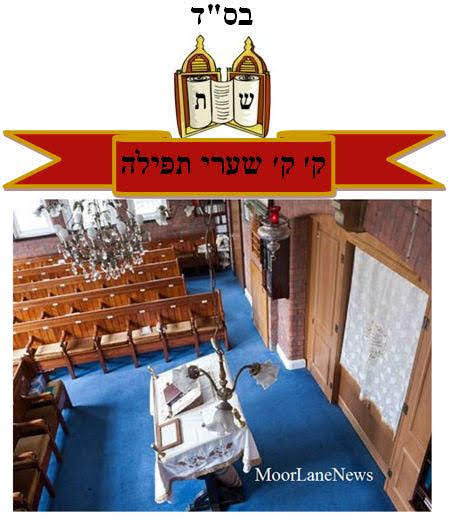
Newsletter Parshat Balak – Taanit Shiva Asar BeTammuz

image.jpeg  

image.png

Have a look at our website www.moorlane.info 
***************

לוח זמני תפלה לקיץ תשפ״ב

Summer Timetable 5782 – 2022

מוצאי שבת

ערבית

)מוצ”ש(

סוף זמן קריאת שמע

זמן
שבת

פלג מנחה (תה״ד)

פלג מנחה (לבוש)

מנחה וקבלת שבת

תאריך

שבת פרשת

Shabbat

Ends

Arbit

Shema to be read before

Candles to be
lit by


Earliest Candle
lighting

Minha & Kabbalat Shabbat*

Date

Parasha

PM

PM

AM

PM

PM

PM

PM


10:39

10:35

9:07

9:15

8:28

7:48

7:30

15/16
July

בלק

For those not in the Bet Hakeneset, but wishing to bring in Shabbat with the Kahal, candles should be lit about 30 minutes after the time listed for Minha and Kabbalat Shabbat, unless the time listed in the ‘latest candle lighting’ column is earlier, when candles MUST be lit by that time, in all cases.

*****

שבת שחרית 

Korbanot – 9:00 am

Hodu – 9:15 am

image.png 5:00 pm 
 מנחה on שבת Day at 6 pm

*****

Women's Nach Group
nach flyer.png

******

Taanit Shiva Asar BeTammuz

SUNDAY 17 th July

Taanit Begins 1:15 am

Shacharit 8:00 am

Mincha 9:00 pm

Shekia 9:27 pm

Fast finishes 10:28 pm

image.png

Guidance for 17th Tammuz from Rabbi Stamler:

Due to extreme heat forecast for the Fast of Tammuz:
  • One should make a special point of drinking plenty the day and evening before – up till 1.15 am [or in case of great need 2.49 am on Motsae Shabbat].
  • Being able to complete the fast takes precedence over praying with a minyan, so if a person is weak and thinks that coming to pray with a minyan might make them have to break their fast, they should pray at home.
  • A person who starts feeling symptoms of dehydration on the fast should drink.
  • Children under Bar/Bat Mitzva should drink.

******

image.png
Please pray for the 
refua shelema of 
Sulcha bat Mazal
********
Q & A Parashat Balak
  1. Why did Moav consult specifically with Midian regarding their strategy against the Jews?
    22:4 – Since Moshe grew up in Midian, the Moabites thought the Midianites might know wherein lay Moshe's power.
  2. What was Balak's status before becoming Moav's king?
    22:4 – He was a prince of Midian.
  3. Why did G-d grant prophecy to the evil Bilaam?
    22:5 – So the other nations couldn't say, “If we had had prophets, we also would have become righteous.”
  4. Why did Balak think Bilaam's curse would work?
    22:6 – Because Bilaam's curse had helped Sichon defeat Moav.
  5. When did Bilaam receive his prophecies?
    22:8 – Only at night.
  6. G-d asked Bilaam, “Who are these men with you?” What did Bilaam deduce from this question?
    22:9 – He mistakenly reasoned that G-d isn't all-knowing.
  7. How do we know Bilaam hated the Jews more than Balak did?
    22:11 – Balak wanted only to drive the Jews from the land. Bilaam sought to exterminate them completely.
  8. What is evidence of Bilaam's arrogance?
    22:13 – He implied that G-d wouldn't let him go with the Moabite princes due to their lesser dignity.
  9. In what way was the malach that opposed Bilaam an angel of mercy?
    22:22 – It mercifully tried to stop Bilaam from sinning and destroying himself.
  10. How did Bilaam die?
    22:23 – He was killed with a sword.
  11. Why did the malach kill Bilaam's donkey?
    22:33 – So that people shouldn't see it and say, “Here's the donkey that silenced Bilaam.” G-d is concerned with human dignity.
  12. Bilaam compared his meeting with an angel to someone else's meeting with an angel. Who was the other person and what was the comparison?
    22:34 – Avraham. Bilaam said, “G-d told me to go but later sent an angel to stop me. The same thing happened to Avraham: G-d told Avraham to sacrifice Yitzchak but later canceled the command through an angel.”
  13. Bilaam told Balak to build seven altars. Why specifically seven?
    23:4 – Corresponding to the seven altars built by the Avot. Bilaam said to G-d, “The Jewish People's ancestors built seven altars, but I alone have built altars equal to all of them.”
  14. Who in Jewish history seemed fit for a curse, but got a blessing instead?
    23:8 – Yaakov, when Yitzchak blessed him.
  15. Why are the Jewish People compared to lions?
    23:24 – They rise each morning and “strengthen” themselves to do mitzvot.
  16. On Bilaam's third attempt to curse the Jews, he changed his strategy. What was different?
    24:1 – He began mentioning the Jewish People's sins, hoping thus to be able to curse them.
  17. What were Bilaam's three main characteristics?
    24:2 – An evil eye, pride and greed.
  18. What did Bilaam see that made him decide not to curse the Jews?
    24:2 – He saw each tribe dwelling without intermingling. He saw the tents arranged so no one could see into his neighbor's tent.
  19. What phrase in Bilaam's self-description can be translated in two opposite ways, both of which come out meaning the same thing?
    24:3 – “Shatum ha'ayin.” It means either “the poked-out eye,” implying blindness in one eye; or it means “the open eye”, which means vision but implies blindness in the other eye.
  20. Bilaam told Balak that the Jews' G-d hates what?
    24:14 – Promiscuity.

 ******
image.png

Halachot from Maran Rabbi Ovadia Yosef Ztz'l 

שבעה עשר בתמוז” – “בין המצרים

יום שבעה
עשר בתמוז חל בשבת, וכיון שאסור להתענות בשבת, נדחתה התענית ליום ראשון
י”ח בתמוז
.

ודיני
תענית שבעה עשר בתמוז נתבארו אצלינו
בהלכה שעסקה
בדינים אלה
. ובשנה זו (התשפ״ב), חומרת התענית
פחותה מבכל שנה, כיון שהתענית אינה חלה ממש ביום שבעה עשרה בתמוז, אלא דחויה ליום
ראשון. ולכן לדוגמא, בעלי ברית
, שהם: אבי הבן, הסנדק והמוהל. אף על פי
שעליהם להתענות בשאר צומות, מכל מקום בתענית דחוייה הדין הוא שהם פטורים מלהתענות
.

ימי
“בין המצרים

הימים
שבין שבעה עשר בתמוז לבין תשעה באב, נקראים ימי “בין המצרים” על שם
הפסוק
(במגילת
איכה פרק א פסוק ג) “כל רודפיה השיגוה בין המצרים”, ואמרו רבותינו
זכרונם לברכה, שְאֵלוּ הימים שבין שבעה עשר בתמוז לתשעה באב, שבהם נכנסו האויבים
לירושלים עיר קדשנו ותפארתנו, ופרעו פרעות בישראל, עד יום תשעה באב שבו החריבו את
בית המקדש בעוונות הרבים, ומאז ועד היום עם ישראל אינו יושב בטח, ותמיד קמים עליו
אויבים מבית ומחוץ. ואף על פי שזכינו תהלות לאל עליון, לחזור לארץ קדשינו בצורה יחסית
חופשית, עדיין לא זכינו לגאולה שלימה, כי בית חיינו חרב, ואומות העולם מציקות לעם
ישראל יום יום, והצרות תוכפות יותר ויותר. ועל הכל, מבחינה רוחנית, שאנו רחוקים
מאד מהגאולה האמיתית, עד שישוב ה' וירחם על נחלתו, וישוב לגאול אותנו גאולה שלימה
,
גאולת
עולמים
.

דרגות
האבלות בימים אלה, ושבוע שחל בו תשעה באב השנה

בהלכות
הקרובות נבאר את דיני “בין המצרים”. ודינים אלו מחולקים. שמיום י”ז
בתמוז ועד ראש חודש אב, נוהגים מעט מנהגי אבלות. ומיום ראש חודש אב, מוסיפים על
מנהגים אלה עוד מנהגים אחרים. ולאחר מכן בשבוע שחל בו תשעה באב, נוהגים מנהגי
אבלות נוספים
.

ובשנה
זו (תשפ״ב) אין לנו דינים השייכים לשבוע שחל בו תשעה באב, משום שתשעה באב
יחול השנה בשבת, וידחה ליום ראשון
. ולפיכך כל דיני שבוע שחל בו תשעה באב אינם
נוהגים בשנה זו. כמו שפסק מרן השלחן ערוך (סימן תקנא). ורק האשכנזים נוהגים להחמיר
בכמה דינים כבר מראש חודש אב, וכמו שנבאר בעתו ובזמנו בעזרת ה
'.

תיקון
חצות

מכיון
שימי “בין המצרים” הם ימי אבל לעם ישראל, נוהגים בהם כמה מנהגי אבל
,
וחסידים
ואנשי מעשה נוהגים לומר “תיקון חצות” אחר חצות היום בימי בין המצרים.
(חצות היום, היינו, שמחלקים את הלילה, מהשקיעה עד הזריחה לשתיים
,
והנקודה
האמצעית, היא “חצות” הלילה, מלשון “מחצית”, ובאותה השעה ביום,
הוא זמן חצות היום. ובהרבה לוחות שנה מופיעה זמן חצות היום, או חצות הלילה
,
שהוא
שווה לזמן חצות היום), ואומרים “תיקון רחל” שבו פסוקים של בכי וצער על חורבן
בית המקדש, ומנהג זה הוא מנהג ותיקין, והביאו מרן החיד”א בספרו מורה באצבע,
וכתב שכן נהגו בארץ ישראל על פי דברי רבינו האר”י ז”ל, וכן כתב עוד
בספרו שו”ת יוסף אומץ. וכתב שנוהגים לומר “תקון רחל”, משום שתקון
רחל מיוסד על בכיה ומספד על חורבן הבית. והביא עוד מדברי רבינו האר”י שכתב
שמנהג טוב וכשר לכל בעל נפש לישב באבילות אחר חצות היום בכל ימי בין המצרים,
ולבכות בכיה ממש על חורבן הבית. עד כאן. ובודאי שעל ידי אמירת תיקון חצות יתעורר
כל אחד להצטער על חורבן בית המקדש וכל הצרות שבאו עלינו ועל אבותינו מתוך הגלות
המרה הזו
.

וכן
נוהג מרן הרב עובדיה יוסף שליט”א, לעורר את הצבור לומר תקון חצות בזמן חצות
היום בימי בין המצרים
. (ותיקון רחל מודפס בסידורים). וכן היו
נוהגים לאמרו בישיבת “פורת יוסף
בירושלים. ויש נוהגים
לומר “תיקון חצות” בכל ימות השנה בחצות הלילה, ותבא עליהם ברכה


The Seventeenth of
Tammuz and the “Three Weeks”

The
public fast of the Seventeenth of Tammuz is observed on Sunday. Since the actual Seventeenth of Tammuz, was Shabbat and it is forbidden to fast on
Shabbat, the fast has been postponed until Sunday, the Eighteenth of
Tammuz.

The laws of the fast of the Seventeenth of Tammuz have already been discussed
in a special
Halacha dedicated to them
. This year, 5782, the severity of this
fast is much less than on other years since the fast does not actually coincide
with the Seventeenth of Tammuz and is merely delayed until Sunday. A practical
application of this law would be, for instance, if there were to be a Berit
Milah held on this day. Although the father of the child, the Mohel, and the
Sandak would indeed be required to fast if the Milah was performed on a regular
public fast day, they are nonetheless exempt from fasting on a postponed public
fast day such as today.

The Period of the “Three Weeks”
The three week period between the Seventeenth of Tammuz and the Ninth of Av is
dubbed by our Sages “Between the Straits,” based on the verse (Eicha 1, 3),
“All of her enemies overtook her between the straits.” Our Sages tell us that
these three weeks between the Seventeenth of Tammuz and the Ninth of Av are
when our enemies entered the holy city of Jerusalem and massacred countless
Jewish people until the Ninth of Av when they finally succeeded in destroying
the Holy Temple. From that day on, the Jewish people no longer dwell securely
and we must endure enemies attacking us from the outside as well as within.
Although, thank G-d, we have merited returning to the holy land relatively
freely, we have nevertheless not yet merited the ultimate redemption, for our
Bet Hamikdash still lies in ruins, the nations of the world are constantly on
the offensive against the Jewish nation, and our tragedies multiply
exponentially every day. We are indeed very spiritually distant from the final
redemption and we hope and pray that Hashem pities us and redeems us once and
for all, speedily in our days.

The Levels of Mourning during this Period and the Laws of the Week during
which Tisha Be’av Falls Out This Year

In the following Halachot we shall, G-d-willing, discuss the laws of the “Three
Weeks.” There are various degrees of mourning observed during this period: From
the Seventeenth of Tammuz until Rosh Chodesh Av, few mourning customs are
observed. From the day of Rosh Chodesh Av, some more mourning customs are
added. During the week during which Tisha Be’av falls out, even more mourning
customs are observed.

This year, 5782, the laws of the week during which Tisha Be’av falls out do not
apply, for the Ninth of Av falls out this year on Shabbat; the fast of Tisha
Be’av is thus postponed until Sunday. For this reason, all of the laws
pertaining to the week during which Tisha Be’av falls out do not apply this
year based on the ruling of Maran HaShulchan Aruch (Chapter 551). Nevertheless,
Ashkenazim do adopt certain stringencies beginning from Rosh Chodesh Av as we
shall, G-d-willing, discuss when the time comes.

Reciting “Tikun Chatzot”
Since these days are a time of mourning for the Jewish nation, we customarily
observe some customs pertaining to mourning. Pious and upstanding people
customarily recite “Tikun Chatzot” (Psalms and prayers related to the
destruction of the Bet Hamikdash) after Halachic mid-day during the “Three
Weeks” (Halachic mid-day is calculated by splitting the night time hours
between sunset and sunrise and the mid-point is Halachic midnight. The exact
same time during the day is Halachic mid-day. Many Jewish calendars state
either only Halachic midnight or mid-day since they are in essence the same
time.) “Tikun Rachel,” which includes verses that lament the destruction of the
Bet Hamikdash, is recited. Maran HaChida in his works “Moreh Ba’Etzba” and
“Yosef Ometz” writes that this is an ancient custom that was observed in Israel
based on the words of the holy Arizal. He writes that the custom is to recite
“Tikun Rachel” because it is based on weeping and lamentation for the
destruction of holy Temple. He adds in the name of the Ari who writes that it
is a worthy custom to sit and mourn after the Halachic mid-day every day during
the “Three Weeks,” including shedding actual tears for the destruction of the
Bet Hamikdash. Through reciting “Tikun Chatzot,” one will surely be moved to
tears because of the sorrow of the destruction of the Bet Hamikdash and all of
the other suffering we and our forefathers have endured during this long and
arduous exile.

Maran Harav Ovadia Yosef  indeed encourages his congregation to recite
“Tikun Chatzot” after Halachic mid-day during the period of the “Three Weeks.”
(“Tikun Rachel” is printed in most Siddurim.) This was indeed the custom in
Yeshivat Porat Yosef in Jerusalem. Some actually have the custom to recite
“Tikun Chatzot” throughout the entire year after Halachic mid-night, and they
shall indeed be blessed

שבעה עשר בתמוז

 יום שבעה עשר בתמוז. (יחדשהו הקדוש
ברוך הוא עלינו לששון ולשמחה). ומימי חורבן בית מקדשינו, החלו ישראל להתענות ביום
זה. ולאחריו יחלו ימי “בין המצרים”. כמו שנבאר בעתו ובזמנו
.

תענית
שבעה עשר בתמוז

נאמר
בספר זכריה (פרק ח פסוק יט) “כה אמר ה' צבאות, צום הרביעי וצום החמישי וצום
השביעי וצום העשירי יהיה לבית יהודה לששון ולשמחה ולמועדים טובים
, והאמת והשלום אהבו”.
ופירשו חז”ל (במסכת ראש השנה דף יח:), צום הרביעי זה צום שבעה עשר בתמוז, כי
חודש תמוז הוא החודש הרביעי מחודש ניסן. (וידוע שחודש ניסן הוא הראשון לחודשי השנה
לפי מנין תורתינו הקדושה). וצום החמישי זה צום תשעה באב, כי חודש אב הוא החודש
החמישי מחודש ניסן. וצום השביעי זה צום גדליה, שהוא בשלושה בתשרי, שהוא החודש
השביעי מחודש ניסן. וצום העשירי זה עשרה בטבת, שהוא החודש העשירי מחודש ניסן
.

דין
התענית

כתב
רבינו הרמב”ם, שכל ישראל מתענים בימים אלו, מפני הצרות שאירעו בהם, כדי לעורר
הלבבות ולפתוח דרכי התשובה, ויהיה זה זכרון למעשינו הרעים, ומעשה אבותינו שהיה
כמעשינו עתה, עד שגרם להם ולנו אותן הצרות, שבזכרון דברים אלו נשוב להיטיב, שנאמר
והתודו את עונם ואת עון אבותם
.

מה
אירע ביום שבעה עשר בתמוז
?
ביום
שבעה עשר בתמוז אירעו חמישה דברים קשים, ואלו הן: נשתברו לוחות הברית
, הופסקה הקרבת קרבן התמיד
בכל יום בבית המקדש, הבקיעו האויבים את חומת ירושלים בתקופת חורבן בית המקדש השני,
שרף אפוסטמוס הרשע את התורה, והועמד צלם בהיכל בית המקדש
.

זמן
התענית

הכל
חייבים להתענות ביום שבעה עשר בתמוז, וחיוב התענית הוא מעלות השחר ועד לצאת
הכוכבים. ואף על פי שזמן התענית הוא מעלות השחר, מכל מקום מי שקם משנתו באמצע
הלילה קודם עלות השחר, אסור לו לאכול, אלא אם כן התנה קודם שהלך לישון שבכוונתו
לקום ולאכול
.

מי הוא
המחוייב בתענית זו
?
קטנים, דהיינו בן פחות משלוש
עשרה שנים, ובת פחותה משתים עשרה שנים, פטורים לגמרי מתעניות אלו. ואינם צריכים
להתענות אפילו כמה שעות. ואפילו אם יש בהם דעת להתאבל על חורבן ירושלים, כל שלא
הגיעו לגיל מצוות, פטורים לגמרי מתעניות אלו, ואפילו אם רוצים להחמיר על עצמם
ולהתענות, יש למחות בידם. ויש מחמירים שלא לתת לקטנים בתענית ציבור אלא לחם ומים.
וכן מנהג כמה מעדות האשכנזים שילדים קטנים שכבר מבינים ענין החורבן, אינם אוכלים
אלא לחם ומים. אבל הספרדים ובני עדות המזרח לא נהגו כן, וכן העיד מרן הרב
חיד”א, שמנהג הספרדים שנותנים לילדים כל צרכם ביום תענית ציבור
.

ומעוברות
ומניקות פטורות מלהתענות בשבעה עשר בתמוז, בצום גדליה ובעשרה בטבת. (ולענין תשעה
באב יבואר אי”ה בזמנו). ואפילו אם רוצות להחמיר על עצמן ולהתענות יש למחות
בידן
.

ולענין
זה נקראת מעוברת כל שהוכר עוברה, דהיינו שעברו שלושה חודשים מתחילת הריונה. ואם
סובלת ממחושים והקאות פטורה מכל התעניות הללו גם קודם עבור שלושה חודשים מתחילת
הריונה, ובפרט אם עברו כבר ארבעים יום מתחילת הריונה
.

ולגבי
מינקת, כלומר, אשה מניקה, שאמרו שפטורה מתעניות אלו. נחלקו הפוסקים, אם רק אשה
שהיא מניקה בפועל פטורה מן התענית, אבל אשה שאינה מניקה בפועל, אף על פי שהיא בתוך
עשרים וארבעה חודשים מזמן לידתה, חייבת להתענות, או שלעולם אין להתחשב בכך שהיא
אינה מניקה בפועל, שכל עשרים וארבעה חודשים מזמן הלידה האשה חלשה מאד, וכמו שאמרו
רבותינו “שאבריה מתפרקין”, ולכן יש לפטרה מן התענית. ומרן הרב
שליט”א, היה מורה ובא במשך שנים להקל בדבר, ושכל אשה תוך עשרים וארבעה חודשים
ללידתה, פטורה מלהתענות בתעניות אלה. וכן כתב בספרו חזון עובדיה העוסק בהלכות
הללו, שכל אשה מינקת פטורה מן התענית, ואפילו אם אינה מניקה בפועל, כל שהיא תוך
עשרים וארבעה חדוש מלידתה, יש לפטרה מן התענית. אולם הוסיף, לאחר שעיין בדבר,
שנכון להקל בזה דוקא באופן שהיא מרגישה בעצמה חולשה יתרה, שאז דינה כדין מינקת,
אבל אם היא אינה חשה תחושה של חולשה יתירה, כגון סחרחורת וכדומה, נכון להחמיר
שתתענה אף היא. וכן פסקו עוד מרבני זמנינו, ובהם הגאון רבי שלום משאש זצ”ל
ועוד. ויש אומרים שכל אשה שהיא תוך עשרים וארבעה חודשים ללידתה, הרי היא פטורה מן
התענית, משום שבדרך כלל היא עסוקה בשאר עניני הבית, ונחלשת מאד מחמת התענית

The Seventeenth of Tammuz

The
Seventeenth of Tammuz (may Hashem renew it as a joyous and festive day). From
the times of the destruction of the Bet Hamikdash, the Jewish nation began to
fast on this day. This day likewise the “Three Weeks” between the Seventeenth
of Tammuz and the Ninth of Av.

The Fast of the Seventeenth of Tammuz
The prophet Zecharia (8, 19) states: “So says Hashem, G-d of Hosts: The fourth,
fifth, seventh, and tenth fast days shall be for the house of Yehuda for
gladness, joy, and good times; [only] love of truth and peace.” Our Sages (in
Masechet Rosh Hashanah 18b) explain that the “fourth fast day” refers to the Seventeenth
of Tammuz, for Tammuz is the fourth month when counting from Nissan (Nissan is
the first of the months of the year according to our holy Torah). The “fifth
fast day” refers to the fast of the Ninth of Av, for Av is the fifth month when
counting from Nissan. The “seventh fast day” refers to the Fast of Gedalya
which falls out on the third of Tishrei, which is the seventh month from
Nissan. The “tenth fast day” refers to the fast of the Tenth of Tevet, which is
the tenth month from Nissan.

The Essence of the Fast
The Rambam writes that the entire Jewish nation must fast on these days because
of the tragedies that befell them on these days. This will serve to awaken
their hearts and open the pathways to repentance. This will also serve as a
reminder of our evil deeds and the deeds of our ancestors that resembled our
current deeds which eventually caused these tragedies to befall them and us.
Upon remembering these things, we shall mend our ways, as the verse states,
“And they shall confess their sins and the sins of their fathers.”

What Occurred on the Seventeenth of Tammuz?
The following five terrible events occurred on the Seventeenth of Tammuz: The
two tablets bearing the Ten Commandments were broken, the daily Tamid offering
brought in the Bet Hamikdash ceased, our enemies breached the walls of
Jerusalem in the Second Temple era, the wicked Apostemos burnt the Torah, and
an idol was erected in the sanctuary of the Bet Hamikdash.

The Time of the Fast
Everyone is obligated to fast on the Seventeenth of Tammuz, and the fast begins
at dawn and ends at nightfall with the emergence of the stars. Although the
fast begins at dawn, if one wakes up in the middle of the night before dawn,
one may not eat unless one specifically makes a condition before going to sleep
that one has in mind to wake up and eat before the fast begins.

Who Is Obligated to Fast?
Minors, meaning boys under the age of thirteen and girls under the age of
twelve, are completely exempt from these fasts. They need not even fast for several
hours. Even if they have the understanding to mourn over the loss of the Bet
Hamikdash, as long as they have reached Bar/Bat Mitzvah age, they are
completely exempt from these fasts. Even if they wish to act stringently and
fast, one should object to them doing so. Some are stringent to only feed
minors bread and water on public fast days. This is indeed customary among some
Ashkenazi communities who hold that if the child is able to understand the
gravity of the destruction of the Bet Hamikdash, he should only be fed bread
and water. However, Sephardic and Middle Eastern Jews customarily do not rule
this way, as Maran Ha’Chida testifies that the custom among the Sephardim was
to feed their children whatever they needed on public fast days.

Pregnant and nursing women are exempt from fasting on the Seventeenth of
Tammuz, the Fast of Gedalya, and the Tenth of Tevet. (Their law regarding Tisha
Be’av will, G-d willing, be discussed at a later time.) Even if they wish to be
stringent and fast, one should object to them doing so.

Regarding this matter, a pregnant woman is defined as when her pregnancy is
noticeable, meaning when the first trimester of pregnancy has elapsed. However,
if she suffers from aches, pains, vomiting, and the like, she is exempt from
all of these fasts even before three months of pregnancy have elapsed; this is
especially true if forty days from the start of her pregnancy have already
elapsed.

 ********

Please support our minyanim whenever possible
Updates will appear on the WhatsApp group image.png
If anyone needs any help getting to or from the minyanim 
please contact one of the members of the Mahamad
******
image.png
Would you like to do some Keriat Hatorah – Torah reading?
Committed to doing a reading and finding it hard?
Need to cancel or make a change?
Want to be added to the Keriat HaTorah roster?
Please contact Yehoshua Jacobs
**************

Virus-free. www.avg.com

Newsletter Parashat Chukat

image.jpeg

image.png

Have a look at our website www.moorlane.info 
*********

image.png

Mazal Tov 
to
Shmuel & Chava Cohen
on the safe arrival of a baby
Girl
שיגדלה לתורה לחופה ולמעשים


Mazal Tov to proud grandparents

R’Daniel & Leah Marshall

Special Mazal Tov to great grandparents 

Dr & Mrs D Marshall  

 
*********
Women’s Nach Group
nach flyer.png
*******
הלכות ברכות
berachot 2 (2).png
****
Please support our minyanim whenever possible
Updates will appear on the WhatsApp group image.png
If anyone needs any help getting to or from the minyanim 
please contact one of the members of the Mahamad
*****
image.png
Please pray for the 
refua shelema of 
Sulcha bat Mazal
******

לוח זמני תפלה לקיץ תשפ״ב

Summer Timetable 5782 – 2022

מוצאי שבת

ערבית

)מוצ”ש(

סוף זמן קריאת שמע

זמן
שבת

פלג מנחה (תה״ד)

פלג מנחה (לבוש)

מנחה וקבלת שבת

תאריך

שבת פרשת

Shabbat

Ends

Arbit

Shema to be read before

Candles to be
lit by


Earliest Candle
lighting

Minha & Kabbalat Shabbat*

Date

Parasha

PM

PM

AM

PM

PM

PM

PM


10:50

10:46

9:02

9:21

8:35

7:53

7:30

8/9
July

חקת

For those not in the Bet Hakeneset, but wishing to bring in Shabbat with the Kahal, candles should be lit about 30 minutes after the time listed for Minha and Kabbalat Shabbat, unless the time listed in the ‘latest candle lighting’ column is earlier, when candles MUST be lit by that time, in all cases.

*****

שבת שחרית 

קרבנות  

9:00 am

הודו

9:15 am

image.png 5:00 pm 
 מנחה on שבת Day at 6 pm

******

image.png
Would you like to do some Keriat Hatorah – Torah reading?
Committed to doing a reading and finding it hard?
Need to cancel or make a change?
Want to be added to the Keriat HaTorah roster?
Please contact Yehoshua Jacobs
**************
Q & A Parashat Chukat
  1. “Take a perfect Para Aduma (red heifer).” What does the word “perfect” temima mean in this context?
    19:2 – Perfectly red.
  2. How many non-red hairs disqualify a cow as a Para Aduma?
    19:2 – Two.
  3. A man dies in a tent. What happens to the sealed metal and earthenware utensils in the tent?
    19:14,15 – The metal utensils are impure for seven days, even if they are sealed. The sealed earthenware vessels are unaffected.
  4. What happens to the one who: a) sprinkles the water mixed with the ashes of the Para Aduma; b) touches the water; c) carries the water?
    19:21 – a) Remains tahor; b) He, but not his clothing, contracts tumah; c) He and his clothing contract tumah.
  5. Why was the mitzvah of the Para Aduma entrusted to Elazar rather than to Aharon?
    19:22 – Because Aharon was involved in the sin of the Golden Calf.
  6. Why does the Torah stress that all of the congregation came to Midbar Tzin?
    20:1 – To teach that they were all fit to enter the Land; everyone involved in the sin of the spies already died.
  7. Why is Miriam’s death taught after the law of Para Aduma?
    20:1 – To teach that just as sacrifices bring atonement, so too does the death of the righteous.
  8. During their journey in the midbar, in whose merit did the Jewish People receive water?
    20:2 – Miriam’s.
  9. Why did Moshe need to strike the rock a second time?
    20:11 – After he hit it the first time, only a few drops came out since he was commanded to speak to the rock.
  10. When Moshe told the King of Edom that the Jewish People would not drink from the well-water, to which well did he refer? What do we learn from this?
    20:17 – To the well that traveled with the nation in the midbar. This teaches that one who has adequate provisions should nevertheless purchase goods from his host in order to benefit the host.
  11. The cloud that led the Jewish People leveled all mountains in their path except three. Which three and why?
    20:22 – Har Sinai for receiving the Torah, Har Nevo for Moshe’s burial, and Hor Hahar for Aharon’s burial.
  12. Why did the entire congregation mourn Aharon’s death?
    20:29 – Aharon made peace between contending parties and between spouses. Thus, everybody mourned him.
  13. What disappeared when Aharon died?
    20:29 – The clouds of glory disappeared, since they sheltered the Jews in Aharon’s merit.
  14. Which “inhabitant of the South” (21:1) attacked the Jews?
    21:1 – Amalek.
  15. For what two reasons did G-d punish the people with snakes specifically?
    21:6 – The original snake, which was punished for speaking evil, is fitting to punish those who spoke evil about G-d and about Moshe. And the snake, to which everything tastes like dust, is fitting to punish those who complained about the manna which changed to any desired taste.
  16. Why did the Jewish People camp in Arnon rather than pass through Moav to enter Eretz Canaan?
    21:13 – Moav refused them passage.
  17. What miracle took place at the valley of Arnon?
    21:15 – The Amorites hid in caves in the mountain on the Moabite side of the valley in order to ambush the Jews. When the Jews approached, the mountain on the Eretz Canaan side of the valley moved close to the other mountain and the Amorites were crushed.
  18. What was the “strength” of Amon that prevented the Jewish People from entering into their Land?
    21:24 – G-d’s command, “Do not harass them” (Devarim 2:19).
  19. Why was Moshe afraid of Og?
    21:34 – Og had once been of service to Avraham. Moshe was afraid that this merit would assist Og in battle.
  20. Who killed Og?
    21:35 – Moshe.
 ******

image.png

Halachot from Maran Rabbi Ovadia Yosef Ztz’l 

הלכות ברכת
הפירות

בהלכות הקודמות ביארנו שיש סדר לברכות. ולמשל, מי שבא לאכול תמרים
ותפוחים, עליו להקדים ולברך על התמרים, מפני שהם משבעת המינים
.

כתב מרן הבית יוסף בשם הרשב”א, שכל מה
שאמרנו שצריך להקדים ולברך על פרי מסוים, זהו דווקא “לכתחילה”. כלומר כן
יש לנהוג. אבל “בדיעבד”, כלומר, אם טעה ובירך על המין השני, יצא ידי
חובת ברכה, ויכול לאכול משניהם, במקרה שהברכות שוות
.

כלומר, אם היו לפניו שני מיני פירות, כגון
תפוחים ותמרים, ששניהם ברכתן שווה, והיא “בורא פרי העץ”, אף על פי שיש
להקדים ולברך על התמר משום שהוא משבעת המינים, מכל מקום אם טעה ובירך על התפוח
תחילה, יצא ידי חובת הברכה, ובברכת התפוח פטר גם את התמר
.

כתב מהר”ר ישראל איסרלן, (בעל ספר תרומת
הדשן, חי סמוך לדורו של מרן, ומרן בתשובתו חלק לו כבוד גדול, וכתב מרן
החיד”א, שהיה למהר”י איסרלן קבלה מעשית, ובעת צרה וצוקה הפליא לעשות
והציל ישראל בחכמתו.) שכל מה שאמרנו שפרי אחד קודם לחברו, או שברכה אחת קודמת
לחברתה, זהו דוקא כאשר רוצה לאכול משניהם, אבל אם אינו רוצה לאכול משניהם, מברך רק
על זה שרוצה לאכול, אף על פי שגם השני מונח לפניו
.

ומרן רבינו הגדול רבי עובדיה יוסף זצוק”ל
כתב, שאפילו אם רוצה לאכול משני המינים, אלא שאחד מהם אינו נמצא לפניו כעת, אינו
חייב להמתין עד שיביאו לפניו את המין שמוקדם לברכה. וכגון שרוצה לאכול תפוח ותמר,
שצריך לברך קודם על התמר, אבל כעת אין לפניו אלא תפוח, ורק לאחר מכן יהיה לפניו
תמר, יכול לברך על התפוח ואין צריך להמתין עד שיביאו לפניו תמר
.

The Laws of the
Blessing on Fruits

In the previous Halachot we have explained that there is an order
of priority regarding blessings. Thus, if one wishes to partake of apples and
dates, one must recite the blessing on the dates, for they are one of the Seven
Species.

Maran Ha’Bet Yosef writes in the
name of the Rashba that the law that one must recite a blessing on a certain
fruit first only applies preferably. This means that this is the way one should
behave preferably. However, if one errs and recites the blessing on the other
fruit, one has fulfilled his obligation and may partake of both fruits,
provided that they share the same blessing.

For instance, if one has before
him to kinds of fruit, such as apples and dates which both share the “Boreh
Peri Ha’etz
” blessing, although one should preferably recite this blessing
on the date because it is one of the Seven Species, nevertheless, if one
mistakenly recited the blessing on the apple, one has nonetheless fulfilled his
obligation of reciting the blessing and the blessing one recited on the apple
exempts the date as well.

Rabbeinu Yisrael Isserlan (author
of the Terumat Ha’Deshen who lived shortly before the lifetime of Maran and
whom Maran affords great honor to in one of his responses; indeed, Maran
Ha’Chida writes in his Shem Ha’Gedolim that Rabbeinu Yisrael Isserlan was
well-versed in practical Kabbalah and in times of danger, he performed miracles
and saved the Jews with his wisdom) writes that this that we have established
that one fruit takes priority over another or that one blessing precedes
another only applies when one wishes to partake of both items. However, if one
does not wish to partake of both, one should only recite a blessing on the item
one wishes to eat although the second item is in front of the individual.

Maran Rabbeinu Ovadia Yosef zt”l
writes that even if one wishes to partake of both items, however, one of
them is not in front of him at the present time, one need not wait until the
item with the prioritized blessing is brought before him. For instance,
regarding an apple and a date where one must recite the blessing on the date,
nevertheless, if one only has an apple in front of him at the present time and
only later will he be brought dates, one may recite the blessing on the apple
and one need not wait until the date is brought before him.


Semachot

image.png
PHOTO-2022-06-30-02-43-37.jpg
Mazal Tov to 
Annie Cohen Avreimi Abraham
on their upcoming wedding
Monday 5th Tammuz / 4th July
בשעה טובה ומוצלחת
שיזכו לבנות בית נאמן בישראל
Mazal Tov 
to 
Rabbi Namir & Mrs Rachel Cohen
on the wedding of their daughter
May they see all their children under the חופה
with good health, beracha & מזל
Moorlanenews
would like to use this opportunity
to wish 
Annie & Avreimi
a massive Besiman Tov
שיזכו לבנות בית נאמן בישראל 
& also
Thank Rabbi Namir for all the 
Torah that he brings to our Kahal
May he continue Mechayil el Chayil
**********
image.png
Mazal Tov 
to
Reuven & Elysia Day
on the safe arrival of a new baby
Girl
שיגדלה לתורה לחופה ולמעשים

Mazal tov 

to proud grandparents

Emmanuella Hodari

&

Antony & Loretta Hodari

Mazal tov to families 

Day, Hodari & Jacobs  

Newsletter Parashat Korach

image.jpeg  

image.png

Have a look at our website www.moorlane.info 
*****
image.png
****
image.png

Dear Friend & Family 

Once again in a few weeks I will be braving the waters of lake Ullswater [which know nothing of global warming] with a group of swimmers to raise funds for MMK.

Manchester Montefiore Kollel, led by the Rosh Chaburah Rabbi Cohen and me, is a well established kollel with over a decade of learning, teaching and communal activity in North and South Manchester.

The Kollel provides:


  • High level learning leading to Semicha (the Kollel was recently tested on the Laws of Shabbat by Dayan Berger shlit”a and Dayan Heimlich shlit”a)
  • Training of young Rabbis in public speaking, writing & leadership roles
  • Daily one to one learning sessions
  • Joint learning initiatives
  • Youth Work including boys' weekly shiur
  • Social Activities
  • Amud Yomi Shiur
  • Sunday morning breakfast shiur
  • Regular Shabbat sermons
  • Monthly Publications
  • Parsha questions
  • Regular time-themed events.

 We’re running a vital fundraising campaign Sunday-Monday, 3rd-4th July 2022

Please support our Torah learning by donating generously to my page on 

 https://www.fundd.org/donate/95/swim4torah?tid=372

 to enable me to reach my goal of £6000.

The intrepid group of swimmers will be braving the chilly waters to swim across Lake Ullswater in the Lake District on 10th July. Splash them with your support!

In the zechut of helping complete our goal, may you be blessed with boundless Bracha, Hatzlacha and continued success.


Moshe Stamler

Other donation methods:

  • By direct transfer to Royal Bank of Scotland Manchester Montefiore Kollel sort code 160001 account number 21005484
  • By post to 12 Ravensway Prestwich M25 0EU  [Cheques/vouchers made out to MMK]
*********
Women's Nach Group
nach flyer.png
****
הלכות ברכות
berachot 2 (2).png
****
Please support our minyanim whenever possible
Updates will appear on the WhatsApp group image.png
If anyone needs any help getting to or from the minyanim 
please contact one of the members of the Mahamad
*****
image.png
Please pray for the 
refua shelema of 
Sulcha bat Mazal
******

לוח זמני תפלה לקיץ תשפ״ב

Summer Timetable 5782 – 2022

מוצאי שבת

ערבית

)מוצ”ש(

סוף זמן קריאת שמע

זמן
שבת

פלג מנחה (תה״ד)

פלג מנחה (לבוש)

מנחה וקבלת שבת

תאריך

שבת פרשת

Shabbat

Ends

Arbit

Shema to be read before

Candles to be
lit by


Earliest Candle
lighting

Minha & Kabbalat Shabbat*

Date

Parasha

PM

PM

AM

PM

PM

PM

PM


10:57

10:53

8:59

9:25

8:39

7:56

7:40

1/2
July

קרח

For those not in the Bet Hakeneset, but wishing to
bring in Shabbat with the Kahal, candles should be lit about 30 minutes after
the time listed for Minha and Kabbalat Shabbat, unless the time listed
in the 
‘latest candle lighting’ column is
earlier,
 when
candles MUST be lit by that time, in all cases.

*****

שבת שחרית 

קרבנות  

9:00 am

הודו

9:15 am

image.png 5:00 pm 
 מנחה on שבת Day at 6 pm

******

image.png
Would you like to do some Keriat Hatorah – Torah reading?
Committed to doing a reading and finding it hard?
Need to cancel or make a change?
Want to be added to the Keriat HaTorah roster?
Please contact Yehoshua Jacobs
**************
Q & A Parashat Korach
  1. Why did Datan and Aviram join Korach?
    16:1 – Because they were his neighbors.
  2. Why is Yaakov's name not mentioned in Korach's genealogy?
    16:1 – Yaakov prayed that his name not be mentioned in connection with Korach's rebellion (Bereishet 49:6).
  3. What motivated Korach to rebel?
    16:1 – Korach was jealous that Elizafan ben Uziel was appointed as leader of the family of Kehat instead of himself.
  4. What did Korach and company do when Moshe said that a techelet garment needs tzizit?
    16:1 – They laughed.
  5. What warning did Moshe give the rebels regarding the offering of the incense?
    16:6 – Only one person would survive.
  6. Did Moshe want to be the kohen gadol?
    16-6 – Yes.
  7. What event did Korach not foresee?
    16:7 – That his sons would repent.
  8. What does the phrase rav lachem mean in this week's Parsha? (Give two answers.)
    16:7,3 – Rav lachem appears twice in this week's Parsha. It means “much more than enough greatness have you taken for yourself (16:3)” and “It is a great thing I have said to you (16:17).”
  9. What lands are described in this week's Parsha as “flowing with milk and honey”?
    16:12 – Egypt and Canaan.
  10. When did Moshe have the right to take a donkey from the Jewish community?
    16:15 – When he traveled from Midian to Egypt.
  11. What did Korach do the night before the final confrontation?
    16:19 – Korach went from tribe to tribe in order to rally support for himself.
  12. What sin did Datan and Aviram have in common specifically with Goliath?
    16:27 – They all blasphemed.
  13. Before what age is a person not punished by the Heavenly Court for his sins?
    16:27 – Twenty years old.
  14. What happens to one who rebels against the institution of kehuna? Who suffered such a fate?
    17:5 – He is stricken with tzara'at, as was King Uziyahu (Divrei HaYamim II 26:16-19).
  15. Why specifically was incense used to stop the plague?
    17:13 – Because the people were deprecating the incense offering, saying that it caused the death of two of Aharon's sons and also the death of 250 of Korach's followers. Therefore G-d demonstrated that the incense offering was able to avert death, and it is sin, not incense, which causes death.
  16. Why was Aharon's staff placed in the middle of the other 11 staffs?
    17:21 – So people would not say that Aharon's staff bloomed because Moshe placed it closer to the Shechina.
  17. Aharon's staff was kept as a sign. What did it signify?
    17:25 – That only Aharon and his children were selected for the kehuna.
  18. Why are the 24 gifts for the kohanim taught in this week's Parsha?
    18:8 – Since Korach claimed the kehuna, the Torah emphasizes Aharon's and his descendants' rights to kehuna by recording the gifts given to them.
  19. Who may eat the kodshei kodashim (most holy sacrifices) and where must they be eaten?
    18:10 – Male kohanim may eat them and only in the azara (forecourt of the Beit Hamikdash).
  20. Why is G-d's covenant with the kohanim called “a covenant of salt”?
    18:19 – Just as salt never spoils, so this covenant will never be rescinded.
******
image.png

Halachot from Maran Rabbi Ovadia Yosef Ztz'l 

דברים
הבאים בתוך הסעודה

דברים הבאים
בתוך הסעודה

בגמרא
במסכת ברכות (מא:), אמר רב פפא, הלכתא
(להלכה), דברים הבאים בתוך הסעודה מחמת
הסעודה, אינם טעונים ברכה, לא לפניהם ולא אחריהם. כלומר, כל מאכל שבא בתוך סעודה
(שאוכלים עם פת לחם
), כגון בשר ודגים וכיוצא בזה, אין מברכים
עליו בשעת הסעודה את הברכה הראויה לו (“שהכל”), משום שכל המאכלים
שבסעודה נפטרים כבר בברכת המוציא לחם מן הארץ
.

הטעם שאין
מברכים בתוך הסעודה

ובטעם
הדבר שכל המאכלים נפטרים בברכת המוציא, במחשבה ראשונה היה נראה, שהוא מדין
“עיקר וטפל”, (כמו
שביארנו בעבר),
שכל
שיש לאדם מאכל המורכב משני מאכלים, מברך על המאכל העיקרי, ופוטר את הטפל. ולדוגמא,
תבשיל של אורז עם עדשים, ברכתו בורא מיני מזונות, אף על פי שברכת העדשים היא
“האדמה”, מפני שהאורז הוא העיקר, וברכתו “מזונות
“,
והעדשים
טפלים לו. וכמו כן בנדונינו, כיון שהפת יש לה חשיבות מיוחדת, הרי היא נחשבת כעיקר
הסעודה, ולכן בברכת הפת נפטרים גם כל שאר המאכלים שיבואו בסעודה
.

אולם בגמרא,
שאלו
לבן זומא על דברים הללו (הם המאכלים הבאים בתוך הסעודה), מפני מה אינם טעונים
ברכה? אמר להם, הואיל והפת פוטרתן. והסביר רבינו הריטב”א, פירוש
,
ולא
מדין טפילה הוא (כלומר, לא מטעם עיקר וטפל הפת פוטרת את שאר המאכלים
),
שאין
המאכל נחשב טפל, אלא כשנאכל עם העיקר, כדברים שמלפתים בהם את הפת (כמו הסלטים שאנו
עושים, שאוכלים אותם ממש עם הפת), אבל מאכלים שאין מלפתים בהם את הפת, אינם נחשבים
טפלים לפת
.

והמשיך רבינו
הריטב”א והסביר, שבכל זאת אין מברכים על המאכלים הבאים בתוך הסעודה, מפני
שהפת היא “עיקר הסעודה” כנגד כל מאכל שיבא אחריה. כלומר, דין מיוחד הוא
לגבי הפת, שמרוב חשיבותה, היא פוטרת את כל המאכלים שבאים יחד עמה בסעודה
,
אף
על פי שהם אינם נאכלים עם הפת ממש
.

ולפיכך, גם
מאכלים כגון בשר ודגים, שאינם נאכלים עם הפת ממש, אין מברכים עליהם בתוך הסעודה.
מאחר ונפטרו כולם בברכת הפת שבתחילת הסעודה
.

ולסיכום: מאכלים הבאים בתוך סעודה שאוכל בה פת לחם, והם
באים מחמת הסעודה, כלומר שבאים למזון ולשובע, כגון בשר ודגים, אין מברכים עליהם,
מכיון שנפטרו כבר בברכת הפת
.

דברים הבאים
לקינוח בסוף הסעודה, כגון פירות, יש לברך עליהם, כיון שאינם מחמת הסעודה כלל. ודין
עוגות ועוגיות המוגשים בסיום הסעודה יבואר בעזרת ה' בהזדמנות אחרת
.


Foods Eaten During a Meal

The Gemara in Masechet Berachot (41a) tells us: “Rav Papa
said: The Halacha is that foods eaten during the meal as part of the meal do
not require a blessing neither before nor after eating them.” This means that
any foods that are eaten during a bread meal, for instance meat, fish, and the
like, would not require their appropriate blessings before eating them during
the meal, for all foods eaten during a meal are already exempt through the
blessing of “Hamotzi Lechem Min Ha’aretz”. Similarly, beverages drunk
during the meal do not require a blessing for beverages are also exempt with
the “Hamotzi” blessing.

The Reason Why Blessings are Not Recited on Foods Eaten
During a Meal

At first glance, it would seem that the reason why no blessing is recited on
foods eaten during a meal is because of the law of the primary and secondary
foods, meaning that when one has a dish consisting of two types of food before
him, one should recite the blessing upon the primary food and thus exempts the
secondary food. For instance, the blessing on a dish of rice and lentils is “Boreh
Minei Mezonot
” for the rice is the primary food and the lentils are only
secondary to it. Thus, it would seem in our case that since the bread has
special significance, it is considered the primary food of the meal and the
blessing on the bread exempts any food that is eaten during the course of the
meal.

Nevertheless, the Gemara recounts that Ben Zoma was asked
why foods eaten during the meal do not require a blessing to which he replied,
“Since the bread exempts them.” The Ritba explains that this is not based on
the Halacha of the secondary food (meaning that the bread does not exempt the
other foods because it is the primary foods and all other foods are secondary),
for a food is not considered secondary unless it is eaten together with the
primary food (such the salads and dips served nowadays at the beginning of the
meal which are actually eaten with bread); however, foods not actually
eaten with the bread cannot be considered secondary to the bread.

The Ritba continues and explains that the reason why one
does not bless on foods eaten during the meal is because regarding any other
foods served after it, the bread is considered “the main part of the meal.”
This means that bread retains a unique law in that, as a result of its innate
significance, it exempts any other foods eaten throughout the meal even if
these foods are not eaten together with the bread.

Thus, even foods such as fish and meat which are not
eaten together with bread would not require a blessing within a bread meal
since they have already been exempted by the blessing on the bread in the
beginning of the meal.

Summary: Foods
that are served during a bread meal and are eaten as part of the meal, meaning
that they are eaten to nourish and satiate, such as fish or meat, do not
require their own blessing since they have already been exempted with the
blessing on the bread.

Foods served at the end of a meal as dessert, such as
fruits, require a blessing since they are not eaten as part of the meal at all.
We shall, G-d-willing, discuss the laws of cakes and cookies served at the end
of a meal on a different occasion.


Newsletter Parashat Behaalotecha

image.jpeg  

image.png

Have a look at our website www.moorlane.info 
*********
Please support our minyanim whenever possible
Updates will appear on the WhatsApp group image.png
If anyone needs any help getting to or from the minyanim 
please contact one of the members of the Mahamad
*****
image.png
Please pray for the 
refua shelema of 
Sulcha bat Mazal
******

לוח זמני תפלה לקיץ תשפ״ב

Summer Timetable 5782 – 2022

מוצאי שבת

ערבית

)מוצ”ש(

סוף זמן קריאת שמע

זמן
שבת

פלג מנחה (תה״ד)

פלג מנחה (לבוש)

מנחה וקבלת שבת

תאריך

שבת פרשת

Shabbat

Ends

Arbit

Shema to be read before

Candles to be
lit by


Earliest Candle
lighting

Minha & Kabbalat Shabbat*

Date

Parasha

PM

PM

AM

PM

PM

PM

PM


10:59

10:55

8:54

9:25

8:38

7:55

7:40

17/18
June

בהעלתך

*****

שבת שחרית 

קרבנות  

9:00 am

הודו

9:15 am

image.png 5:00 pm 
 מנחה on שבת Day at 6 pm

******

image.png
Would you like to do some Keriat Hatorah – Torah reading?
Committed to doing a reading and finding it hard?
Need to cancel or make a change?
Want to be added to the Keriat HaTorah roster?
Please contact Yehoshua Jacobs
**************
Q & A Parashat Behaalotecha
  1. Toward which direction did the wicks of the Menorah burn, and why?
    8:2 – They leaned toward the middle wick so people wouldn't say that the Menorah was lit for its light.
  2. From what material and in what manner was the Menorah made?
    8:4 – It was made from one solid piece of hammered gold.
  3. Moshe was commanded to cleanse the levi'im by sprinkling on them “mei chatat.” What is “mei chatat”?
    8:7 – Water containing ashes of the para aduma.
  4. Which three “t'nufot” (wavings) are in the parsha?
    8:11 – The wavings of Kehat, Gershon and Merari.
  5. Why did G-d claim the first-born of the Jewish People as His possession?
    8:17 – Because in Egypt He spared them during makat bechorot.
  6. Why are the words “Bnei Yisrael” repeated five times in verse 8:19?
    8:19 – To show G-d's love for them.
  7. When a levi reaches age 50, which functions may he still perform?
    8:25 – Closing the courtyard gates of the Mishkan and Beit Hamikdash; singing during the avoda; loading the wagons to transport the Mishkan.
  8. Why was the mitzvah of Pesach Sheini not commanded directly to Moshe?
    9:7 – The people who asked about it were rewarded by being the catalyst for the teaching of this mitzvah.
  9. What similarity is there between the Menorah and the trumpets?
    8:4, 10:2 – They were each made from a single, solid block.
  10. What three purposes did trumpet signals serve?
    10:2-7 – Announcement of the gathering of Bnei Yisrael, the gathering of the nesi'im, and the beginning of a move of the encampment.
  11. How many tribes marched between the Gershon-Merari detachment and that of Kehat? How was the time differential used?
    10:17-21 – Three: Reuven, Shimon and Gad. In the meantime Gershon and Merari set up the Mishkan.
  12. The tribe of Dan, who traveled last, was called “the gatherer of all the camps.” What did they gather?
    10:25 – They gathered and returned things lost by the other tribes.
  13. When the Jewish People entered the Land, who took temporary possession of Jericho?
    10:32 – The children of Yitro.
  14. Which aron is referred to in verse 10:33?
    10:33 – The aron which held the broken pieces of the first tablets, that was taken to the battlefront.
  15. Which two topics are out of chronological order in the parsha?
    9:1, 10:35,36 – The Pesach sacrifice, and the traveling of the aron.
  16. Which tastes did the manna not offer, and why not?
    11:5 – Cucumbers, melons, leeks, onion and garlic – these are harmful to nursing women.
  17. Moshe was commanded to choose 70 elders to help him lead the Jewish People. What happened to the elders who led the Jewish People in Egypt?
    11:16 – They were consumed in the fire at Taverah (11:3).
  18. Whom did Moshe choose as elders?
    11:16 – People who were supervisors in Egypt and had pity on Bnei Yisrael at risk to themselves.
  19. What was the prophecy of Eldad and Medad?
    11:28 – “Moshe will die and Yehoshua will lead the Jewish People into the Land.”
  20. Why did Miriam merit to have the people wait for her?
    12:15 – Because she waited for Moshe when he was cast into the river.
******
image.png

Halachot from Maran Rabbi Ovadia Yosef Ztz'l 

שאלה: מהי ברכת פלפל ממולא? ומהי ברכת עוגה, שיש בה מעט קמח, אבל עיקרה
פירות ואגוזים
?

תשובה:
בהלכה
הקודמת
ביארנו את עיקר הדין, שהאוכל שני מיני
מאכל שברכתם שונה זה מזה, והיה האחד מהם עיקר והשני טפל לו, אינו מברך על כל אחד
מהם בפני עצמו, אלא מברך על העיקר ופוטר את הטפל. ולפיכך, אם היה אדם אוכל אורז
המעורב עם קטניות
, בודאי שהאורז הוא עיקר התבשיל, ולכן יש
לברך עליו “בורא מיני מזונות”, ובכך נפטרים מברכת הקטניות, כיון
שהקטניות טפלות לאורז
.

עלי
גפן או עוף ממולאים באורז

עלי
גפן הממולאים אורז, וכן קישואים או פלפלים הממולאים באורז, מכיון שבעיני רוב בני
האדם עיקר האכילה היא במילוי, שהוא האורז, לכן יש לברך עליהם כברכת המילוי, שהיא
ברכת בורא מיני מזונות, ובברכה זו יפטרו גם עלי הגפן או הירקות מברכתם
.
אבל
מי שבא לאכול עוף ממולא במעט אורז, בדרך כלל כוונתו היא בעיקר על אכילת העוף, שאין
האורז אלא נלווה אליו, ולכן יברך על העוף ברכת “שהכל נהיה בדברו”, ועל
האורז לא יברך כלל, שהרי הוא טפל
.

כאשר
אחד המינים הוא מין דגן

מה
שלמדנו עד עתה, שברכת העיקר פוטרת הטפל, זהו דוקא בכל מיני המאכלים שאינן
“מין דגן”. כלומר, אם היו שני מינים מעורבים יחד, ואחד מהם היה מין דגן,
כגון קמח חיטה או שעורה, מבואר בגמרא במסכת ברכות (לו
:), שלעולם מין הדגן
נחשב לעיקר, מפני שישנה חשיבות רבה לחמשת מיני דגן שהם עיקר אכילתנו. (וכן פסק מרן
בשלחן ערוך סימן רח
).

ולפיכך,
עוגת פירות, שאופים אותה עם קמח וביצים ופירות מיובשים, אפילו אם יהיו הפירות
מרובים מאד הרבה יותר מהקמח, מכל מקום יש לברך על העוגה “בורא מיני
מזונות”, שהרי מעורב בה מין דגן. וכן ופלים או עלי “גלילית”
ממולאים שוקולד, אף אם עיקר כוונת האוכל היא על השוקולד שבין עלי הופל, מכל מקום
לא יוכל לברך “שהכל” כדין ברכת השוקולד
, הואיל ועלי הופל
עשויים ממין דגן, ולכן הם נחשבים לעיקר ופוטרים את הטפל בברכתם
.

וכן
האוכל “ביסקויט”, ומניח בתוכו שוקולד, עליו לברך “בורא מיני
מזונות”, כי הביסקויט הוא העיקר, והשוקולד טפל. (בשו”ת יביע אומר
ח”ז או”ח סימן לג
).

ולסיכום: כשמעורבים במאכל שני מינים, לעולם, יש לברך על
המין העיקרי, ובכך פוטרים את המין הטפל. ולכן, האוכל עלי גפן או פלפל ממולאים
אורז, יברך על האורז
, ויפטור את הירק, כי האורז הוא העיקר. אולם
אם היה המין הטפל עשוי מ”מין דגן”, לעולם מין הדגן הוא העיקרי. ולכן,
עוגה שמעורב בה קמח בכדי לתת בה מעט טעם, ומעורבים בה גם ביצים ומיני פירות
וכדומה, אף על פי שהקמח מועט מאד, מכל מקום ברכת אותה העוגה היא “בורא מיני
מזונות”, שהרי הקמח הוא מין דגן והוא העיקר
.

ויש בדין זה עוד
פרטים שיבוארו בהלכות הבאות
.

A Dish Comprised of
Several Kinds of Food

Question:
What
is the correct blessing on stuffed peppers? Similarly, what is the correct
blessing on a cake which has just a little flour but the primary ingredients of
the cake are fruits and nuts?

Answer: In the previous
Halacha
we have explained that
when one eats two different foods requiring two different blessings and one is
primary and the other secondary to it, one does not recite a blessing on each
food individually; rather, one recites a blessing on the primary food and this
is sufficient to exempt the secondary food. Thus, if one eats a dish of cooked
rice topped with beans, the rice is certainly the primary food in this dish and
a “Mezonot” blessing is recited on it and by doing so, the blessing
on the beans is exempted since the beans are secondary to the rice.

Grape Leaves or Chicken Stuffed With Rice
Regarding the blessing on grape leaves or peppers stuffed with rice, since most
people the stuffing the primary food in this dish which is the rice, one
recites the “Boreh Minei Mezonot” blessing on the filling and thus
exempt the blessing on the grape leaves or other vegetables. Nevertheless, if
one eats chicken stuffed with rice, in general, the main food in one's eyes is
the chicken and the rice only serves to accompany it; thus, one should recite a
“Shehakol Nihya Bidvaro” blessing on the chicken and not recite any
blessing on the rice which is secondary to it.

When One of the Foods is a Grain Derivative
Regarding what we have discussed until now that the blessing on a primary food
exempts the secondary food applies only foods which are not made from grain.
However, if two foods are mixed together and one of the foods are a grain
derivative, such as wheat or barley flour, the Gemara (Berachot 36b) states
that the grain product is always considered primary, for the five types of
grain retain an innate significance since they are our primary staples. Maran
Ha'Shulchan Aruch (Chapter 208) rules likewise.

Thus, regarding a fruit cake which is baked with flour, eggs, and dried fruit,
even if the fruits greatly outnumber the amount of flour in the cake, the
blessing on such a cake is nevertheless “Boreh Minei Mezonot,” for it
contains a grain derivative. Similarly, regarding wafers or wafer rolls filled
with chocolate, even if one's primary intention is to eat the chocolate between
the various layers of the wafer, one may nevertheless not recite a
“Shehakol” blessing on the chocolate, for the wafer is made out of a
grain derivative and is therefore considered primary and exempts the food
secondary to it from its blessing.

The same applies to one who eats a biscuit and places chocolate on it in that
one must recite a “Boreh Minei Mezonot” on the biscuit, for the
biscuit is primary and the chocolate is secondary to it.

Summary: When a dish is comprised of two kinds of food, one must recite
a blessing on the primary food and thus exempt the secondary food. Thus, if one
eats grape leaves or pepper stuffed with rice, one should recite a blessing on
the rice thereby exempting the blessing on the vegetable, for the rice is the
primary food. However, if the secondary food is made from a grain derivative,
the grain product is always considered primary. Thus, if a cake contains some
flour in order to give it some taste along with fruit and eggs, even if the
amount of flour is very small, the cake still requires the “Boreh Minei
Mezonot” blessing, for the flour is a grain derivative and is therefore
the primary ingredient.

This law involves several other details which will be delineated in the next Halacha.


Newsletter Parashat Naso

image.jpeg  

image.png

Have a look at our website www.moorlane.info 
*****
Important Information

As we are sure you are aware, 

the annual Parklife music festival returns to 

Heaton Park THIS coming weekend 

(Shabbat and Sunday).

As usual, Parklife attracts around 80,000 attendees per day, 

who come from all over the country. 

Obviously, this many visitors to the area raises the potential for incidents to occur 

and this is one of the reasons the organisers arrange for so many security personnel 

in the area over the two days of the festival.


Therefore we kindly ask the kahal to be vigilant and ensure the usual security steps are taken

whilst tefillot, avot ubanim or learning is taking place

 i.e. ensure all doors to the building are properly closed.


Please remember to report any antisemitic incidents, or incidents of suspicious behaviour immediately, 

to the police on 999 and to CST on 0800 032 3263.

Alternatively, the police will have their mobile police unit parked on Kings Road throughout the weekend. 

You can report incidents directly to them there OR you can report incidents to the officers at the 

Gatehouse at the Sedgley Police College.

Finally, you can contact the Parklife Community Impact Team before, 

during and after the event to report issues. During the event they are based at the 

Maccabi Centre on 0161 883 1962 or via email on residents@parklife.uk.com 

or you are also free to go there in person from 11:00 – 21:00 during the event.


****
Please support our minyanim whenever possible
Updates will appear on the WhatsApp group image.png
If anyone needs any help getting to or from the minyanim 
please contact one of the members of the Mahamad
*****
image.png
Please pray for the 
refua shelema of 
Sulcha bat Mazal
******

לוח זמני תפלה לקיץ תשפ״ב

Summer Timetable 5782 – 2022

מוצאי שבת

ערבית

)מוצ”ש(

סוף זמן קריאת שמע

זמן
שבת

פלג מנחה (תה״ד)

פלג מנחה (לבוש)

מנחה וקבלת שבת

תאריך

שבת פרשת

Shabbat

Ends

Arbit

Shema to be read before

Candles to be
lit by


Earliest Candle
lighting

Minha & Kabbalat Shabbat*

Date

Parasha

PM

PM

AM

PM

PM

PM

PM


10:54

10:50

8:54

9:21

8:34

7:51

7:40

10/11
June

נשא

*****

שבת שחרית 

קרבנות  

9:00 am

הודו

9:15 am

image.png 5:00 pm 
 מנחה on שבת Day at 6 pm

******

image.png
Would you like to do some Keriat Hatorah – Torah reading?
Committed to doing a reading and finding it hard?
Need to cancel or make a change?
Want to be added to the Keriat HaTorah roster?
Please contact Yehoshua Jacobs
**************
Q & A Parashat Naso
  1. What is the significance of the number 8,580 in this weeks Parsha?
    4:47-48 – It is the number of leviim between ages thirty and fifty.
  2. Besides transporting the Mishkan, what other service performed by the leviim is referred to in this Parsha?
    4:47 – Singing and playing cymbals and harps to accompany the sacrifices.
  3. On which day did Moshe teach the command to send those who are temeim (ritually impure) out of the camp?
    5:2 – The day the Mishkan was erected.
  4. Name the three camps in the desert.
    5:2 – The camp of the Shechina was in the center, surrounded by the camp of Levi which was surrounded by the camp of Yisrael.
  5. Who was sent out of each of the camps?
    5:2 – A metzora was sent out of all three camps. A zav was permitted in the camp of Yisrael but excluded from the two inner camps. A person who was tamei from contact with the dead had to leave only the camp of the Shechina.
  6. A person stole from another and swore that he was innocent. If he later confesses his guilt, what are his obligations?
    5:6-8 – He pays the principle plus a fifth to the victim, and brings a korban asham.
  7. Who determines which kohen receives the gifts that must be given to the kohanim?
    5:10 – The giver.
  8. What does the Torah promise a person who gives matnot kehuna?
    5:10 – Great wealth.
  9. Why are the verses about matnot kehuna followed by the verses about the sotah?
    5:12 – To teach that someone who withholds the gifts due the kohanim is deserving of eventually bringing his wife to the kohanim to be tried as a sotah.
  10. Why is the sotah given water from the holy basin?
    5:17 – The holy basin was made from the mirrors of the righteous women who left Egypt; the sotah strayed from the example set by these women.
  11. What does the kohen do to the hair of a sotah?
    5:18 – He uncovers it.
  12. When a sotah who is guilty of adultery drinks the water, she dies in a very specific fashion. What happens to the adulterer?
    5:22 – He dies a similar death.
  13. Before the name of G-d is erased, the sotah has the option either to admit guilt or to drink the water. Does she have a third option?
    5:27 – Yes, she can refuse both: She can refuse to admit guilt and also refuse to drink the water. (After the Name of G-d is erased, she loses this option.)
  14. What are chartzanim? What are zagim?
    6:4 – Chartzanim are seeds. Zagim are peels.
  15. What sin does a Nazir commit against himself?
    6:11 – He abstains from enjoying wine.
  16. Where was the cut hair of a Nazir placed?
    6:18 – It was placed on the fire under the pot in which the nazirs shelamim offering was cooked.
  17. A kohen should bless the people “with a full heart”. What word in the Parsha conveys this idea of “a full heart”?
    6:23 – “Amor.”
  18. What is the meaning of the blessing “May G-d bless you and guard you”?
    6:24 – “May G-d bless you” that your property may increase, “and guard you” from robbery.
  19. What is the meaning of the blessing “May G-d lift up His countenance upon you”?
    6:26 – “May He suppress His anger.”
  20. The tribe of Yissachar was the second tribe to offer their gifts. Why did they merit this position?
    7:18 – The Tribe of Yissachar was well versed in Torah. Also, they proposed the idea that the nesiim should offer gifts.
******
image.png

Halachot from Maran Rabbi Ovadia Yosef Ztz'l 

הלכות ברכת
הפירות

בהלכות הקודמות ביארנו שיש סדר לברכות. ולמשל, מי שבא לאכול תמרים
ותפוחים, עליו להקדים ולברך על התמרים, מפני שהם משבעת המינים
.

כתב מרן הבית יוסף בשם הרשב”א, שכל מה
שאמרנו שצריך להקדים ולברך על פרי מסוים, זהו דווקא “לכתחילה”. כלומר כן
יש לנהוג. אבל “בדיעבד”, כלומר, אם טעה ובירך על המין השני, יצא ידי
חובת ברכה, ויכול לאכול משניהם, במקרה שהברכות שוות
.

כלומר, אם היו לפניו שני מיני פירות, כגון
תפוחים ותמרים, ששניהם ברכתן שווה, והיא “בורא פרי העץ”, אף על פי שיש
להקדים ולברך על התמר משום שהוא משבעת המינים, מכל מקום אם טעה ובירך על התפוח
תחילה, יצא ידי חובת הברכה, ובברכת התפוח פטר גם את התמר
.

כתב מהר”ר ישראל איסרלן, (בעל ספר תרומת
הדשן, חי סמוך לדורו של מרן, ומרן בתשובתו חלק לו כבוד גדול, וכתב מרן
החיד”א, שהיה למהר”י איסרלן קבלה מעשית, ובעת צרה וצוקה הפליא לעשות
והציל ישראל בחכמתו.) שכל מה שאמרנו שפרי אחד קודם לחברו, או שברכה אחת קודמת
לחברתה, זהו דוקא כאשר רוצה לאכול משניהם, אבל אם אינו רוצה לאכול משניהם, מברך רק
על זה שרוצה לאכול, אף על פי שגם השני מונח לפניו
.

ומרן רבינו הגדול רבי עובדיה יוסף זצוק”ל
כתב, שאפילו אם רוצה לאכול משני המינים, אלא שאחד מהם אינו נמצא לפניו כעת, אינו
חייב להמתין עד שיביאו לפניו את המין שמוקדם לברכה. וכגון שרוצה לאכול תפוח ותמר,
שצריך לברך קודם על התמר, אבל כעת אין לפניו אלא תפוח, ורק לאחר מכן יהיה לפניו
תמר, יכול לברך על התפוח ואין צריך להמתין עד שיביאו לפניו תמר
.

The Laws of the
Blessing on Fruits

In the previous Halachot we have explained that there is an order
of priority regarding blessings. Thus, if one wishes to partake of apples and
dates, one must recite the blessing on the dates, for they are one of the Seven
Species.

Maran Ha’Bet Yosef writes in the
name of the Rashba that the law that one must recite a blessing on a certain
fruit first only applies preferably. This means that this is the way one should
behave preferably. However, if one errs and recites the blessing on the other
fruit, one has fulfilled his obligation and may partake of both fruits,
provided that they share the same blessing.

For instance, if one has before
him to kinds of fruit, such as apples and dates which both share the “Boreh
Peri Ha’etz
” blessing, although one should preferably recite this blessing
on the date because it is one of the Seven Species, nevertheless, if one
mistakenly recited the blessing on the apple, one has nonetheless fulfilled his
obligation of reciting the blessing and the blessing one recited on the apple
exempts the date as well.

Rabbeinu Yisrael Isserlan (author
of the Terumat Ha’Deshen who lived shortly before the lifetime of Maran and
whom Maran affords great honor to in one of his responses; indeed, Maran
Ha’Chida writes in his Shem Ha’Gedolim that Rabbeinu Yisrael Isserlan was
well-versed in practical Kabbalah and in times of danger, he performed miracles
and saved the Jews with his wisdom) writes that this that we have established
that one fruit takes priority over another or that one blessing precedes
another only applies when one wishes to partake of both items. However, if one
does not wish to partake of both, one should only recite a blessing on the item
one wishes to eat although the second item is in front of the individual.

Maran Rabbeinu Ovadia Yosef zt”l
writes that even if one wishes to partake of both items, however, one of
them is not in front of him at the present time, one need not wait until the
item with the prioritized blessing is brought before him. For instance,
regarding an apple and a date where one must recite the blessing on the date,
nevertheless, if one only has an apple in front of him at the present time and
only later will he be brought dates, one may recite the blessing on the apple
and one need not wait until the date is brought before him.


Newsletter Parashat Shelach – Shabbat Mevarechim

image.jpeg

image.png

Have a look at our website www.moorlane.info 
*****
This  שבת  is שבת מברכים
Reminder there will be NO derasha
instead we will have the 
kahal recitation of Sefer Tehilim
****
image.png
Mazal Tov
to
Yosef and Tehilla Marshall
on the safe arrival of a baby boy

Sheyizke Laberit Bizmana Latorah Lachupa Ulemaasim Tovim


Mazal Tov to 
Grandparents
 R’Daniel and Leah Marshall
Great Grandparents
Dr & Mrs Marshall
*****
Women’s Nach Group
nach flyer.png
****
הלכות ברכות
berachot 2 (2).png
****
Please support our minyanim whenever possible
Updates will appear on the WhatsApp group image.png
If anyone needs any help getting to or from the minyanim 
please contact one of the members of the Mahamad
*****
image.png
Please pray for the 
refua shelema of 
Sulcha bat Mazal
******

לוח זמני תפלה לקיץ תשפ״ב

Summer Timetable 5782 – 2022

מוצאי שבת

ערבית

)מוצ”ש(

סוף זמן קריאת שמע

זמן
שבת

פלג מנחה (תה״ד)

פלג מנחה (לבוש)

מנחה וקבלת שבת

תאריך

שבת פרשת

Shabbat

Ends

Arbit

Shema to be read before

Candles to be
lit by


Earliest Candle
lighting

Minha & Kabbalat Shabbat*

Date

Parasha

PM

PM

AM

PM

PM

PM

PM


11:00

10:56

8:56

9:27

8:40

7:56

7:40

24/25
June

שלח (ש”מ)

*****

שבת שחרית 

קרבנות  

9:00 am

הודו

9:15 am

image.png 5:00 pm 
 מנחה on שבת Day at 6 pm

******

image.png
Would you like to do some Keriat Hatorah – Torah reading?
Committed to doing a reading and finding it hard?
Need to cancel or make a change?
Want to be added to the Keriat HaTorah roster?
Please contact Yehoshua Jacobs
**************
Q & A Parashat Shelach
  1. Why is the portion about the meraglim written immediately after the portion about Miriam’s tzara’at?
    13:2 – To show the evil of the meraglim (spies), that they saw Miriam punished for lashon hara (negative speech) yet failed to take a lesson from it.
  2. To what was Moshe referring when he asked the meraglim “Are there trees in the land”?
    13:20 – Were there any righteous people in the land whose merit would “shade” the Canaanites from attack?
  3. Who built Hebron?
    13:22 – Cham.
  4. Which fruits did the meraglim bring back?
    13:23 – A cluster of grapes, a pomegranate and a fig.
  5. How many people carried the grape cluster?
    13:23 – Eight.
  6. Why did G-d shorten the meraglim’s journey?
    13:25 – G-d knew the Jews would sin and be punished with a year’s wandering for each day of the spies’ mission. So He shortened the journey to soften the decree.
  7. Why did the meraglim begin by saying the land is “flowing with milk and honey”?
    13:27 – Any lie which doesn’t start with an element of truth won’t be believed. Therefore, they began their false report with a true statement.
  8. Why did the meraglim list Amalek first among the hostile nations they encountered?
    13:29 – To frighten the Jews. The Jewish People were afraid of Amalek because Amalek had once attacked them.
  9. How did Calev quiet the people?
    13:30 – He fooled them by shouting, “Is this all that the son of Amram did to us?” The people quieted themselves to hear what disparaging thing Calev wished to say about the “son of Amram” (Moshe).
  10. Why did the Land appear to “eat its inhabitants”?
    13:32 – G-d caused many deaths among the Canaanites so they would be preoccupied with burying their dead and not notice the meraglim.
  11. Besides the incident of the meraglim, what other sin led to the decree of 40 years in the desert?
    13:33 – The golden calf.
  12. On what day did Bnei Yisrael cry due to the meraglim’s report? How did this affect future generations?
    14:1 – The 9th of Av (Tisha B’av). This date therefore became a day of crying for all future generations: Both Temples were destroyed on this date.
  13. “Don’t fear the people of the Land…their defense is departed.” (14:9) Who was their chief “defender”?
    ” 14:9 – Iyov. ?
  14. Calev and Yehoshua praised Eretz Canaan and tried to assure the people that they could be victorious. How did the people respond?
    14:10 – They wanted to stone them.
  15. “How long shall I bear this evil congregation?” G-d is referring to the 10 meraglim who slandered the Land. What halacha do we learn from this verse?
    14:27 – That ten men are considered a congregation.
  16. How is the mitzvah of challa different from other mitzvot associated with Eretz Yisrael?
    15:18 – The obligation to observe other mitzvot associated with Eretz Yisrael began only after the possession and division of the Land. The mitzvah of challa was obligatory immediately upon entering the Land.
  17. What is the minimum amount of challa to be given to a kohen according to Torah Law? Rabbinic Law?
    15:20 – No fixed amount is stated by the Torah. Rabbinic Law requires a household to give 1/24 and a baker to give 1/48.
  18. Verse 15:22 refers to what sin? How does the text indicate this?
    15:22 – Idolatry. “All these commandments” means one transgression which is equal to transgressing all the commandments – i.e. idolatry.
  19. Moshe’s doubt regarding the punishment of the mekoshesh etzim (wood-gatherer) was different than his doubt regarding the punishment of the blasphemer. How did it differ?
    15:34 – Moshe knew that the mekoshesh etzim was liable for the death penalty, but not which specific means of death. Regarding the blasphemer, Moshe didn’t know if he was liable for the death penalty.
  20. How do the tzitzit remind us of the 613 commandments?
    15:39 – The numerical value of the word tzitzit is 600. Tzitzit have eight threads and five knots. Add these numbers and you get 613.
******

image.png

Halachot from Maran Rabbi Ovadia Yosef Ztz’l 

המסתפק
אם בירך

שאלה: אדם המסתפק עם בירך על מה שהוא אוכל כעת, האם
עליו לברך מחמת הספק? ובמידה ואינו מברך, האם הוא רשאי להמשיך לאכול
?

תשובה: כלל גדול בידינו “ספק ברכות להקל”,
והוא משום חומרת האיסור לברך ברכה לחינם, שהרי בכל ברכה וברכה אנו מזכירים שם
שמים, והזכרת שם שמים שלא לצורת היא עוון גדול, לכן לעולם, כאשר יש בידינו ספק אם
לברך או לא לברך, אנו פוסקים להקל, כלומר, שלא לברך את הברכה. והזכרנו ענין זה כבר
בכמה הזדמנויות. כי יסוד הדברים הוא על פי מאמר רבותינו במסכת ברכות, “כל
המברך ברכה שאינה צריכה (כלומר, מברך ברכה שאינו חייב לברך אותה) עובר משום לא
תשא”. ונחלקו רבותינו הראשונים בביאור דברי הגמרא, כי לדעת התוספות במסכת ראש
השנה (לג.) ועוד מרבותינו הראשונים, איסור ברכה שאינה צריכה אינו אלא מדרבנן, ומה
שאמרו בגמרא שכל המברך ברכה שאינה צריכה עובר משום לא תשא, אין הכוונה שיש בזה
איסור תורה ממש, אלא לעולם איסורו מדרבנן, והסמיכוהו
(אסמכתא, היינו
פסוק שעליו נסמכו חז”ל כשגזרו גזירה שאינה אסורה מן התורה
)
רבנן
על הפסוק “לא תשא את שם ה’ אלהיך לשוא
“.

אולם לעומת אלו
הפוסקים הסבורים שאין בזה איסור אלא מדרבנן, דעת הרמב”ם ועוד מרבותינו
הראשונים, שאיסור ברכה שאינה צריכה הוא איסור גמור מן התורה, שכל שמזכיר שם שמים
בלשון ברכה ואינו חייב באותה ברכה עובר על איסור לא תשא את שם אלהיך לשוא. (וכבר
הזכרנו ענין זה בדין ברכת הדלקת הנרות של שבת), וכן פסק להלכה מרן השלחן ערוך
שקבלנו הוראותיו, שכל המברך ברכה שאין בה צורך ,עובר על איסור תורה, משום לא תשא
את שם ה’ אלהיך לשוא
.

ולפיכך, הסכמת
הפוסקים, שבכל מקום שיש בידינו ספק אם לברך אם לאו, ההלכה היא שספק ברכות להקל,
ואין לברך מצד הספק, והמברך מחמת הספק, איסור עושה, שהרי הוא נכנס בספק נשיאת שם
שמים לשוא, שהרי יתכן שבירך כבר על מה שאוכל. וכן פסק הרמב”ם
(בפ”ד
מהלכות ברכות), וזו לשונו: מי שנסתפק אם בירך המוציא או לא בירך
,
אינו
חוזר ומברך, מפני שאינו מן התורה. (כלומר, חיוב ברכת המוציא, אינו מן התורה
).

ולפיכך פסק מרן
השלחן ערוך (בסימן רט), בזו הלשון: כל הברכות, אם נסתפק אם בירך אם לאו, אינו מברך
לא בתחילה ולא בסוף. (חוץ מברכת המזון, מפני שהיא של תורה
. ובדין זה הרחבנו
במקום אחר
).

ולסיכום: המסופק אם בירך על האוכל שהוא אוכל כעת, אינו
חוזר לברך מספק
.

ובהלכה הבאה
נבאר מה יעשה אדם זה, האם מותר לו להמשיך לאכול ממה שלפניו? והאם ישנה אפשרות לתקן
את הדבר
?

When One is in Doubt About Having Recited a Blessing

Question: If one
is unsure whether or not he has recited a blessing a food he is currently
eating, must one recite the blessing again as a result of the doubt? If not,
may one continue eating?

Answer: Our
Sages taught us a great rule: “A doubt regarding a blessing is to be treated
leniently” (i.e. when in doubt regarding a blessing, do not bless). This is as
a result of the severity of the prohibition to recite a blessing in vain, for
every blessing contains the name of Hashem and reciting Hashem’s name for
naught is a grave sin. Thus, whenever a doubt exists regarding whether or not
to recite a blessing, we rule that one should not recite the blessing. We have
discussed this point on several different occasions. The basis for this is
another teaching of our Sages in Masechet Berachot that “one who recites an
unnecessary blessing (a blessing one is not obligated to recite) transgresses
the prohibition of uttering Hashem’s name in vain.” The Rishonim disagree
regarding the understanding of this Gemara, for according to the Tosafot (Rosh
Hashanah 33a) and other Rishonim, the prohibition of reciting an unnecessary
blessing is merely rabbinic and when the Gemara states that one who recites an
unnecessary blessing has transgressed the prohibition of uttering Hashem’s name
in vain, this does not refer to an actual Torah prohibition; rather, this is
only a rabbinic prohibition which the Sages based on the verse of “Do not bear
the name of Hashem, your G-d, in vain.”

On the other hand, the Rambam and other great Rishonim
maintain that reciting an unnecessary blessing is an absolute Torah
prohibition; thus, one who recites Hashem’s name within a blessing one is not
obligated to recite has transgressed the prohibition of “Do not bear the name
of Hashem, your G-d, in vain.” Maran Ha’Shulchan Aruch, whose rulings we
follow, rules likewise that one who recites an unnecessary blessing has
transgressed the Torah prohibition of uttering Hashem’s name in vain.

Based on this, the consensus of the Poskim is that when
in doubt regarding a blessing, one must act leniently and abstain from reciting
the blessing. Reciting the blessing as a result of the doubt is prohibited
because by doing so, one is entering a situation of possibly uttering Hashem’s
name in vain if one has, in fact, already recited this blessing. Indeed, the
Rambam (Chapter 4 of Hilchot Berachot) rules: “If one is in doubt whether or
not he has recited the ‘Hamotzi’ blessing, one should not recite this
blessing again since this is not a Torah obligation.”

Maran Ha’Shulchan Aruch (Chapter 209) rules likewise:
“Any blessing about which one is in doubt whether or not one has recited it,
whether it is a blessing before or after eating, should not be recited (besides
for Birkat Hamazon which is a Torah obligation; we have discussed this
elsewhere).”

Summary: If one
is in doubt whether or not he has recited a blessing on the food he is
currently eating, one should not recite the blessing again because of the
doubt. In the following Halacha, we shall, G-d-willing, discuss whether or not
one may continue to eat the food before him and if there is a way to rectify
such a situation.


Virus-free. www.avg.com


Newsletter Parashat Bamidbar – Chag Shavuot

image.jpeg  

image.png

Have a look at our website www.moorlane.info 
*****
THIS Friday Bank Holiday
PHOTO-2022-05-29-10-01-46.jpg
*****
image.png
image.png
Bar Mitzvah 
Invitation
With gratitude to Hashem
Serjio & Jennifer
Lalouche
invite the kahal
to the Bar Mitzva of 
their dear son 
Oz 
THIS Shabbat 
Parshat Bamidbar
Followed by Kiddush

Moorlanenews
would like to take this opportunity 
to welcome to our kahal 
&
wish a heartfelt Besiman Tov to 
Serjio & Jennifer Lalouche
on celebrating the 
Bar Mitzvah of their son
Oz
שיזכה לגדל בתורה ומצות ומעשים טובים

Mazal Tov to ALL the Family

*****
image.png
image.png
Time table attached to this email
*****
תיקון ליל שבועות
PHOTO-2022-05-27-13-48-56 (1).jpg
****
שבועות
2nd day
5d14f900-13b9-4352-a838-f1da320a1b48.jpg
****
image.png
attached to this email
****
COMING SOON
image.png
****
Please support our minyanim whenever possible
Updates will appear on the WhatsApp group image.png
If anyone needs any help getting to or from the minyanim 
please contact one of the members of the Mahamad
*****
image.png
Please pray for the 
refua shelema of 
Sulcha bat Mazal
*******************
image.png
Would you like to do some Keriat Hatorah – Torah reading?
Committed to doing a reading and finding it hard?
Need to cancel or make a change?
Want to be added to the Keriat HaTorah roster?
Please contact Yehoshua Jacobs
**************
Q & A Parashat Bamidbar
  1. Why were the Jewish People counted so frequently?
    1:1 – They are very dear to G-d.
  2. What documents did the people bring when they were counted?
    1:18 – They brought birth records.
  3. What determined the color of the tribal flags?
    2:2 – Each tribe's flag was the color of that tribe's stone in the breastplate of the kohen gadol.
  4. What is the difference between an “ot” and a “degel”?
    2:2 – An “ot” is a flag, i.e. a colored cloth that hangs from a flagpole. A degel is a flagpole.
  5. How do we see that the Jews in the time of Moshe observed techum Shabbat – the prohibition against traveling more than 2,000 amot on Shabbat?
    2:2 – G-d commanded them to camp no more than 2,000 amot from the Ohel Moed. Had they camped farther, it would have been forbidden for them to go to the Ohel Moed on Shabbat.
  6. What was the signal for the camp to travel?
    2:9 – The cloud over the Ohel Moed departed and the kohanim sounded the trumpets.
  7. What was the sum total of the counting of the 12 tribes?
    2:32 – 603,550.
  8. Why are Aharon's sons called “sons of Aharon and Moshe”?
    3:1 – Since Moshe taught them Torah, it's as if he gave birth to them.
  9. Who was Nadav's oldest son?
    3:4 – Nadav had no children.
  10. Which two people from the Book of Esther does Rashi mention in this week's Parsha?
    3:7 – Bigtan and Teresh.
  11. Why did the levi'im receive ma'aser rishon?
    3:8 – Since the leviim served in the Mishkan in place of everyone else, they received tithes as “payment.”
  12. Which groups of people were counted from the age of one month?
    3:15, 40 – The leviim, and the firstborn of Bnei Yisrael.
  13. Name the first descendant of Levi in history to be counted as an infant.
    3:15 – Levi's daughter Yocheved was born while the Jewish People were entering Egypt. She is counted as one of the 70 people who entered Egypt.
  14. Who assisted Moshe in counting the levi'im?
    3:16 G-d.
  15. Why did so many people from the tribe of Reuven support Korach in his campaign against Moshe?
    3:29 – The tribe of Reuven was encamped near Korach, and were therefore influenced for the worse. This teaches that one should avoid living near the wicked.
  16. Why did so many people from the tribes of Yehuda, Yissachar and Zevulun become great Torah scholars?
    3:38 – The tribes of Yehuda, Yissachar and Zevulun were encamped near Moshe, and were therefore influenced for the good. This teaches that one should seek to live near the righteous.
  17. In verse 3:39 the Torah states that the total number of levi'im was 22,000. The actual number was 22,300. Why does the Torah seem to ignore 300 levi'im?
    3:39 – Each levi served to redeem a first-born of the Jewish People. Since 300 leviim were themselves firstborn, they themselves needed to be redeemed, and could therefore not redeem others.
  18. The firstborn males of the Jewish People were redeemed for five shekalim. Why five shekalim?
    3:46 – To atone for the sale of Yosef, Rachel's firstborn, who was sold by his brothers for five shekalim (20 pieces of silver.)
  19. During what age-span is a man considered at his full strength?
    4:2 – Between the ages of 30 and 50.
  20. As the camp was readying itself for travel, who was in charge of covering the vessels of the Mishkan in preparation for transport?
    4:5 – The Kohanim.
******
image.png

Halachot from Maran Rabbi Ovadia Yosef Ztz'l 

דין האש ביום טוב

ביארנו שדין יום טוב ודין שבת שוה לענין כל האיסורים, אלא שביום טוב הותרו מלאכות מסויימות לצורך הכנת מאכל (“אוכל נפש”) ליום טוב, וכגון מלאכת בישול.

הדלקת אש

אסור ל”הוליד” אש ביום טוב, כלומר אסור ליצור אש חדשה, כגון על ידי הדלקת גפרורים וכדומה, ואפילו לצורך אוכל נפש אסור להוליד אש ביום טוב. אבל מותר להדליק גפרור משלהבת של נר שנדלק מערב יום טוב לצורך אוכל נפש. ומטעם זה מותר לטלטל קופסת גפרורים ביום טוב, ואין בזה איסור משום מוקצה, כיון שראוי ונוח להשתמש בגפרורים על ידי הדלקה מאש שמצויה כבר.

ועל כן הרוצה לבשל על גבי הכיריים של גז ביום טוב, עליו לדאוג להכין לו מערב יום טוב נר דולק, שיוכל לקחת ממנו אש באמצעות גפרור, על מנת להדליק את הגז שבכיריים, ואז יוכל לבשל כדרכו תמיד.

כיבוי אש

אסור לכבות אש ביום טוב, ואפילו מקצת כיבוי, כגון להוריד ולהנמיך את האש שבכיריים אסור. ויש מיקלים להנמיך את האש שבכיריים כשעושה כן לצורך המאכל שעל הכיריים שלא ישרף ויתבשל יפה, וכן פסק מרן רבינו עובדיה יוסף זצ”ל, אבל לכבות לגמרי את האש אסור.

אופן שמותר לכבוד את הכיריים של הגז

מכיון שאסור לכבות אש ביום טוב, נהגו הכל, שהכיריים של הגז היו דולקות בבתיהם במשך כל היום כולו, שהרי אי אפשר לכבות את הגז. עד שמרן רבינו הגדול זצ”ל נדרש לשאלה זו, והעלה הלכה למעשה, שמותר לכבות את האש על ידי “גרמא”. כלומר, לא בפעולה ישירה, אלא בדרך עקיפה, שימלאו קומקום קטן (פינג'אן) של מים על כל גדותיו, ויניחוהו על האש עד שירתח, ואז יגלשו המים על ידי רתיחתם על האש ויכבוה. ואחר כך יוכלו לסובב את הכפתור של הגז כדי למנוע זרימת והתפשטות הגז. (וטעם ההיתר בכיבוי האש על ידי גרמא, נבאר בקצרה, משום שאש שאיננה בוערת על ידי פתילה, אלא רק על גבי מתכת, כמו האש בכיריים של גז, אין איסור לכבותה ביום טוב אלא מדרבנן, וכיבוי דרבנן מותר בדרך זו).

והמים שרתחו, יש להשתמש בהם לצורך הכנת תה או קפה, כדי שיהיה בישולם לצורך אוכל נפש, שהרי אסור לבשל מים ביום טוב לצורך הכיבוי בלבד, אלא לצורך אוכל נפש בלבד.

ומובא בשם הגאון הראשון לציון שליט”א, שאפשר להקל בכיבוי האש בכיריים החדשות שמצויות עתה, על ידי כך ששמים כפית בסמוך לחיישן שמרגיש את חום האש, וכך לאחר כמה שניות החיישן יורה על סגירת זרימת הגאז.

[יש מי שכתב, שכשם שמותר לכבות את האש שבגז על ידי הנחת קומקום מים כמבואר, כמו כן מותר לכבות את הגז על ידי סגירת ברז הגז הראשי שדרכו זורם הגז לכיריים, שהרי אין זה כיבוי ישיר, אלא בדרך עקיפה שמביאה בתוך מספר שניות לכיבוי הגז, וגם בדרך זו נחשב הדבר ל”גרמא”. אולם מרן רבינו זצ”ל דחה דבריו מההלכה, שהרי עיננו הרואות שמיד עם סגירת ברז הגז השלהבת יורדת מטה מטה עד שנכבית לגמרי. ולפיכך אין זה בגדר “גרמא” שהתירה התורה, שכמו כן מצינו לגבי מי שלוקח שמן מן הנר (שהנר דולק על ידי שמן, והוא לוקח מאותו השמן וגורם שהנר יכבה בטרם עת), שחייב משום “מכבה”, כמבואר במסכת ביצה (דף כב.). ומבואר אם כן שלא כל ה”גרמות” שוות, ובכל אופן שמיד עם פעולת הגרמא נראית הפעולה בעינים, אין זה בגדר גרמא].

ולסיכום: אסור להדליק אש ביום טוב. ומותר להעביר אש מאש קיימת לצורך “אוכל נפש” כגון בישול וכדומה. ואסור לכבות אש ביום טוב. ומותר לכבות את האש על ידי בישול מים מעל הלהבה, ואז על ידי גלישת המים תכבה האש. ובמים יש להכין קפה או תה.

לשאלת רבים: מותר לעשות גלידה או ג'לי ביום טוב, כדי לאכלו ביום טוב עצמו. ומותר להעביר אש לכיריים של גז, אף על פי שיש שם חיישן חשמלי שמונע דליפת גז. (בתנאי שלא נדלקת נורה עם פתיחת ברז הגז). ומותר להדליק את הגאז באמצעות גפרור, אף על פי שיש שם ניצוץ חשמלי שמדליק את הלהבה, באופן שיניח את הגפרור במקום הניצוץ, וכך לא יהיה לו צורך כלל בניצוץ זה, ובאופן כזה יש להקל.


The Laws of Fire on Yom Tov

In previous Halachot we have explained that Yom Tov and Shabbat are equal regarding all prohibitions besides for certain works associated with food preparation, such as cooking, which are permitted on Yom Tov.

Igniting a Flame
One may not produce a new fire on Yom Tov, for instance by striking a match, even for the purpose of food preparation. It is, nevertheless, permissible to light a match or candle from a flame which existed before the onset of Yom Tov for the purpose of food preparation. For this reason, one may move a matchbox on Yom Tov and this is not considered Muktzeh, since matches are usable on Yom Tov by igniting them from a pre-existing flame.

Thus, if one wishes to cook on one’s gas stove on Yom Tov, one must take care to prepare a candle lit before Yom Tov so that one may light a match from it and subsequently use this match to light the gas range; in this way, one will be permitted to cook as usual.

Extinguishing a Flame
One may not extinguish a flame on Yom Tov; even partially extinguishing a flame, such as by minimizing the flame on a gas stovetop, is prohibited. Some permit lowering a flame when this is done to prevent the food being cooked on top of it from becoming burnt; Maran Rabbeinu Ovadia Yosef zt”l rules accordingly. However, completely extinguishing the flame is forbidden.

The Permissible Method to Extinguish a Flame
Since it is forbidden to extinguish a flame on Yom Tov, it was once customary for people to leave their gas stoves running the entire Yom Tov, for extinguishing is prohibited. Eventually though, Maran Rabbeinu zt”l was asked about this matter, and he ruled that one may cause a flame to be extinguished indirectly, meaning that one should fill a teapot with water until the top and place it on the fire until it boils and by doing so, the water will overflow and spill onto the fire, thereby extinguishing it. After doing so, one may then turn off the knobs of the stove to prevent gas from leaking into the house. (The reason for this leniency is based on the fact that when a flame is not burning on a wick or a piece of wood and is merely burning atop a piece of metal, such as a gas stovetop, the prohibition to extinguish it is merely rabbinic. Thus, an indirect extinguishing, which is likewise only a rabbinic prohibition, is permitted here.)

Regarding the boiled water, one should use it to make tea or coffee, so that their preparation will have been for a food preparation purpose, for one may not boil water on Yom Tov merely in order to extinguish a flame, as it is only permissible for the purpose of food preparation.

It has been quoted in the name of the great Rishon Le’Zion, Hagaon Rabbeinu Yitzchak Yosef Shlit”a, that it would be permissible to extinguish the fire on newer-models of gas stovetops by blocking off the sensor with a spoon and as a result, a few seconds later, the sensor will send a signal to turn off the gas.

(Some write that just as one may cause a flame on a gas stove to be extinguished by boiling a teapot of water on top of it as we have discussed above, so too, one may extinguish a flame on the gas stove by shutting the central gas line through which gas flows to the stove, for this cannot be considered a direct extinguishing, since one is not doing so through a gust of wind or turning off the knobs on the range; rather it is considered indirect, for this is an action that brings about the extinguishing of the flame in a matter of seconds, and is thus permitted. Maran zt”l, nevertheless, disagrees and writes that the Halacha does not follow this opinion, for we can see clearly that immediately upon shutting the central gas line, the flame begins to dwindle until it is completely extinguished; thus, this is not the kind of “indirect action” the Torah permitted. We find a similar concept in the Gemara (Beitzah 22a) that if one removes some olive oil from a candle filled with oil where a wick is burning thereby causing the candle to extinguish earlier than it would have, one has transgressed the prohibition of extinguishing. If so, we see that not all indirect actions are equal, and anytime one carries out the “indirect” action and the outcome is immediately noticeable, this cannot be considered an indirect action.)

Summary: One may not ignite a flame on Yom Tov. One may transfer a pre-existing flame to a match or another candle for purposes of food preparation and the like. One may likewise not extinguish a flame on Yom Tov. One may extinguish a flame on the stove top by boiling a pot of water on top of it thereby allowing the water to overflow onto the flame and extinguish it. One should use this boiled water to make tea or coffee.    

By Popular Request: It is permissible to make ice cream or jello on Yom Tov, as long as one intends to eat it in Yom Tov. It is permissible to transfer a flame to ignite a gas stovetop, even when there it has a sensor which is meant to prevent gas from leaking out (as long as no lights or indicators turn on as a result of turning on the gas knob). One may light the stovetop with a match although there may be an electric spark which ignites the flame by placing the match next to the spark, in which case one will have no purpose for this spark, and letting the gas ignite in this manner.

Newsletter Parashat Bechukotai – Shabbat Mevarechim

image.jpeg  

image.png

Have a look at our website www.moorlane.info 
*****
This  שבת  is שבת מברכים
Reminder there will be NO derasha
instead we will have the 
kahal recitation of Sefer Tehilim
****
Please support our minyanim whenever possible
Updates will appear on the WhatsApp group image.png
If anyone needs any help getting to or from the minyanim 
please contact one of the members of the Mahamad
*****
image.png
Please pray for the 
refua shelema of 
Sulcha bat Mazal
*******
Interesting Read
Why Israel and Chutz La’Aretz Read Different Parshas (And Why We Don’t Re-Align Sooner)
Rabbi Jack Abramowitz
 
Why Do We Read Different Parshas?
This year, we have a situation that arises every so often – certainly not infrequently! In America, Europe, Australia, South Africa – basically, most of the world – the eighth and final day of Pesach falls on a Shabbos. But in Israel, where Pesach is only seven days long, the last day of the holiday is Friday. The next day is a regular, non-yom tov Shabbos (or “Shabbat,” as most people there would say). This creates the following discrepancy: in Israel, they read parshas Acharei Mos on the Shabbos that to them is the day after Pesach. In the rest of the world, where Shabbos is still observed as Pesach, we read the special portion for yom tov.
This means that the following week, Kedoshim is read in Israel and Acharei Mos is read in the rest of the world. The week after that, Emor is read in Israel and Kedoshim is read elsewhere. This goes on for fifteen weeks until the parshiyos eventually realign. This occurs when Israel reads parshas Masei and the rest of the world reads both Matos and Masei.
Fifteen weeks! Three and a half months!
Because this is a leap year (i.e., a year with an extra month of Adar), we may be looking at the maximum number of weeks possible for a discrepancy between Israel and elsewhere but in other years, the difference may be even more pronounced. If the sedras of Acharei Mos-Kedoshim, Behar-Bechukosai and Chukas-Balak were joined, as they are in most years, we might have three fewer weeks of discrepancy but an even bigger question arises: Why wait so long to re-synchronize the calendar when all we need to do is for Israel to split a double parsha?
The question is largely based on the assumption that having everybody read the same Torah portion at the same time should be the overriding concern. Before we address that assumption, let’s look at why we read the Torah the way we do.
The Rules of the Torah-Reading Schedule
Historically, the Torah was not always divided the way we read it today. Our current system was designed by the Geonim in Bavel (Babylonia) but for centuries, the triennial (three-year) cycle was popular in Israel. It is therefore not unheard of for different communities to not all be reading the same Torah portion at the same time. (It appears that things started to coalesce in the 14th century.) Nevertheless, there were always certain principles, such as that the portions of the curses in sefer Vayikra (meaning parshas Bechukosai) and in sefer Devarim (meaning parshas Ki Savo) should be read before Shavuos and Rosh Hashana, respectively; this practice is attributed to the Biblical Ezra (Megillah 31b – Tosfos there adds that parshas Bemidbar should also be read before Shavuos so that the curses in Bechukosai aren’t too close to Shavuos).
The Shulchan Aruch (OC 428:4) lays out four rules, which serve as the basis for why certain sedras may or may not be joined:
(1) The Shabbos before Pesach must be parshas Tzav in a regular year or parshas Metzora in a leap year, unless Rosh Hashana was on a Thursday, in which case it’s parshas Acharei Mos. This necessitates joining Vayakhel-Pekudei into a single parsha in most years;
(2) The Shabbos before Shavuos is parshas Bemidbar, as we have discussed. (In a leap year in which Rosh Hashana was on Thursday, it is parshas Naso.) Because of this, three sets of parshiyos in sefer Vayikra are combined in a regular (non-leap) year: Tazria-Metzora, Acharei Mos-Kedoshim and Behar-Bechukosai. (In regular years when Pesach starts on Shabbos, Behar and Bechukosai are read separately in Israel because 22 Nisan is a regular Shabbos there);
(3) Parshas Vaeschanan is read on the Shabbos after Tisha b’Av. Because of this, the parshiyos of Matos and Masei need to be combined except in leap years in which Rosh Hashana fell on Thursday or in Israel in leap years when Pesach starts on Shabbos (as is the case this year – 5779). Outside of Israel, when Shavuos falls on Friday (so that Shabbos is the second day), Chukas and Balak must also be read together;
(4) Parshas Nitzavim is read on the Shabbos before Rosh Hashana, as we have discussed. Because of this, if Rosh Hashana falls on a Monday, there will be two non-yom tov Shabboses in between Rosh Hashana and Succos. In such a case, the parshiyos of Nitzavim and Vayeilech must be split, reading Vayeilech between Rosh Hashana and Yom Kippur, so that Haazinu is read before Succos. (This is because V’Zos HaBracha needs to be read on Simchas Torah.) However, if Rosh Hashana falls on a Thursday, there is only one non-yom tov Shabbos between Rosh Hashana and Succos (the other being Yom Kippur) so Nitzavim-Vayeilech must be read as a single parsha in order the accomplish the same result.
We go into things with these four basic ground rules in place, but there are other factors to consider.
Why Don’t We Adjust Sooner?
As noted, the simple solution in most years would be for Israel to spilt a double parsha, which would cause them to realign with the rest of the world. The reason we don’t do this is explained by Rav Yissachar ben Mordechai ibn Sussan (15th century). In Tikkun Yissachar, he writes that Israel is following the predominant custom, which is presumably based on the Torah’s ideal that Pesach should be observed for seven days. It would be unseemly for the residents of Israel to tweak their practice to align with the rest of the world, whose Torah-reading schedule is “off” out of necessity, thanks to the addition of an eighth day of Pesach. And so, in Israel, they wait until the last possible juncture to combine sedras. (We’ll explain why in a moment.)
Because this year (5782) is a leap year, there are no double parshas for Israel to split, but the question still arises: why don’t the rest of us “double up” two sedras earlier, in order to catch up with Israel?
There are a number of factors. For one thing, in a leap year, combining Matos-Masei is the normal thing to do. If we combined an earlier sedra, we’d have to separate Matos and Masei, which goes against our “standard operating procedure.” (See Maharit.) But why are we so keen – both in Israel and elsewhere, to delay combining parshas to the last possible opportunity?
It seems that the appropriate course of action when doubling-up two sedras is to wait for the latest opportunity to do so. This could either be because people historically waited to combine parshas until they saw that they were going to have a problem meeting one of the four “checkpoints” described above, or simply in order to make it evident that they were “doubling up” Torah readings in order to meet one of these checkpoints.
While people might acknowledge the necessity inherent in the former hypothesis, I question its historicity, since we’ve been working with standardized calendars for far longer than we’ve had a standardized Torah-reading schedule; I therefore tend to favor the latter hypothesis. People may find it a less compelling reason but I think the logic underlying it makes perfect sense. Consider: We add an extra month of Adar to our calendar every so often in order to ensure that the following month – Nisan, in which Pesach occurs – falls in the spring. Doing it this way was a necessity in Sanhedrin times, when the calendar was set month by month, based on the testimony of witnesses. Nowadays, however, we have a calendar that will last us to eternity. We could just as easily accomplish our goal by inserting an extra Kislev or an extra Shevat. Nevertheless, we only insert an extra Adar since the additional month is only declared for the sake of the month that follows it. Similarly, I can see the logic of doubling up two Torah readings at the juncture closest to the point that actually necessitates such a change.

The Modern-Day Traveler’s Dilemma
It’s apparent that this issue has presented a halachic quandary for more than a millennium but it has really only become a point of contention for some people in the few decades, based on increasingly-common transit between Israel and diaspora communities. Being in a country reading the “wrong” parsha for one’s own schedule creates the inconvenience of trying to find a minyan reading the sedra of one’s homeland (probably easier for an American, European or Australian in Israel than vice versa) or trying somehow to “fix” things upon one’s return home.
Obviously, if one is in a place with a lot of one’s own countrymen, such as an English-speaking yeshiva in Israel or some kind of vacation resort, by all means one may read the sedra that the visiting congregation is up to even if it’s not the one being read throughout the country they’re visiting. It must be noted, however that one is not obligated to find such a minyan. Reading the Torah is a communal obligation, not an individual obligation. An individual fulfills his personal obligation through the communal reading even if it’s not the one he would have heard at home. (Yom Tov Sheini Kehilchaso 9:13-17 cites Rav Moshe Feinstein, Rav Shlomo Zalman Auerbach, Rav Shach and Rav Elyashiv on this matter.)
Nevertheless, some people seem to feel quite strongly that the ubiquity of travel between Israel and elsewhere warrants a change. I, personally, believe that such a demand may be missing the point of the enactment. The Geonim and Rishonim appear to have put a lot of thought into the matter of our Torah readings but the number of travelers between Israel and elsewhere does not appear to have been a major factor in the decision-making process. There have always been travelers between Israel and the diaspora. Even today, the number of travelers affected by this discrepancy represents a tiny minority of world Jewry. It just happens to be a somewhat larger tiny minority than in previous generations.
But What About Unity?
As far as the concept of “Jewish unity” – the idea that we should inherently all be reading the same parsha as much as possible – that’s a nice ideal but it’s not the driving force in this matter. Yes, Jewish unity is an important concept. This is stressed throughout our literature, from the idea that we camped at Sinai k’ish echad b’lev echad (like a single person with a unified purpose – Rashi on Exodus 19:2, citing the Mechilta d’Rabbi Yishmael) to the principle that kol Yisroel areivim zeh bazeh (all Jews are interconnected – Talmud Shevuos 39a. And no, that wasn’t a typo – “zeh bazeh” has a different nuance in meaning than the more familiar “zeh lazeh,” which occurs elsewhere). Jewish unity is important but it’s not the sole driving force in halacha.
Consider if you will the holiday of Purim, which occurred close to the end of the Biblical period. The Sages instituted that Purim be observed on 14 Adar. Unless one is in a city that was walled since the time of Joshua – in that case, one observes Purim on 15 Adar. And it doesn’t stop there! Take a look at the first two mishnayos in tractate Megillah: there were small villages where residents would only assemble in shuls on Mondays and Thursdays. In such villages, if 14 Adar didn’t fall on one of those days, they would observe Purim on the closest preceding Monday or Thursday. Accordingly, some people might read the megillah on 11, 12 or 13 Adar, while others read it on 14 Adar and still others read it on 15 Adar! Didn’t Chazal understand the importance of Jewish unity?
Of course they did. But they also understood that unity doesn’t mean being in lockstep. We all celebrate Purim in mid-Adar but the needs of different communities may affect exactly when that is. It may be inconvenient for a person if he’s in Jerusalem on 14 Adar and in Tel Aviv on 15 Adar – neither of which is observed as Purim – but we’re not about to change the practice because of such commuters.
The same is true of our Torah-reading schedule. All of Jewry now observes the one-year cycle, and we are sure to re-align at four points in the year, as detailed above. In between those points, however, there’s “wiggle room” that enables different communities to meet different halachic needs. Yes, there are some world travelers who may be inconvenienced by the differences between Israel and elsewhere but, as with those who commute in and out of Jerusalem in Adar, the onus is on the individual to adjust to the community, not vice versa.
The fact that we may sometimes read different sedras for weeks – or even for months – is a celebration of our individuality. The fact that we always make sure to re-align is a sign of our unity.
******

לוח זמני תפלה לקיץ תשפ״ב

Summer Timetable 5782 – 2022

מוצאי שבת

ערבית

)מוצ”ש(

סוף זמן קריאת שמע

זמן
שבת

פלג מנחה (תה״ד)

פלג מנחה (לבוש)

מנחה וקבלת שבת

תאריך

שבת פרשת

Shabbat

Ends

Arbit

Shema to be read before

Candles to be
lit by


Earliest Candle
lighting

Minha & Kabbalat Shabbat*

Date

Parasha

PM

PM

AM

PM

PM

PM

PM


10:34

10:30

8:58

9:06

8:20

7:39

7:20

27/28
May

בחקותי (ש''מ)

שבת שחרית 

קרבנות  

9:00 am

הודו

9:15 am

image.png 5:00 pm 
Pirke Avot 5:50 pm
 מנחה on שבת Day at 6 pm

******

image.png
Would you like to do some Keriat Hatorah – Torah reading?
Committed to doing a reading and finding it hard?
Need to cancel or make a change?
Want to be added to the Keriat HaTorah roster?
Please contact Yehoshua Jacobs
**************
Q & A Parashat Bechukotai
  1. To what do the words “bechukotai telechu” (walk in My statutes) refer?
    26:3 – Laboring in Torah learning.
  2. When is rain “in its season?”
    26:4 – At times when people are not outside (e.g., Shabbat nights).
  3. What is the blessing of “v'achaltem lachmechem l'sova” (and you shall eat your bread to satisfaction)?
    26:5 – You will only require a little bread to be completely satisfied.
  4. What is meant by the verse “and a sword will not pass through your land”?
    26:6 – No foreign army will travel through your land on their way to a different country.
  5. Mathematically, if five Jewish soldiers can defeat 100 enemy soldiers, how many enemy soldiers should 100 Jewish soldiers be able to defeat?
    26:4 – Two thousand.
  6. How much is “revava”?
    26:4 – Ten thousand.
  7. Which “progression” of seven transgressions are taught in Chapter 26, and why in that particular order?
    26:14,15 – Not studying Torah, not observing mitzvot, rejecting those who observe mitzvot, hating Sages, preventing others from observing mitzvot, denying that G-d gave the mitzvot, denying the existence of G-d. They are listed in this order because each transgression leads to the next.
  8. What is one benefit which the Jewish People derive from the Land of Israel's state of ruin?
    26:32 – No enemy nation will be able to settle in the Land of Israel.
  9. What was the duration of the Babylonian exile and why that particular number?
    26:35 – 70 years. Because the Jewish People violated 70 Shemitta and yovel years.
  10. How many years did the Jewish People sin in Israel up till the time the northern tribes were exiled?
    26:35 – 390 years.
  11. In verse 26:42, the name Yaakov is written with an extra “vav.” From whom did Yaakov receive this extra letter and why?
    26:42 – In five places in the Torah, Yaakov's name is written with an extra “vav” and in five places the name Eliyahu is missing a “vav.” Yaakov “took” these vavs as a pledge that Eliyahu will one day come and announce the redemption of Yaakov's children.
  12. What positive element is implied by the words “and I will bring them into the land of their enemies?”
    26:41 – G-d Himself, so to speak, will bring them into their enemies' land. This means that even when the Jews are in exile, G-d will supply them with leaders who inspire them to keep the Torah. This guards the Jews from assimilating into the host culture.
  13. In verse 26:42, why is the word “remember” not used in connection with the name of Yitzchak?
    26:42 – Because the image of Yitzchak's ashes (who was prepared to be brought as an offering) upon the altar is always before G-d.
  14. Why does the Torah say in 26:46 “Torot” (plural) and not “Torah” (singular)?
    26:46 – To teach that both the Written Torah and the Oral Torah were given to Moshe on Har Sinai.
  15. What happens when a poor person dedicates the value of a man to the Beit Hamikdash and doesn't have sufficient funds to fulfill his vow?
    27:8 – The person whose value was donated goes before the kohen, who sets the obligation according to the poor person's ability to pay.
  16. If a person says “The leg of this animal shall be an olah offering” the animal is sold and sacrificed as an olah offering. What is the status of the money received for the animal?
    27:9 – The money is “chullin,” meaning it does not have “holy” status, except for the value of the animal's leg which does have “holy” status.
  17. If a person dedicates his ancestral field to the Beit Hamikdash and fails to redeem it before yovel what happens to the field?
    27:16 – It becomes the property of the kohanim who are on rotation at the beginning of yovel.
  18. Where must “ma'aser sheini” be eaten?
    27:30 – In Jerusalem.
  19. When a person redeems “ma'aser sheini” what happens to the food? What happens to the redemption money?
    27:31 – The food becomes permissible to him outside of Jerusalem. The redemption money must be brought to Jerusalem and used to purchase food to be eaten there.
  20. How does a person tithe his animals?
    27:32 – He passes them through a door individually and he marks every tenth animal with a rod smeared with red dye.
******
image.png

Halachot from Maran Rabbi Ovadia Yosef Ztz'l 

חג השבועות

נאמר בפרשת מתן תורה, “ויסעו מרפידים ויבאו
מדבר סיני, ויחנו במדבר, ויחן שם ישראל נגד ההר”. (שמות יט
).

רבינו חיים בן עטר, ה”אור החיים”
הקדוש הקשה, שהרי בפסוקים שקודם לכן כבר נאמר “לצאת בני ישראל מארץ מצרים,
ביום הזה באו מדבר סיני”, ואם כן לכאורה, מדוע כפלה התורה וכתבה שוב
“ויחנו במדבר”, הרי ברור הדבר שאם הגיעו למדבר גם חנו שם
, ואם כן מה באה ללמדינו התורה בדבר זה?

ומסביר האור החיים הקדוש, כי פסוק זה בא ללמדינו
שלשה עיקרים בקבלת התורה, שמבלעדי שלשת הדברים הללו אי אפשר היה לקבל את התורה,
ועל ידם נתרצה הקדוש ברוך הוא לתת לבני ישראל את התורה
.

הראשון, “ויסעו
מרפידים”, שקודם קבלת התורה, היו עם ישראל ברפיון ידים ועצלות גדולה, כדרכם
של עבדים משוחררים, ואף על פי כן הם הכינו עצמם והתגברו על מדותיהם הטבעיות, לקבל
את התורה בזריזות ובחשק, וקבלו על עצמם שלא להתעצל בלימוד התורה. כי כך טבע הדבר
בלימוד התורה, שדברי תורה צריכים חיזוק כל העת, ולכן התורה טורחת בכל פעם שהיא
מזכירה ענין לימוד התורה, לתת תוספת חיזוק, כמו שנאמר “לא ימוש ספר התורה הזה
מפיך, והגית בו יומם ולילה, הלא צויתיך חזק ואמץ”, וכן על זה הדרך. ולפיכך
הוצרכה התורה לציין “ויסעו מרפידים”, שהיו נרפים מאד, ברפיון ידיים, ואף
על פי כן זרזו עצמם לקבלת התורה בחשק ושמחה,  ו”יסעו” מאותו הרפיון
שהיה להם קודם לכן. שזהו עיקר גדול ותנאי לזכות לכתרה של תורה
.

העיקר השני, “ויבאו מדבר
סיני ויחנו במדבר”, שהכוונה בזה שהגיעו עם ישראל למדרגה רוחנית שהיא בבחינת
מדבר, שהכל דשין ודורכין עליו, והוא מקום הפקר לכל, כמו כן ישראל הגיעו למצב של
ענווה ושיפלות רוח, כי מבלעדי זה אי אפשר לזכות לתורה
, כי אין התורה
שורה על גסי הרוח, ועל כן משה רבינו זכה שהוא יקבל את התורה
, לפי שהוא היה סמל
ואות למופת של ענוה גדולה שלא היה עוד כמותה. גם לא ניתנה התורה אלא על ההר הנמוך
שבהרים, הר סיני, כי אין השכינה שורה על גסי הרוח וגבהי הלב, ורק בזכות הענוה זכו
ישראל לכתר תורה
.

והעיקר השלישי, “ויחן שם ישראל כנגד
ההר”, אשר כמו שפירשנו כבר, לשון “ויחן” הוא לשון יחיד, מפני שעם
ישראל באותו הזמן היתה בינהם אחדות גדולה, כאיש אחד בלב אחד, וגם זה הוא תנאי גדול
לזכות לתורה, כי אין קבלת התורה רק ליחידים שבישראל, אלא דוקא לכל כלל ישראל יחד,
ועל כן התורה צריכה תמיד להיות נלמדת בציבור, ואמרו רבותינו “חרב אל הבדים”,
חרב אל אותם שלומדים בד בבד, כלומר לבדם, כי אין אדם זוכה לישרות בתורה, אלא כשהיא
נלמדת עם עוד אדם, שיעיר את תשומת לב חבירו כשהוא טועה בלימוד. (ואחר שידע כבר את
עיקרי לימוד התורה בדרך נכונה, יוכל ללמוד לבדו מתוך ספרי האחרונים, אשר גם על ידי
העיון בהם יוכל לעמוד על טעותו), ואשרי העם שהם באים בליל שבועות ללמוד תורה
בציבור
, במקום שהשכינה שורה בו, אשר על כגון זה נאמר
“ויחן שם ישראל כנגד ההר”, כי כאיש אחד, זכו לקבל את התורה, וכמו כן
אנו, נזכה לאורה של תורה, משאת חיינו, בזכות ענוה ושפלות רוח, לקבל מהגדולים
מאיתנו את האמת, ולהודות תמיד על האמת, ולהשתדל כמה שאפשר להיות באחדות גדולה,
שמתוך כך תשרה עלינו השכינה הקדושה, ונזכה לכתרה של תורה
.

The Holiday of Shavuot

Regarding the giving of the Torah, the Torah states
(Shemot 19): “And they travelled from Refidim and they arrived at the Sinai
Desert and they camped in the desert; and Israel camped there opposite the
mountain.”

Rabbeinu Chaim ben Atar, the saintly “Or Ha’Chaim,” asks
that in the previous verses the Torah states, “On the third month of the Jewish
nation leaving Egypt, on this day they had come to the Sinai desert.” If so,
why does the Torah repeat the fact that they “camped in the desert”? Is it not
clear that if they arrived at the desert that they camped there as well? What
does the Torah mean to teach us by writing this?

The saintly Or Ha’Chaim explains that the Torah is trying
to convey to us three key principles regarding receiving the Torah without
which accepting the Torah would have been impossible and because of which
Hashem decided to give us the Torah.

The first is “Travelling from Refidim” (in Hebrew,
“Refidim” is similar to the word “Rifyon” meaning laxity) before the giving of
the Torah, for the Jewish nation experienced great carelessness and lethargy as
all freed slaves do and even so, they prepared themselves and overcame their
natural character-traits in order to be able to accept the Torah in a zealous
and energetic manner by accepting upon themselves not to become lazy in their
Torah learning. This is indeed the natural course of Torah learning that the
Torah needs strengthening and recommitment at all times. It is for this reason
that any time the Torah mentions learning Torah, the Torah adds a boost of
encouragement as the verse states, “This Sefer Torah shall not budge from your
lips and you shall delve in it day and night etc. have I not commanded you to
be strong and courageous?” The Torah therefore needed to point out that they
“travelled from Refidim,” for they had truly been slacking off, but even so
they had energized themselves to accept the Torah with desire and joy and they
had thus “travelled away” from the laxity they possessed beforehand, for this
is a great principle and important condition for meriting receiving the Torah’s
crown.

The second principle is “And they arrived at the Sinai
desert and they camped in the desert.” This means that the Jewish nation
reached the lofty level wherein they made themselves like a desert which is
ownerless and everyone walks through and tramples on. Similarly, the Jewish
nation reached a high level of humility and submissiveness, for without doing
so, one cannot merit accepting the Torah as the Torah does not identify itself
with the arrogant. It is also for this reason that Moshe Rabbeinu was the one
chosen to receive the Torah, for he served as an outstanding symbol of extreme
humility, the likes of which the world had never seen. Additionally, the Torah
was given only on the lowest of mountains, Mount Sinai, for Hashem’s presence
does not rest on the arrogant and the haughty; only because of their humility
did the Jewish nation merit receiving the crown of Torah.

The third principle is “And Israel camped there opposite
the mountain.” The Torah uses the singular form of the word “camped” in order
to teach us that the Jewish nation was completely unified at that time, like
one man with one heart. This also serves as an important condition in order to
receive the Torah, for the Torah was not given to individuals among the Jewish
nation; rather, it was given to the entire nation as one. It is for this reason
that the Torah must be read in public. Indeed the verse states, “May a sword be
to the loners” referring to those who learn Torah alone, for one cannot merit
having a correct understanding of the Torah unless he learns with someone else
who will be able to bring the errors he has made in his learning to his
attention. (Once one masters the principles for how to properly learn Torah,
one may then learn from the works of the Acharonim alone, for by delving in
them one will likewise be able to realize if he has erred.) Praiseworthy is the
nation whose people come together to learn Torah on the night of Shavuot in a
place where the holy presence of Hashem rests. Regarding this does the verse
state, “And Israel camped there opposite the mountain,” for they merited
receiving the Torah as one. May we likewise merit gleaning from the eternal
light of the Torah by virtue of our true humility through accepting the true
interpretation of the Torah from those greater than us and admitting that their
interpretation is indeed true. Let us try our very best to always be completely
unified, for this will cause Hashem to rest His holy presence on us and we will
thereby merit receiving the crown of the Torah.