
| 2448 | (1312) | Spies return from 40 days in Israel with evil reports of the Land of Israel. Jewish people cry in despair, give up hope of entering the Land of Israel. |
| 3340 | (421) | Destruction of First Temple by the Babylonians, under Nebuchadnezzar. About 100,000 Jews killed during the invasion. Exile of remaining tribes in the southern kingdom to Babylon and Persia. |
| 3830 | 70 | Destruction of Second Temple by Romans, under Titus. Over 2,500,000 Jews die as a result of war, famine and disease. Over 1,000,000 Jews exiled to all parts of the Roman Empire. Over 100,000 Jews sold as slaves by Romans. Jews killed and tortured in gladiatorial “games” and pagan celebrations. |
| 3892 | 132 | Bar Kochba revolt crushed. Betar destroyed – over 100,00 killed. |
| 3893 | 133 | Turnus Rufus ploughs site of Temple. Romans build pagan city of Aelia Capitolina on site of Jerusalem. |
| 4855 | 1095 | First Crusade declared by Pope Urban II. 10,000 Jews killed in the first month of Crusade. Crusades bring death and destruction to thousands of Jews, totally obliterate many communities in Rhineland and France. |
| 5050 | 1290 | Expulsion of Jews from England, accompanied by pogroms and confiscation of books and property. |
| 5252 | 1492 | Inquisition in Spain and Portugal culminates in the expulsion of the Jews from the Iberian Peninsula. Families separated, many die by drowning, massive loss of property. |
| 5674 | 1914 | In the morning of August 1, Germany declared war on Russia, and that afternoon Russia declared war on Germany. With the war on Germany, Russia declared war on its own Jews with massive deportations, tens of thousands of Jewish hostages, and bloody army-organized pogroms along the entire front line. This Khurbm, the first 20th-century genocide, resulted in more than 300,000 Jewish civilian deaths. |
| 5702 | 1942 | Deportations from the Warsaw Ghetto to the Treblinka concentration camp begin. |
| 5749 | 1989 | Iraq walks out of talks with Kuwait. |
| 5754 | 1994 | The deadly bombing of the building of the AMIA (the Jewish community centre in Buenos Aires, Argentina) which killed 86 people and wounded some 300 others. |

לוח זמני תפילה לקיץ תשפ״ו
Summer Timetable 5786 – 2026
מוצאי שבת | ערבית )מוצ”ש( | סוף זמן קריאת שמע | זמן שבת | מנחה וקבלת שבת | תאריך | שבת פרשת |
Shabbat Ends | Arbit | Shema to be read before | Candles to be | Minha & Kabbalat Shabbat | Date | Parasha |
PM | PM | AM | PM | PM |
|
|
10:23 | 10:19 | 9:14 | 9:03 | 7:30 | 24/25 | ואתחנן (שבת נחמו) |
For those not in the Bet Hakeneset, but wishing to bring in Shabbat with the Kahal, candles should be lit about 30 minutes after the time listed for Minha and Kabbalat Shabbat. Unless the time listed in the ‘latest candle lighting’ column is earlier, when candles should be lit by that time, in all cases.
******
Times for the Summer Holidays
מוצאי שבת | ערבית )מוצ”ש( | סוף זמן קריאת שמע | זמן שבת | מנחה וקבלת שבת | תאריך | שבת פרשת |
Shabbat Ends | Arbit | Shema to be read before | Candles to be | Minha & Kabbalat Shabbat | Date | Parasha |
PM | PM | AM | PM | PM |
|
|
10:07 | 10:03 | 9:19 | 8:51 | 7:30 | 31 | עקב |
9:51 | 9:47 | 9:25 | 8:38 | 7:30 | 7/8 | ראה (ש''מ) |
9:34 | 9:30 | 9:30 | 8:24 | 7:30 | 14/15 | שופטים |
*****
🕯️SUMMER TIMES FOR SHABBAT 🕯️
שבת
מנחה וקבלת שבת
7:30 pm
קרבנות
9:00 am
הודו
9:15 am
מנחה של שבת
6:30 pm
********
*********
Although Moshe is content that Yehoshua will lead the nation, Moshe nevertheless prays to enter the Land of Israel in order to fulfill its special mitzvahs. Hashem refuses. Moshe reminds the Jewish People of the gathering at Mount Sinai when they received the Torah, that they saw no visual representation of the Divine, but only the sound of words. Moshe impresses on the Jewish People that the Mount Sinai revelation took place before an entire nation, not to a select elite, and that only the Jewish People will ever claim that Hashem spoke to their entire nation. Moshe specifically enjoins the Bnei Yisrael to “pass over” the Mount Sinai event to their children throughout all generations.
Moshe predicts, accurately, that when the Jewish People dwell in Eretz Yisrael, they will sin and be scattered among all the nations. They will stay few in number — but will eventually return to Hashem.
Moshe designates three “refuge cities” to which an inadvertent killer may flee. Moshe repeats the Ten Commandments and then teaches the Shema, the central credo of Judaism, that there is only One G-d. Moshe warns the people not to succumb to materialism, forgetting their purpose as a spiritual nation. The Torah portion concludes with Moshe exhorting Bnei Yisrael not to intermarry when they enter Eretz Yisrael, as they cannot be a treasured and holy nation if they intermarry, and that in doing so they would become indistinguishable from the other nations.
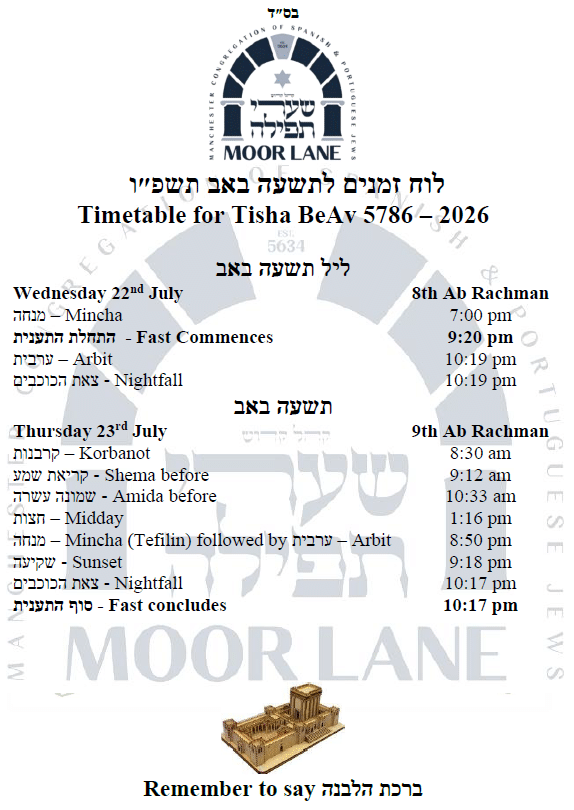
ערב תשעה באב
נהגו לשבת על הקרקע בסעודה המפסקת, וראוי שלא לשבת על הקרקע ממש, משום שיש אומרים שעל פי דברי המקובלים אין לנהוג כן, אלא ישב על הקרקע ויניח תחתיו שמיכה או שטיח, ולא ישבו שלושה אנשים ביחד בסעודה המפסקת, כדי שלא יתחייבו בזימון, אלא ישבו כל אחד במקום אחר.
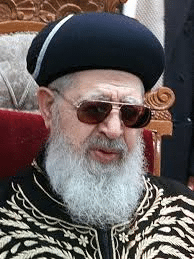
ומרן זצ”ל היה יושב בסעודה מפסקת על הקרקע לבדו, ודומה כמי שמתו מוטל לפניו.
כל האמור לעיל אינו אלא בסעודה שאוכל אחר חצות היום, והיא סעודה מפסקת, כלומר, שהיא הסעודה האחרונה שלפני הצום, אבל אם אוכל אחריה עוד סעודה, אפילו אם אוכלה אחר חצות היום, אינה נחשבת לסעודה המפסקת. וכן אם אוכל קודם חצות היום, אפילו אם אין בדעתו לאכול סעודה נוספת עד הצום, אינה נחשבת לסעודה מפסקת.
The Laws of Erev Tisha Be’av
Taking a Stroll
The Sefer Ha’Minhagim, authored by Rabbeinu Eizik Tirna, states that one should not leisurely stroll around on Erev Tisha Be’av. The Rama, some great Acharonim, and seemingly Maran Ha’Chida as well, rule accordingly.
The Last Meal Before the Fast
On Erev Tisha Be’av during the “Seuda Ha’Mafseket,” the last meal before the fast (which takes place following halachic midday, as we shall discuss), our Sages prohibited eating meat and drinking wine. It is customary to prohibit eating fish and drinking beer or other alcoholic beverages during this meal as well. If one usually drinks a small amount of an alcoholic beverage after one’s meal in order to aid in the digestion of the food (such as whiskey), if one wishes to do so following the last meal before the fast, one has on whom to rely.
Two Cooked Foods
Our Sages also prohibited eating two cooked foods during the last meal before the fast of Tisha Be’av. Even two eggs, one soft-boiled and one hard-boiled, are considered to be two cooked foods in this context. Nevertheless, if two foods were cooked in one pot in a way that is common during the rest of the year, such as a vegetable soup, peppers stuffed with rice, and the like, they are considered to be only one cooked food and they may be eaten during this meal. Similarly, our Sages prohibited only two “cooked” foods as opposed to baked goods, such as bread, which are not considered “cooked” foods in this context. Additionally, one may eat several kinds of fruits and vegetables during this meal. However, if the fruits or vegetables were cooked, they may not be eaten.
Some Customs Related to the Last Meal Before the Fast
Some customarily eat bread with ashes (made from burnt paper and the like) during the last meal before Tisha Be’av. Our Sages tell us (Ta’anit 30a) that during this meal, Rabbi Yehuda bar Il’ai would eat dry bread dipped in salt and drink a pitcher of water while seated between the oven and the furnace (the gloomiest place in the house) as though his deceased relative lay before him.
It is customary to eat the “Seuda Ha’Mafseket” while seated on the floor. Nevertheless, one should not sit directly on the floor; rather, one should sit on a blanket or carpet. This is recommended by some Mekubalim. Similarly, three men should not sit and eat together so that they do not become obligated in “Zimmun.” Rather, everyone should sit and eat separately.
Maran zt”l would sit alone on the floor as he ate the “Seuda Ha’Mafseket” and his demeanor was as though he was sitting next to a deceased relative.
Everything we have mentioned above only applies to a meal eaten after halachic midday of Erev Tisha Be’av and only if this meal is the last meal before the fast of Tisha Be’av. However, if one plans to eat another meal after this one, although this current meal is being eaten past halachic midday, it is not considered the “Seuda Ha’Mafseket.” Similarly, if this meal is eaten before halachic midday, although one does not intend to eat another meal before the fast, it is not halachically considered to be the “Seuda Ha’Mafseket” (meaning that the above laws do not apply to it).
Important Note: Nevertheless, what many people commonly do on Erev Tisha Be’av is eat a full meal with many different cooked dishes close to the fast and afterwards sit on the floor to eat an egg and then recite Birkat Hamazon or first recite Birkat Hamazon and then wash again for bread, sit on the floor, and eat some bread and an egg after which they proceed to the synagogue for Tisha Be’av prayers. This is an error and is forbidden according to Halacha, for the Poskim tell us that when we say that as long as one intends to eat another meal before the fast, the previous meal is not considered the Seuda Ha’Mafseket, this only applies when one plans to have an established meal afterwards; however, if one knows the meal one is eating currently is the last actual meal one is having before the fast and only intends to eat an egg or another light snack for ceremonial purposes only and not because one is actually hungry, the previous established meal will retain the Seuda Ha’Mafseket status and it will have been forbidden to eat two cooked foods during that meal. Therefore, the correct procedure is to eat the last established meal (even with several cooked foods) before halachic midday, before going to pray early Mincha, or at least early enough in the day and leave some room so that one will become hungry again closer to the evening so that one may eat another established meal with appetite; this later meal will then be considered the proper Seuda Ha’Mafseket where one may eat only one cooked food and it will have been permissible to eat several cooked foods during the previous meal.
 | Virus-free.www.avg.com |