

Newsletter Parashat Vayakhel – Pekude – Shabbat Mevarechim – Parashat HaChodesh

בס״ד
Moor Lane - Logo.JPG

image.png
ק׳ ק׳ שׁערי תפילה
Have a look at our website 
******

image.png
שבת מברכים

THIS SHABBAT 

is  

שבת מברכים

Reminder
there will be NO derasha this week
instead we will have the 
kahal recitation of Sefer Tehilim
*******

image.png

THIS SHABBAT

we take out 2 Sefarim

(1) Parashat Vayakhel  – Pekude

(2) Parashat HACHODESH

The haftara THIS week will be the 

Haftara of HACHODESH

********
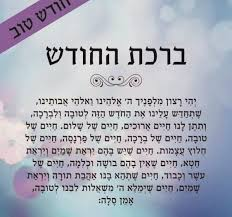
ראש חודש
image.png
Rosh Chodesh Nisan
Wednesday night / Thursday 19th Mar
***********

🪉Moor Lane Women’s Nach Group🪉

PHOTO-2026-03-10-21-41-00.jpg

*******

🕯️שבת🕯️

לוח זמני תפלה לחורף  תשפ״ו

Winter Timetable 5786 – 2025/26

מוצאי שבת

ערבית

(מוצ״ש)

שקיעה

מנחה שבת

סוף זמן קריאת שמע

הדלקת נרות

מנחה וקבלת שבת

תאריך

שבת פרשת

Shabbat

Ends

Arbit

Sunset

Minha

Shema before

Candle Lighting

Minha & Kabbalat Shabbat

Date

Parasha

PM

PM

PM

PM

AM

PM

PM


7:00

6:56

6:10

5:35

9:22

5:54

5:54

13/14 Mar

ויקהל־פקודי  (ש״מ) (החודש)

*****

🕯️WINTER TIMES FOR SHABBAT MORNING🕯️

שבת

קרבנות

8:45 am
הודו

9:00 am

********

📜
Parasha Overview

Vayakhel

Moshe Rabbeinu exhorts the Bnei Yisrael to keep Shabbat, and requests donations for the materials for making the Mishkan. He collects gold, silver, precious stones, skins and yarn, as well as incense and olive oil for the Menorah and for anointing. The princes of each tribe bring the precious stones for the Kohen Gadol's breastplate and ephod. G-d appoints Betzalel and Oholiav as the master craftsmen. Bnei Yisrael contribute so many resources, such that Moshe begins to refuse donations. Special curtains with two different covers were designed for the Mishkan's roof and door. Gold-covered boards in silver bases were connected, forming the Mishkan's walls. Betzalel made the Holy Ark (which contained the Tablets) from wood covered with gold. On the Ark's cover there were two figures facing each other. The Menorah and the table with the showbreads were also of gold. Two Altars were made: a small incense Altar of wood, overlaid with gold, and a larger Altar for sacrifices, made of wood covered with copper.

Pekude 

The Book of Shemot concludes with this Torah portion. After finishing all the different parts, vessels and garments used in the Mishkan, Moshe gives a complete accounting and enumeration of all the contributions and of the various clothing and vessels that had been fashioned. Bnei Yisrael bring everything to Moshe. He inspects the handiwork and notes that everything was made according to G-d’s specifications. Moshe blesses the people. G-d speaks to Moshe and tells him that the Mishkan should be set up on the first day of the first month, i.e., Nissan. He also tells Moshe the order of assembly for the Mishkan and its vessels. Moshe does everything in the prescribed manner. When the Mishkan is finally complete with every vessel in its place, a cloud descends upon it, indicating that G-d's glory was resting there. Whenever the cloud moved away from the Mishkan, Bnei Yisrael would follow it. At night the cloud was replaced by a pillar of fire.

*******
image.png  

Halachot from Maran Rabbi Ovadia Yosef Ztz'l

חג הפסח התשפ”ו

ההכנות לפסח מעכשיו

נהגו כל ישראל, לנקות את בתיהם היטב היטב זמן רב לפני חג הפסח, כדי שלא יגיעו לידי איסור חמץ, וכדי לכבד את החג בבית נקי, שישבו בליל הסדר כבני מלכים. וכל הנקיונות שעושים לכבוד הפסח, בתוך שלושים יום לחג הפסח, הרי הם בכלל מצות “ביעור חמץ”. וכתב מרן החיד”א בספר עבודת הקודש (אות קצו), בשם רבותינו זכרונם לברכה, שכל אדם הנזהר מחמץ בפסח שלא יכשל בו בשום אופן, בטוח הוא שתעלה לו שנה טובה, כי ימי הפסח הם שורש לכל השנה כולה.

ובפרט זכו במצוה זו נשים צדקניות, שמקפידות הקפדה יתירה בנקיון הבית לכבוד הפסח. ומסופר, שפעם ראה הגאון מבריסק, רבי יצחק זאב הלוי סולובייצ'יק, שאשתו מברישה את אחד הכסאות בבית במאמץ רב, אמר לה, לא צריך כל כך! השיבה לו, אילו הייתי שומעת בקולך, הלא הייתי עלולה להכשל בחמץ בפסח!

אך יש לדעת שיש עיקר ויש טפל, והמקומות שחשוב במיוחד לנקותם בהקפדה רבה, הם המקומות שבאמת יש חשש שיגיע לשם חמץ, ובפרט במטבח ובכלים שעתידים להשתמש בהם לכבוד הפסח, וכן במוצרי המיוחדים לפסח. אבל שאר עניני הנקיון, כמו צביעת הבית וניקוי חלונות בצורה יסודית וכדומה, אינם חשובים כל כך כמו הנקיונות ההכרחיים באמת על פי ההלכה.

איסור אכילת והנאה מן החמץ

נאמר בתורה (שמות יג) לענין ימי חג הפסח “מַצּוֹת יֵאָכֵל אֵת שִׁבְעַת הַיָּמִים וְלֹא יֵרָאֶה לְךָ חָמֵץ וְלֹא יֵרָאֶה לְךָ שְׂאֹר בְּכָל גְּבֻלֶךָ”. (חמץ, הכוונה לבצק מחמשת מיני דגן ששהה די זמן עד שהחמיץ. ושאור, הכוונה לבצק שהחמיץ וטעמו רע, ומשתמשים בו כדי להחמיץ עיסה אחרת, כמו שעושים בזמנינו “מחמצת שאור”).

ובגמרא במסכת פסחים (דף כא: ועוד), למדו רבותינו ממדרש הפסוקים, שהחמץ בפסח אסור באכילה, וכמו כן הוא אסור בהנאה, שאפילו אם הוא אינו אוכל מן החמץ בפסח, אסור לו למכור את החמץ לגוי, מפני שהוא נהנה במכירה זו, וכן הדין שאסור ליהנות בשום צורה מהחמץ. וכל האוכל חמץ בפסח עונשו כרת, שהוא עונש חמור מאד.

חמץ בפסח – אפילו באלף אינו בטל

כל כך חמור איסור חמץ בפסח, עד כדי כך, שחמץ שנתערב עם מאכלים אחרים, אפילו באלף לא בטל, מה שאין כן בשאר איסורים.

ולדוגמא, באיסור אכילת דם, שאם נפל גרם אחד של דם לקדירה עם תבשיל, אם יש בתבשיל ששים גרם של היתר כנגד הדם, הרי הדם בטל בתוכו (“בטל בששים”), והתבשיל מותר. ואילו חמץ בפסח אם יש אלף כנגדו, כגון פירור לחם בתוך סיר גדול עם התבשיל, הכל אסור באכילה מפני אותו פירור של חמץ שנתערב שם.

לכן יש להזהר מאד בעניני חמץ בפסח, לקנות אך ורק מצרכי מזון שאין בהם כל חשש תערובת חמץ, ושנמצאו תחת השגחה אחראית. וכן אין לסמוך על אדם שאינו יהודי שומר תורה ומצוות, כשאומר על מאכל מסוים שאין בו חשש חמץ, וכגון שמעיד על תבלין מסוים שאין בו שום תערובת וכדומה, וכפי שכבר הוכח בעבר, שאנשים נכשלו באיסור חמץ משום שסמכו על החנווני בשעה שאין לו כל נאמנות.

וכתב מרן רבינו עובדיה יוסף זצ”ל, שנכון שלא לקנות שום תוצרת המיועדת לפסח בלי הכשר על כל מוצר לחג הפסח, וכן הדין אף בדברים שנראה שאין בהם חשש, כגון ליקר, אראק, וכדומה. ובזמנינו אפילו במוצרים הנראים הכי “תמימים”, יש חששות רציניים מבחינת כשרות במשך כל ימות השנה, ובפרט בימות הפסח, כי בכל מוצר מעורבים הרבה מאד חומרים מחומרים שונים, והדברים ידועים.

כלים הבלועים מחמץ

אסור להשתמש בפסח בכלים שמשתמשים בהם בכל ימות השנה, שהרי הם בלועים מחמץ, מכיון שבזמן שתבשיל חם נמצא בתוך הכלי, הרי דפנות הכלי בולעות ממנו טעם חמץ, (כשם שהן בולעות טעם בשר או חלב), ולכן יש להשתמש בכלים מיוחדים לפסח, שלא השתמשו בהם למאכלי חמץ, או להכשיר את כלי החמץ לפסח, כל כלי כפי הדינים המיוחדים לו.


The Holiday of Pesach-5786

Preparations for Pesach Start Now
The entire Jewish nation customarily cleans their houses well for Pesach so as not to encounter the prohibition of Chametz on Pesach and in order to honor this festive holiday with a clean house, so that the family can sit around the Seder table like kings. All Pesach cleaning performed within thirty days of Pesach is included in the Mitzvah of eliminating Chametz. Indeed, Maran Ha’Chida writes in his Sefer Avodat Ha’Kodesh (Section 196) in the name of our Sages that one who is extremely meticulous with regards to not transgressing the prohibitions of Chametz on Pesach is guaranteed to have a good year, for the days of Pesach are the root for the rest of the days of the year.

This Mitzvah especially belongs to righteous Jewish women who take extra care in cleaning the house for Pesach. It is told over that once, the great Brisker Rav, Hagaon Harav Yitzchak Zev Ha’Levi Soloveichik zt”l, once saw his wife exerting herself greatly while brushing a dining room chair. He told her, “You do not need to do that so much!” She replied, “If I would listen to you, I could have transgressed the prohibition of retaining Chametz on Pesach!”

However, one must be able to distinguish between the primary and secondary. The most important places to clean are those where Chametz is actually brought in and used throughout the year, especially the kitchen and dishes meant for Pesach use. On the other hand, other forms of “Pesach cleaning,” such as painting the house or scrubbing the window shades etc., are not as essential as the other forms of cleaning, as we have established.

The Prohibition to Eat and Benefit from Chametz
The Torah (Shemot 13) states regarding the holiday of Pesach: “Matzot shall be eaten for seven days; neither leaven nor sourdough shall be seen in your borders.”

Our Sages taught in Masechet Pesachim (21b among other places) through expounding certain verses that not only is Chametz prohibited for consumption on Pesach, it is also forbidden to benefit from Chametz on Pesach, meaning that even if one does not actually eat Chametz on Pesach, he still may not sell it to a non-Jew and the like on Pesach for this would mean that he is benefitting from this sale. Consumption of Chametz on Pesach is punishable by Karet (severance of one’s soul from the Jewish nation).

Chametz on Pesach Cannot Even be Nullified by a Ratio of One to One Thousand
The prohibition of Chametz on Pesach is so severe that if Chametz gets mixed into other foods, it cannot be nullified even by a ratio of one to one thousand, which is not the case regarding other prohibitions.

For instance, regarding the prohibition of consuming blood, if one gram of blood falls into a pot of food, if there are sixty grams of food present against the one gram of blood that fell into it, the blood is considered nullified, and this food is permitted for consumption. Regarding Chametz on Pesach, however, even if the food present is one thousand times the amount of the Chametz that fell into it, for instance if a tiny crumb of Chametz falls into a large pot of food, the entire pot of food becomes prohibited for consumption because of the crumb of Chametz that became mixed into it.

Therefore, one must be extremely careful regarding Chametz on Pesach to buy only food products that one is completely certain do not contain Chametz mixtures and are certified by a reliable Kashrut organization. Similarly, one should not rely on a non-Torah-observant Jew when he tells him that a certain food does not contain any Chametz, for instance if he says that a certain spice does not have any Chametz mixed into it, for it has already occurred that some people have transgressed the prohibition of Chametz because they had relied on a grocer with no believability. Maran Harav Ovadia Yosef Shlit”a writes that it is proper for one not to purchase any food product designated for Pesach use without a reliable Kosher for Passover certification on every single item. The same applies even to things that do not seem problematic such as liquor, Arack, and the like. Nowadays, even products that look “innocent” pose major Kashrut problems during the rest of the year and especially during Pesach, as all products contain a multitude of ingredients, as we all know.

Dishes Which Have Absorbed Chametz
One may not use the same dishes that he uses during the rest of the year on Pesach, for these dishes have Chametz absorbed in them since when a hot food is inside these dishes, the walls of these dishes absorb its Chametz flavor, just as they absorb dairy or meat flavor. Thus, one must either use dishes that are specially designated for Pesach that have not been used for Chametz or kosher (make kosher for Pesach) his Chametz dishes. This will be better explained in following Halachot.


Newsletter Purim 5786 – Parashat Ki Tisa – Parashat Para

בס״ד
Moor Lane - Logo.JPG

image.png
ק׳ ק׳ שׁערי תפילה
Have a look at our website 
******

image.png

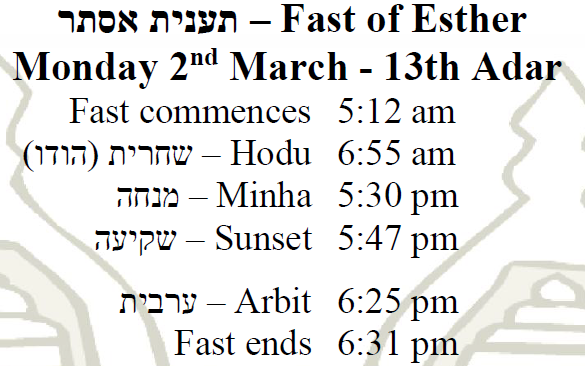
Taanit Esther

image.png

****

image.png
image.png

****

image.png
Purim

image.png
image.png

****
image.png

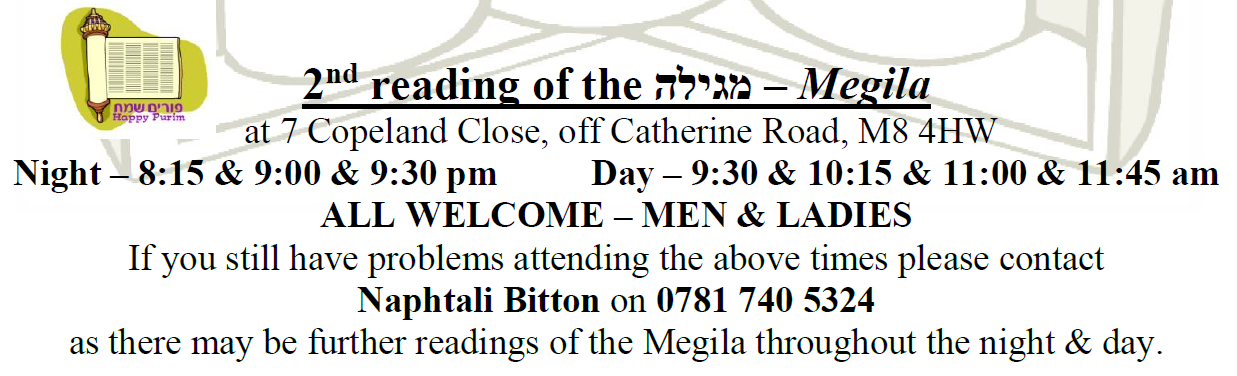
2nd Reading of the Megila

for Men & Ladies

Night 

8:15 – 9:00 – 9:30 PM

Day

9:30 – 10:15 – 11:00 – 11:45 AM

🎉If none of the above times work for you 

Please call Naphtali, as he may still read it again 

during the day just for YOU

image.png

****

image.png

Zecher Lemachatzit Hashekel


 1) One who did not give the Zecher Lemahatzit Hashekel before Purim should give it before the Megila reading. 


2) One should be careful not to refer to the Zecher Lemahatzit Hashekel as mahatzit hashekel. 


3) One should give an amount of money equal to the value of 9 grams, or about 1/3 of an ounce, of pure silver. 


4) Ideally one should give the zecher lemahatzit hashekel using three coins since in Parshat Shekalim it says “terumat Hashem” three times.


 5) Someone who can't afford to give the value of the silver can give an actual half shekel coin. 


6) Anyone over twenty is required to give the zecher lemahatzit hashekel. 


7) Some Poskim maintain that once a child reaches bar mitzvah he is also required to give it. 


8) One should ideally also give a separate one for each child in the household. 

Therefore the father of a family of five should ideally give five times the value of 9 grams of pure silver. 

One for himself, one for his wife, and one for each of the children. 


9) If he is not able to do so he should give the half shekel for himself and he should give a little more (even just a few coins) for the rest of his household. 

The appropriate sum that one should donate in commemoration of the Half-Shekel this year (5786) is approximately $23 (USD) per person(For those residing in Israel, based on the recent USD to ILS conversion rate, the sum this year is approximately 82 ILS per person.)  The great Rishon Le’Zion, Hagaon Rabbeinu Yitzchak Yosef Shlit”a, writes that it is best to add the value of sales tax in order to cover all of the opinions.

The way to calculate this sum is as follows: A troy ounce of silver consists of 31.1 grams. Thus, the price of one troy ounce of silver [recently approximately $78 USD] must be divided by 31.1 and then multiplied by nine in order to find the updated price of nine grams of silver, which is the value of actual Half-Shekel coin, as we have mentioned in past years. There is a disagreement among the Poskim whether the price per ounce of silver should be calculated including applicable sales tax. Halachically speaking, Maran Rabbeinu Ovadia Yosef zt”l has instructed us that one may be lenient and calculate this sum excluding tax. However, if one acts stringently and donates a larger sum to charity, one shall surely be blessed from above.

The minimum amount of the donation for the commemoration of the Half-Shekel for small children is the value of a coin which is half of the local currency. Example: In the United States this would be a half-dollar coin, hence, the donation would equal fifty cents. (In Israel, this would be the Half-Shekel [NIS] coin.)

This Year 5786

Zecher Lemahatzit Hashekel

is around 

£ 20

*******

IMG_5465.JPG

image.png
image.png
Below is the link for our Bet Hakeneset
👇👇👇👇👇click below👇👇👇👇👇

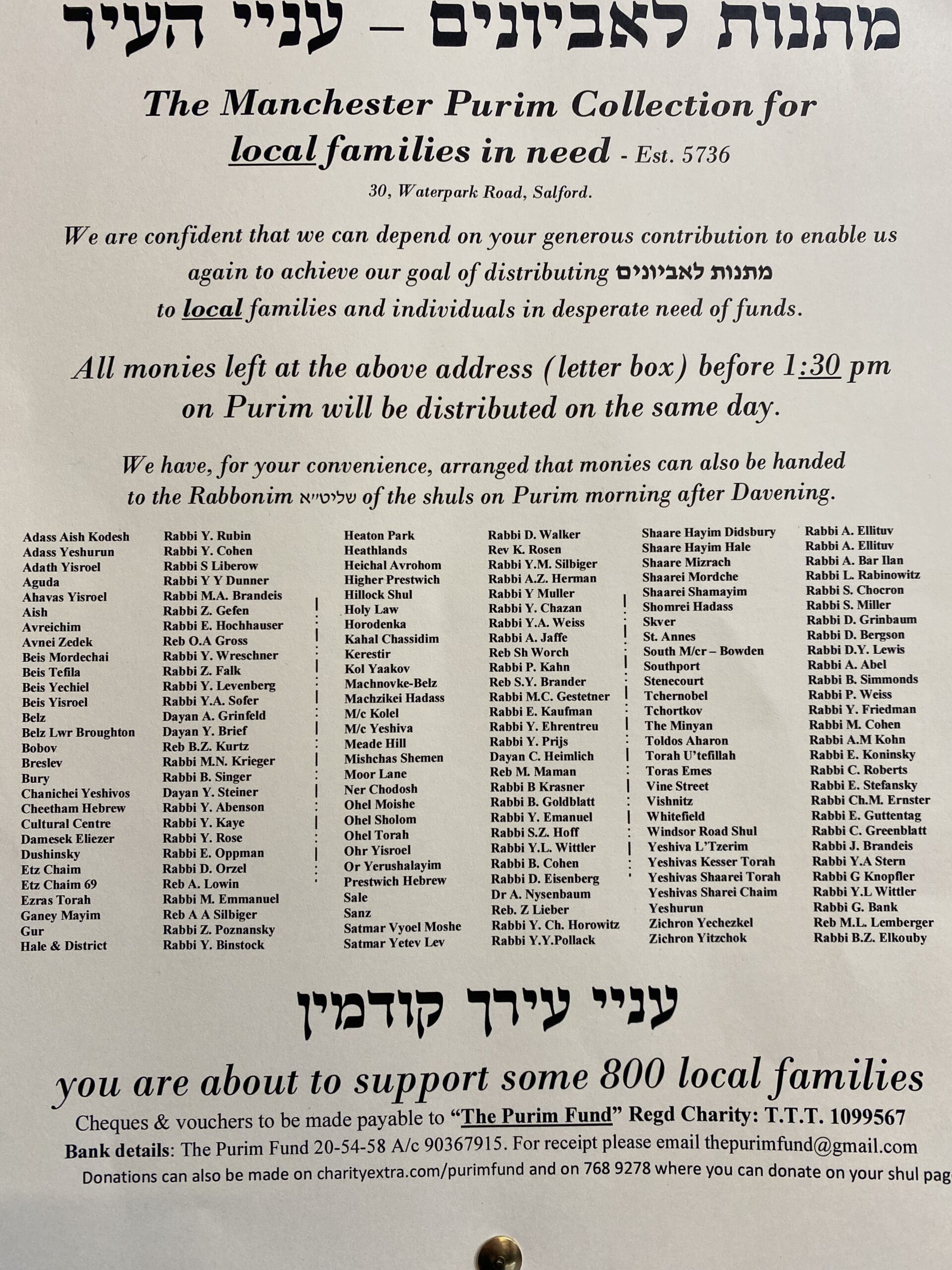
Purim Fund 2026 – Charity Extra

*****

image.png

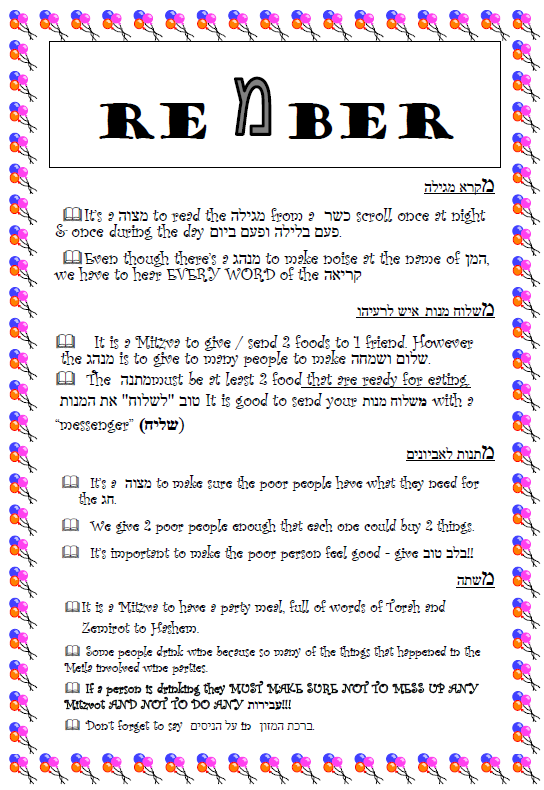
Mitzvot On Purim

מקרא מגילה

&   It’s aמצוה  to read theמגילה  from a כשר  scroll once at night & once during the day – פעם בלילה ופעם ביום.

&   Even though there’s aמנהג  to make noise at the name of המן, we have to hear EVERY WORD of the קריאה


משלוח מנות  איש לרעיהו


&    It is a מצוה to give / send 2 foods to 1 friend. 

However theמנהג  is to give to many people to make שלום ושמחה.


&   Theמתנה  must be at least 2 types of food that are ready for eating.

טוב “לשלוח” את המנות  – It is good to send your משלוח מנות  with a “messenger” (שליח)

מתנות לאביונים

&   It’s a מצוה  to make sure the poor people have what they need for the חג.

&   We give 2 poor people enough that each one could buy 2 things.

&   It’s important to make the poor person feel good – give בלב טוב!!

משתה

&    It is a מצוה to have a party meal, full of words of תורה and זמירות to ה׳.

&   Some people drink wine because so many of the things that happened in the מגילה  involved wine parties.

&   If a person is drinking they 

MUST MAKE SURE NOT TO MESS UP ANY Mitzvot 

&   Don’t forget to say על הניסים  in  ברכת המזון.

*****

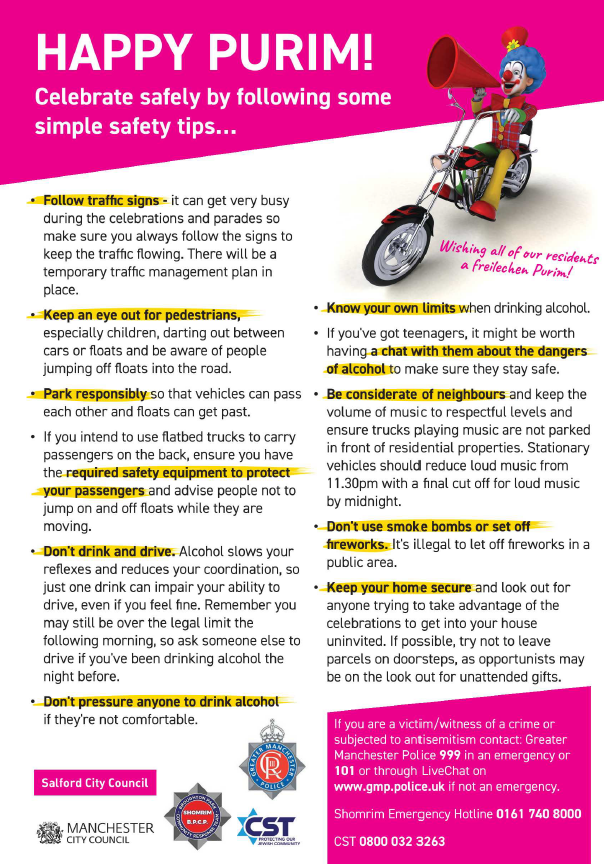
Important Taraffic Information for Purim

image.pngimage.png


*******

🗓️

🕯️שבת🕯️

לוח זמני תפלה לחורף  תשפ״ו

Winter Timetable 5786 – 2025/26

מוצאי שבת

ערבית

(מוצ״ש)

שקיעה

מנחה שבת

סוף זמן קריאת שמע

הדלקת נרות

מנחה וקבלת שבת

תאריך

שבת פרשת

Shabbat

Ends

Arbit

Sunset

Minha

Shema before

Candle Lighting

Minha & Kabbalat Shabbat

Date

Parasha

PM

PM

PM

PM

AM

PM

PM


6:47

6:43

5:57

5:20

9:31

5:41

5:41

6/7 Mar

כי תשא (פרה)  

🕯️WINTER TIMES FOR SHABBAT MORNING🕯️

שבת

קרבנות

8:45 am
הודו

9:00 am

*******

Parasha Overview

Moshe conducts a census by counting each silver half-shekel donated by all men age twenty and over. Moshe is commanded to make a copper laver for the Mishkan. The women donate the necessary metal. The formula of the anointing oil is specified, and G-d instructs Moshe to use this oil only for dedicating the Mishkan, its vessels and Aharon and his sons. G-d selects Betzalel and Oholiav as master craftsmen for the Mishkan and its vessels.

The Jewish People are commanded to keep the Shabbat, an eternal sign that G-d made the world. Moshe receives the two Tablets of Testimony on which are written the Ten Commandments.

The mixed multitude who left Egypt with the Jewish People panic when Moshe's descent seems to be delayed, and so they force Aharon to make a golden calf for them to worship. Aharon stalls, trying to delay them. Hashem tells Moshe to return to the people immediately, threatening to destroy everyone and build a new nation from Moshe. When Moshe sees the camp of idol-worship, he smashes the Tablets and destroys the golden calf. The sons of Levi volunteer to punish the transgressors, executing 3,000 men.

Moshe ascends the mountain again to pray for forgiveness for the people, and G-d accepts his prayer. Moshe sets up the Mishkan and G-d's clouds of glory return. Moshe asks G-d to show him the rules by which he conducts the world, but he is granted only a small portion of this request. G-d tells Moshe to hew new Tablets, and reveals to him the text of the prayer that will invoke Divine mercy.

Idol worship, intermarriage and the combination of milk and meat are prohibited. The laws of Pesach, the first-born, the first-fruits, Shabbat, Shavuot and Succot are taught. When Moshe descends with the second set of Tablets, his face is luminous as a result of contact with the Divine.

Ohr Somayach Institutions www.ohr.edu

*******
image.png

Halachot from Maran Rabbi Ovadia Yosef Ztz'l

משפחה ומשפחה – ימי מלחמה

נאמר במגילת אסתר: “וְהַיָּמִים הָאֵלֶּה נִזְכָּרִים וְנַעֲשִׂים בְּכָל דּוֹר וָדוֹר מִשְׁפָּחָה וּמִשְׁפָּחָה מְדִינָה וּמְדִינָה וְעִיר וָעִיר וִימֵי הַפּוּרִים הָאֵלֶּה לֹא יַעַבְרוּ מִתּוֹךְ הַיְּהוּדִים וְזִכְרָם לֹא יָסוּף מִזַּרְעָם”. ועל מה שנאמר “משפחה ומשפחה” פירש רש”י: “מתאספין יחד ואוכלים ושותין יחד, וכך קבלו עליהם, שימי הפורים לא יעברו”. כלומר, קבלו עליהם היהודים שהיו בזמן מרדכי ואסתר, שבכל הדורות יתכנסו כל בני המשפחה יחד, משום שכאשר יושבים כמה בני משפחה יחד, גדלה השמחה, כפי שעושים במסיבות וסעודות מיוחדות. וביום פורים, מצוה לשמוח.

לכן כתב בספר “סדר היום”, שבסעודת פורים, יתעכב על שולחנו לאכול ולשתות יותר ממה שרגיל, ויקבץ כל אנשי ביתו וחבריו על שלחן אחד, כדרך המסיבה שמתאספים יחד הרבה אנשים לעשות סעודה, ומתוך כך מתרבה השמחה, אבל כאשר אדם יושב יחיד וגלמוד, אי אפשר לשמוח כראוי. והפוסקים הביאו את דברי “סדר היום” הללו. ולכן כל אדם יעשה כפי שיש ביכולתו, להשתדל להזמין חברים וקרובים יראי שמים לסעוד עם בני משפחתו, וישמחו יחד ויודו לה' על נסיו שבכל יום עמנו.

סעודת פורים שנמשכת עד מוצאי פורים

דנו הפוסקים, כאשר אוכלים סעודת פורים, והסעודה נמשכת עד מוצאי פורים, האם יש להזכיר “על הנסים” בברכת המזון, או לא? ודיון זה קיים בכל שבוע ושבוע, כאשר סעודה שלישית של שבת נמשכת עד למוצאי שבת, האם יש להזכיר “רצה והחליצנו” בברכת המזון או לא?

ובארחות חיים (הלכות פורים סימן לה) כתב בשם רבינו יצחק מקורביל, שאפילו אם סעודת פורים נמשכה עד שעה מאוחרת, יש לומר “על הנסים” בברכת המזון. וכן כתב בהגהות מיימוני (פ”ב מהל' מגילה) בשם מהר”ם מרוטנבורג. אולם רבינו הרא”ש בתשובה (כלל כב סי' ו) כתב, שאם יצא כבר יום פורים, אין להזכיר “על הנסים” בברכת המזון. שהרי כעת כבר אין זה פורים, ולא שייך לומר “שעשית לאבותינו בימים ההם בזמן הזה”.

וכדברי הרא”ש פסק רבינו הטור (סימן תרצה). שאם התחיל סעודתו ביום ונמשכה עד הלילה לא יאמר על הנסים בברכת המזון.

ומרן השלחן ערוך, הביא את דברי כל הפוסקים הללו בבית יוסף (סימן קפח), ופסק בשלחן ערוך לגבי שבת, שאם היה אוכל עד שיצאה שבת, מזכיר “רצה והחליצנו” בברכת המזון. וכן פסק לגבי פורים (בסימן תרצה), שאם התחיל סעודת פורים ביום, ונמשכה עד הלילה, אומר על הנסים, כי תמיד הולכים אחרי תחילת הסעודה. וכן הלכה, הן למנהג הספרדים והן למנהג האשכנזים, שאם נמשכה הסעודה עד שעה מאוחרת, יש להזכיר “על הנסים”, אף על פי שאין זה יום פורים ממש. מכל מקום, הסעודה הזו, היא סעודה ששייכת לזמן של פורים. ומי שטעה ולא הזכיר “על הנסים” בפורים, אינו חוזר לברך שוב. וכן אם שכח בתפלה, אינו חוזר להתפלל שוב.

– – – – – – – – – –

ימי מלחמה

מאחר והימים מתוחים מאד, ומעת לעת נשמעות אזעקות.

לכן נבאר את הדינים הנוגעים לקריאת המגילה בזמן אזעקה.
כאשר נשמעת אזעקה, ולא נמצאים במקום מוגן, יש לעזוב את המקום ולפנות למרחב מוגן. יש להשתדל שלא לומר שום דבר שאינו הכרחי. לאחר שניתן, יש לשוב לבית הכנסת ולקרוא את המגילה מתחילת הפסוק שבו עצרו.
במקרה והקורא במגילה, אינו מסוגל להמשיך לקרוא, יש לחזור מתחילת המגילה, ללא ברכות.

מצוות מתנות לאביונים ומשלוח מנות וסעודת פורים ניתן ברוך ה' לקיים ללא בעיה.

וה' יבשרנו בשורות טובות, ומי שעשה נסים לאבותינו בימים ההם, הוא יראנו נסים ונפלאות, ויראנו את קץ הפלאות, נשמע ונתבשר בשורות טובות בנפילת כל אויבינו כמאז, ובנצחון ישראל, והשראת השכינה, בגאולה השלימה, במהרה בימינו אמן.


Every Family – Directions for Purim in Light of the War with Iran

The verse in Megillat Esther states, “Consequently, these days are recalled and observed in every generation, by every family, in every province, and in every city; and these days of Purim shall never cease among the Jews and their memory shall never perish among their descendants.” Rashi comments on the words “By every family”: “They gather together and eat and drink together; this is the manner in which they accepted upon themselves that the days of Purim shall not cease.” This means that the Jews in the times of Mordechai and Esther accepted upon themselves that in every subsequent generation, all family members would gather together in feasting, for when the entire family gathers together, this enhances the joyful occasion, as they would do for special parties and events. It is therefore a Mitzvah to rejoice in this way on Purim day.

Thus, the Sefer Seder Ha’Yom (authored by Rabbeinu Moshe ben Machir, a great Mekubal who lived in the times of the saintly Ari z”l) writes that on Purim, one should stay at one’s table longer than one usually would and eat and drink more that one is generally accustomed to. One should likewise gather all one’s family and friends around one table as one would at special parties, for this greatly enhances one’s joy on Purim day. However, when one sits all alone, one cannot truly rejoice. The Poskim quote these words of the Seder Ha’Yom. Thus, one must do his utmost to invite one’s friends and relatives to partake of the Purim feast along with one’s family and use this opportunity to rejoice and offer thanksgiving to Hashem for His never-ending miracles.

When the Purim Feast Continues into Motza’ei Purim
The Poskim discuss whether or not one should recite “Al Ha’Nissim” in Birkat Hamazon following the Purim feast which continues on into Motza’ei Purim. This is a question that can be posed almost every week when Seudah Shelishit (the third Shabbat meal) continues on into Motza’ei Shabbat. Should “Retzeh Ve’Hachalitzenu” be inserted into Birkat Hamazon or not in such a situation?

The Orchot Chaim (Hilchot Purim, Chapter 35) writes in the name of Rabbeinu Yitzchak of Corbeil that even if the Purim feast extends until several hours after Purim has already ended, one should recite “Al Ha’Nissim” in Birkat Hamazon. The Hagahot Maimoni (Chapter 2 of Hilchot Megillah) rules likewise in the name of his teacher, Maharam of Rottenberg. Nevertheless, the Rosh writes in a response (Chapter 22, Section 6) that if Purim has already ended, one should not recite “Al Ha’Nissim” since it is no longer Purim and it would not make sense to recite “That you have performed for our forefathers in those days, at this time.”

The Tur (Chapter 695) rules in accordance with his father, the Rosh, that if one began the Purim feast on Purim day and the meal continues into the following night, one should not recite “Al Ha’Nissim” in Birkat Hamazon.

Maran quotes all of these Poskim in his commentary, Bet Yosef (Chapter 188), and rules in his Shulchan Aruch (ibid.) regarding Shabbat, “If one was eating and Shabbat has concluded, one should insert ‘Retzeh Ve’Hachalitzenu’ into one’s Birkat Hamazon.” Maran rules likewise regarding Purim (in Chapter 695) that if one began the Purim feast on Purim day and the meal extends into the following night, one should recite ‘Al Ha’Nissim’ in Birkat Hamazon, for the determining factor regarding this law is the beginning of the meal. Thus, this is indeed the Halacha for both Ashkenazi and Sephardic Jews in that even if the meal extends well into the night, one should nevertheless recite “Al Ha’Nissim” in Birkat Hamazon. Although it is technically no longer Purim, this meal is nonetheless connected to Purim day. If one forgets to insert “Al Ha’Nissim” in Birkat Hamazon of Purim, one would not repeat Birkat Hamazon. The same law applies regarding inserting “Al Ha’Nissim” into all Amida prayers of Purim in that if one forgot to do so, one would not repeat one’s Amida prayer.

– – – – – – – – – – – – – – –

Directions for Purim in Light of the War with Iran

During this stressful time when sirens sound every so often, let us discuss the Halacha regarding hearing a siren during Megillah reading. If Megillah reading is being held outside a protected space and a siren sounds, those present should immediately seek shelter in a protected space. One should make an effort not to speak any words that are not absolutely necessary. Whenever possible, the congregation should return to the synagogue and continue the Megillah reading from the beginning of the verse where the Chazzan left off. In the event that the Chazzan cannot continue reading, someone else should repeat from the beginning of the Megillah, but without Berachot.

The Mitzvot of Matanot La'Evyonim, Mishloach Manot, and the Purim feast should be able to be fulfilled without any issue.

May Hashem bring about the downfall of all our enemies and perform miracles for us as He has during those days at this time and proceed to usher in the Ultimate Redemption, Amen!