Newsletter Parashat Nitzavim – Shabbat Hagadol

Moor Lane Logo New Best.JPG

Announcements

***

image.png

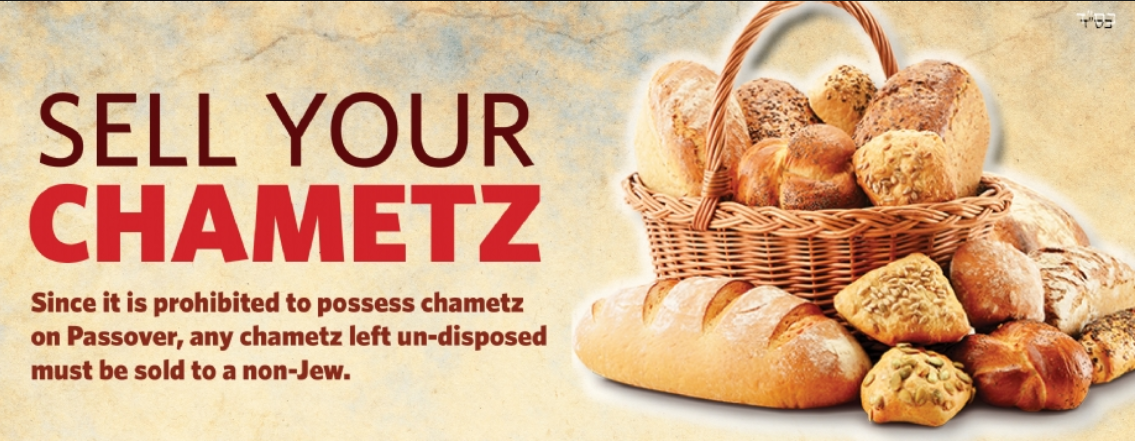
Mechirat Chametz

image.png

The Mechirat Chametz Form

is attached to this email and should be handed directly to

David Menashe or Benjamin Hassan

or alternatively can be taken directly to the 

Manchester Bet Din

1st floor in the Cultural Centre, Bury Old Road

Completed forms should NOT be left in the boxes of 

David or Benjamin in the Bet Hakeneset 

as to avoid confusion 

and should NOT be sent to Moorlanenews 

as emails are not read every day.

***

image.png
Members are kindly reminded to clean out their private boxes in the Bet Hakeneset
 as these will NOT be clean by anyone 
and it is each individuals responsibility to be clean of Chametz
Tizke Lemitzvot

***

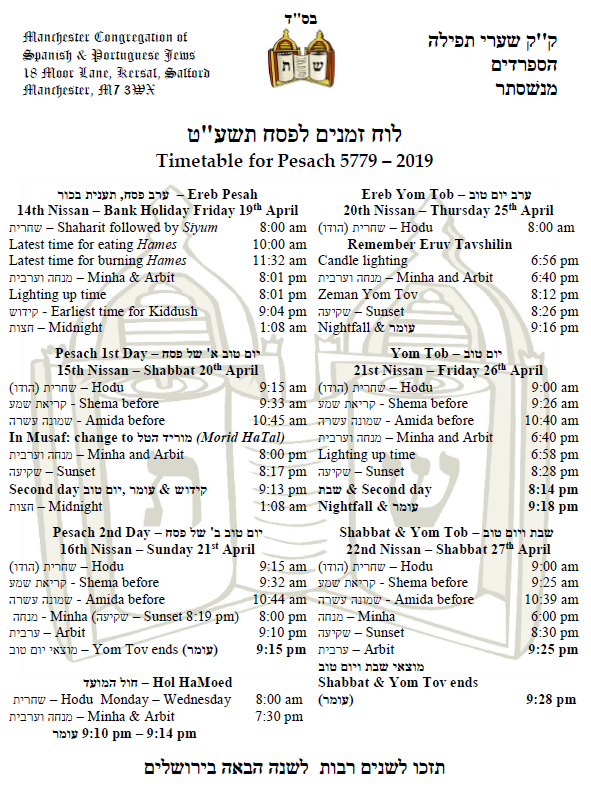
Pesach Time Table 

attached to this email

image.png

**

The Seder At a Glance 

by 

Naphtali Bitton

attached to this email


image.png


*** 

SHABBAT

Shabbat Times

לוח זמני תפלה
לחורף
תשע"ט

Winter Timetable
5779 – 2018 / 19


מוצאי
שבת

ערבית

)מוצ"ש(

מנחה

סוף זמן קריאת שמע

זמן שבת

פלג המנחה

(תה״ד)

פלג המנחה (לבוש)

מנחה וקבלת שבת

תאריך

שבת פרשת

Shabbat

Ends

Arbit

Mincha

Shema before

Latest

Candle lighting


Earliest Candle
lighting

Mincha & Kabbalat Shabbat

Date

Parasha

PM

PM

PM

AM

PM

PM

PM

PM


8:58

8:50

6:00

9:42

7:48

7:10

6:43

6:45

12/13 Apr

מצורע  (שבת הגדול)


Mincha throughout the Summer months 

will be at 6 pm

Shabbat Services

Children’s
Tehilim straight after Musaf

Anyone wishing
to donate a Kiddush Please email Moorlanenews

****

Q
& A on Parashat Metzora

Metzora

  1. When may a metzora not be pronounced tahor?
    14:2 – At night.
  2. In the midbar, where did a metzora dwell while he was tamei?
    14:3 – Outside the three camps.
  3. Why does the metzora require birds in the purification process?
    14:4 – Tzara'at comes as a punishment for lashon hara. Therefore, the Torah requires the metzora to offer birds, who chatter constantly, to atone for his sin of chattering.
  4. In the purification process of a metzora, what does the cedar wood symbolize?
    14:4 – The cedar is a lofty tree. It alludes to the fact that tzara'at comes as a punishment for haughtiness.
  5. During the purification process, the metzora is required to shave his hair. Which hair must he shave?
    14:9 – Any visible collection of hair on the body.
  6. What is unique about the chatat and the asham offered by the metzora?
    14:10 – They require n'sachim (drink offerings).
  7. In the Beit Hamikdash, when the metzora was presented "before G-d" (14:11), where did he stand?
    14:11 – At the gate of Nikanor.
  8. Where was the asham of the metzora slaughtered?
    14:13 – On the northern side of the mizbe'ach.
  9. How was having tzara'at in one's house sometimes advantageous?
    14:34 – The Amorites concealed treasures in the walls of their houses. After the conquest of the Land, tzara'at would afflict these houses. The Jewish owner would tear down the house and find the treasures.
  10. When a house is suspected as having tzara'at, what is its status prior to the inspection by a kohen?
    14:36 – It is tahor.
  11. What happens to the vessels that are in a house found to have tzara'at?
    14:36 – They become tamei.
  12. Which type of vessels cannot be made tahor after they become tamei?
    14:36 – Earthenware vessels.
  13. Where were stones afflicted with tzara'at discarded?
    14:40 – In places where tahor objects were not handled
  14. When a house is suspected of having tzara'at, a kohen commands that the affected stones be replaced and the house plastered. What is the law if the tzara'at:
    1. returns and spreads;
    2. does not return;
    3. returns, but does not spread?
    1. 14:44-45 – It is called "tzara'at mam'eret," and the house must be demolished;
    2. 14:48 – the house is pronounced tahor;
    3. 14:44 – The house must be demolished.
  15. When a person enters a house that has tzara'at, when do his clothes become tamei?
    14:46 – When he remains in the house long enough to eat a small meal.
  16. What is the status of a man who is zav (sees a flow):
    1. two times or two consecutive days;
    2. three times or three consecutive days?

    15:2 –

    1. He is tamei;
    2. he is tamei and is also required to bring a korban.
  17. zav sat or slept on the following:
    1. a bed;
    2. a plank;
    3. a chair;
    4. a rock.

    If a tahor person touches these things what is his status?

    15:4-5 – Only a type of object that one usually lies or sits upon becomes a transmitter of tumah when a zav sits or lies on it. A tahor person who subsequently touches the object becomes tamei and the clothes he is wearing are also tmei'im. Therefore:

    1. tamei;
    2. tahor;
    3. tamei;
    4. tahor.
  18. What does the Torah mean when it refers to a zav who "has not washed his hands"?
    15:11 – One who has not immersed in a mikveh.
  19. When may a zav immerse in a mikveh to purify himself?
    15:13 – After seven consecutive days without a flow.
  20. What is the status of someone who experiences a one-time flow?
    15:32 – He is tamei until evening.


****

Halachot
from Rabbi Eli Mansour

 Shabbat Hagadol

The Shabbat before Pesach is called "Shabbat
Hagadol," or "the Great Shabbat," a term that is generally
understood as a reference to the miracle that occurred in Egypt on the Shabbat
before Benei Yisrael's departure from Egypt. It was on that Shabbat, which fell
on the tenth of Nissan, that Benei Yisrael designated sheep for the Korban
Pesach (paschal offering) and tied them to their bedposts. The Egyptians
inquired as to the purpose behind this designation of sheep, which the
Egyptians worshipped as a pagan deity, and Benei Yisrael explained that they
prepared the sheep for a sacrificial offering to God. Despite this grave insult
to their deity, the Egyptians were powerless to oppose Benei Yisrael. They were
miraculously struck by a disease that required them to regularly visit the
restroom, thus impairing their ability to cause any harm to Benei Yisrael.

In commemoration of this great miracle that occurred on the Shabbat before
Pesach on the year when Benei Yisrael left Egypt, we observe this Shabbat as a
special occasion and refer to it as "Shabbat Hagadol."

Some have raised the question as to why we commemorate this miracle
specifically on the Shabbat before Pesach, rather than on the calendar date
when this miracle occurred – the tenth of Nissan. Why don't we observe a
commemoration on this date regardless of the day of week on which it falls?

One answer suggests that it was specifically due to Benei Yisrael's observance
of Shabbat that the greatness of this miracle was felt. When they told the
Egyptians on that day of their plans to slaughter the sheep as a sacrifice, the
Egyptians believed them despite the fact that they did not slaughter the sheep
that day, because they understood that Benei Yisrael would not kill animals on
Shabbat. On the subsequent days, however, when the Egyptians saw that Benei
Yisrael were not yet slaughtering the sheep, they began to suspect that they
were bluffing all along. It was thus specifically on Shabbat when the Egyptians
sought to foil Benei Yisrael's plans but were miraculously prevented from doing
so, and for this reason we commemorate this miracle specifically on the Shabbat
before Pesach.

Others explain that the tenth of Nissan marks yet another great miracle in
Jewish history – the splitting of the Jordan River when Benei Yisrael entered
the Land of Israel, as recorded in the Book of Yehoshua (chapter 3). In order
to make it clear that we commemorate the miracle in Egypt, and not the
splitting of the Jordan, we observe our commemoration on the Shabbat before
Pesach, rather than on the calendar date of the tenth of Nissan.

The Chid"a (Rabbi Chayim Yosef David Azulai, 1724-1806) writes that on
this Shabbat people should extend to one another the greeting, "Shabbat
Hagadol Shalom" and then respond, "Shabbat Hagadol Shalom
U'mevorach."

There is a widespread custom for the Grand Rabbi of the congregation to deliver
on this Shabbat a special Derasha (lecture) devoted to the laws of Pesach and
discussions of the Haggada in preparation for the holiday. This is another
reason for calling this Shabbat "Shabbat Hagadol," which perhaps
means, "the Shabbat of the great person," referring to the Grand
Rabbi. Additionally, the Derasha delivered on Shabbat Hagadol is typically
lengthier than the Rabbi's usual lecture. (The late Chief Rabbi of the
Sephardic Community in Brooklyn, Chacham Yaakov Kassin A”H, would deliver his
Derasha on Shabbat Hagadol in Congregation Shaare Zion for several hours before
Mincha.) The term "Shabbat Hagadol" may thus refer to the
"great," or long, lecture that the Rabbi delivers on this Shabbat.

Some Ashkenazim have the practice of reciting the Maggid section of the Haggada
on Shabbat Hagadol, in order to familiarize themselves with the Haggada in
preparation for the Seder. The Gaon of Vilna (Rabbi Eliyahu of Vilna,
1720-1797) opposed this practice, in light of the emphasis made in the Haggada
itself that the obligation to tell the story of the Exodus applies only on the
night of Pesach ("Lo Amarti Ela Be'sha'a She'yeish Matza U'marror Munachim
Lefanecha"). In any event, even for those of us who do not actually recite
the Haggada on Shabbat Hagadol, this Shabbat is an appropriate time to begin
reviewing the Haggada and prepare material for the Seder


The Significance of Shabbat Hagadol
Maran, in Shulhan Aruch, discusses the special
Shabbatot that precede Pesah and the various Halachot that apply on those days.
On Shabbat Shekalim, we take out an extra Sefer Torah and read the section of
Shekalim, just as on Shabbat Zachor, the Shabbat before Purim, we read the
section of Zachor, and we read special portions from the Torah on Shabbat Para
and Shabbat Ha’hodesh. Interestingly, however, Maran also makes mention of the
Shabbat immediately preceding Pesah, which is called Shabbat Hagadol (“The
Great Shabbat”) because of the miracle that occurred on this Shabbat. Maran
makes mention of this Shabbat, even though there are no specific Halachot
associated with this Shabbat. There is no special reading from the Sefer Torah
on this Shabbat, and there are no special prayers, and yet Maran made a point
of mentioning in his Halachic code that this Shabbat is special and is called
Shabbat Hagadol.

It is true that there are several customs observed by some communities on this
Shabbat. For example, many synagogues read a special Haftara on this Shabbat,
but this is not required according to the strict Halacha. Some Ashkenazim read
portions of the Haggadah on Shabbat Hagadol, but this, too, is just a custom,
and in fact the Vilna Gaon (Rabbi Eliyahu of Vilna, 1720-1797) was opposed to
the practice.

The Hida (Rav Haim Yosef David Azulai, 1724-1807) suggested that perhaps the
Halachic implications of the status of Shabbat Hagadol relates to greetings
extended to one another on this Shabbat. Instead of greeting one another with
the usual greeting of “Shabbat Shalom,” the Hida suggested that perhaps one
should instead extend the greeting, “Shabbat Hagadol Shalom,” and the other
should then respond, “Shabbat Hagadol Shalom U’meborach.” Still, it remains
unclear why Maran would make a point of mentioning Shabbat Hagadol if there are
no actual Halachot that apply on this Shabbat.

Former Chief Rabbi Eliyahu Bakshi-Doron, in his work Binyan Ab, suggested that
the practical significance of Shabbat Hagadol lies in the perspective it gives
us on the preparations for Pesah. On the Shabbat before the Exodus, which was
the 10th of Nissan, Beneh Yisrael were instructed to prepare a sheep for the
Korban Pesah (paschal sacrifice) which was slaughtered four days later, on the
14th of Nissan. In full view of the Egyptians, who worshipped sheep as an Aboda
Zara, Beneh Yisrael took a lamb and tied it to their bedpost, and they even
explained to the Egyptians what they were doing, that this animal would be
sacrificed to G-d. The Egyptians wanted to kill the people for desecrating
their deity, but G-d performed a miracle and made them powerless to cause Beneh
Yisrael any harm.

Rav Bakshi-Doron noted that this miracle differed fundamentally from the ten
plagues. The ten plagues were brought directly by G-d, whereas the miracle of
Shabbat Hagadol came about through the people’s courage. It was through their
preparations for the Misva that a miracle happened. And the fact that G-d
performed a miracle during the preparation for the Misva, four days before the
actual performance of the Misva, is very significant. It demonstrates that even
the preparatory stages have great value; that even the work we do in
preparation for a Misva is laden with significance. And thus Maran made mention
of Shabbat Hagadol in Shulhan Aruch, to teach us the importance of preparing
for Pesah, by learning and teaching the Halachot and putting ourselves in the
proper frame of mind for the holiday. The miracle of Shabbat Hagadol teaches us
that it is not only the Misva itself that has value, but also the work we
invest beforehand preparing ourselves for the performance of the Misva.


****

Shabbat Shalom


moorlanenews@gmail.com


Please feel free to ask us any questions or requests you may need through this e-mail. We will get back to you, bli neder, asap.

Please send us any announcement you would like to make through our e-mail before Wednesday morning, if possible, unless there is a Yom Tob. Exceptions will be made for late entries

Be advised that we will only announce your simcha when you give us permission to do so

If you no longer wish to receive further emails from moorlanenews please reply with the word "unsubscribe".

Thank you, Hatzlacha & all the best

Bedikatz Chametz Form

Bedikat Chametz form is attached to this email

As announced yesterday in the Bet Hakeneset, all completed forms should be handed directly to David Menashe or Benjamin Hassan or alternatively can be taken directly to the Manchester Bet Din, first floor in the cultural centre, Bury Old Road.

Completed forms should NOT be left in the boxes of David or Benjamin in the Bet Hakeneset as to avoid confusion.
Tizke Lemitzvot
Pesach Kasher Vesameach

image.png

Shabbat Shalom


moorlanenews@gmail.com


Please feel free to ask us any questions or requests you may need through this e-mail. We will get back to you, bli neder, asap.

Please send us any announcement you would like to make through our e-mail before Wednesday morning, if possible, unless there is a Yom Tob. Exceptions will be made for late entries

Be advised that we will only announce your simcha when you give us permission to do so

If you no longer wish to receive further emails from moorlanenews please reply with the word "unsubscribe".

Thank you, Hatzlacha & all the best

Newsletter Parashat Tazria, Parashat HaChodesh & Rosh Chodesh

Moor Lane Logo New Best.JPG

Announcements

This Shabbat is 

Shabbat Parashat Tazria, 

Parashat HaChodesh 

& Rosh Chodesh 

1) We have 6 Aliyot in Parashat Tazria

2) We have the 7th Aliya in Parashat Rosh Chodesh

followed by Kadish

3) Aliya of Maftir in Parashat HaChodesh

followed by Kadish


The maftir will be the haftara of Hachodesh

with the 1st and last Passuk of Rosh Chodesh.

א
בשבת הסמוכה לחודש ניסן, מוציאים שני ספרי תורה, וקוראים בשני פרשת החודש הזה לכם ראש חדשים.
 ובראש חודש ניסן שחל להיות בשבת, מוציאים שלשה ספרים, וקוראים ששה אנשים בראשון, בפרשת השבוע, והשביעי משלים חובת היום בספר השני, ומתחיל וביום השבת שני כבשים וכו', ובראשי חודשיכם וגו'. ואומר קדיש. ואחר כך עולה המפטיר וקורא בספר השלישי, בפרשת החודש הזה לכם ראש חודשים, ואומר קדיש, ומפטיר ביחזקאל מ''ה, בראשון באחד לחודש תקח פר בן בקר. [כ''כ ראבי''ה (מגילה סי' תקצה) בשם הירושלמי, וסיים ''והכי נהגינן''. וכ''פ הרמב''ם (פי''ג מהלכות תפלה הכ''ג). ועוד. וענין ההפטרה שמפטירין בזה ולא בהשמים כסאי מבואר בספר הפרדס לרש''י (סי' כג). ובמחזור ויטרי (עמוד רה ורכא). ובשבולי הלקט (סי' קצג). ובאו''ז. ובמרדכי (פרק בני העיר). וכ''פ הרמ''א בהגה (סי' תכה ס''א). ילקוט יוסף מועדים עמ' רסו]. 


ב
כשחל ראש חודש ניסן בשבת מנהג הספרדים לקרות אחר ההפטרה פסוק ראשון ואחרון של השמים כסאי. ובברכות ההפטרה אין המפטיר מזכיר של ראש חודש, לא באמצע ברכה האחרונה ולא בחתימתה. 


***

Birkat Hailanot

this Sunday 

at 7:15 pm

at 28 Moor Lane

Family Marshall

image.png

***

New Opportunity for learning

The Avrechim of the Kollel are able to learn with the Kahal 

from 6.50 til Arbit at 7.30 every evening

Need a partner?

contact Rabbi Stamler

image.png


***

pesachblue16mw.jpg

*** 

image.png
image.png
image.png
attached to this email

***

SHABBAT

Shabbat Times

לוח זמני תפלה לחורף תשע"ט

Winter Timetable 5779 – 2018 / 19


מוצאי שבת

ערבית

)מוצ"ש(

מנחה

סוף זמן קריאת שמע

זמן שבת

פלג המנחה

(תה״ד)

פלג המנחה (לבוש)

מנחה וקבלת שבת

תאריך

שבת פרשת

Shabbat

Ends

Arbit

Mincha

Shema before

Latest

Candle lighting


Earliest Candle lighting

Mincha & Kabbalat Shabbat

Date

Parasha

PM

PM

PM

AM

PM

PM

PM

PM


8:44

8:35

6:00

9:46

7:36

6:59

6:29

6:45

5/6 Apr

תזריע (ר״ח) (החודש)


Shabbat Services

Children’s Tehilim straight after Musaf

Anyone wishing to donate a Kiddush Please email Moorlanenews

 ****

Q & A on Parashat Tazria

 All references are to the verses and Rashi's commentary, unless otherwise stated.

Tazria

  1. When does a woman who has given birth to a son go to the mikveh?
    12:2 – At the end of seven days.
  2. After a woman gives birth, she is required to offer two types of offerings. Which are they?
    12:6 – An olah and a chatat.
  3. What animal does the woman offer as a chatat?
    12:6 – A tor (turtle dove) or a ben yona (young pigeon).
  4. Which of these offerings makes her tahor (ritual purity)?
    12:7 – The chatat.
  5. Which of the sacrifices does the woman offer first, the olah or the chatat?
    12:8 – The chatat.
  6. Who determines whether a person is a metzora tamei (person with ritually impure tzara'at) or is tahor?
    13:2 – A kohen.
  7. If the kohen sees that the tzara'at has spread after one week, how does he rule?
    13:5 – The person is tamei.
  8. What disqualifies a kohen from being able to give a ruling in a case of tzara'at?
    13:12 – Poor vision.
  9. Why is the appearance of tzara'at on the tip of one of the 24 "limbs" that project from the body usually unable to be examined?
    13:14 – The tzara'at as a whole must be seen at one time. Since these parts are angular, they cannot be seen at one time.
  10. On which days is a kohen not permitted to give a ruling on tzara'at?
    13:14 – During the festivals; and ruling on a groom during the seven days of feasting after the marriage.
  11. In areas of the body where collections of hair grow (e.g., the head or beard), what color hair is indicative of ritual impurity?
    13:29 – Golden.
  12. In areas of the body where collections of hair grow, what color hair is indicative of purity?
    13:37 – Any color other than golden.
  13. If the kohen intentionally or unintentionally pronounces a tamei person "tahor," what is that person's status?
    13:37 – He remains tamei.
  14. What signs of mourning must a metzora display?
    13:45 – He must tear his garments, let his hair grow wild, and cover his lips with his garment.
  15. Why must a metzora call out, "Tamei! Tamei! "?
    13:45 – So people will know to keep away from him.
  16. Where must a metzora dwell?
    13:46 – Outside the camp in isolation.
  17. Why is a metzora commanded to dwell in isolation?
    13:46 – Since tzara'at is a punishment for lashon hara (evil speech), which creates a rift between people, the Torah punishes measure for measure by placing a division between him and others.
  18. What sign denotes tzara'at in a garment?
    13:49 – A dark green or dark red discoloration.
  19. What must be done to a garment that has tzara'at?
    13:52 – It must be burned
  20. If after washing a garment the signs of tzara'at disappear entirely, how is the garment purified?
    13:58 – Through immersion in a mikveh.

****

Halachot from Maran Rabbi Ovadia Yosef Ztz'l

 ברכת האילנות בשבת

השנה שנת התשע"ט, יחול יום ראש חודש ניסן ביום השבת הבא עלינו לטובה. ומאחר ונוהגים ומשתדלים לברך ברכת האילנות ביום ראש חודש ניסן, נבאר האם כאשר חל ראש חודש ניסן בשבת, יש לברך בשבת, או שמא יש להמתין עם הברכה עד ליום ראשון.

"שמא יתלוש"
ובראשית, עלינו לדון בזה מצד מה שהובא בגמרא במסכת סוכה (לז:), אמר רבה, הדס במחובר, מותר להריח בו, אתרוג במחובר אסור להריח בו. כלומר, הדס שאינו תלוש מן העץ, מותר להריח ממנו בשבת, אבל אתרוג המחובר לאילן, אסור להריח בו בשבת. ומסבירה הגמרא, מה טעם החילוק בין הדס לאתרוג? הדס, שעשוי רק להריח ממנו, אין לחשוש שמא יבוא לתלוש ממנו, מה שאין כן אתרוג, שהוא פרי, יש לחשוש יותר שמא זה שמריח ממנו בשבת, יבוא לתלוש ממנו. וכן פסקו כל הפוסקים. ומכאן משמע, שלגבי ברכת האילנות בשבת, בודאי שאין לאסור בזה משום חשש שמא יבוא לתלוש מפרחי האילנות, שהרי אין כאן פירות, ואפילו אם היו פירות, הרי אינו נוגע בהם כלל, ואינו מריח מהם, ולכן בודאי שאין לחוש שמא יתלוש מהם.

דברי רבי חיים פלאג'י
אמנם הגאון רבי חיים פלאג'י בספר מועד לכל חי (סימן א אות ח) כתב: "בעיר קושטא, נוהגים לברך ברכת האילנות אפילו בשבת ויום טוב. אבל בעירנו איזמיר, לא ראיתי ולא שמעתי מעולם שיברכו ברכת האילנות בשבת ויום טוב. ואם נאמר שהטעם לזה משום חשש שמא יקח בידו הפרחים להריח בהם, ושמא יתלוש, אם כן אפילו בקושטא יש להם לחוש שלא יברכו ברכת האילנות בשבת". עד כאן דבריו.

והנה לפי מה שמבואר בפוסקים, שאין לחוש שמא יתלוש מהאילנות, מאחר ואין כאן פירות, וגם אינו מריח מהם כלל, אם כן אין לחשוש למה שהעיר הגאון רבי חיים פלאג'י בזה, והעיקר להלכה כמו שנהגו בקושטא, שהיו מברכים ברכת האילנות אפילו בשבת. וכן כתבו הרבה מהאחרונים.

ומה שבאיזמיר ובעוד מקומות לא נהגו לברך ברכת האילנות בשבת, יש לבאר, על פי מה שכתב בשו"ת שמחת כהן (סימן קמב) להגאון רבי רחמים חי חויתה הכהן זצ"ל (עליו אמר לנו מרן זצוק"ל, שלא היה כמותו בדורינו, ושהיה גאון מובהק, ומאד היה מרן משבחו על גדולתו בתורה ובמדות מצויינות), שכנראה שנמנעו מכך, משום שיש צורך להוציא את הסידורים מבית הכנסת לפרדסים, כדי שיוכלו לברך מתוך הסידור, ולומר את נוסח היהי רצון וכו' שנוהגים לומר. ומאחר ובמקומותם בחוץ לארץ לא היה עירוב, ואסור היה לטלטל שום דבר מחוץ לבית הכנסת, לכן נמנעו מברכה זו. אבל במקום שיכולים לטלטל, או שאין צורך בסידורים, בודאי שרשאים לברך אף בשבת.

דברי כף החיים
אמנם הגאון רבי יעקב חיים סופר זצ"ל בספר כף החיים (סי' רכו אות ד) כתב בזו הלשון: בשבת, אין לברך ברכת האילנות, ונראה שלפי דברי המקובלים, שעל ידי ברכת האילנות מברר ניצוצי קדושה מן הצומח, יש איסור נוסף משום בורר בשבת. ולכן אסור לברך ברכת האילנות בשבת ויום טוב. עד כאן.

כלומר, מאחר ועל פי דברי המקובלים, ישנם "ניצוצות קדושה" בצומח, והניצוצות מתבררים מן הצומח על ידי הברכה וחוזרים למקומם הנכון, הרי שיש בדבר איסור משום "בורר" בשבת. ובספרו שו"ת באר מים חיים בכתב יד הוסיף על כך, שנשאל על זה, שהרי גם בכל הברכות והתפלות אנו מבררים ניצוצי קדושה, והשיב, שזהו לצורך אותה שעה, והרי הלכה בידינו, בורר אוכל לאלתר (לצורך מיידי) מותר.

ומרן רבינו עובדיה יוסף זצ"ל (שו"ת יחוה דעת ח"א סימן ב) תמה על כך מאד, שמנין לו להכף החיים שבענין רוחני כזה שייך בכלל דין בורר? והאריך מעט בזה, לדחות מכל וכל את דברי הכף החיים בזה, והסביר שאין לפסוק הלכות על פי עניני קבלה כגון אלה, ולכן העלה להלכה שמותר לברך ברכת האילנות בשבת.

ולמעשה, מרן זצ"ל בספרו חזון עובדיה על הלכות פסח (עמוד כג), כתב שכן יש לנהוג, לברך ברכת האילנות בשבת. והוסיף, שכן עשה מעשה בשנת התשנ"ה, שחל ראש חודש ניסן בפסח, "ובירכנו ברכת האילנות בשבת". (אולם לאחר מכן לפני מעט שנים, לא יצא מרן זצ"ל בשבת לברך ברכה זו, ואולי הוא מפני שלא רצה לטלטל את הסידורים כנ"ל, או מטעם אחר, אך להלכה אין לנו אלא כמו שכתב בספרו כנ"ל).

ולסיכום: אפשר לברך ברכת האילנות בשבת. ובפרט כאשר הציבור כולו מגיע לבית הכנסת בשבת, ויש לחוש שאם ימתינו עד אחר השבת, רבים לא יברכו בכלל, או שיברכו ביחידות, כאשר מוטב לברך בציבור, וברוב עם הדרת מלך.

The Blessing of the Trees on Shabbat

This year, 5779, Rosh Chodesh Nissan falls out on this coming Shabbat. Since many individuals try to recite the Blessing of the Trees immediately on Rosh Chodesh Nissan, let us discuss whether this blessing may be recited on Shabbat or perhaps it is better to postpone reciting it until Sunday.

“Lest One Detach”

The first issue we must deal with is the words of the Gemara (Sukkah 37b): “Rabba said: One may smell a myrtle branch still attached to the ground on Shabbat but one may not smell an Etrog (citron) still attached to the tree on Shabbat.” The Gemara explains that the distinction between a myrtle branch and an Etrog is that since a myrtle branch is used solely for smelling, there is no concern that one will detach it from the ground (since one can smell it while it is still attached); however, regarding an Etrog which is a fruit whose primary purpose is eating, we are concerned that by smelling it while it is still attached to the tree, one will come to detach it. All of the Poskim rule in accordance with this Gemara. Based on this, reciting the Blessing of the Trees on Shabbat certainly does not pose any concern that one will detach the blossoms on the tree, for there are no fruits on the tree yet. Furthermore, even if there were fruits on the tree, one is neither touching them nor smelling them and there is therefore absolutely no concern that one will detach them from the tree.

The Opinion of Hagaon Harav Chaim Palagi

Nevertheless, Hagaon Harav Chaim Palagi zt”l writes in his Mo’ed Le’Kol Hai (Chapter 1, Section 8): “In the city of Istanbul, they customarily recite the Blessing of the Trees on Shabbat and Yom Tov as well. However, in our city of Izmir, I have never seen or heard anyone reciting the Blessing of the Trees on Shabbat or Yom Tov. If we claim that the reason for this is because of the concern that one will detach some of the blossoms from the tree, even in Istanbul, they should be concerned with this as well and abstain from reciting the Blessing of the Trees on Shabbat.”

On the other hand, based on the words of the Poskim that there is no concern of detaching anything from the tree when there are no fruits present and since one is not smelling anything, there is therefore no room to be concerned with the issue that Hagaon Harav Chaim Palagi raises. Thus, the custom in Istanbul where they would recite this blessing even on Shabbat was the halachically correct custom. Many Acharonim rule likewise.

We can explain the reason behind the custom in Izmir and other places where it was customary not to recite the Blessing of the Trees on Shabbat based on the Responsa Simchat Kohen (Chapter 142) authored by Hagaon Harav Rahamim Hai Hwita Ha’Kohen zt”l (about whom Maran zt”l exclaimed that there was no one like him in our generation and that he was an astounding halachic genius and whom Maran would extol tremendously about his greatness in Torah and exemplary character traits) who writes that it seems that it is customary to abstain from this because Siddurim must be carried from the synagogue to the orchards in order to recite the blessing and the appropriate texts recited along with it. Since many places outside of Israel did not have an Eruv and it was forbidden to carry anything outside of the synagogue, they abstained from reciting this blessing on Shabbat. However, in places where carrying is permissible on Shabbat or if Siddurim are not necessary, the Blessing of the Trees may certainly be recited on Shabbat.

The Opinion of the Kaf Ha’Chaim

Nevertheless, Hagaon Harav Yaakov Chaim Sofer zt”l writes in his Kaf Ha’Chaim (Chapter 226, Subsection 4), as follows: “The Blessing of the Trees should not be recited on Shabbat. It seems that according to the words of the Mekubalim that by reciting the Blessing of the Trees one separates the holy sparks from growing things (vegetation), this likewise constitutes an additional prohibition of selecting on Shabbat. It is therefore forbidden to recite the Blessing of the Trees on Shabbat and Yom Tov.”

This means that since there is a Kabbalistic concept that there are “sparks of holiness” hidden within growing things and by reciting this blessing, one separates these sparks and they are able to ascend to their appropriate place in Heaven, this constitutes the prohibition of selecting on Shabbat. In the manuscripts of his Responsa Be’er Mayim Chaim, Hagaon Harav Sofer writes that he was asked that any blessings and prayers one recites likewise separate holy sparks so how is it that we can pray on Shabbat, to which he replied that this is necessary for that very moment and regarding the laws of selecting on Shabbat, the law is that selecting for immediate use is permissible.

Maran Rabbeinu Ovadia Yosef zt”l (in his Responsa Yechave Da’at, Volume 1, Chapter 2) wonders where the Kaf Ha’Chaim derived this law from that selecting on Shabbat applies to spiritual matters? Maran zt”l then writes somewhat lengthily to completely rebuff the opinion of the Kaf Ha’Chaim on this issue and writes that one should not rule on matters of Halacha based on such Kabbalistic concepts. He concludes that one may, in fact, recite the Blessing of the Trees on Shabbat.

Halachically speaking, Maran zt”l writes in his Chazon Ovadia-Pesach (page 23) that the proper custom is to indeed recite the Blessing of the Trees on Shabbat. He adds that he had actually done so in the year 5755 (1995) when Rosh Chodesh Nissan coincided with Shabbat. (Nevertheless, several years ago shortly before his passing, Maran zt”l did not go and recite the Blessing of the Trees on Shabbat which coincided with Rosh Chodesh Nissan; perhaps this was because he did not wish to carry the Siddur or for some other reason. Nonetheless, the Halacha clearly follows the ruling stated in Maran’s works.)

Summary: The Blessing of the Trees may be recited on Shabbat. This is especially true since the entire congregation attends the synagogue on Shabbat and there is concern that if they postpone reciting this blessing until after Shabbat, many individuals may not recite this blessing at all or that some will recite this blessing alone (without the presence of a Minyan) when it is actually preferable to recite this blessing along with a large congregation.

****


Shabbat Shalom


moorlanenews@gmail.com


Please feel free to ask us any questions or requests you may need through this e-mail. We will get back to you, bli neder, asap.

Please send us any announcement you would like to make through our e-mail before Wednesday morning, if possible, unless there is a Yom Tob. Exceptions will be made for late entries

Be advised that we will only announce your simcha when you give us permission to do so

If you no longer wish to receive further emails from moorlanenews please reply with the word "unsubscribe".

Thank you, Hatzlacha & all the best

Newsletter Parashat Shemin and Parashat Para

Moor Lane Logo New Best.JPG

Announcements

image.png

THIS Motzae Shabbat

we change the clocks 

1 Hour forward

to BST

***

image.png

as from this 

Sunday 31st March

we will be having

Mincha followed by Arvit

THIS WEEK 

at

7:25 pm

***

This SHABBAT we take out 2 Sefarim

1) Parashat Shemini

2) Parashat Para

it is also 

Shabbat Mevarechim


Halachot on Parashat Para

by 

Rabbi Eli Mansour

Shabbat Parah- The Shabbat After Purim

On the Shabbat immediately following Purim, we take a second Torah scroll from the ark and read from it the section known as "Parashat Para." Parashat Para, which tells of the laws of the Para Aduma (the red heifer, whose ashes were used to sprinkle on those who had become ritually impure), is the opening section of Parashat Chukat, until the words, "Ve'ha'nefesh Ha'noga'at Titma Ad Ha'arev" (Bamidbar 19:1-22). 

Tosefot in Masechet Berachot (13) write that the annual reading of Parashat Para constitutes a Torah obligation; this is mentioned by other Rishonim (Medieval Talmudists), as well, including the Rashba (Spain, 1235-1310), the Ritva (Spain, 1250-1330) and Terumat Ha'deshen (Rabbi Yisrael Isserlin, Germany-Austria, 1390-1460). The Shulchan Aruch indeed records this position. 

Later writers have raised the question of where the Torah introduces such an obligation. If, indeed, this reading is required according to Torah law, this requirement must have a clear Biblical source. The work "Yalkut Ha'gershuni" suggests that this reading is obligated by force of the Torah's admonition to recall the unfortunate incident of the sin of the golden calf (Devarim 9:7). As this incident marks a very sad moment in our nation's history, we prefer not to read the actual narrative of the golden calf, and we instead read about the Para Aduma, which serves to atone for the sin of the golden calf. Indeed, the Sages describe the cow used for this ritual as the mother that comes to clean the mess made by her daughter, the calf. Thus, the reading of the Para Aduma section fulfills the Torah obligation to recall the incident of the golden calf. 

Others, however, have questioned this explanation. If this is the obligation we seek to fulfill, we can just as easily do so on the Shabbat when we read Parashat Ki Tisa, which contains the narrative of the golden calf. On this Shabbat we could instruct the congregation to have in mind while listening to this reading to fulfill the Torah obligation of remembering the incident of the golden calf. Rather than instituting a special reading, we could fulfill this requirement through the standard, scheduled reading of Parashat Ki Tisa. Furthermore, when all is said and done, the Sages speak of the Para Aduma ritual as a Chok – a Mitzva whose underlying rationale eludes human comprehension. It is therefore difficult to claim that this Mitzva serves solely as atonement for the sin of the golden calf. 

The Aruch Ha'shulchan (Rabbi Yechiel Epstein of Nevardok, Bielorussia 1829-1888) suggests a different Biblical source of the obligation to read Parashat Para. The Torah instructs in this section, "Ve'hayeta Lachem Le'chukat Olam" – that this law "shall be for you an eternal statute." The Torah here requires that we observe this law "eternally," despite the fact that this Mitzva of purifying oneself with the ashes of Para Aduma applies only when the Temple stands. The Aruch Ha'shulchan therefore suggests that the Torah here refers to an obligation to verbally recall this process by reading the relevant section in the Torah, even when practically the ritual cannot be performed. 

In any event, other scholars claimed that the reading of Parashat Para originates from Chazal (the Sages), and is not required by Torah law. Some even claim that Tosefot did not, in fact, cast this requirement as a Torah obligation. This theory contends that Tosefot had written the abbreviation "Peh-Peh," referring to "Parashat Purim," the section read on Purim telling of the battle with Amalek, with which one can fulfill the Torah obligation to recall Amalek's hostility. Later editors mistakenly understood the abbreviation as referring to "Parashat Para," and therefore reached the erroneous conclusion that Tosefot viewed this reading as a Torah obligation. However, this theory is difficult to accept in light of the fact that numerous other Rishonim, as mentioned above, side with Tosefot on this matter. It is hard to imagine that they were all misled by a printing error. 

Are women included in the obligation of Parashat Para? 

Presumably, this would depend on the two sources mentioned above. According to the "Yalkut Ha'gershuni," as we have seen, we read Parashat Para to recall the incident of the golden calf. If so, then women, who did not take part in the worship of the golden calf, should be excluded from this obligation. According to the Aruch Ha'shulchan, however, who explained that this reading fulfills the obligation of eternally remembering the Para Aduma purification ritual, it should apply equally to women, who are likewise required to undergo purification through the process of the Para Aduma. 

Therefore, women should endeavor to come to the synagogue to hear the reading of Parashat Para. If this presents a problem given their domestic responsibilities, they may remain at home. 

It should also be noted that the highest-quality Torah scroll available should be used for this reading, since according to many it constitutes a Torah obligation.

Summary: There is a difference of opinion as to whether the reading of Parashat Para on the Shabbat following Purim constitutes a Torah obligation, or was ordained by the Rabbis. Women should make an effort to come to the synagogue for this reading unless it poses considerable difficulty, and the highest-quality Torah scroll should be used for this reading.

***

New Opportunity for learning

The Avrechim of the Kollel are able to learn with the Kahal 

from 6.50 til Arbit at 7.30 every evening

Need a partner?

contact Rabbi Stamler


image.png


*** 

SHABBAT

Shabbat Times

לוח זמני תפלה לחורף תשע"ט

Winter Timetable 5779 – 2018 / 19

מוצאי שבת

ערבית )מוצ"ש(

שקיעה

מנחה שבת

סוף זמן קריאת שמע

הדלקת נרות

מנחה וקבלת שבת

תאריך

שבת פרשת

Shabbat

Ends

Arbit

Sunset

Minha

Shema before

Candle Lighting

Minha & Kabbalat Shabbat

Date

Parasha

PM

PM

PM

PM

AM

PM

PM


7:30

7:25

6:39

6:00

9:01

6:23

6:20

29/30 Mar

שמיני (פרה) (ש"מ)

Shabbat Services

Children’s Tehilim straight after Musaf

Anyone wishing to donate a Kiddush Please email Moorlanenews

 ****

Q & A on Parashat Shemini

  1. What date was "yom hashemini"?
    9:1 – First of Nissan.
  2. Which of Aharon's korbanot atoned for the Golden Calf?
    9:2 – The calf offered as a korban chatat.
  3. What korbanot did Aharon offer for the Jewish People?
    9:3,4 – A he-goat as a chatat, a calf and a lamb for an olah, an ox and a ram for shelamim, and a mincha.
  4. What was unique about the chatat offered during the induction of the Mishkan?
    9:11 – It's the only example of a chatat offered on the courtyard mizbe'ach that was burned.
  5. When did Aharon bless the people with the birkat kohanim?
    9:22 – When he finished offering the korbanot, before descending from the mizbe'ach.
  6. Why did Moshe go into the Ohel Mo'ed with Aharon?
    9:23 – For one of two reasons: Either to teach Aharon about the service of the incense, or to pray for the Shechina to dwell with Israel.
  7. Why did Nadav and Avihu die?
    10:2 – Rashi offers two reasons: Either because they gave a halachic ruling in Moshe's presence, or because they entered the Mishkan after drinking intoxicating wine.
  8. Aharon quietly accepted his sons' death. What reward did he receive for this?
    10:3 – A portion of the Torah was given solely through Aharon.
  9. What prohibitions apply to a person who is intoxicated?
    10:9-11 – He may not give a halachic ruling. Also, a kohen is forbidden to enter the Ohel Mo'ed, approach the mizbe'ach, or perform the avoda.
  10. Name the three chatat goat offerings that were sacrificed on the day of the inauguration of the Mishkan.
    10:16 – The goat offerings of the inauguration ceremony, of Rosh Chodesh, and of Nachshon ben Aminadav.
  11. Which he-goat chatat did Aharon burn completely and why?
    10:16 – The Rosh Chodesh chatat: Either because it became tamei, or because the kohanim were forbidden to eat from it while in the state of aninut (mourning).
  12. Why did Moshe direct his harsh words at Aharon's sons?
    10:16 – Out of respect for Aharon, Moshe directed his anger at his sons and not directly at Aharon.
  13. Moshe was upset that Aharon and his sons did not eat the chatat. Why?
    10:17 – Because only when the kohanim eat the chatat are the sins of the owners atoned.
  14. Why did G-d choose Moshe, Aharon, Elazar, and Itamar as His messengers to tell the Jewish People the laws of kashrut?
    11:2 – Because they accepted the deaths of Nadav and Avihu in silence.
  15. What are the signs of a kosher land animal?
    11:3 – An animal whose hooves are completely split and who chews its cud.
  16. How many non-kosher animals display only one sign of kashrut? What are they?
    11:4,5,6,7 – Four: Camel, shafan, hare, and pig.
  17. If a fish sheds its fins and scales when out of the water, is it kosher?
    11:12 – Yes.
  18. Why is a stork called chasida in Hebrew?
    11:19 – Because it acts with chesed (kindness) toward other storks.
  19. The chagav is a kosher insect. Why don't we eat it?
    11:21 – We have lost the tradition and are not able to identify the kosher chagav.
  20. What requirements must be met in order for water to maintain its status of purity?
    11:36 – It must be connected to the ground (i.e., a spring or a cistern).

 ****

Halachot from Maran Rabbi Ovadia Yosef Ztz'l

 זהירות בעניני חמץ

———————————————–
אנו עומדים סמוך לימי הפסח הבאים עלינו לטובה, ולכן נתחיל לבאר הלכות פסח, על פי מה שכתבנו בזה בשנים קודמות, ובתוספת נוסף.
———————————————–

איסור אכילת והנאה מן החמץ 
נאמר בתורה (שמות יג) לענין ימי חג הפסח "מצות יאכל את שבעת הימים, ולא יראה לך חמץ ולא יראה לך שאור בכל גבולך".

ובגמרא במסכת פסחים (דף כא: ועוד), למדו רבותינו ממדרש הפסוקים, שהחמץ בפסח אסור באכילה, וכמו כן הוא אסור בהנאה, שאפילו אם הוא אינו אוכל מן החמץ בפסח, אסור לו למכור את החמץ לגוי וכיוצא בזה, מפני שהוא נהנה במכירה זו. וכל האוכל חמץ בפסח ענשו כרת.

חמץ בפסח – אפילו באלף אינו בטל
כל כך חמור איסור חמץ בפסח, עד כדי כך, שחמץ שנתערב עם מאכלים אחרים, אפילו באלף לא בטל, מה שאין כן בשאר איסורים.

ולדוגמא באיסור אכילת דם, שאם נפל גרם אחד של דם לקדירה עם תבשיל, אם יש בתבשיל ששים גרם של היתר כנגד הדם, הרי הדם בטל בתוכו ("בטל בששים"), והתבשיל מותר. ואילו חמץ בפסח אם יש אלף כנגדו, כגון פירור לחם בתוך סיר גדול עם התבשיל, הכל אסור באכילה מפני אותו פירור של חמץ שנתערב שם.

לכן יש להזהר מאד בעניני חמץ בפסח, לקנות אך ורק מצרכי מזון שאין בהם כל חשש תערובת חמץ, ושנמצאו תחת השגחה אחראית. וכן אין לסמוך על אדם שאינו יהודי שומר תורה ומצוות, כשאומר על מאכל מסוים שאין בו חשש חמץ, וכגון שמעיד על תבלין מסוים שאין בו שום תערובת וכדומה, וכפי שכבר הוכח בעבר, שאנשים נכשלו באיסור חמץ משום שסמכו על החנווני בשעה שאין לו כל נאמנות. וכתב מרן רבינו עובדיה יוסף זצ"ל, שנכון שלא לקנות שום תוצרת המיועדת לפסח בלי הכשר על כל מוצר לחג הפסח, וכן הדין אף בדברים שנראה שאין בהם חשש, כגון ליקר, אראק, וכדומה. ובזמנינו אפילו במוצרים הנראים הכי "תמימים", יש חששות רציניים מבחינת כשרות במשך כל ימות השנה, ובפרט בימות הפסח, כי בכל מוצר מעורבים הרבה מאד חומרים מחומרים שונים, והדברים ידועים.

כלים הבלועים מחמץ
אסור להשתמש בפסח בכלים שמשתמשים בהם בכל ימות השנה, שהרי הם בלועים מחמץ, מכיון שבזמן שתבשיל חם נמצא בתוך הכלי, הרי דפנות הכלי בולעות ממנו טעם חמץ, (כשם שהן בולעות טעם בשר או חלב), ולכן יש להשתמש בכלים מיוחדים לפסח, שלא השתמשו בהם למאכלי חמץ, או להכשיר את כלי החמץ לפסח. ובהלכה הבאות יבואר יותר.

מקום שאדם מתארח בו
כשם שאדם צריך להזהר בתוך ביתו לאכול אך ורק ממוצרים ומכלים הכשרים לפסח, כמו כן עליו להזהר בכל מקום שהוא אוכל שם, שיהיה כשר בתכלית. ולכן מי שהולך להתארח אצל חבירו בחג הפסח, או שהוא מתארח בבית מלון, עליו לכלכל דרכיו במשפט, שלא יבא לידי מבוכה שתגרום לו לאכול במקום שאינו ראוי לו, ויזהר מראש שלא להיות מוזמן למקום שאינו כשר בתכלית, כדי שלא יבא ח"ו לידי מכשול.

ומעשה היה ביהודי אחד, יקר יקרים, מעולי הונגריה, שעלה לארץ ישראל לפני כששים שנה בערב פסח. בנו הנשוי, היה דר באחד הישובים הדתיים, והוא הזמין את אביו לחג הפסח. שאל אותו אביו, האם עוד הנך מקפיד כראוי על כל הלכות הפסח? השיב לו הבן, בודאי! נסעו האב עם רעייתו ושאר ילדיו הרווקים אל הבן הנשוי. כבר בליל החג, ראה האב כי הלכות הפסח אינן מקויימות כראוי. לכן, חדל לאכול שום דבר, מלבד מעט ירקות. ומיד במוצאי החג הראשון, אמר לאשתו ומשפחתו, אין אני נשאר כאן אפילו רגע אחד. אמרו לו, והלא אין תחבורה בשעה כזו! אמר להם אני איני נשאר אפילו רגע אחד, והלך ברגל שלוש שעות, עד שהגיע לתחנת אוטובוס, וחזר לירושלים בצער גדול, כי בנו אינו זהיר כראוי בהלכות החג. וממנו למדו כל המשפחה, ותיקנו מעשיהם.

Caution Regarding Chametz Issues

————————————————
Since we are nearing the holiday of Pesach and the laws of Pesach are quite vast, we will begin to review the primary laws of this holiday based on what we have written in previous years in addition to some new insights.
————————————————

 The Prohibition to Eat Chametz
The Torah (Shemot 13) states regarding the holiday of Pesach: “Matzot shall be eaten for seven days; neither leaven nor sourdough shall be seen in your borders.”

Our Sages taught in Masechet Pesachim (21b among other places) through expounding certain verses that not only is Chametz prohibited for consumption on Pesach, it is also forbidden to benefit from Chametz on Pesach, meaning that even if one does not actually eat Chametz on Pesach, he still may not sell it to a non-Jew and the like on Pesach for this would mean that he is benefitting from this sale. Consumption of Chametz on Pesach is punishable by Karet (severance of one’s soul from the Jewish nation).

Chametz on Pesach Cannot Even be Nullified by a Ratio of One to One-Thousand
The prohibition of Chametz on Pesach is so severe that if Chametz gets mixed into other foods, it cannot be nullified even by a ratio of one to one thousand, which is not the case regarding other prohibitions.

For instance, regarding the prohibition of consuming blood, if one gram of blood falls into a pot of food, if there are sixty grams of food present against the one gram of blood that fell into it, the blood is considered nullified and this food is permitted for consumption. Regarding Chametz on Pesach, however, even if the food present is one thousand times the amount of the Chametz that fell into it, for instance if a tiny crumb of Chametz falls into a large pot of food, the entire pot of food becomes prohibited for consumption because of the crumb of Chametz that became mixed into it.

Therefore, one must be extremely careful regarding Chametz on Pesach to buy only food products that one is completely certain do not contain Chametz mixtures and are certified by a reliable Kashrut organization. Similarly, one should not rely on a non-Torah-observant Jew when he tells him that a certain food does not contain any Chametz, for instance if he says that a certain spice does not have any Chametz mixed into it, for it has already occurred that some people have transgressed the prohibition of Chametz because they had relied on a grocer with no believability. Maran Harav Ovadia Yosef Shlit”a writes that it is proper for one not to purchase any food product designated for Pesach use without a reliable Kosher for Passover certification on every single item. The same applies even to things that do not seem problematic such as liquor, Arack, and the like. Nowadays, even products that look “innocent” pose major Kashrut problems during the rest of the year and especially during Pesach, as all products contain a multitude of ingredients, as we all know.

Dishes Which Have Absorbed Chametz
One may not use the same dishes that he uses during the rest of the year on Pesach, for these dishes have Chametz absorbed in them since when a hot food is inside these dishes, the walls of these dishes absorb its Chametz flavor, just as they absorb dairy or meat flavor. Thus, one must either use dishes that are specially designated for Pesach that have not been used for Chametz or kosher (make kosher for Pesach) his Chametz dishes. This will be better explained in following Halachot.

When One is a Guest
Just as one must take care to eat food that is Kosher for Pesach and from dishes and utensils that are Kosher for Pesach in his home, one must also take care that anywhere else he eats is absolutely kosher. Thus, if one is staying as a guest in his friend’s home or in a hotel for Pesach, he must think this through beforehand in a tedious manner so that a tumultuous situation does not arise that will cause him to eat in an unworthy place. One should be very careful in advance not to be invited to a place that is not absolutely kosher so as not to, G-d forbid, transgress any prohibitions.  

An incident once occurred approximately sixty years ago when a righteous Hungarian Jew immigrated to Israel on Erev Pesach. His married son lived in a religious settlement and invited his father to join them for the Pesach holiday. His father asked him, “Are you careful regarding the laws of Pesach?” The son replied, “Certainly!” The father travelled with his wife and unmarried children to spend the holiday together with his married son. On the first night of Pesach, the father was already able to tell that the laws of Pesach were not being observed adequately. He therefore did not eat anything besides for some vegetables. Immediately upon the conclusion of the first Yom Tov of Pesach, the father exclaimed to his wife, “I refuse to stay here for even one extra second!” They told him, “But there is no public transportation at this hour!” The father once again reiterated, “I shall not stay here for even one moment.” He then proceeded to walk for three hours to the nearest bus stop at which point he boarded a bus to Jerusalem, saddened that his son did not observe the laws of Pesach properly. The rest of the family learned from their father’s actions and mended their ways.

עיקר דין החמץ והקטניות בפסח

מהות החימוץ
נאמר בתורה (שמות יג) לענין ימי הפסח: "מצות יאכל את שבעת הימים, ולא יראה לך חמץ ולא יראה לך שאור בכל גבולך".

וענין החימוץ שאסרה התורה, הוא שבהתחבר קמח דגן עם המים, ושוהה כך זמן מתאים, משתנה ההרכב הפנימי של הקמח ומתחיל להחמיץ, ומרגע שהחמיץ, אסור אותו החמץ בפסח באכילה ובהנאה, וכן אסור ליהודי להחזיק ברשותו חמץ בימות הפסח.

קטניות
אורז וכל מיני הקטניות, ובכלל זה אפונים, חומוס, שעועית, סויה, עדשים וכדומה, מותרים בפסח, כי אין חמץ אלא בחמשת מיני דגן, חיטה, שעורה, כוסמת, שבולת שועל ושיפון. וקטניות אינן מיני דגן, אלא מיני ירק.

אולם הדבר פשוט שמאחר ומצויים לעתים שיתערבו מיני דגן בקטניות, לכן יש להזהר לברור היטב את האורז וכיוצא בו, לבל יהיו מעורבים בו חטים או שעורים וכיוצא בזה ממיני דגן, כי מצוי לפעמים במקומות שמגדלים ומייצרים בהם את האורז, שמייצרים בקרבתו גם מיני דגן, וכן בבתי האריזה של האורז, אורזים גם כן שאר מיני דגן, והם מתערבים בתוך האורז ועלולים לאסור את כל התבשיל. (וכפי שנתבאר בהלכה הקודמת, שאפילו פירור חמץ יכול לאסור סיר גדול עם תבשיל). ולכן נוהגים לברור את האורז לפסח בתשומת לב רבה ובכובד ראש, שלש פעמים, ובשעה שילדים קטנים אינם נמצאים בסביבתם של הבודקים.

מנהג האשכנזים וכמה מקהלות הספרדים
מחמת החשש לתערובת גרגרי דגן בתוך הקטניות, נהגו האשכנזים איסור בקטניות בפסח. וכך נימנו וגזרו גדולי רבותינו שבאשכנז, לאסור באיסור גמור כל אכילת קטניות בפסח. אולם ברוב ארצות הספרדים לא נתקבל איסור זה כלל ועיקר. ואין לספרדי להחמיר על עצמו בדבר זה מכמה טעמים.

אמנם ישנם כמה מיראי ה' הספרדים שנהגו להחמיר כמנהג האשכנזים שלא לאכול אורז בפסח. ובפרט נפוץ הדבר בקרב המערבים, יוצאי מרוקו ושאר מדינות צפון אפריקה. אולם אף הם אינם מחמירים בדרך כלל, אלא באורז, אבל בשאר קטניות נוהגים היתר. ויש שנהגו לאסור אכילת חומוס גם כן.

ובהלכה הבאה נביא עוד פרטי דינים בזה.


The Laws of Chametz and Kitniyot (Legumes) on Pesach

The Essence of Leavening
The Torah (Shemot 13) tells us regarding the holiday of Pesach: “Matzot shall be eaten for seven days; neither leaven nor sourdough shall be seen in all of your borders.” The leaven that the Torah prohibits is produced by the combination of grain-flour and water remaining in this state for a long enough period of time; this causes the internal composition of the flour to leaven (rise). From the moment the mixture begins to leaven it is considered “Chametz” which is prohibited for consumption or benefit on Pesach and it is also prohibited for a Jew to retain Chametz in his property on Pesach.

Kitniyot
Rice and all other legumes, including peas and beans, are permitted on Pesach, for the prohibition of Chametz only applies to grains and legumes are not classified as “grains”. One must nevertheless take care to check the grains of rice well to make sure that no kernels of wheat or barley are mixed inside, for it is fairly common that in some places where rice is grown or packaged, other grains are also grown or packaged in close proximity as well and some kernels of these grains can easily become mixed into the rice and indeed make one’s entire dish prohibited for consumption (for even one tiny crumb of Chametz can prohibit a large pot of food). Thus, it is customary to check through rice three times before Pesach with all due concentration and seriousness, at a time when small children are not present to disrupt the individual checking.

The Custom of Ashkenazi Jewry and Some Sephardic Communities
Due to fear that kernels of various grains may have become mixed into the legumes, Ashkenazim customarily prohibit the consumption of legumes on Pesach. Indeed, the greatest Ashkenazi authorities enacted that it is completely prohibited to eat any legumes on Pesach. However, this prohibition was not accepted at all by most Sephardic and Middle Eastern communities. A Sephardic individual should not be stringent regarding this matter for several reasons.

However, there are several G-d-fearing Sephardic communities who are stringent and customarily abstain from eating rice on Pesach. This is especially common among Moroccan and other North African communities. However, even they are customarily stringent only with regards to rice, but they do eat other forms of legumes. Some customarily abstain from eating chick peas on Pesach as well.

In the following Halacha, we shall, G-d-willing, discuss this further.

פרטים בדין קטניות בפסח

בהלכה הקודמת, ביארנו באופן כללי את עיקרי דין החמץ והקטניות בפסח. והסברנו, שלכל הדעות "קטניות", כגון חומוס ואורז, אינן "חמץ" ממש. כי חמץ שייך רק בדבר העשוי ממיני דגן. אולם האשכנזים נהגו איסור בקטניות, משום שהיה הדבר נפוץ מאד, שנתערבו גרגרי חמץ עם הקטניות. ולפיכך הם נמנעים מלאכלם.

"התרת נדרים" לאכול קטניות
עדות האשכנזים, הנוהגים איסור בקטניות, אין להם כל היתר לאכילת קטניות בפסח, ואף אם יעשו "התרת נדרים", אין בכך כלום, ועדיין הם מחוייבים למנהג עדתם, שלא ליטוש את מנהגיהם, ולהמנע מאכילת קטניות בפסח.

ובכלל זה איסור שימוש בשמן סויה, ואכילת אורז, וכן כל כיוצא בזה.

אולם עדות הספרדים שהחמירו על עצמם שלא לאכול אורז, ועתה יש להם איזה צורך להקל באכילת אורז, מחמת חולי וכיוצא בזה, יכולים להתיר להם לאוכלו, אם יעשו "התרת נדרים" כדין, על מה שנהגו עד עתה. וזאת משום שתוקף האיסור שקיבלו הספרדים על עצמם, אינו באותו דרגה כמו שקיבלו עליהם האשכנזים, ואצל הספרדים לא נתקבלה גזירה ממש על אכילת קטניות, אלא נהגו בהם איסור מצד הזהירות, כיון שהיה מצוי חשש חמץ בקטניות. כן פסק מרן הרב זצ"ל בספר חזון עובדיה ח"ב עמוד נה. ואין כאן המקום להאריך.

כלים הבלועים בקטניות
כבר ביארנו, שאסור להשתמש בפסח בכלים שבישלו בהם בשאר ימות השנה. וזאת משום, שכלים שהיה בהם מאכל חמץ רותח, הרי שדפנות הכלי "בלעו" מן החמץ שהיה בהם. ואחר כך כשמבשלים בהם מאכל כשר לפסח, דפנות הכלי "פולטות" טעם של חמץ לתוך התבשיל. וכשם שאנו נזהרים תמיד להפריד את כלי החלב מכלי הבשר, מחמת בליעת הכלים ממאכלי הבשר או החלב.

אולם איסור הקטניות בפסח, אינו חמור כמו איסור חמץ ממש. שאינו אלא גזירה שנהגו להחמיר, מחמת חשש חמץ. לפיכך כתב הגאון רבי ישמעאל הכהן, בשו"ת זרע אמת (ח"ג או"ח סי' מח), שאשכנזי המתארח בבית ספרדי, והספרדי הכין עבורו מאכלים ללא חשש קטניות, מותר לאשכנזי לאכול בביתו ללא חשש.

ואף על פי שהכלים של הספרדי בלועים מתבשילי הקטניות, אין בכך כלום, כיון שאין זה אלא מנהג שנהגו משום זהירות יתירה, ולא שקיבלוהו עליהם כאיסור ממש. (בפרט אם יש לשער שלא בישלו בכלים קטניות בתוך עשרים וארבע שעות האחרונות. ואין האשכנזי צריך לשאול את הספרדי, האם בישלו באותו יום קטניות באותו הכלי. ואין כאן המקום להאריך).

ולסיכום: האשכנזים נוהגים איסור באכילת קטניות בפסח. ואין להקל באיסור זה אפילו על ידי "התרת נדרים". והספרדים שנהגו בזה איסור, ויש להם צורך להקל באכילת קטניות, כגון מחמת חולי וכדומה, יוכלו  להקל בזה על ידי התרת נדרים.

אשכנזי המתארח בבית ספרדי, והספרדי הכין עבורו מאכלים ללא חשש קטניות, מותר לו לאכול מהם, אף על פי שהספרדי בישל קודם לכן מאכלים עם קטניות באותם הכלים.

Some Detailed Laws Regarding Kitniyot (Legumes) on Pesach

In the previous Halacha we have briefly discussed the primary laws of Chametz and Kitniyot (legumes) on Pesach. We have explained that according to all communities, legumes such as rice and chick peas are not actual Chametz, for only grain products can be considered Chametz. However, Ashkenazim customarily banned eating Kitniyot on Pesach because it used to be common for grains of Chametz to become mixed with Kitniyot. They therefore customarily abstain from eating them.

“Annulment of Vows” in Order to Eat Kitniyot 
Ashkenazi communities who customarily prohibit Kitniyot have no recourse to permit consuming Kitniyot on Pesach. Even if they perform the order of “Annulment of Vows,” this does not make it permissible; they are still bound by the custom of their community and they may not discard their custom by eating Kitniyot on Pesach.

Included in this prohibition is the use of soy sauce, eating rice, and the like.

However, Sephardic communities who have acted stringently until this point and abstained from eating rice and now have a certain need to eat rice, such as due to illness and the like, may be permitted to eat it as long as they perform the “Annulment of Vows” as prescribed by Halacha for the custom they have followed thus far. This is because the level of the prohibition that these Sephardic communities accepted upon themselves is not on the same level as the prohibition which the Ashkenazim accepted upon themselves. The Sephardim never accepted an actual “decree” upon themselves banning Kitniyot; rather, they customarily abstained from eating them as a precaution because Chametz would sometimes mix into the Kitniyot. Maran Rabbeinu Ovadia Yosef zt”l rules likewise in his Responsa Chazon Ovadia, Volume 2, page 55.

Vessels which have Absorbed Kitniyot
We have already explained that vessels which have absorbed actual Chametz may not be used on Pesach. This is because when vessels contain boiling hot Chametz foods, the walls of the vessel absorb some of the Chametz in them. Afterwards, when Pesach foods are cooked in the same vessel, the walls of the vessel release Chametz flavor into the food. For the same reason, we are always meticulous to separate meat and dairy dishes in order to avoid vessels absorbing from one another.

However, the prohibition of Kitniyot on Pesach is not as stringent as actual Chametz, for it is only an enactment which some customarily accepted due to Chametz concerns. Based on this, Hagaon Harav Yishmael HaKohen writes in his Responsa Zera Emet (Volume 3, Orach Chaim, Chapter 48) that if an Ashkenazi individual is being hosted by a Sephardic individual and the host prepares foods for the guest that are Kitniyot-free, the Ashkenazi may eat in his home without hindrance.

Although the Sephardic host’s vessels have absorbed some flavor from his own Kitniyot foods, this poses no issue, for this custom is only as an extra precaution and they never accepted it upon themselves as an actual prohibition. (This is especially true if we can assume that Kitniyot were not cooked in this vessel within the past twenty-four hours. Additionally, the Ashkenazi need not ask the Sephardi if Kitniyot were cooked in this vessel within twenty-four hours.)

Summary: Ashkenazim customarily prohibit consuming Kitniyot on Pesach. They cannot be lenient regarding this custom even if they have performed the order of “Annulment of Vows.” Sephardim who have thus far customarily abstained from this as well but now have some special need to eat Kitniyot, such as due to illness and the like, may indeed be lenient in this matter by performing an “Annulment of Vows.”

****

Shabbat Shalom


moorlanenews@gmail.com


Please feel free to ask us any questions or requests you may need through this e-mail. We will get back to you, bli neder, asap.

Please send us any announcement you would like to make through our e-mail before Wednesday morning, if possible, unless there is a Yom Tob. Exceptions will be made for late entries

Be advised that we will only announce your simcha when you give us permission to do so

If you no longer wish to receive further emails from moorlanenews please reply with the word "unsubscribe".

Thank you, Hatzlacha & all the best

Purim – Parashat Tzav

Moor Lane Logo New Best.JPG

Announcements

image.png

***

image.png

***

New edition of 

image.png
attached to this email
  ***
Capture.JPG

New Opportunity for learning

The Avrechim of the Kollel are able to learn with the Kahal 

from 6.50 pm till Arbit at 7.30 pm every evening

Need a partner?

contact Rabbi Stamler

image.png

image (1).png


*** 

image.png

***

SHABBAT

Shabbat Times

לוח זמני תפלה לחורף תשע"ט

Winter Timetable 5779 – 2018 / 19


מוצאי שבת

ערבית )מוצ"ש(

שקיעה

מנחה שבת

סוף זמן קריאת שמע

הדלקת נרות

מנחה וקבלת שבת

תאריך

שבת פרשת

Shabbat

Ends

Arbit

Sunset

Minha

Shema before

Candle Lighting

Minha & Kabbalat Shabbat

Date

Parasha

PM

PM

PM

PM

AM

PM

PM


7:17

7:10

6:26

5:50

9:10

6:10

6:10

22/23 Mar

צו


Shabbat Services

Children’s Tehilim straight after Musaf

Anyone wishing to donate a Kiddush Please email Moorlanenews

 ****

Q & A on Parashat Tzav

All references are to the verses and Rashi's commentary, unless otherwise stated.

  1. What separated the kohen's skin from the priestly garments?
    6:3 – Nothing.
  2. How often were the ashes removed from upon the mizbe'ach? How often were they removed from next to the mizbe'ach?
    6:4 –
    A) Every day.
    B) Whenever there was a lot.
  3. If someone extinguishes the fire on the mizbe'ach, how many Torah violations has he transgressed?
    6:6 – Two.
  4. The portion of a flour-offering offered on the mizbe'ach may not be chametz. But is the kohen's portion allowed to be chametz?
    6:10 – No.
  5. When a kohen is inaugurated, what offering must he bring?
    6:13 – A korban mincha — A tenth part of an ephah of flour.
  6. What three baking processes were used to prepare the korban of Aharon and his sons?
    6:14 – Boiling, baking in an oven and frying in a pan.
  7. What is the difference between a minchat kohen and a minchat Yisrael?
    6:15 – The minchat kohen is burned completely. Only a handful of the minchat Yisrael is burned, and the remainder is eaten by the kohanim.
  8. When is a kohen disqualified from eating from a chatat?
    6:19 – If he is tamei (spiritually impure) at the time of the sprinkling of the blood.
  9. What is the difference between a copper and earthenware vessel regarding removing absorbed tastes?
    6:21 – One can remove an absorbed taste from a copper vessel by scouring and rinsing, whereas such a taste can never be removed from an earthenware vessel.
  10. Can an animal dedicated as an asham be replaced with another animal?
    7:1 – No.
  11. How does an asham differ from all other korbanot?
    7:3 – It can only be brought from a ram or sheep.
  12. Unlike all other korbanot, what part of the ram or sheep may be placed on the mizbe'ach?
    7:3 – The tail.
  13. What three types of kohanim may not eat from the asham?
    7:7 – A t'vul yom (a tamei kohen who immersed in a mikveh yet awaits sunset to become tahor); A mechusar kipurim (a tamei person who has gone to the mikveh but has yet to bring his required offering); An onan (a mourner prior to the burial of the deceased).
  14. n which four instances is a korban todah brought?
    7:12 – Upon safe arrival from an ocean voyage; Upon safe arrival from a desert journey; Upon being freed from prison; Upon recovering from illness.
  15. Until when may a todah be eaten according to the Torah? Until when according to Rabbinic decree?
    7:15 –
    (a) Until the morning.
    (b) Until midnight.
  16. How does a korban become pigul?
    7:18 – The person slaughters the animal with the intention that it be eaten after the prescribed time.
  17. Who may eat from a shelamim?
    7:19 – Any uncontaminated person (not only the owner).
  18. What miracle happened at the entrance of the Ohel Moed?
    8:3 – The entire nation was able to fit in this very small area.
  19. Other than Yom Kippur, what other service requires that the kohen separate from his family?
    8:34 – The burning of the parah adumah (red heifer).
  20. What are the 5 categories of korbanot listed in this Parsha?
    Olah (6:2); mincha (6:7); chatat (6:18); asham (7:1); shelamim (7:11).

 ****

Halachot from Maran Rabbi Ovadia Yosef Ztz'l

 חג הפורים – נסים גלויים

שאלה: האם בזמנינו אין נסים גלויים, מפני שאנו לא ראויים לכך?

תשובה: אמרו רבותינו בכמה מקומות, כי אין הקדוש ברוך הוא עושה נסים לחינם. כי הנס, הוא כבריאת עולם חדש. כי טבע העולם הוטבע בו מעת בריאתו, ולשנות את הטבע, יש צורך לחדש מהלכים כמו בריאת העולם. ולכן אמרו רבותינו (במסכת שבת לב.), אל יבקש אדם שיעשו לו נס מן השמים, כי מנכים לו מזכויותיו. שהרי עשיית הנס היא כאילו בורא הקדוש ברוך הוא עולם חדש עבור אדם פרטי.

ובכל זאת בימי קדם היה צורך גדול שיעשה השם יתברך נסים גדולים ומפורסמים, משום שעם ישראל מעצם טבעם והחינוך הטבעי שהיה חדור בתוכם, לא היו בנויים היטב ומוכנים לאמונת ה' יתברך. כי היו חיים מאות בשנים בארץ מצרים, ששם היו כולם עובדי כוכבים ומזלות. וכן כל שאר האומות בימי קדם היו מאמינים בכוכבים ובמזלות, והיו סבורים שהכוכבים הם המורידים להם את השפע, ולכן פנו לעבוד את הכוכבים. ועם ישראל נדבקו מן הטעות של כל אומות העולם.

ולכן עם ישראל טעו שוב ושוב לחטוא לה'. עשו להם עגל זהב במדבר, ואחר כך עבדו לפסל מיכה, וכן בארץ ישראל כמה וכמה פעמים חטאו בעניני עבודה זרה, ואפילו לאחר שגלו מן הארץ, אמרו הנשים לירמיה הנביא (ירמיהו פרק מד פסוק יח): "וּמִן אָז חָדַלְנוּ לְקַטֵּר לִמְלֶכֶת הַשָּׁמַיִם, וְהַסֵּךְ לָהּ נְסָכִים, חָסַרְנוּ כֹל וּבַחֶרֶב וּבָרָעָב תָּמְנוּ". כי היו בטוחות שרק על ידי עבודת כוכבי השמים יגיע אליהם השפע. (כשם שבזמנינו, ההולכים אצל העוסקים במיסטיקה וקבלה מעשית, מכורים לעבודתם, ולא יבינו כי אספו רוח בחפניהם).

לפיכך, כדי לבטל דעה משובשת זו, ועל מנת לתקוע את אמונת ה' בלב ישראל, עשה להם ה' יתברך נסים גלויים, להראותם כי ה' הוא האלקים, והוא המשדד מערכות שמים, שאין ישראל כפופים להם כלל. ולכן עשה ה' נסים המנוגדים לדרך הטבע, כדי שיכירו וידעו כולם, ששקר נחלו. ולכן משה רבינו הזהיר את ישראל כמה פעמים על הנסים שראו עיניהם, שילמדו מהם כי ה' הוא האלקים. וכן שמואל הרמתי, עשה להם לישראל נסים היפך גדר הטבע. וכן אליהו הנביא שהוריד אש וגשמים מן השמים, ובאמת, לאחר שראו ישראל את הנס הזה, נהפך לבבם והכירו וידעו כי לה' הארץ. ואם כן, כל הנסים היו כדי לקבוע בלב האומה את האמונה בה'. ובכל זאת מפעם לפעם שכחו ישראל את שראו בעיניהם, וחזרו למעשיהם הרעים.

וכל זה היה קודם זמן אסתר המלכה, אבל מזמן אסתר, קיימו וקבלו היהודים עליהם את תורת ה' בכל לבב. כי ראו כי לה' הארץ ולו נתכנו עלילות. כי המן חשב על פי חשבונות שעשה, כי מזלם של ישראל בחודש אדר ירד מטה מטה. שכם באמת על פי המזלות, היה הזמן ההוא ראוי לנפילת ישראל חס ושלום. וכן לפי דעתם של חכמי המזלות, היה אז מזלם של ישראל סוף מזל דלי, שהוא רע ומר לישראל, ולעומת זאת, מזלו של עמלק, היה אז טוב מאד, כי מזלו של עמלק הוא אריה, ואז מזל אריה היה במערכה טובה, כי השמש היתה לפניו, וכוכב צדק האיר למולו. וכל מהלכי הלבנה והכוכבים היו נגד ישראל ולטובת עמלק.

וה' הפיר עצתו של עמלק, ושידד כוכבי שמים, ונהפוך הוא, שישראל עלו, ועמלק ירדו, ומזה הכירו כח מעשי ה', ופחיתות ענין המזלות והכוכבים, ולכן מאז נס אסתר, לא נמצא בישראל שיחזרו עוד לחטאים אלה, של אמונה בכוכבים ומזלות.

ומטעם זה מאז והלאה, פסקו הנסים המפורסמים והגלויים מישראל, שהרי אין בהם צורך עוד לשלימות אמונתינו. ולכן פסקו נסים מימות אסתר ואילך. לא מפני שאין אנו ראויים עוד לנסים, אלא להיפך, מפני שאנו שלמים באמונתינו מימות אסתר, אין לנו צורך בנסים. עד שנזכה לגאולה השלימה במהרה בימינו, ואז יחדש ה' יתברך ימינו, ויראנו נפלאות. (יערות דבש, דרוש ג')


The Holiday of Purim-Open Miracles

Question: Are there no open miracles in our days because we are unworthy of them?

Answer: Our Sages teach us in several places that Hashem does not perform miracles for naught since doing so entails changing the laws of nature that Hashem established in this world which is tantamount to the creation of a “new world.” It is for this reason that our Sages (Shabbat 32a) teach us that one should not pray for a miracle to be performed for him, for if this occurs, some of the individuals will be deducted since this is like creating a new world for a single person.

Nevertheless, in previous generations, there was a need for Hashem to perform great and revealed miracles, for the Jewish nation, by nature and by virtue of the upbringing they were engrained with by living in Egypt for Hundreds of years among an idolatrous nation, was not yet prepared for belief in Hashem. All other nations in the days of yore likewise believed that the stars and constellations were the cause of all goodness and abundance and thus began worshipping the stars. The Jewish nation was likewise influenced by the error of the other nations of the world.

It is for this reason that the Jewish nation continuously sinned against Hashem in the desert making the Golden Calf and later worshipping Micha’s idol; similarly, when they entered Eretz Yisrael, the Jewish nation strayed after idol worship several times. Even when they were exiled from Israel, some Jewish women told Yirmiya Ha’Navi (Yirmiyahu 44, 18), “From the time we have stopped offering incense to the heavenly objects and pouring libation offerings to them, we lack everything and we have perished by sword and starvation.” This is because the women of that generation were certain that the source of abundance was only by serving the stars and other heavenly objects. (Just as those who consult with individuals who practice “practical Kabbalah” and other mystics in our generation are addicted to such practices and do not realize the futility in doing so.)

In order to abolish such flawed beliefs and to imbue the Jewish nation with a strong sense of belief in the true Master of the Universe, Hashem performed open miracles in order to show that Hashem is the true G-d and that He alone orchestrates the heavenly objects, which have no influence at all on the Jewish nation. It is for this reason that Hashem performed miracles which went against the laws of nature, in order for all to know that their previous beliefs were all baseless lies. Likewise, Moshe Rabbeinu referred to these supernatural miracles many times in order for the Jewish nation to realize that Hashem is the true G-d. Similarly, the prophets Shmuel and Eliyahu performed supernatural miracles for the Jewish nation by bringing down rain and fire from the sky; after the Jewish nation observed such miracles, they knew that the land was Hashem’s alone. Thus, the purpose of the all these miracles was to establish Hashem’s sovereignty in the heart of the Jewish nation. Nevertheless, the Jewish nation forgot the wonders their eyes had seen from time to time and returned to their wicked ways.

Nonetheless, all of this applied only until the times of Queen Esther. From the time of Queen Esther and on, however, the Jewish nation accepted Hashem’s Torah whole-heartedly. Haman devised his evil plan because he calculated that the Jewish nation’s fortune was quite bad during the month of Adar; indeed, according to the order of the constellations, this was actually true and that time ripe for the destruction of the Jewish nation, G-d-forbid. Indeed, according to the great astrologers, this occurred at a time when the Jewish nation’s fortune was towards the end of the constellation of Aquarius, which is a terrible time for the Jewish nation. On the other hand, Amalek’s fortune at that time was quite good, for the constellation that represents Amalek is Leo and at that time, Leo was in a favorable position with the sun before it and Jupiter shining right across from it. All of the lunar, planetary, and stellar systems at that time were against the Jewish nation and in favor of Amalek.

Hashem, however, disrupted Amalek’s plans, rearranged the stars, and switched everything for Israel to be victorious and Amalek to fall. Everyone then realized the might of Hashem and the insignificance of the stars and constellations. From the time the miracle of Esther occurred, we have not heard of a large portion of the Jewish nation returning to sins involving idolatry and belief in the stars.

It is for this reason that from that time and on, open and revealed miracles have ceased from the Jewish nation, for we no longer need them for the completion of our belief. Let us be clear: This is not because we are unworthy of such miracles; on the contrary, because our belief has been complete since the times of Queen Esther, we no longer need such miracles until the Final Redemption, at which point Hashem shall, once again, perform many miracles and wonders for us. (See Rabbeinu Yehonatan Eibeschitz’s Ya’arot Devash, Darush 3.)


****

Shabbat Shalom


moorlanenews@gmail.com


Please feel free to ask us any questions or requests you may need through this e-mail. We will get back to you, bli neder, asap.

Please send us any announcement you would like to make through our e-mail before Wednesday morning, if possible, unless there is a Yom Tob. Exceptions will be made for late entries

Be advised that we will only announce your simcha when you give us permission to do so

If you no longer wish to receive further emails from moorlanenews please reply with the word "unsubscribe".

Thank you, Hatzlacha & all the best

Newsletter Parashat Vayikra – Parashat Zachor

Moor Lane Logo New Best.JPG
Announcements

This week is Shabbat Zachor

Shabbat Zachor

On certain occasions piyutim are chanted during pesuqé dezimra:

On Shabat Shira and the Seventh Day of Pesah the piyut "Ashira keShirat Moshé" is sung before Shirat haYam (The Song on the Sea).

On Shabbat Zachor the piyut "Mi Khamokha" is chanted during Nishmat.

On Rosh haShana and Yom Kipur special piyutim are chanted after Shirat haYam, before Yishtabah, and between Yishtabah and the Qadish. 


The minhag of inserting piyutim into the prayers is actually quite ancient, dating back at least to the times of Ribi Yehuda haLevi (c. 1000-1100 CE) who penned the piyut "Mi Khamokha" for Shabat Zakhor and instituted its recital in the middle of Nishmat Kol Hai. Several Rishonim, among them the Ri miGash (d. 1141), the Rashba (d. 1310), and the Radbaz (d. 1573), attest that this was the custom in their time, showing no sign of disapproval. Nevertheless, this custom was met with sharp, repeated critique by later halakhic authorities, all challenging the halakhic basis for this custom, as it constitutes a forbidden interruption (hefseq) in the prayers.

Though Maran instructs in the Shulhan 'Arukh (O"H §68:1) that it is best to refrain from including liturgy in the Blessings of Qeriat Shema', he makes no mention of adding liturgy in Pesuqé deZimra. The determining factor for allowing liturgy in Pesuqé deZimra is whether or not there exists a prohibition to add praises or Tehilim to those instituted by the Sages as Pesuqé deZimra

The Hida in Tub 'Ayin (§18:35) cites the opinion of Ribi David Hayim Corinaldi in this matter, denouncing the practice of those who reserved the recital of liturgy intended for Pesuqé deZimra (e.g. Ribi Yehuda haLevi's Mi Chamocha) until after the repetition of the 'Amida; arguing that the Tur and Maran only took issue with adding liturgy to the Blessings of Qeriat Shema'. The simple logic behind Ribi Corinaldi's judgment seems to be that, since Pesuqé deZimra were instituted as praises to G-d, additional praises, such as the piyutim, should not be deemed an interruption therein. Still, the Hida rules that liturgy may not be added to Pesuqé deZimra, explaining that these praises were carefully arranged by the Sages in accordance with Qabala and are thus strictly unchangeable

The minhag in Kahal Kadosh Shaare Tefila – Moor Lane, is to recite the piyut Mi Chamocha in the middle of Nishmat

****

THIS SUNDAY

image.png

***

image.png

***

image.png

image (1).png

New Opportunity for learning

The Avrechim of the Kollel are able to learn with the Kahal 

from 6.50 til Arbit at 7.30 every evening

Need a partner?

contact Rabbi Stamler


***** 

image.png

*******

Moolanenews

would like to thank 

image.png
image.png
for the extra light & brightness 
in our Bet Hakeneset
Tizke Lemitzvot 

*****

SHABBAT

Shabbat Times

לוח זמני תפלה לחורף תשע"ט

Winter Timetable 5779 – 2018 / 19


מוצאי שבת

ערבית )מוצ"ש(

שקיעה

מנחה שבת

סוף זמן קריאת שמע

הדלקת נרות

מנחה וקבלת שבת

תאריך

שבת פרשת

Shabbat

Ends

Arbit

Sunset

Minha

Shema before

Candle Lighting

Minha & Kabbalat Shabbat

Date

Parasha

PM

PM

PM

PM

AM

PM

PM


7:03

6:55

6:13

5:35

9:20

5:57

5:55

15/16 Mar

ויקרא (זכור)


Shabbat Services

Children’s Tehilim straight after Musaf

Anyone wishing to donate a Kiddush Please email Moorlanenews

****

Q & A on Parashat Vayikra

 All references are to the verses and Rashi's commentary, unless otherwise stated

  1. Who does the word "eilav" in verse 1:1 exclude?
    1:1 – Aharon.
  2. Name all the types of animals and birds mentioned in this week's Parsha.
    1:2,14, 3:12 – Cattle, sheep, goats, turtledoves (torim), and doves (bnei yona).
  3. What two types of sin does an olah atone for?
    1:4 – Neglecting a positive command, and violating a negative command which is rectified by a positive command.
  4. Where was the olah slaughtered?
    1:5 – In the Mishkan Courtyard (azarah).
  5. What procedure of an animal-offering can a non-kohen perform?
    1:5 – Ritual slaughter.
  6. Besides the fire the kohanim bring on the altar, where else did the fire come from?
    1:7 – It descended from Heaven.
  7. At what stage of development are torim (turtledoves) and bnei yona (young pigeons) unfit as offerings?
    1:14 – When their plumage turns golden. At that stage, bnei yona are too old and torim are too young.
  8. What is melika?
    1:15 – Slaughtering a bird from the back of the neck using one's fingernail.
  9. Why are animal innards offered on the altar, while bird innards are not?
    1:16 – An animal's food is provided by its owner, so its innards are "kosher." Birds, however, eat food that they scavenge, so their innards are tainted with "theft."
  10. Why does the Torah describe both the animal and bird offerings as a "satisfying aroma"?
    1:17 – To indicate that the size of the offering is irrelevant, provided your heart is directed toward G-d.
  11. Why is the term "nefesh" used regarding the flour offering?
    2:1 – Usually, it is a poor person who brings a flour offering. Therefore, G-d regards it as if he had offered his nefesh (soul).
  12. Which part of the free-will mincha offering is burned on the altar?
    2:1 – The kometz (fistful).
  13. The Torah forbids bringing honey with the mincha. What is meant by "honey"?
    2:11 – Any sweet fruit derivative.
  14. When does the Torah permit bringing a leavened bread offering?
    2:12 – On Shavuot.
  15. Concerning shelamim, why does the Torah teach about sheep and goats separately?
    3:7 – Because they differ regarding the alya (fat tail). The lamb's alya is burned on the altar but the goat's is not.
  16. For most offerings the kohen may use a service vessel to apply the blood on the mizbe'ach. For which korban may he apply the blood using only his finger?
    3:8 – The chatat.
  17. Who is obligated to bring a chatat?
    4:2 – One who accidentally transgresses a negative commandment whose willing violation carries the karet (excision) penalty.
  18. Where were the remains of the bull burned while in the wilderness? Where were they burned during the time of the Beit Hamikdash?
    4:12 –
    1. Outside the three camps.
    2. Outside Jerusalem.
  19. What two things does a voluntary mincha have that a minchat chatat lacks?
    5:11 – Levona and oil.
  20. What is the minimum value of a korban asham?
    5:15 – Two shekalim.

****

Halachot from Maran Rabbi Ovadia Yosef Ztz'l

מתנות לאביונים

מה צריך לתת?
ומצות מתנות לאביונים, אינה דוקא במתנות ממש, אלא רשאי לתת לאביונים מעות (כסף) כדי שיוכלו לקנות ממנו צרכי סעודת פורים.

כמה צריך לתת?
ירא שמים יתן מתנות לאביונים בעין יפה ובסבר פנים יפות, והנה שכרו ופעולתו לפניו. וכמה הוא חיוב מתנות לאביונים?, הנה מעיקר הדין אין קצבה במעות פורים, כי מן הדין די בנתינת פרוטה, שהוא סכום הקטן שיש בכל מקום (וכגון בארץ ישראל מטבע של חצי שקל וכדומה), ומכל מקום כאמור, עדיף להרבות במתנות לאביונים, מלהרבות בסעודת פורים ובמשלוח מנות. ועל כל פנים נכון שלא יפחות מסכום שיוכל האביון לעשות ממנו סעודת פורים.

החילוק בין משלוח מנות למתנות לאביונים
בהלכה הקודמת ביארנו, שיש לתת את המשלוח מנות, באופן שהמקבל ידע ממי קיבלת את המעות, והנותן ידע למי נותן. וזאת משום שטעם המצוה של משלוח מנות, הוא בכדי להרבות אהבה ואחוה בין בני אדם. אולם לענין מתנות לאביונים אין הדין כן, אלא רשאי לתת את המתנות באופן שהאביון לא ידע ממי קיבל, וכן הנותן לא ידע למי נותן.

וכן במשלוח מנות, יש לתת מנות ממש, כלומר, דברי מאכל ומשקה, מה שאין כן במתנות לאביונים, שיכול לתת לאביונים מעות, שיוכל לקנות מהם את צרכי הסעודה.

חשיבות מתנות לאביונים
וכתב הרמב"ם (הלכות מגילה פרק ב), חייב אדם לשלוח לחברו שתי מנות בשר, או שני מיני תבשיל, או שני מיני אוכלים (מאכלים), שנאמר: ומשלוח מנות איש לרעהו, שתי מנות לאיש אחד, וכל המרבה לשלוח לרעים הרי זה משובח. וחייב לחלק לעניים מעות או מיני אכלים ביום הפורים, לא פחות משני עניים, שנותן לכל אחד מתנה אחת, שנאמר: ומתנות לאביונים. ומוטב לאדם להרבות במתנות לאביונים יותר מלהרבות בסעודתו ובמשלוח מנות לחברים, שאין שמחה גדולה מפוארה יותר מלשמח לב עניים ויתומים ואלמנות וגרים, שהמשמח לב האומללים הללו, הרי הוא דומה לשכינה, שנאמר: "להחיות רוח שפלים ולהחיות נפש נדכאים".

נתינה לגבאי צדקה
הנותן מעות לגבאי צדקה, שהוא מחלקם לעניים בו ביום, יוצא ידי חובת מתנות לאביונים, ששלוחו של אדם כמותו. וכן נוהגים רבים כיום, שהם נותנים לגבאי נאמן את כספי המתנות לאביונים, והוא שלוחם לתת את כספי המתנות לעניים ביום הפורים. ועדיף לנהוג כן ממה שיתן בעצמו את המעות, לאביונים כאלה אשר אינו יכול לדעת בודאות אם הם ראויים למתנות אלו.

וכבר הזהרנו בעבר על הצורך לשים לב שגבאי הצדקה הם אנשים יראי שמים, ולא לסמוך בעיניים עצומות על ועדי הצדקה למיניהם

Matanot La’Evyonim

The Rambam (Chapter 2 of Hilchot Megilla) writes: “One must send his friend two portions of meat or two cooked foods or two food items, as the verse states, ‘And sending portions to one another,’ which means two potions to one person. The more friends one sends to, the more praiseworthy he is. One must also distribute monetary gifts or food items to the poor on Purim day, no less than one gift to two poor people, as the verse states, ‘And gifts to the poor’. It is more important for one to distribute more gifts to the poor than to spend a lot on one’s feast or send gifts to many friends, for there is no greater and more splendid happiness than to gladden the hearts of the poor, orphans, widows, and converts; one who gladdens these downtrodden souls is comparable to the holy presence of Hashem Himself, as the verse states, ‘To revive the spirit of the downtrodden and to revive the soul of the oppressed.’” 


One who fears Heaven should distribute Matanot La’Evyonim generously and with good cheer and his reward will be great indeed. How much must a person give as Matanot La’Evyonim? Although the letter of the law dictates that there is no set amount for this gift and one fulfills his obligation by giving even a few cents per pauper, nevertheless, it is preferable to spend more on Matanot La’Evyonim then on the Purim feast or Mishloach Manot. (One should preferably give enough so that the pauper will be able to make use of the sum for the Purim feast.) 

One who gives money to a charity treasurer who will subsequently distribute this sum to the needy on Purim day on the donor’s behalf has fulfilled his obligation, since “one’s messenger is like himself.” This is the prevalent custom today as many people give their Matanot La’Evyonim to trustworthy treasurers and they in turn distribute the money on the donors’ behalf on Purim day. It is actually proper to fulfill the Mitzvah in this way rather than to give the money to such people whom one cannot ascertain whether or not they are genuinely needy. 

However, we must warn our readers that when one gives these monetary gifts to charity treasurers, one should take extreme caution to give only to treasurers who are trustworthy and G-d-fearing, for we have heard of situations where there have been individuals who have stolen the majority of the proceeds for themselves and taken advantage of the plight of the truly downtrodden in order amass wealth for themselves. Hagaon Ya’abetz writes in his Sefer Megillat Sefer (about three hundred years ago) that most of the charity collected for the poor of Jerusalem had been stolen by the charity treasurers who would pass the funds from hand to hand and became rich in this way while not leaving even a fraction of the proceeds for the poor people of Jerusalem, which eventually lead to the collapse of the Ashkenazi community in Jerusalem. Similarly, we are clearly aware of several organizations that collect money on behalf of widows and orphans and keep all the proceeds for themselves, leaving only a tiny sum over for the intended recipients. These greedy individuals who steal from the mouths of the poor present themselves as righteous and upstanding individuals; as such, one must be keen in order to avoid them. Anyone who cherishes his soul should distance himself from such people in addition to warning others about them, for donating to such individuals does not constitute Tzedakah at all. One should give his Matanot La’Evyonim and all other Tzedakah for that matter only to treasurers who are completely trustworthy and G-d-fearing or to Torah scholars who are in charge of passing the charity on to G-d-fearing individuals themselves. 

We recommend giving donations to one’s local, G-d-fearing rabbi who will then distribute the proceeds to the poor 

דין משלוח מנות 

מצות משלוח מנות
נאמר במגילת אסתר (ט, כב) לעשות אותם ימי משתה ושמחה "ומשלוח מנות איש לרעהו" – "ומתנות לאביונים". ובגמרא במסכת מגילה (דף ז). אמרו, משלוח "מנות" שתי מנות לאיש אחד. "ומתנות לאביונים", שתי מתנות לשני בני אדם. (כי מיעוט "מנות", שתים, מנה אחת ועוד מנה. ומיעוט "מתנות", שתים, מתנה ועוד מתנה אחת. וכן מיעוט "אביונים" שתים. שכן לא נאמר "משלוח מנה איש לרעהו ומתנה לאביון).

טעם המצוה
וטעם המצוה הוא, שכאשר אדם שולח לחברו תשורה ומנחה, הרי הוא מביע לו בזה את רגשי אהבתו אליו, ועל ידי כן נוטע גם בליבו אהבה אליו. ועוד, כי ישנם אנשים חסרי כל, אשר יבושו לפשוט ידם לקבל צדקה כדי לקיים סעודת פורים, וכאשר שולח להם דרך כבוד "משלוח מנות" לא יבושו ולא יכלמו, ויקיימו מצות סעודת פורים בשמחה ובחדוה.

ומכיון שטעם מצוה זו הוא כדי להרבות אהבה בין אדם לחבירו, ובין אשה לרעותה, לכן, השולח משלוח מנות ואין המקבל יודע ממי קבלם, אין הנותן מקיים בזה מצות משלוח מנות, שהרי מכיון שאינו יודע ממי קבלם, אין כאן חיבה וריעות.

ודבר זה הוא שונה ממצות צדקה שאנו רגילים בה בכל ימות השנה. שהרי במצות צדקה, מצוה מן המובחר שלא יהיה המקבל יודע ממי קיבל, וגם שלא יהיה הנותן יודע למי הוא נותן, מה שאין כן לגבי מצות משלוח מנות, שחובה היא שידע המקבל ממי קבל, בכדי שתכנס בלבו אהבה לחבירו.

הגדרת "שתי מנות"
ופירוש הדבר "שתי מנות" היינו שני מאכלים שונים, או מאכל ומשקה, כגון עוגה ובקבוק יין. והמנהג כיום לשלוח מיני מתיקה למשלוח מנות. ויוצאים בזה ידי חובה. וכמבואר גם הנשים חייבות לשלוח לחברותיהן משלוח מנות.

ומכיון שעיקר טעמה של מצות משלוח מנות, הוא בכדי שיהיה לכל אדם מה לאכול בסעודת הפורים, לכן השולח לחבירו מתנות שונות בתורת משלוח מנות, וכגון ששולח לו בגדים או סדינים וכיוצא בזה, אינו יוצא ידי חובת משלוח מנות. ואפילו אם שולח לחבירו מעות (כסף) בכדי שיוכל חבירו לקנות מנות של מאכלים, אינו יוצא ידי חובתו, שצריך לשלוח דוקא מנות של מאכל ומשקה. ולכן גם השולח לחבירו טבק להרחה או סיגריות, אינו יוצא ידי חובת משלוח מנות.

שליחת חידושי תורה
כתב חכם אחד בירחון "המאסף", כי תלמיד חכם השולח לחבירו דברי תורה וחידושים ופרפראות בתורת משלוח מנות, יוצא בזה ידי חובתו. שהרי בין לפי הטעם שמשלוח מנות הוא בכדי להראות אהבה, ובין לפי הטעם שמשלוח מנות הוא בכדי שיהיה למקבל במה לשמוח בסעודת פורים, יוצאים בחידושי תורה ידי חובה. שהרי דברי התורה הם משמחים את הלב, כמו שנאמר "פקודי ה' ישרים משמחי לב", ועל ידיהם ישמח המקבל כמו אדם המקבל מאכלים ומשקאות לסעודת פורים. ועוד, שאין לך התחברות יותר גדולה מן התורה, ועל כן יוצאים בזה ידי חובת הטעם, שיראה לחבירו אהבה בנתינת המנות.

ומרן הרב עובדיה יוסף שליט"א כתב על דבריו, שאינם אלא דרשות בעלמא, ולא דברים על פי דרכה של ההלכה, שהרי פשוט שלא יוצאים ידי חובת סעודת פורים אלא באכילה ממש, ולא באכילת דברי תורה, ולכן גם החיוב במשלוח מנות הוא במנות של מאכלים ממש, ולא בדברי תורה. ועל כן להלכה אין לסמוך על דברים אלה, וחייב כל אדם לשלוח לחבירו מנות של מאכל או משקה דוקא, שיוכל לשמוח בהם בסעודת פורים.

משלוח מנות לאבל
אף על פי שאסור לשלוח מתנה לאבל בתוך שלשים יום לפטירת קרובו, או בתוך שנה לפטירת אביו או אמו, מכל מקום מותר לשלוח מנות לאבל ביום הפורים. אולם כתב מרן הרב שליט"א, שלא ישלחו לו מיני מתיקה ומנות של תפנוקים, אלא דברי מאכל, כגון בשר ודגים וכדומה ופירות וירקות וכדומה. וכן האבל עצמו, שהוא חייב לשלוח מנות לרעהו, טוב שישלח מנות של בשר ודגים וכדומה, ולא של מיני מתיקה

The Laws of Mishloach Manot

The Mitzvah of Mishloach Manot
The verse in the Megillat Esther (9, 22) states: “In order to mark them as days of feasting and merriment and sending portions (Mishloach Manot) to one another as well as giving gifts to the poor (Matanot La’Evyonim).” The Gemara in Megilla (7a) says that Mishloach “Manot” refers to sending two food portions to one person while “Matanot La’Evyonim” refers to giving two gifts to two people; i.e. one gift per person. (This is because “Manot” is at least two portions, “Matanot” is at least two gifts, and “Evyonim” is at least two poor people. The verse does not say, “Sending a portion to one another as well as giving gifts to a pauper”). 

The Reason for This Mitzvah

The underlying reason for this Mitzvah is that when one sends his friend a gift, he expresses his feelings of fondness for him and by doing so he plants feelings of camaraderie in his friend’s heart for himself as well. Additionally, there are those who truly lack financial means and they may be ashamed to ask for assistance for the necessities of the Purim feast; thus, when one sends his friend this “Mishloach Manot” in a respectable fashion, he will not be ashamed to accept it at all, and he will thus be able to partake of the Purim feast amid much joy and happiness. 

Since the fundamental reason for this Mitzvah is to create friendship between man and his fellow, if one sends Mishloach Manot to his friend and the recipient does not know who the sender is, the sender has not fulfilled his obligation, for being that the recipient does not know who he received this gift from, there is subsequently no friendly bond formed. 

This Mitzvah is different from the Mitzvah of Tzedakah (charity) given during the rest of the year, for regarding Tzedakah, it is most preferable that the recipient not know who the donor is and the donor not know who the recipient is. However, regarding Mishloach Manot, the recipient must know who has sent him this gift, for only in this way will feelings of friendship enter his heart. 

The Definition of “Two Portions” 
The definition of “two portions” is two different food items or a food item and a beverage, such as cake and a bottle of wine. It is customary nowadays to send different kinds of sweets and one will satisfactorily fulfill his obligation in this way. Women must also send Mishloach Manot to their friends. 

Since one of the predominant reasons for Mishloach Manot is for people to have food to eat for the Purim feast, if one sends his friend such gifts as clothing or blankets as Mishloach Manot, he has not fulfilled his obligation. Even if one sends his friend a monetary gift such that he will be able to purchase food with it, he has still not fulfilled his obligation, for one can only do so by sending food items or beverages. Thus, one who sends his friend snuff or cigarettes as Mishloach Manot has not fulfilled his obligation. 

Sending Novel Torah Thoughts 

A certain Torah scholar has written in the monthly publication, “HaMe’asef,” that a Torah scholar who sends his friend his novel Torah thoughts and insights as Mishloach Manot has fulfilled his obligation. This is because whether the reason for Mishloach Manot is to garner camaraderie or in order to supply one’s friend with something to enhance his Purim feast, one fulfills his obligation regardless, for words of Torah gladden the heart as the verse states, “The commandments of Hashem are just and gladden the heart”, and through them a person will be just as glad as receiving food and drink for the Purim feast. In addition, there is no stronger bond than that of the Torah; thus, one would indeed fulfill his obligation according to the opinion that friendship must be shown through these gifts. 

Maran Harav Ovadia Yosef Shlit”a writes that this opinion is nothing more than a nice thought, however, it does not follow the path of Halacha, for clearly, one only fulfills his obligation of the Purim feast with actual food and not by “eating” words of Torah; thus, the obligation of Mishloach Manot is also strictly with food items and not words of Torah. Therefore, the aforementioned opinion may not be relied upon and one must send his friend specifically food items or beverages in order to enhance his Purim feast. 

Mishloach Manot To/From a Mourner 

Although one may not send a present to a mourner during the thirty days of mourning or to one mourning the loss of a father or mother during the twelve months of mourning, nevertheless, one may send them Mishloach Manot on Purim. However, Maran Harav Shlit”a writes that one should not send a mourner different kinds of sweets or junk food; rather one should send actual food items such as meat, fish, fruits, vegetables, and the like. Similarly, the mourner himself, who is also obligated to send Mishloach Manot, should also preferably send meat, fish, and the like rather that assorted sweets


****

Shabbat Shalom


moorlanenews@gmail.com


Please feel free to ask us any questions or requests you may need through this e-mail. We will get back to you, bli neder, asap.

Please send us any announcement you would like to make through our e-mail before Wednesday morning, if possible, unless there is a Yom Tob. Exceptions will be made for late entries

Be advised that we will only announce your simcha when you give us permission to do so

If you no longer wish to receive further emails from moorlanenews please reply with the word "unsubscribe".

Thank you, Hatzlacha & all the best

Newsletter Parshat Pekude

Moor Lane Logo New Best.JPG

Announcements

***

image.png
image.png

Rosh Chodesh Adar Sheni

TONIGHT

Thursday & Friday

7 & 8 March 2019

***

Moorlanenews 

would like to thank

ALL the members of the Kehila

who worked so hard to prepare 

such a beautiful 

Shabbat UK Kiddush

in our Bet Hakeneset


Big Thank you as well to ALL the generous donations received

Tizke Lemitzvot


May Hashem repay you with

semachot in your own families


Moorlanenews 

would also like to thank

the members of the kehila who 

'week in week out'

buy, prepare & clear up after every week's kiddush

May we always have semachot in our Bet Hakeneset 

*****

Kiddush Invitation

This Shabbat

Marshall anniversary-02.jpg
Moorlanenews 
would like to take this opportunity 
to wish our dear friends
Dr & Mrs D Marshall
a big Mazal Tov
on celebrating their 
50th wedding anniversary
&
a big thank you
for the many years of service 
you have both dedicated
and continue dedicating 
to our Bet Hakeneset

May Hashem repay you 
and send you BOTH 
good health, beracha, mazal & hatzlacha 
&
nachat from all your family

***

purimflyer.png

***

Capture.JPG

New Opportunity for learning

The Avrechim of the Kollel are able to learn with the Kahal 

from 6.50 til Arbit at 7.30 every evening

Need a partner?

contact Rabbi Stamler


image.png

image (1).png


*** 

image.png

***

SHABBAT

Shabbat Times

לוח זמני תפלה לחורף תשע"ט

Winter Timetable 5779 – 2018 / 19

מוצאי שבת

ערבית )מוצ"ש(

שקיעה

מנחה שבת

סוף זמן קריאת שמע

הדלקת נרות

מנחה וקבלת שבת

תאריך

שבת פרשת

Shabbat

Ends

Arbit

Sunset

Minha

Shema before

Candle Lighting

Minha & Kabbalat Shabbat

Date

Parasha

PM

PM

PM

PM

AM

PM

PM


6:50

6:45

6:00

5:25

9:29

5:44

5:45

8/9 Mar

פקודי


Shabbat Services

Children’s Tehilim straight after Musaf

Anyone wishing to donate a Kiddush Please email Moorlanenews

 ****

Q & A on Parashat Pekude

 All references are to the verses and Rashi's commentary, unless otherwise stated

  1. Why is the word Mishkan stated twice in verse 38:21?
    38:21 – To allude to the Beit Hamikdash that would twice be taken as a "mashkon" (pledge) for the sins of the Jewish People until the nation repents.
  2. Why is the Mishkan called the "Mishkan of Testimony"?
    38:21 – It was testimony for the Jewish People that G-d forgave them for the golden calf and allowed His Shechina to dwell among them.
  3. Who was appointed to carry the vessels of the Mishkanin the midbar?
    38:21 – The levi'im.
  4. Who was the officer in charge of the levi'im?
    38:21 – Itamar ben Aharon.
  5. What is the meaning of the name Betzalel?
    38:22 – "In the shadow of G-d."
  6. How many people contributed a half-shekel to the Mishkan? Who contributed?
    38:26 – 603,550. Every man age twenty and over (except the levi'im).
  7. Which material used in the bigdei kehuna was not used in the coverings of the sacred vessels?
    39:1 – Linen (See Rashi 31:10).
  8. How were the gold threads made?
    39:3 – The gold was beaten into thin plates from which threads were cut. (See Rashi 28:6).
  9. What was inscribed on the stones on the shoulders of the ephod?
    39:6, 39:7 – The names of the tribes.
  10. What was on the hem of the me'il?
    39:24,25 – Woven pomegranates and golden bells.
  11. What did the Kohen Gadol wear between the mitznefet and the tzitz?
    39:31 – Tefillin.
  12. What role did Moshe play in the construction of the Mishkan?
    39:33 – He stood it up.
  13. Which date was the first time that the Mishkan was erected and not dismantled?
    40:17 – Rosh Chodesh Nissan of the second year in the desert. For seven days before this, during the consecration of Aharon and his sons, Moshe erected and dismantled the Mishkan. (Rashi 39:29)
  14. What was the "tent" which Moshe spread over the Mishkan(40:19)?
    40:19 – The curtain of goatskin.
  15. What "testimony" did Moshe place in the aron?
    40:20 – The Luchot Habrit.
  16. What function did the parochet serve?
    40:21 – It served as a partition for the aron.
  17. Where was the shulchan placed in the Mishkan?
    40:22 – On the northern side of the Ohel Mo'ed, outside the parochet.
  18. Where was the menorah placed in the Mishkan?
    40:24 – On the southern side of the Ohel Mo'ed opposite the shulchan.
  19. Who offered the communal sacrifices during the eight days of the dedication of the Mishkan?
    40:29 – Moshe.
  20. On which day did both Moshe and Aharon serve as kohanim?
    40:31 – On the eighth day of the consecration of the Mishkan.

****

Halachot from Maran Rabbi Ovadia Yosef Ztz'l

משנכנס אדר מרבים בשמחה

בגמרא במסכת תענית (דף כט.) אמר רבי יהודה בנו של רב שמואל בן שילת משמו של רב , כשם שמשנכנס אב ממעטין בשמחה כך משנכנס אדר מרבים בשמחה. אמר רב פפא, הלכך כל אחד מישראל שיש לו דין (דהיינו משפט) עם נכרי (גוי), ישתמט ממנו בחודש אב, משום רוע מזלם של ישראל בחודש אב, וישתדל שיצא הדין בחודש אדר משום שאז מזלם של ישראל הוא טוב מאד.

ומקור הדברים, הוא כמו שנאמר במגילת אסתר, "והחודש אשר נהפך להם מיגון לשמחה", ללמדינו, שמזל החודש גורם הצלה וטובה לישראל, שבחודש זה מזלם הוא טוב.

והקשו המפרשים, כיצד אמרו בגמרא שבחודש אדר יש מזל טוב לישראל, והרי אמרו רבותינו (שבת קנו:) שאין מזל לישראל, דהיינו שישראל אינם נתונים תחת השפעת כוכבים ומזלות כמו הגויים, אלא נתונים באופן מוחלט וישיר להשגחת השם יתברך, ונאמרו בזה כמה תירוצים.

הריטב"א (רבינו יום טוב בן אברהם) כתב, שאף על פי שאין מזל לישראל, מכל מקום בשני חודשים אלו, אב ואדר, יש מזל לישראל, דהיינו שהמזלות משפיעים על ישראל, משום שכך נגזר עלינו מאת השם יתברך. והוסיף עוד שאפשר לומר, שלעולם אין המזל שולט בישראל, ומה שנאמר שיש מזל טוב בחודש אדר וכו', היינו שיש גזירות טובות על ישראל בחודש אדר. (והגזירות הם מהשם יתברך, ולא על ידי כוכבים ומזלות, אשר הם אינם משפיעים כלל על ישראל).

והמהרש"א תירץ, שמה שאמרו רבותינו אין מזל לישראל, היינו שאם נגזר מן השמיים שלא תבוא שום פורענות על ישראל, באמת לא תבוא שום פורענות, וכן אם נגזרה טובה על ישראל, בודאי היא תבוא, בלא קשר למזלות, אבל אם חלילה יש על אדם איזו גזירה רעה, אותה הגזירה עשויה יותר לבוא בזמנים שמזלו של אותו אדם אינו טוב, ולכן הרבה גזירות קשות באו על ישראל בחודש אב בכלל ובתשעה באב בפרט, וכן להיפך, אם נגזרה על אדם גזירה טובה, אותה הגזירה עשויה יותר לבוא בזמנים שמזלו של אותו אדם הוא טוב, ובחודש אדר מזלם של ישראל הוא טוב.

אולם הגאון חתם סופר כתב, שדין זה, שיהודי שיש לו משפט עם נכרי, יסדר שהמשפט יהיה בחודש אדר, אינו נכון להלכה. וטעמו הוא, משום שאין מזל לישראל. והסביר, שמטעם זה השמיט הרמב"ם בחיבורו הגדול את הדין הזה, משום שלהלכה אין להתחשב בענינים אלה, שהרי אין מזל לישראל. ומרן רבינו הגדול שליט"א, חלק עליו, הואיל ומדברי רבותינו הנ"ל מוכח, שאף על פי שאין מזל לישראל, מכל מקום שייך לומר שבחודש אדר מזלם של ישראל טוב יותר. ומה שהרמב"ם בחיבורו לא הזכיר ענין זה, יש לתרץ שהוא משום שאין זה ענין הלכתי שיש לכתבו בספרו של הרמב"ם, אלא עצה טובה בלבד

“When Adar Begins, Happiness Increases”

The Gemara in Masechet Ta’anit (29a) tells us, “Rabbi Yehuda son of Rav Shmuel ben Shilat taught in the name of Rav: Just as when the month of Av begins happiness is diminished, so too, when Adar begins happiness increases. Rav Papa says, therefore, if a Jew has a court case with a gentile pending, he should avoid having it in the month of Av when the Jewish nation’s fortune is bad, and try to have it held during the month of Adar when the Jewish nation’s fortune is good.”

The source for this is based on a verse in Megillat Esther which states, “And the month which was switched for them from tragedy to joy,” which teaches us that the good fortune of this month brings about salvation and goodness for Israel, for indeed their fortune is very good during this month.

The commentaries ask: How can the Gemara say that during the month of Adar the fortune of the Jewish people is good, does the Gemara (Shabbat 156b) not say that the Jewish nation has no fortune, which means that they are not under the influence of various stars and constellations as are the other nations of the world, rather they under the direct supervision of Hashem? There are several answers to this question.

The Ritba (Rabbeinu Yom Tov ben Avraham) writes that although the Jewish nation has no fortune, in the months of Av and Adar they are indeed under the influence of the constellations, for this was the way it was decreed by Hashem. He adds that it is possible that the Jewish nation is never under the influence of the constellations and what is meant by the Gemara that Adar is auspicious etc. is that during the month of Adar, good things are decreed upon the Jewish people. (These decrees are directly from Hashem, blessed is He, and not from the constellations or stars for the Jewish nation is not influenced by them.)

The Maharsha explains that what our Sages meant when they said that “the Jewish nation has no fortune” is that if it was decreed in Heaven that no punishment befall Israel or that a certain good thing happen to them, it will surely happen as such, regardless of any stars or constellations. However, if, G-d forbid, something bad was decreed on a specific person, it will usually befall him during times when his fortune is not the best. Thus, many tragic experiences have befallen the Jewish nation during the month of Av and especially on Tisha Be’av (the Ninth of Av). Similarly, when good things are decreed upon a specific person, they will usually befall him when his fortune is good and the month of Adar is especially auspicious for the Jewish people.

However, Hagaon Chatam Sofer writes that this law that a Jew who has a pending court case with a gentile should try to have it fall out during the month of Adar, is halachically incorrect. His reasoning for this is because the Jewish nation has no fortune. It is for this reason that the Rambam omits this Halacha from his great work, for the Halacha is that one should not pay any attention to these matters, as Israel has no fortune. Maran Harav Shlit”a disagrees with this opinion, for it is quite clear from the words of the aforementioned authorities that although the Jewish nation has no fortune, nevertheless, it is still possible that during the month of Adar their overall fortune is better. We can explain that the reason why the Rambam omits this law from his work is because this matter is not of halachic nature; rather it is only a wise piece of advice 

****

Shabbat Shalom


moorlanenews@gmail.com


Please feel free to ask us any questions or requests you may need through this e-mail. We will get back to you, bli neder, asap.

Please send us any announcement you would like to make through our e-mail before Wednesday morning, if possible, unless there is a Yom Tob. Exceptions will be made for late entries

Be advised that we will only announce your simcha when you give us permission to do so

If you no longer wish to receive further emails from moorlanenews please reply with the word "unsubscribe".

Thank you, Hatzlacha & all the best

Newsletter Parshat Vayakhel – Parashat Shekalim – Sabbat UK

Moor Lane Logo New Best.JPG

Announcements

THIS SHABBAT

image.png

***

Invitation

image.png

***

Shabbat Shekalim

This week we read Parashat Shekalim

Shekalim

When the Holy Temple stood in Jerusalem, each Jew contributed an annual half-shekel to the Temple.

The funds raised were primarily used to purchase cattle for the communal sacrifices. The leftover monies were used for a variety of communal purposes, including providing salaries for the judges and maintenance of the Temple, its vessels, and the city walls.

This annual tax, known as the machatzit hashekel, was due on the 1st of Nissan. One month earlier, on the 1st of Adar, the courts began posting reminders about this Biblical obligation. In commemoration, the Shekalim is the first of four readings added during or immediately before the month of AdarTorah reading of the Shabbat that falls on or before Adar is supplemented with the verses (Exodus 30:11-16) that relate G‑d's commandment to Moses regarding the first giving of the half-shekel.

The Shekalim haftarah (II Kings 11:17-12:17) continues on the same theme, discussing the efforts of King Jehoash (9th century BCE) to earmark communal funds for the upkeep of the first Holy Temple.

(We too give a commemorative half shekel to charity—on the Fast of Esther.)

"Parshat Shekalim" is the first of four special readings added during or immediately before the month of Adar (the other three being Zachor, Parah and Hachodesh).

The Shekalim reading is also related to the upcoming holiday of Purim. According to the Talmud, Haman's decree was averted in merit of the mitzvah of machatzit hashekel.


Haftara

II Kings 11:17-12:17.

The Parshat Shekalim Torah reading discusses the annual obligation for every Jew to give half a shekel to the Temple coffers. The haftorah discusses the efforts of King Jehoash (9th century BCE) to earmark these communal funds for the upkeep of the first Holy Temple.

Background for this haftarah: Because of an alliance with the Northern Kingdom of Israel, idol worship had become rampant in the erstwhile righteous Davidic dynasty-controlled Southern Kingdom. When the king of the Southern Kingdom, Ahaziah, was killed, his mother Athaliah murdered the remainder of the royal family and seized the throne. During her brief reign, she actively promoted idolatry. Unbeknownst to her, one of Ahaziah's sons, a small baby, was hidden and survived. When he became seven years of age, Jehoiada the High Priest led a successful revolt against Athaliah, and installed the child king, Jehoash, as the new King of Judea.

The haftarah begins with the new king renewing the people's covenant with G-d. They destroyed all the pagan altars and statues and appointed officers to oversee the Holy Temple. Jehoash then instructed the priests regarding all the funds that were donated to the Temple. According to his plan, all the funds would be appropriated by the priests. In return, the priests would pay for the regular maintenance of the Temple. In the 23rd year of Jehoash's reign, the priests neglected to properly maintain the Temple. Jehoash then ordered that all monies should be placed in a special box that was placed near the Temple altar, and these funds were given directly to the workers and craftsmen who maintained the Temple


***

New Opportunity for learning

The Avrechim of the Kollel are able to learn with the Kahal 

from 6.50 til Arbit at 7.30 every evening

Need a partner?

contact Rabbi Stamler


image.png

image (1).png

*** 

SHABBAT

Shabbat Times

לוח זמני תפלה לחורף תשע"ט

Winter Timetable 5779 – 2018 / 19


מוצאי שבת

ערבית )מוצ"ש(

שקיעה

מנחה שבת

סוף זמן קריאת שמע

הדלקת נרות

מנחה וקבלת שבת

תאריך

שבת פרשת

Shabbat

Ends

Arbit

Sunset

Minha

Shema before

Candle Lighting

Minha & Kabbalat Shabbat

Date

Parasha

PM

PM

PM

PM

AM

PM

PM


6:37

6:30

5:47

5:10

9:38

5:31

5:30

1/2 Mar

ויקהל  (שקלים) (ש''מ)


Shabbat Services

Children’s Tehilim straight after Musaf

Anyone wishing to donate a Kiddush Please email Moorlanenews

 ****

Q & A on Parashat Vayakhel

 All references are to the verses and Rashi's commentary, unless otherwise stated.

  1. On which day did Moshe assemble the Jewish People?
    35:1 – The day after Yom Kippur.
  2. Why is the prohibition against doing work on Shabbat written prior to the instruction for building the Mishkan?
    35:2 – To emphasize that the building of the Mishkan does not supersede the laws of Shabbat.
  3. Why does the Torah specify the particular prohibition of lighting a fire on Shabbat right after it had already noted the general prohibition of doing work on Shabbat?
    35:3 – There are two opinions: One opinion is to teach that igniting a fire on Shabbat is punishable by lashes as opposed to other "melachot" which are punishable by death. The other opinion is to teach that violation of numerous "melachot" at one time requires a separate atonement for each violation.
  4. What function did the "yitdot hamishkan" serve?
    35:18 – The edges of the curtains were fastened to them. These were inserted in the ground so the curtains would not move in the wind.
  5. What function did the "bigdei hasrad" serve?
    35:19 – They covered the aron, the shulchan, the menorah, and the mizbachot when they were packed for transport.
  6. What was unusual about the way the women spun the goat's hair?
    35:26 – It was spun directly from off the backs of the goats.
  7. Why were the Nesi'im last to contribute to the building of the Mishkan? How does the Torah show dissatisfaction with their actions?
    35:27 – The Nesi'im reasoned that they would first let the people contribute materials needed for the Mishkan and then they would contribute what was lacking. The Torah shows its dissatisfaction by deleting a letter from their title.
  8. Who does the Torah identify as the primary builders of the Mishkan? From which tribes were they?
    35:30, 35:34 – Betzalel ben Uri from the tribe of Yehuda; Oholiav ben Achisamach from the tribe of Dan.
  9. What time of day did the people bring their daily contributions for the construction of the Mishkan?
    36:3 – Morning.
  10. For what was the woven goat's hair used?
    36:14 – It was made into curtains to be draped over thMishkan
  11. What image was woven into the parochet?
    36:35 – Cherubim. (See Rashi 26:31)
  12. Why does the Torah attribute the building of the aron to Betzalel?
    37:1 – Because he dedicated himself to its building more than anyone else.
  13. Where were the sculptured kruvim located?
    37:7 – On the two extremities of the kaporet (cover of the aron).
  14. How many lamps did the Menorah have?
    37:23 – Seven.
  15. Of what materials was the mizbe'ach haketoret composed?
    37:25,26 – Wood overlaid with gold.
  16. Of what material was the mizbe'ach ha'olah composed?
    38:1-2 – Wood overlaid with copper.
  17. The kiyor was made from copper mirrors. What function did these mirrors serve in Egypt?
    38:8 – These mirrors aided in the proliferation of the Jewish People. The Jewish women in Egypt would look in the mirrors so as to awaken the affections of their husbands who were exhausted by their slave labor.
  18. How did the kiyor promote peace?
    38:8 – Its waters helped a woman accused of adultery to prove her innocence.
  19. The kiyor was made from the mirrors of the women who were crowding at the entrance to the Ohel Mo'ed. Why were the women crowding there?
    38:8 – To donate to the Mishkan.
  20. Of what material were the "yitdot hamishkan" constructed?
    38:20 – Copper.

****

Shabbat Shalom


moorlanenews@gmail.com


Please feel free to ask us any questions or requests you may need through this e-mail. We will get back to you, bli neder, asap.

Please send us any announcement you would like to make through our e-mail before Wednesday morning, if possible, unless there is a Yom Tob. Exceptions will be made for late entries

Be advised that we will only announce your simcha when you give us permission to do so

If you no longer wish to receive further emails from moorlanenews please reply with the word "unsubscribe".

Thank you, Hatzlacha & all the best

Virus-free. www.avg.com

Newsletter Parshat Ki Tisa

Moor Lane Logo New Best.JPG

Announcements

image1.jpeg
Moor Lane Shul 
invites the Kehilla to a kiddush after davening, 
Parashat Vayakhel – Shabbat 2nd March 2019,
in honour of Shabbat UK.
ANYONE WISHING TO DONATE MONEY 
 FOR THE KIDDUSH 
PLEASE CALL 
Yamin Ibgui 07714 660081
Tizke Lemiktzvot

***

image.png

*****

image.png
attached on this email

**

Capture.JPG

New Opportunity for learning

The Avrechim of the Kollel are able to learn with the Kahal 

from 6.50 til Arbit at 7.30 every evening

Need a partner?

contact Rabbi Stamler


image.png
image (1).png


*** 

SHABBAT

Shabbat Times

לוח זמני תפלה לחורף תשע"ט

Winter Timetable 5779 – 2018 / 19


מוצאי שבת

ערבית )מוצ"ש(

שקיעה

מנחה שבת

סוף זמן קריאת שמע

הדלקת נרות

מנחה וקבלת שבת

תאריך

שבת פרשת

Shabbat

Ends

Arbit

Sunset

Minha

Shema before

Candle Lighting

Minha & Kabbalat Shabbat

Date

Parasha

PM

PM

PM

PM

AM

PM

PM


6:24

6:15

5:33

4:55

9:47

5:17

5:15

22/23 Feb

כי תשא


Shabbat Services

Children’s Tehilim straight after Musaf

Anyone wishing to donate a Kiddush Please email Moorlanenews

 ****

Q & A on Parashat Ki Tisa

All references are to the verses and Rashi’s commentary, unless otherwise stated.

  1. How many "geira" are in a shekel?
    30:13 – Twenty.
  2. What was the minimum age of military service in the Jewish army?
    30:14 – Twenty.
  3. What were the three different types of terumah donated?
    30:15 – For the adanim (sockets), for the purchase of communal sacrifices, and for the building of the Mishkan.
  4. The Jews were counted after Yom Kippur and again after Pesach. Both times they numbered the same amount. How can this be? Didn't some 19-year olds turn 20 during that six month period?
    30:16 – Their ages were calculated based on Rosh Hashana, not based on their individual birthdays.
  5. How many ingredients comprise the incense of the Mishkan?
    30:34 – Eleven ingredients were used making the incense.
  6. According to Rashi, why are sailors called "malachim?"
    30:35 – Because they stir (malach) the water with their oars.
  7. What is the difference between chochma (wisdom), bina (understanding), and da'at (knowledge)?
    31:3 – Chochma is knowledge acquired from others. Bina is the deduction of new knowledge from what one has already learned. Da'atis holy inspiration.
  8. Shabbat is a "sign." What does it signify?
    31:13 – It is a sign between G-d and the Jewish People that He has chosen them and a sign to the nations of the world that He has sanctified the Jewish People.
  9. When did the Jewish People begin to give contributions for the building of the Mishkan?
    31:18 – The 11th of Tishrei.
  10. How many books are there in Tanach?
    31:18 – 24.
  11. From where did the men take the earrings that they donated to make the calf?
    32:2,3 – From their ears.
  12. Why did Aharon build the altar for the golden calf by himself?
    32:5 – He hoped that by building it by himself it would take longer and in the interim Moshe would return.
  13. Why did Moshe break the Tablets?
    32:19 – Moshe reasoned: If the Torah forbids those who have estranged themselves from the Torah to partake in even a single commandment (Pesach sacrifice), surely the entire Torah cannot be given to a whole nation which has estranged itself from G-d!
  14. How can two brothers belong to two different tribes?
    32:27 – Half-brothers, sharing the same mother.
  15. Why did Moshe ask that his name be erased from the Torah?
    32:32 – So people shouldn't say "Moshe was unworthy to plead for mercy on behalf of the Jewish people."
  16. How has the sin of the golden calf affected the Jewish People throughout history?
    32:34 – Whenever G-d punishes the Jewish People, part of that punishment comes as payment for the sin of the golden calf.
  17. In verse 33:2, G-d says that the inhabitants of Eretz Canaan would be driven out of the Land. In that verse, only six of the seven Canaanite nations are mentioned. What happened to the seventh?
    33:2 – The seventh nation, the Girgashites, voluntarily emigrated.
  18. How did G-d show that He forgave the Jewish People?
    33:14 – He agreed to let His Shechina dwell among them.
  19. How did Moshe become wealthy?
    34:1 – Moshe carved the Tablets out of precious stone. G-d commanded Moshe to keep the leftover fragments.
  20. How do the light rays shining from Moshe's face show us the powerful effect of sin?
    34:35 – Before the sin of the golden calf, the people would not have been afraid to look at the light rays, but after the sin they were afraid.

****

Halachot from Maran Rabbi Ovadia Yosef Ztz'l

 שאלה: האם מותר להזמין "שמרטף" (בייבי סיטר) בכדי לשמור על הילדים ביום השבת, ולשלם לה עבור כך מערב שבת או במוצאי שבת, או שיש בכך איסור?

תשובה: בגמרא במסכת בבא מציעא (נח.) מבואר, שגזרו רבותינו שלא לשלם בשבת שכר לפועל, מפני שתשלום השכר על דבר שנעשה בשבת, דומה לעניני מקח וממכר האסור בשבת.

השוכר פועל לשמור לו תינוק
ובתוספתא אמרו, "השוכר את הפועל לשמור לו פרה, לשמור את התינוק, אין נותנין לו שכר שבת". וכן פסקו הרי"ף והרמב"ם והרא"ש, וכן פסקו הטור ומרן השלחן ערוך (סימן שו סעיף ד).

ומבואר מכאן, שאסור לשלם לשומר, והוא הדין ל"שמרטף", עבור השמירה ביום השבת, כיון שזהו "שכר שבת", שגזרו רבותינו שלא לשלמו.

שכר שבת בהבלעה
אולם מבואר שם בתוספתא ובדברי הפוסקים, שמותר לשלם שכר שבת ב"הבלעה", כלומר, אם שוכר אדם שומר, כדי שישמור לו על חפציו במשך שבוע, יכול לשלם לו עבור כל ימות השבוע אף על פי שבכלל השבוע גם יום השבת.

ולפיכך הוא הדין לגבי שמרטף, שאם התנו עמה מראש שתשגיח על הילדים במשך כל השבוע וכדומה, ולא מחשבים עמה את שכרה לפי שעות או ימים, אלא בסכום כולל עבור כל הזמן שמוטל עליה לשמור, מותר לשלם לה גם עבור השגחתה על הילדים ביום השבת, שכן זהו שכר שבת "בהבלעה".

אבל אם שכרה מחושב לפי מספר שעות או ימים, אסור לתת לה שכר שבת, וכן אסורה היא לקבל שכר שבת.

לצורך מצוה
אבל, אם הדבר נעשה לצורך מצוה, מותר לשמרטף ליטל שכר על שמירתה, שבאופן זה לא גזרו חכמים. ולכן כתב בספר כנסת הגדולה שנהגו לשלם למיילדות עבור מלאכתן ביום השבת, וכן כתבו הפוסקים שנהגו לשלם לחזנים ולתוקעים בשופר עבור מלאכתם בימי שבתות וימים טובים.

ומכל מקום כתבו הפוסקים, שכל הנוטל שכר עבור מלאכה בשבת, אף על פי שהוא לצורך מצוה, אינו רואה סימן ברכה לעולם מאותו שכר, ולכן כתבו שטוב שיקבלו שכרם בהבלעה, כגון שיקבל החזן את שכרו גם עבור תפילות בימי החול וכדומה. ובספר ילקוט יוסף, הביא הגאון הראש"ל רבי יצחק יוסף שליט"א, ששמע מפי מרן רבינו עובדיה יוסף זצ"ל הכ"מ, שאם נוטל שכר עבור עניין מצוה שנעשה בשבת, טוב שיקנה באותו השכר איזה דבר מצוה, כגון ספרי קודש וכדומה, משום שכיוון שלוקח שכר זה לדבר מצוה, יראה בו סימן ברכה.

ולסיכום: מי ששכר "שמרטף" לשמירת ילדיו, אסור לו לשלם לה את שכרה עבור יום השבת. לכן, יש לסכם מראש, שתשמור על הילדים בזמן נוסף, מלבד יום השבת, והשכר ישולם לה באופן כולל על כל השמירה. וגם היא, כשתבוא לדרוש את שכרה, תאמר שהיא מבקשת שישלמו לה את השכר הכללי, ולא תדרוש שכר עבור יום השבת דוקא. (וראה בחזון עובדיה ח"ו עמוד ג).

Babysitting On Shabbat

Question: May one hire a babysitter to watch one’s children on Shabbat and pay her on Friday or on Motza’ei Shabbat or is this forbidden?

Answer: The Gemara (Baba Metzia 58a) states that our Sages enacted that one may not pay a worker for work performed on Shabbat, for this is similar to monetary transactions which are forbidden on Shabbat.

Hiring a Worker to Watch a Child
The Tosefta states, “If one hires a worker to watch one’s cow or child, one may not pay him for the work he has provided on Shabbat.” The Rif, Rambam, Rosh, Tur, and Maran Ha’Shulchan Aruch (Chapter 306, Section 4) rule accordingly.

We see that one may not pay a watchman or a babysitter for what they have watched on Shabbat, for this constitutes “Shabbat wages” which our Sages have forbidden to pay.

Shabbat Wages in a Collective Manner
Nevertheless, the Tosefta and the Poskim point out that one may pay Shabbat wages in a collective manner, i.e. if one has hired a guard to watch one’s possessions throughout the entire week, one may pay the guard his wages for the entire week although the payment includes the Shabbat wages as well.

Thus, the same applies to a babysitter in that if it was stipulated in advance that she should watch the children for the entire week and her salary is not determined on an hourly or daily basis, rather, for the entire pre-determined period that she is to watch the children, she may be compensated for watching the children on Shabbat as well since this is being included with the rest of her salary.

However, if the babysitter is paid on an hourly or daily basis, one may not pay her for the work she has done on Shabbat and she may not accept such compensation either.

For the Purpose of a Mitzvah
Nevertheless, when there is a Mitzvah purpose, a babysitter may receive compensation for her work on Shabbat, for our Sages never intended to prohibit such a situation. It is for this reason that the Kenesset Ha’Gedolah writes that it is customary to pay midwives for their services. Similarly, the Poskim write that it is customary to pay Chazzanim (cantors) and those who blow Shofar for the services they provide on Shabbat and Yom Tov.

On the other hand, the Poskim write that one who receives compensation for work one has performed on Shabbat shall not see any blessing from this money. The Poskim therefore write that it is preferable that such individuals receive their Shabbat wages in a collective manner, such as, in the form of compensation for his prayers during the week as well. In his Sefer Yalkut Yosef, the great Rishon Le’Tzion, Hagaon Harav Yitzchak Yosef Shlit”a writes that he heard from his father, Maran Rabbeinu Ovadia Yosef zt”l, that if one received a salary for a service performed on Shabbat, one should use this money to purchase some item related to a Mitzvah, such as Torah books and the like, for by purchasing an item related to a Mitzvah with this money, one shall see blessing from this money in this way.

Summary: If one hires a babysitter to watch one’s children on Shabbat, one may not pay her for the services she performed on Shabbat. Thus, one should make up with the babysitter that she watch the children on another occasion (besides for Shabbat) as well and she will then be paid collectively for the entire babysitting period. Similarly, when requesting reimbursement, the babysitter should request to be paid collectively for the entire babysitting service and not specifically for the babysitting she had done on Shabbat (see Chazon Ovadia-Shabbat, Part 6, page 3).


****

Shabbat Shalom


moorlanenews@gmail.com


Please feel free to ask us any questions or requests you may need through this e-mail. We will get back to you, bli neder, asap.

Please send us any announcement you would like to make through our e-mail before Wednesday morning, if possible, unless there is a Yom Tob. Exceptions will be made for late entries

Be advised that we will only announce your simcha when you give us permission to do so

If you no longer wish to receive further emails from moorlanenews please reply with the word "unsubscribe".

Thank you, Hatzlacha & all the best

Newsletter Parashat Tetzave

Moor Lane Logo New Best.JPG

Announcements

image1.jpeg

Moor Lane Shul 
invites the Kehilla to a kiddish after davening, 
Parashat Vayakhel – Shabbat 2nd March 2019,
in honour of Shabbat UK.
ANYONE WISHING TO DONATE MONEY 
 FOR THE KIDDUSH 
PLEASE CALL 
Yamin Ibgui 07714 660081
Tizke Lemiktzvot
***

New Opportunity for learning

The Avrechim of the Kollel are able to learn with the Kahal 

from 6.50 pm till Arbit at 7.30 pm every evening

Need a partner?

contact Rabbi Stamler


image.png

image (1).png


*** 

SHABBAT

Shabbat Times

לוח זמני תפלה לחורף תשע"ט

Winter Timetable 5779 – 2018 / 19


מוצאי שבת

ערבית )מוצ"ש(

שקיעה

מנחה שבת

סוף זמן קריאת שמע

הדלקת נרות

מנחה וקבלת שבת

תאריך

שבת פרשת

Shabbat

Ends

Arbit

Sunset

Minha

Shema before

Candle Lighting

Minha & Kabbalat Shabbat

Date

Parasha

PM

PM

PM

PM

AM

PM

PM


6:11

6:05

5:19

4:40

9:54

5:03

5:00

15/16 Feb

תצוה


Shabbat Services

Children’s Tehilim straight after Musaf

Anyone wishing to donate a Kiddush Please email Moorlanenews

 ****

Q & A on Parashat Tetzave

All references are to the verses and Rashi’s commentary, unless otherwise stated.

  1. What two precautions were taken to assure the purity of oil for the menorah?
    27:20 – The olives were pressed and not ground, and only the first drop was used.
  2. How was Aharon commanded to kindle the menorah?
    27:20 – He was commanded to kindle it until the flame ascended by itself.
  3. What does tamid mean in reference to the menorah?
    27:20 – It means that it should be kindled every night.
  4. What does kehuna mean?
    28:3 – Service.
  5. Name the eight garments worn by the Kohen Gadol.
    28:4,36,42 – Choshenephodme'ilketonetmitznefetavnettzitz, and michnasayim.
  6. To what does Rashi compare the ephod?
    28:6 – A woman's riding garment.
  7. In which order were the names of the Tribes inscribed on the ephod?
    28:10 – In order of birth.
  8. The stones of the ephod bore the inscription of the names of the sons of Yaakov. Why?
    28:12 – So that G-d would see their names and recall their righteousness.
  9. For what sins did the choshen mishpat atone?
    28:15 – For judicial errors.
  10. What are three meanings of the word mishpat?
    28:15 –
    (i) The claims of the litigants,
    (ii) The court's ruling,
    (iii) The court's punishment.
  11. What was lacking in the bigdei kehuna in the second Beit Hamikdash?
    28:30 – The Urim V'Tumim — the "Shem Ha'meforash" placed in the folds of the choshen.
  12. Which garment's fabric was woven of only one material?
    28:31 – The fabric of the me'il was made only of techelet.
  13. When the Kohen Gadol wore all his priestly garments, where on his head was the tefillin situated?
    28:37 – Between the tzitz and the mitznefet.
  14. What does the word tamid mean in reference to the tzitz? (two answers)
    28:38 –
    (i) It always atones, even when not being worn.
    (ii)The Kohen Gadol must always be aware that he is wearing it.
  15. Which garments were worn by a kohen hediot?
    28:40,42 – Ketonetavnetmigba'at, and michnasayim.
  16. During the inauguration of the kohanim, a bullock was brought as a sin offering. For what sin did this offering atone?
    29:1 – The sin of the golden calf.
  17. Moshe was commanded to wash Aharon and his sons to prepare them to serve as kohanim (29:4). How were they washed?
    29:4 – They immersed in a mikveh.
  18. What was unique about the bull sin-offering brought during the inauguration of the kohanim?
    29:14 – It is the only external sin-offering that was completely burned.
  19. How did the oil used for the meal-offering differ from the oil used for the menorah?
    29:40 – Oil for the menorah comes only from beaten olives. Oil for meal-offerings may come from either beaten olives or from ground-up olives.
  20. What does the crown on the mizbeach haketoret symbolize?
    30:3 – The crown of kehuna.


****

Halachot from Maran Rabbi Ovadia Yosef Ztz'l

 שאלה: האם מותר להניח בשבת מכשיר "אינטרקום" בחדר שיש בו תינוק, כדי שיוכלו הוריו לשמוע את בכיו ולדעת מה מצבו, ולהעניק לו כל צרכיו?

תשובה: הנה לכאורה יש לדון בזה מצד שמכשיר האינטרקום דומה מצד פעולתו למכשיר הרם קול שכבר אסרוהו כל גאוני הדורות האחרונים מכמה סיבות, ומהם, מפני שמכשיר הרם קול הוא כלי המיוחד להשמעת קול, שאסור מדרבנן להשתמש בו ביום השבת. וכן האריך בזה מרן הרב זצ"ל בספר יביע אומר (ח"א סי' יט) לאסור השימוש ברמקול בשבת מכמה טעמים.

אולם לענין אינטרקום בחדר שיש בו תינוק, לכאורה יש לדון בזה להקל מטעם שתינוק נחשב כחולה שאין בו סכנה גם כאשר הוא מרגיש טוב, (שהרי מצבו רגיש וכל הזמן הוא נזקק לטיפול של הוריו) ולכן, באיסור דרבנן שלא נעשה על ידי ההורים, רק על ידי התינוק שמשמיע קולו, לכאורה יש להקל. ואף שבזמן שנכנסים ההורים לחדר התינוק בכדי לטפל בו, נשמע גם קולם ברמקול בזמן שהם מדברים שם, מכל מקום מותר הדבר, לפי שאינם מתכונים שישמעו קולם, ואין להם כל תועלת מכך, וגם אינם עושים מעשה בידים כלל, על כן יש להקל בזה באיסור דרבנן.

אלא שיש אומרים שעיקר איסור השימוש ברמקול או באינטרקום בשבת אינו רק מדרבנן, אלא איסורו איסור גמור מן התורה, מפני שבזמן שעוברים גלי הקול, נוצרת פעולה חשמלית המביאה לזיקי אש במוליכי הזרם החשמלי, ויש בזה איסור תורה. וכן כתבו כמה מגדולי הרבנים בדור שלפנינו. אולם מרן הרב זצ"ל העיר על דבריהם, כי מזה זמן רב דיבר על כך עם ידידו הגאון רבי שלמה זלמן אוירבך זצ"ל (שהיה נודע בהבנתו בעניני חשמל בהלכה) והלה הודיעו באופן ברור כי דברי הרבנים שכתבו כך אינם נכונים במציאות כלל, ושאין הדיבור מעורר זיקי אש, רק הגברת הזרם, שאין בו שום חשש של הבערה וכיבוי, וכל דברי המומחים בזה הם רק על הגברת הזרם, אבל האש או האור, לא מתגבר ולא מתמעט בזה כלל. והרבנים שכתבו כן בזמנים עברו, הוא מפני שלא היה ענין החשמל ברור בזמנם די הצורך.

ולפיכך הדבר ברור, שאין איסור בשימוש ברמקול בשבת, אלא מדרבנן, ולפיכך בנדון דנן שהוא לצורך תינוק, וגם לא נעשה מעשה בידים ממש, המיקל בשימוש באינטרקום בשבת, יש לו על מה שיסמוך.

Baby Monitors on Shabbat

Question: May one place a baby monitor (intercom) in a baby's room on Shabbat in order to be able to hear if the baby cries and to be able to adequately care for his/her needs?

Answer: At first glance, it would seem that the baby monitor is similar in the way it works to a microphone which has already been prohibited by the greatest luminaries of the past several generation for several reasons, including the fact that it is a vessel designated for making noise whose usage on Shabbat is subject to a rabbinic prohibition. Indeed, Maran Harav zt"l writes lengthily in his Responsa Yabia Omer (Volume 1, Chapter 19) to prohibit the usage of a microphone on Shabbat for several reasons.

Nevertheless, there seems to be more room for leniency regarding a monitor placed in a baby's room, for an infant is considered to be "an individual ill with a non-life-threatening illness" even when he is healthy (since a baby's condition is very sensitive and he is constantly in need of his parents' care); thus, there is room for leniency regarding a rabbinic prohibition not being performed by the parents and which is only a result of the raising of the baby's voice. Although the parents' voices are heard on the intercom as well when they enter the baby's room in order to care for him and speak there, nevertheless, this is still permissible since they have no intention for their voices to be heard and they gain no benefit from this in addition to the fact that there is no physical action. Thus, regarding a rabbinic prohibition, there is room for leniency.

On the other hand, some claim that the usage of a microphone or baby monitor on Shabbat is not only a rabbinic prohibition but is actually a Torah prohibition, for the sound waves create an electrical function whereby sparks of fire are emitted via electrical conduction. Several great luminaries from the previous generation rule likewise. Nevertheless, Maran zt"l disagrees with this opinion, for after having spoken this matter over with his great friend, Hagaon Harav Shlomo Zalman Auerbach zt"l (who was known to be an expert in the Halachot regarding electricity), the latter informed him that it is clear that the opinion of the aforementioned luminaries is completely incorrect and one's speech does not create any kind of sparks and only causes an increase in the sound waves which has no connection to the forbidden works of igniting or extinguishing a flame. All experts in the field of electricity point to an increase in the sound waves but no fire (electricity) is increased or decreased as a result. The reason why some Poskim wrote this way in previous generation is because the essence of electricity was not yet explained so clearly.

Thus, it is clear that using a microphone on Shabbat is only a rabbinic prohibition and regarding our situation which is a necessity for an infant and where no physical action being performed, one who is lenient and uses a baby monitor on Shabbat surely has on whom to rely.


****

Shabbat Shalom


moorlanenews@gmail.com


Please feel free to ask us any questions or requests you may need through this e-mail. We will get back to you, bli neder, asap.

Please send us any announcement you would like to make through our e-mail before Wednesday morning, if possible, unless there is a Yom Tob. Exceptions will be made for late entries

Be advised that we will only announce your simcha when you give us permission to do so

If you no longer wish to receive further emails from moorlanenews please reply with the word "unsubscribe".

Thank you, Hatzlacha & all the best