



שבת מברכים
is
שבת מברכים

Date | Title | Hebrew | Relative | Relationship |
|
|
|
|
|
|
|
|
|
|
|
|
|
|
|
|
|
|
|
|
|
|
|
|
|
לוח זמני תפילה לקיץ תשפ״ו
Summer Timetable 5786 – 2026
מוצאי שבת | ערבית )מוצ”ש( | סוף זמן קריאת שמע | זמן שבת | מנחה וקבלת שבת | תאריך | שבת פרשת |
Shabbat Ends | Arbit | Shema to be read before | Candles to be | Minha & Kabbalat Shabbat | Date | Parasha |
PM | PM | AM | PM | PM |
|
|
10:47 | 10:43 | 9:04 | 9:20 | 7:30 | 10/11 | מטות־מסעי (ש''מ) |
For those not in the Bet Hakeneset, but wishing to bring in Shabbat with the Kahal, candles should be lit about 30 minutes after the time listed for Minha and Kabbalat Shabbat. Unless the time listed in the ‘latest candle lighting’ column is earlier, when candles should be lit by that time, in all cases.
*****
🕯️SUMMER TIMES FOR SHABBAT 🕯️
שבת
מנחה וקבלת שבת
7:30 pm
קרבנות
9:00 am
הודו
9:15 am
מנחה של שבת
6:30 pm
********

******
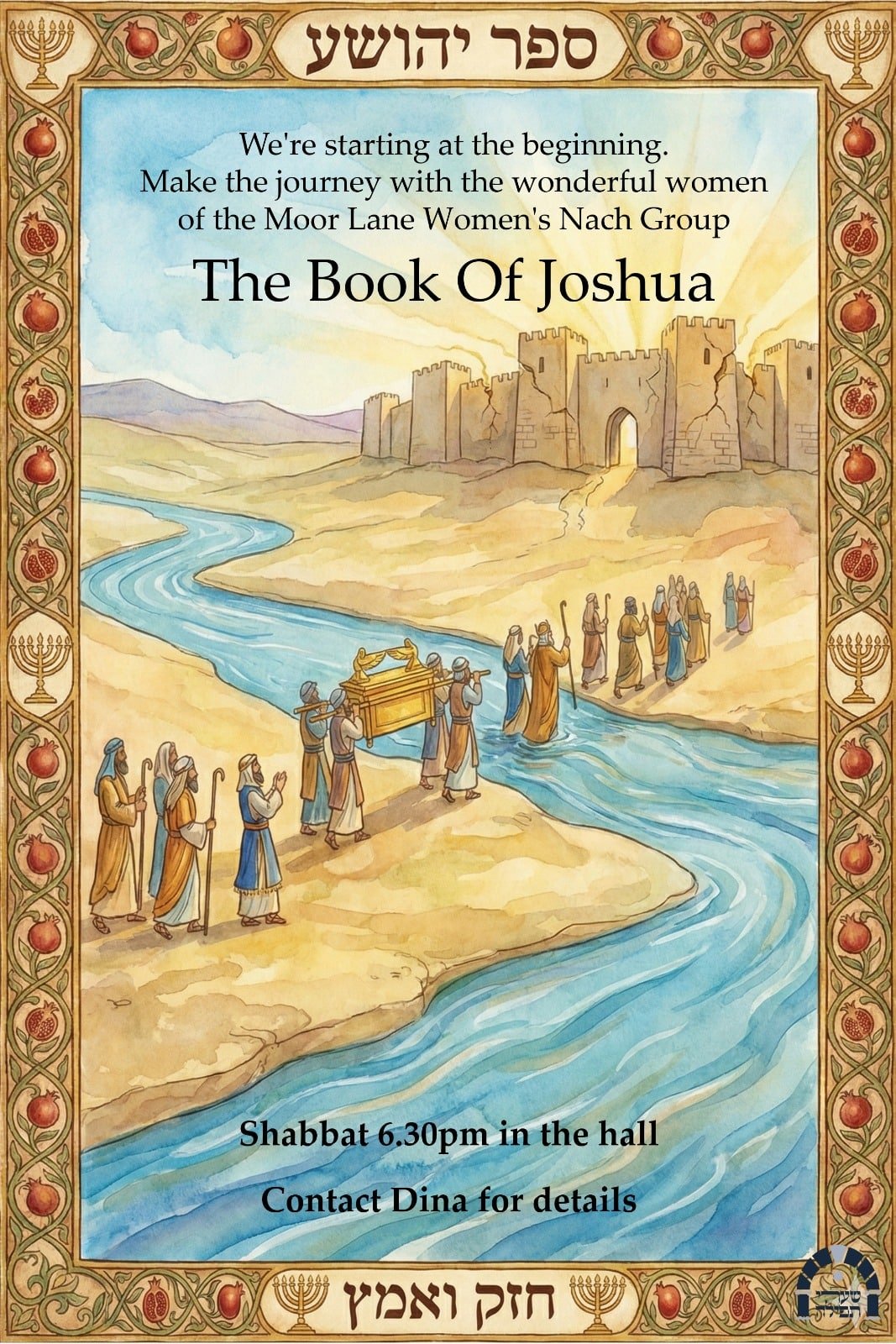
Moor Lane Women’s Nach Group
*******
Matot
Moshe teaches the rules and restrictions governing oaths and vows, especially the role of a husband or father in either upholding or annulling a vow. The Bnei Yisrael wage war against Midian. They kill the five Midianite kings, all the males and Bilaam. Moshe is upset that women were taken captive. They were catalysts for the immoral behavior of the Jewish People. He rebukes the officers. The spoils of war are counted and apportioned. The commanding officers report to Moshe that there was not even one casualty among the Bnei Yisrael. They bring an offering that is taken by Moshe and Elazar and placed in the Ohel Mo'ed (Tent of Meeting). The Tribes of Gad and Reuven, who own large quantities of livestock, petition Moshe to allow them to remain on the eastern side of the Jordan River and not enter the western Land of Israel. They explain that the land east of the Jordan is quite suitable grazing land for their livestock. Moshe's initial response is that this request will discourage the rest of the Bnei Yisrael, and that it is akin to the sin of the spies. They assure Moshe that they will first help conquer the Land of Israel, and only then will they go back to their homes on the eastern side of the Jordan River. Moshe grants their request on condition that they uphold their part of the deal.
Masei
The Torah names all 42 encampments of the Bnei Yisrael on their 40-year journey from the Exodus to the crossing of the Jordan River into Eretz Yisrael. Hashem commands the Bnei Yisrael to drive out the Canaanites from the Land of Israel and to demolish every vestige of their idolatry. The Bnei Yisrael are warned that if they fail to completely rid the Land of the Canaanites, those who remain will be “pins in their eyes and thorns in their sides.” The boundaries of the Land of Israel are defined, and the tribes are commanded to set aside 48 cities for the Levites, who do not receive a regular portion in the division of the Land. Cities of refuge are to be established so that someone who unintentionally kills another person may flee there. The daughters of Tzlofchad marry members of their own tribe so that their inheritance will stay in their own tribe. Thus ends the Book of Bamidbar/Numbers, the fourth of the Books of the Torah.

תספורת בימי בין המצרים – שנת תשפ”ו
אולם הספרדים ובני עדות המזרח לא נהגו להחמיר בזה, אלא מנהגינו כעיקר תקנת רבותינו התנאים, שגזרו אחר חורבן בית המקדש, שבשבוע שחל בו תשעה באב, אסור מלספר ולכבס, וכן פסקו הרמב”ם ומרן השלחן ערוך. אולם אלה מהספרדים שלומדים או גרים בסביבת אשכנזים, ורוצים להחמיר בזה, רשאים להחמיר. (כמו שכתב בספר חזון עובדיה ארבע תעניות).
ושבוע שחל בו תשעה באב, פירושו, השבוע שבתוכו חלה תענית תשעה באב, מיום ראשון ואילך. ולדוגמא השנה, שיחול יום תשעה באב ביום חמישי (עוד כמעט שלושה שבועות), הרי שמיום ראשון שלפניו, נוהגים כל מנהגי האבלות השייכים לשבוע שחל בו תשעה באב.
נחלקו הפוסקים, לענין אשה שאבלה על אחד משבעת קרוביה (אב ואם, אח ואחות, בן ובת, ובעל), האם אסור לה להסתפר, כשם שלאנשים אסור להסתפר, או שאיסור זה אינו נוהג באשה.
ולהלכה, מרן השלחן ערוך, אשר הספרדים וכל בני עדות המזרח הולכים לאורו, פסק שאין איסור תספורת נוהג באשה. ועל כן תיכף אחר שבעת ימי האבל, מותר לאשה להסתפר. אבל הרמ”א, שלפי הוראותיו הולכים האשכנזים היוצאים ביד רמ”א, פסק שאיסור תספורת נוהג גם בנשים.
ולפי זה נראה, שלדעת מרן השלחן ערוך, ולמנהג הספרדים, אין איסור תספורת נוהג בנשים גם בשבוע שחל בו תשעה באב. אבל למנהג האשכנזים היוצאים ביד רמ”א, אף הנשים בכלל איסור זה. וכן פסק הגאון רבי משה פיינשטיין זצ”ל, ועוד מגדולי הפוסקים.
ומכל מקום יש מרבני האשכנזים שכתבו, שאף על פי שבאבלות ממש, מנהגם הוא שגם הנשים אינן מסתפרות, מכל מקום בבין המצרים רשאיות הנשים להקל בזה, כי אין תוקף מנהג האבלות חמור כל כך מצד הדין, רק בתורת מנהג, כמו שביארנו. אבל בשבוע שחל בו תשעה באב, שאז איסור התספורת הוא מתקנת חכמי המשנה ממש, ולא רק מחמת המנהג, אין לחלק בין אנשים לנשים.
ולמעשה: מנהג האשכנזים לאסור תספורת בכל ימי בין המצרים. והספרדים מחמירים בזה רק בשבוע שחל בו תשעה באב, ולגבי נשים, אף מן האשכנזים המיקלות בזה, יש להן על מה לסמוך
The Laws of Taking Haircuts During the “Three Weeks”- The Year 5786
The Customary Prohibition of Haircuts
As a result of the mourning observed during the “Three Weeks,” the Ashkenazi custom is to abstain from shaving and taking haircuts beginning from the Seventeenth of Tammuz until the Tenth of Av.
Nevertheless, the Sephardic custom is not as stringent and follows the letter of the law established by a Tannaic enactment (following the destruction of the Bet Hamikdash) which is to prohibit taking haircuts and laundering clothing during the week during which Tisha Be’av falls out. The Rambam and Maran Ha’Shulchan Aruch rule likewise. Those Sephardic Jews who study with or live in close proximity to Ashkenazim may act stringently and abstain from shaving and taking haircuts from the Seventeenth of Tammuz.
The week during which Tisha Be’av falls out refers to the very week the fast of Tisha Be’av is observed, beginning from Sunday of that week. For instance, if Tisha Be’av occurs on Thursday, as it does this year, all of the mourning customs associated with the week during which Tisha Be’av falls out begin from the previous Sunday.
Haircuts for Women
Regarding a woman taking a haircut during the week during which Tisha Be’av falls out or during the “Three Weeks” according to the Ashkenazi custom, this depends on a related disagreement among the Poskim, as follows:
The Poskim disagree regarding whether a woman who is in mourning for one of seven relatives (father, mother, brother, sister, son, daughter, or husband) is forbidden to take a haircut just as it is forbidden for a male mourner or perhaps, this prohibition does not apply to women.
Halachically speaking, Maran Ha’Shulchan Aruch, whose rulings are followed by Sephardic and Middle Eastern Jews, writes that the prohibition to take a haircut does not apply to women. Thus, immediately following the initial seven days of mourning (Shiva), a woman may take a haircut. Nevertheless, the Rama, whose rulings are followed by Ashkenazi Jews, writes that the prohibition to take a haircut applies to women as well.
It therefore seems that according to Maran Ha’Shulchan Aruch and the Sephardic custom, the prohibition to take haircuts observed in mourning the destruction of the Bet Hamikdash does not apply to women either. However, according to the Rama and the Ashkenazi custom, women are also included in this prohibition. Hagaon Harav Moshe Feinstein zt”l and other great Poskim rule likewise.
On the other hand, there are Ashkenazi Poskim who write that although women are prohibited to take haircuts while in actual mourning for a relative, nevertheless, woman may, in fact, act leniently and take haircuts during the “Three Weeks,” for this (not taking haircuts throughout the entire “Three Weeks”) is not as much a halachic prohibition according to the letter of the law as it is a custom which has been accepted. However, during the week during which Tisha Be’av falls out, when it is an actual prohibition to take a haircut based on the edict of the Sages of the Mishnah and not merely customary, there is no distinction between men and women.
Halachically speaking, according to the Ashkenazi custom, men abstain from taking haircuts from the Seventeenth of Tammuz while the Sephardic custom is to permit this until the week during which Tisha Be’av falls out. Regarding women, those who wish to act leniently, even among Ashkenazi women, have on whom to rely.