


Taanit Esther
****

****


****
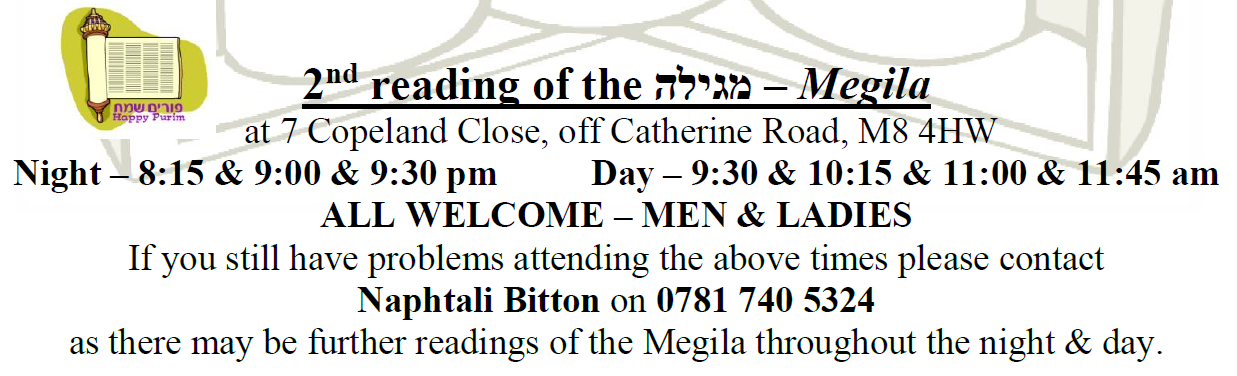
2nd Reading of the Megila
for Men & Ladies
Night
8:15 – 9:00 – 9:30 PM
Day
9:30 – 10:15 – 11:00 – 11:45 AM
🎉If none of the above times work for you
Please call Naphtali, as he may still read it again
during the day just for YOU
****
Zecher Lemachatzit Hashekel
1) One who did not give the Zecher Lemahatzit Hashekel before Purim should give it before the Megila reading.
2) One should be careful not to refer to the Zecher Lemahatzit Hashekel as mahatzit hashekel.
3) One should give an amount of money equal to the value of 9 grams, or about 1/3 of an ounce, of pure silver.
4) Ideally one should give the zecher lemahatzit hashekel using three coins since in Parshat Shekalim it says “terumat Hashem” three times.
5) Someone who can't afford to give the value of the silver can give an actual half shekel coin.
6) Anyone over twenty is required to give the zecher lemahatzit hashekel.
7) Some Poskim maintain that once a child reaches bar mitzvah he is also required to give it.
8) One should ideally also give a separate one for each child in the household.
Therefore the father of a family of five should ideally give five times the value of 9 grams of pure silver.
One for himself, one for his wife, and one for each of the children.
9) If he is not able to do so he should give the half shekel for himself and he should give a little more (even just a few coins) for the rest of his household.
The appropriate sum that one should donate in commemoration of the Half-Shekel this year (5786) is approximately $23 (USD) per person. (For those residing in Israel, based on the recent USD to ILS conversion rate, the sum this year is approximately 82 ILS per person.) The great Rishon Le’Zion, Hagaon Rabbeinu Yitzchak Yosef Shlit”a, writes that it is best to add the value of sales tax in order to cover all of the opinions.
The way to calculate this sum is as follows: A troy ounce of silver consists of 31.1 grams. Thus, the price of one troy ounce of silver [recently approximately $78 USD] must be divided by 31.1 and then multiplied by nine in order to find the updated price of nine grams of silver, which is the value of actual Half-Shekel coin, as we have mentioned in past years. There is a disagreement among the Poskim whether the price per ounce of silver should be calculated including applicable sales tax. Halachically speaking, Maran Rabbeinu Ovadia Yosef zt”l has instructed us that one may be lenient and calculate this sum excluding tax. However, if one acts stringently and donates a larger sum to charity, one shall surely be blessed from above.
The minimum amount of the donation for the commemoration of the Half-Shekel for small children is the value of a coin which is half of the local currency. Example: In the United States this would be a half-dollar coin, hence, the donation would equal fifty cents. (In Israel, this would be the Half-Shekel [NIS] coin.)
This Year 5786
Zecher Lemahatzit Hashekel
is around
£ 20
*******
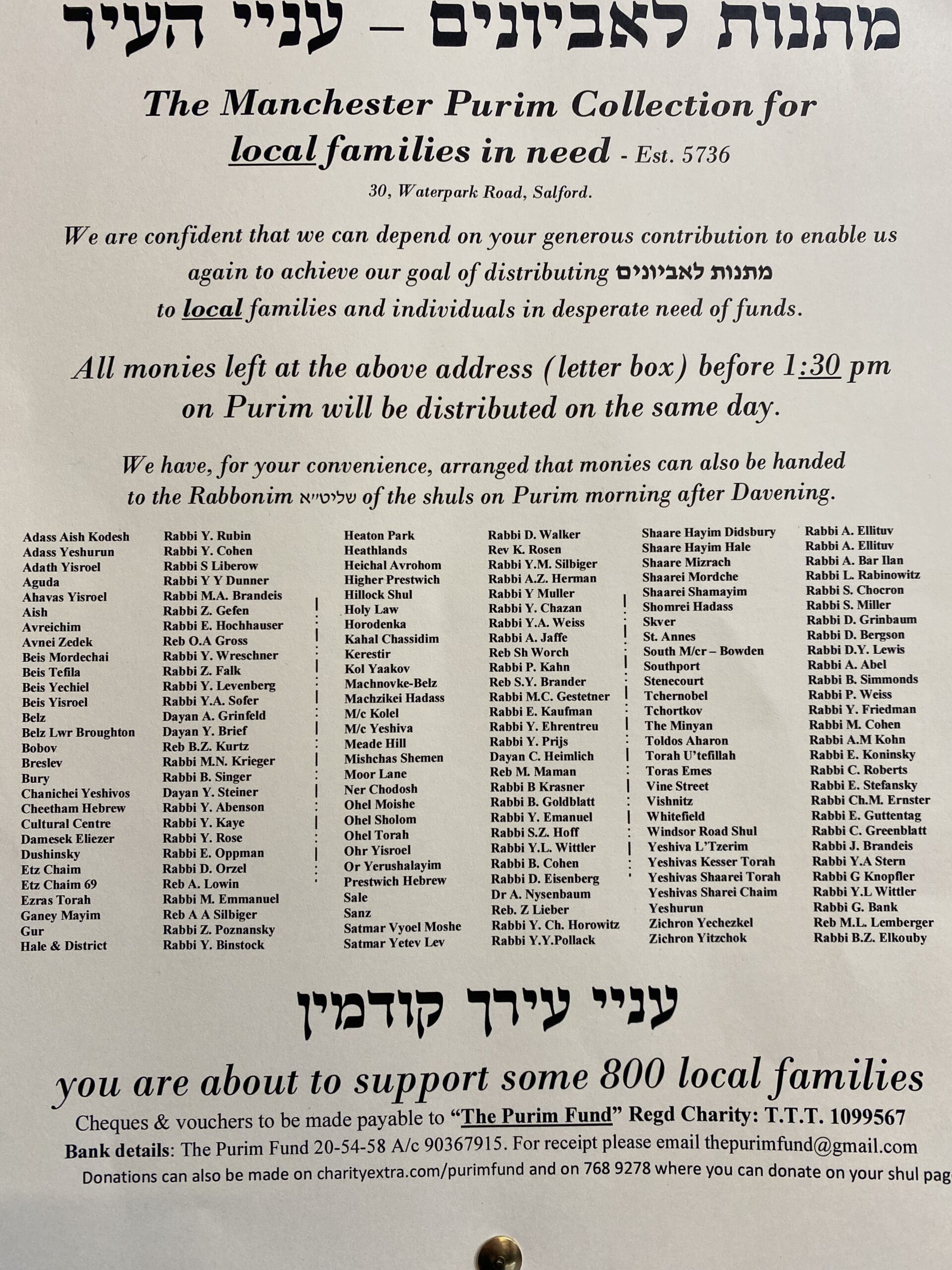

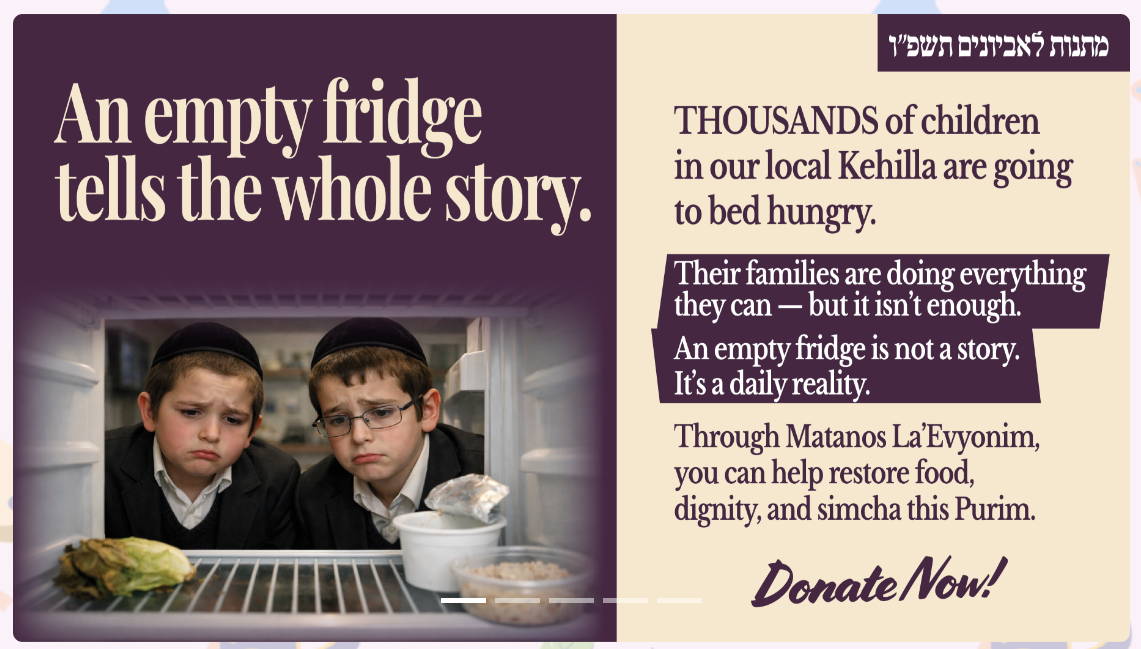
Purim Fund 2026 – Charity Extra
*****
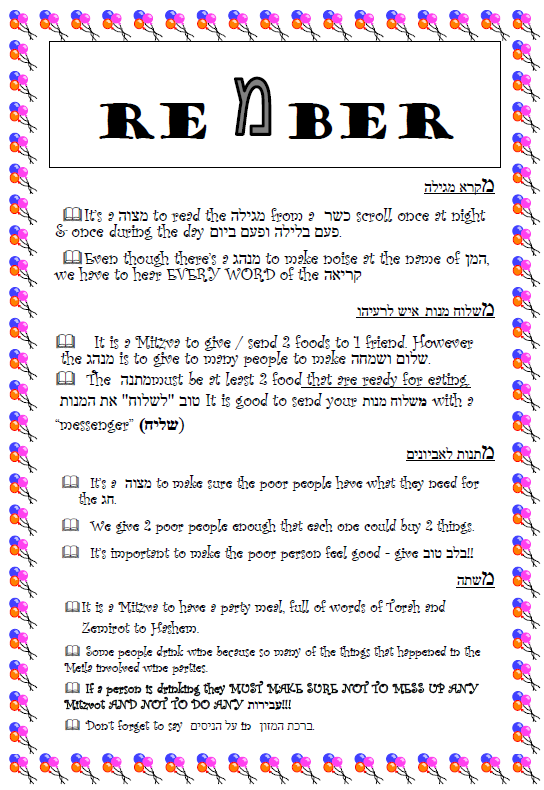
Mitzvot On Purim
מקרא מגילה
& It’s aמצוה to read theמגילה from a כשר scroll once at night & once during the day – פעם בלילה ופעם ביום.
& Even though there’s aמנהג to make noise at the name of המן, we have to hear EVERY WORD of the קריאה
משלוח מנות איש לרעיהו
& It is a מצוה to give / send 2 foods to 1 friend.
However theמנהג is to give to many people to make שלום ושמחה.
& Theמתנה must be at least 2 types of food that are ready for eating.
טוב “לשלוח” את המנות – It is good to send your משלוח מנות with a “messenger” (שליח)
מתנות לאביונים
& It’s a מצוה to make sure the poor people have what they need for the חג.
& We give 2 poor people enough that each one could buy 2 things.
& It’s important to make the poor person feel good – give בלב טוב!!
משתה
& It is a מצוה to have a party meal, full of words of תורה and זמירות to ה׳.
& Some people drink wine because so many of the things that happened in the מגילה involved wine parties.
& If a person is drinking they
MUST MAKE SURE NOT TO MESS UP ANY Mitzvot
& Don’t forget to say על הניסים in ברכת המזון.
*****
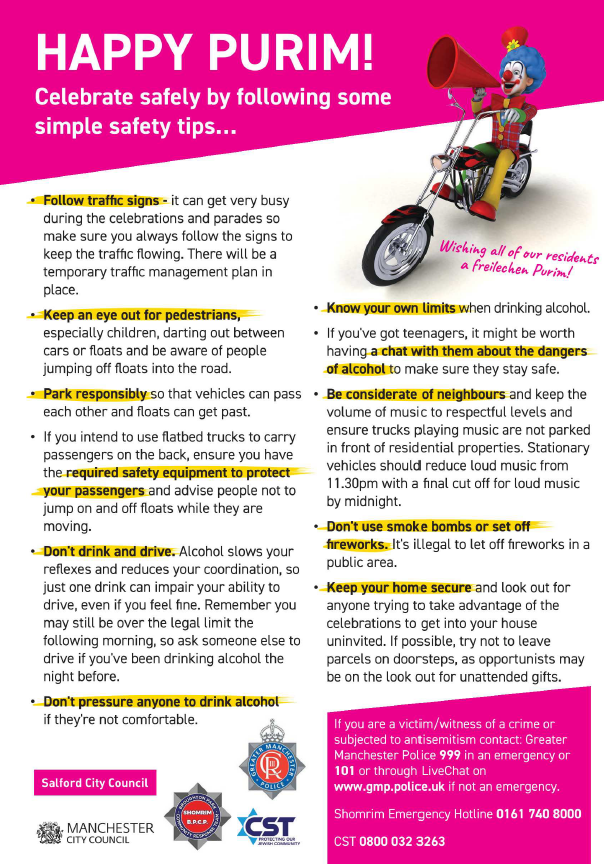
Important Taraffic Information for Purim

*******
🗓️
לוח זמני תפלה לחורף תשפ״ו
Winter Timetable 5786 – 2025/26
מוצאי שבת | ערבית (מוצ״ש) | שקיעה | מנחה שבת | סוף זמן קריאת שמע | הדלקת נרות | מנחה וקבלת שבת | תאריך | שבת פרשת |
Shabbat Ends | Arbit | Sunset | Minha | Shema before | Candle Lighting | Minha & Kabbalat Shabbat | Date | Parasha |
PM | PM | PM | PM | AM | PM | PM |
|
|
6:47 | 6:43 | 5:57 | 5:20 | 9:31 | 5:41 | 5:41 | 6/7 Mar | כי תשא (פרה) |
שבת
קרבנות
8:45 am
הודו
9:00 am
*******
Moshe conducts a census by counting each silver half-shekel donated by all men age twenty and over. Moshe is commanded to make a copper laver for the Mishkan. The women donate the necessary metal. The formula of the anointing oil is specified, and G-d instructs Moshe to use this oil only for dedicating the Mishkan, its vessels and Aharon and his sons. G-d selects Betzalel and Oholiav as master craftsmen for the Mishkan and its vessels.
The Jewish People are commanded to keep the Shabbat, an eternal sign that G-d made the world. Moshe receives the two Tablets of Testimony on which are written the Ten Commandments.
The mixed multitude who left Egypt with the Jewish People panic when Moshe's descent seems to be delayed, and so they force Aharon to make a golden calf for them to worship. Aharon stalls, trying to delay them. Hashem tells Moshe to return to the people immediately, threatening to destroy everyone and build a new nation from Moshe. When Moshe sees the camp of idol-worship, he smashes the Tablets and destroys the golden calf. The sons of Levi volunteer to punish the transgressors, executing 3,000 men.
Moshe ascends the mountain again to pray for forgiveness for the people, and G-d accepts his prayer. Moshe sets up the Mishkan and G-d's clouds of glory return. Moshe asks G-d to show him the rules by which he conducts the world, but he is granted only a small portion of this request. G-d tells Moshe to hew new Tablets, and reveals to him the text of the prayer that will invoke Divine mercy.
Idol worship, intermarriage and the combination of milk and meat are prohibited. The laws of Pesach, the first-born, the first-fruits, Shabbat, Shavuot and Succot are taught. When Moshe descends with the second set of Tablets, his face is luminous as a result of contact with the Divine.
Ohr Somayach Institutions www.ohr.edu
משפחה ומשפחה – ימי מלחמה
נאמר במגילת אסתר: “וְהַיָּמִים הָאֵלֶּה נִזְכָּרִים וְנַעֲשִׂים בְּכָל דּוֹר וָדוֹר מִשְׁפָּחָה וּמִשְׁפָּחָה מְדִינָה וּמְדִינָה וְעִיר וָעִיר וִימֵי הַפּוּרִים הָאֵלֶּה לֹא יַעַבְרוּ מִתּוֹךְ הַיְּהוּדִים וְזִכְרָם לֹא יָסוּף מִזַּרְעָם”. ועל מה שנאמר “משפחה ומשפחה” פירש רש”י: “מתאספין יחד ואוכלים ושותין יחד, וכך קבלו עליהם, שימי הפורים לא יעברו”. כלומר, קבלו עליהם היהודים שהיו בזמן מרדכי ואסתר, שבכל הדורות יתכנסו כל בני המשפחה יחד, משום שכאשר יושבים כמה בני משפחה יחד, גדלה השמחה, כפי שעושים במסיבות וסעודות מיוחדות. וביום פורים, מצוה לשמוח.
לכן כתב בספר “סדר היום”, שבסעודת פורים, יתעכב על שולחנו לאכול ולשתות יותר ממה שרגיל, ויקבץ כל אנשי ביתו וחבריו על שלחן אחד, כדרך המסיבה שמתאספים יחד הרבה אנשים לעשות סעודה, ומתוך כך מתרבה השמחה, אבל כאשר אדם יושב יחיד וגלמוד, אי אפשר לשמוח כראוי. והפוסקים הביאו את דברי “סדר היום” הללו. ולכן כל אדם יעשה כפי שיש ביכולתו, להשתדל להזמין חברים וקרובים יראי שמים לסעוד עם בני משפחתו, וישמחו יחד ויודו לה' על נסיו שבכל יום עמנו.
ובארחות חיים (הלכות פורים סימן לה) כתב בשם רבינו יצחק מקורביל, שאפילו אם סעודת פורים נמשכה עד שעה מאוחרת, יש לומר “על הנסים” בברכת המזון. וכן כתב בהגהות מיימוני (פ”ב מהל' מגילה) בשם מהר”ם מרוטנבורג. אולם רבינו הרא”ש בתשובה (כלל כב סי' ו) כתב, שאם יצא כבר יום פורים, אין להזכיר “על הנסים” בברכת המזון. שהרי כעת כבר אין זה פורים, ולא שייך לומר “שעשית לאבותינו בימים ההם בזמן הזה”.
וכדברי הרא”ש פסק רבינו הטור (סימן תרצה). שאם התחיל סעודתו ביום ונמשכה עד הלילה לא יאמר על הנסים בברכת המזון.
ומרן השלחן ערוך, הביא את דברי כל הפוסקים הללו בבית יוסף (סימן קפח), ופסק בשלחן ערוך לגבי שבת, שאם היה אוכל עד שיצאה שבת, מזכיר “רצה והחליצנו” בברכת המזון. וכן פסק לגבי פורים (בסימן תרצה), שאם התחיל סעודת פורים ביום, ונמשכה עד הלילה, אומר על הנסים, כי תמיד הולכים אחרי תחילת הסעודה. וכן הלכה, הן למנהג הספרדים והן למנהג האשכנזים, שאם נמשכה הסעודה עד שעה מאוחרת, יש להזכיר “על הנסים”, אף על פי שאין זה יום פורים ממש. מכל מקום, הסעודה הזו, היא סעודה ששייכת לזמן של פורים. ומי שטעה ולא הזכיר “על הנסים” בפורים, אינו חוזר לברך שוב. וכן אם שכח בתפלה, אינו חוזר להתפלל שוב.
מצוות מתנות לאביונים ומשלוח מנות וסעודת פורים ניתן ברוך ה' לקיים ללא בעיה.
וה' יבשרנו בשורות טובות, ומי שעשה נסים לאבותינו בימים ההם, הוא יראנו נסים ונפלאות, ויראנו את קץ הפלאות, נשמע ונתבשר בשורות טובות בנפילת כל אויבינו כמאז, ובנצחון ישראל, והשראת השכינה, בגאולה השלימה, במהרה בימינו אמן.
Every Family – Directions for Purim in Light of the War with Iran
The verse in Megillat Esther states, “Consequently, these days are recalled and observed in every generation, by every family, in every province, and in every city; and these days of Purim shall never cease among the Jews and their memory shall never perish among their descendants.” Rashi comments on the words “By every family”: “They gather together and eat and drink together; this is the manner in which they accepted upon themselves that the days of Purim shall not cease.” This means that the Jews in the times of Mordechai and Esther accepted upon themselves that in every subsequent generation, all family members would gather together in feasting, for when the entire family gathers together, this enhances the joyful occasion, as they would do for special parties and events. It is therefore a Mitzvah to rejoice in this way on Purim day.
Thus, the Sefer Seder Ha’Yom (authored by Rabbeinu Moshe ben Machir, a great Mekubal who lived in the times of the saintly Ari z”l) writes that on Purim, one should stay at one’s table longer than one usually would and eat and drink more that one is generally accustomed to. One should likewise gather all one’s family and friends around one table as one would at special parties, for this greatly enhances one’s joy on Purim day. However, when one sits all alone, one cannot truly rejoice. The Poskim quote these words of the Seder Ha’Yom. Thus, one must do his utmost to invite one’s friends and relatives to partake of the Purim feast along with one’s family and use this opportunity to rejoice and offer thanksgiving to Hashem for His never-ending miracles.
When the Purim Feast Continues into Motza’ei Purim
The Poskim discuss whether or not one should recite “Al Ha’Nissim” in Birkat Hamazon following the Purim feast which continues on into Motza’ei Purim. This is a question that can be posed almost every week when Seudah Shelishit (the third Shabbat meal) continues on into Motza’ei Shabbat. Should “Retzeh Ve’Hachalitzenu” be inserted into Birkat Hamazon or not in such a situation?
The Orchot Chaim (Hilchot Purim, Chapter 35) writes in the name of Rabbeinu Yitzchak of Corbeil that even if the Purim feast extends until several hours after Purim has already ended, one should recite “Al Ha’Nissim” in Birkat Hamazon. The Hagahot Maimoni (Chapter 2 of Hilchot Megillah) rules likewise in the name of his teacher, Maharam of Rottenberg. Nevertheless, the Rosh writes in a response (Chapter 22, Section 6) that if Purim has already ended, one should not recite “Al Ha’Nissim” since it is no longer Purim and it would not make sense to recite “That you have performed for our forefathers in those days, at this time.”
The Tur (Chapter 695) rules in accordance with his father, the Rosh, that if one began the Purim feast on Purim day and the meal continues into the following night, one should not recite “Al Ha’Nissim” in Birkat Hamazon.
Maran quotes all of these Poskim in his commentary, Bet Yosef (Chapter 188), and rules in his Shulchan Aruch (ibid.) regarding Shabbat, “If one was eating and Shabbat has concluded, one should insert ‘Retzeh Ve’Hachalitzenu’ into one’s Birkat Hamazon.” Maran rules likewise regarding Purim (in Chapter 695) that if one began the Purim feast on Purim day and the meal extends into the following night, one should recite ‘Al Ha’Nissim’ in Birkat Hamazon, for the determining factor regarding this law is the beginning of the meal. Thus, this is indeed the Halacha for both Ashkenazi and Sephardic Jews in that even if the meal extends well into the night, one should nevertheless recite “Al Ha’Nissim” in Birkat Hamazon. Although it is technically no longer Purim, this meal is nonetheless connected to Purim day. If one forgets to insert “Al Ha’Nissim” in Birkat Hamazon of Purim, one would not repeat Birkat Hamazon. The same law applies regarding inserting “Al Ha’Nissim” into all Amida prayers of Purim in that if one forgot to do so, one would not repeat one’s Amida prayer.
– – – – – – – – – – – – – – –
Directions for Purim in Light of the War with Iran
During this stressful time when sirens sound every so often, let us discuss the Halacha regarding hearing a siren during Megillah reading. If Megillah reading is being held outside a protected space and a siren sounds, those present should immediately seek shelter in a protected space. One should make an effort not to speak any words that are not absolutely necessary. Whenever possible, the congregation should return to the synagogue and continue the Megillah reading from the beginning of the verse where the Chazzan left off. In the event that the Chazzan cannot continue reading, someone else should repeat from the beginning of the Megillah, but without Berachot.
The Mitzvot of Matanot La'Evyonim, Mishloach Manot, and the Purim feast should be able to be fulfilled without any issue.
May Hashem bring about the downfall of all our enemies and perform miracles for us as He has during those days at this time and proceed to usher in the Ultimate Redemption, Amen!