

Newsletter Parashat Tzav – Shabbat Hagadol 5786

בס״ד
Moor Lane - Logo.JPG

image.png
ק׳ ק׳ שׁערי תפילה
Have a look at our website 
*****
This Shabbat is
Shabbat Hagadol

Shabbat Hagadol
The Shabbat before Pesach is called “Shabbat Hagadol,” or “the Great Shabbat,” a term that is generally understood as a reference to the miracle that occurred in Egypt on the Shabbat before Benei Yisrael's departure from Egypt. It was on that Shabbat, which fell on the tenth of Nissan, that Benei Yisrael designated sheep for the Korban Pesach (paschal offering) and tied them to their bedposts. The Egyptians inquired as to the purpose behind this designation of sheep, which the Egyptians worshipped as a pagan deity, and Benei Yisrael explained that they prepared the sheep for a sacrificial offering to God. Despite this grave insult to their deity, the Egyptians were powerless to oppose Benei Yisrael. They were miraculously struck by a disease that required them to regularly visit the restroom, thus impairing their ability to cause any harm to Benei Yisrael.
In commemoration of this great miracle that occurred on the Shabbat before Pesach on the year when Benei Yisrael left Egypt, we observe this Shabbat as a special occasion and refer to it as “Shabbat Hagadol.”
Some have raised the question as to why we commemorate this miracle specifically on the Shabbat before Pesach, rather than on the calendar date when this miracle occurred – the tenth of Nissan. Why don't we observe a commemoration on this date regardless of the day of week on which it falls?
One answer suggests that it was specifically due to Benei Yisrael's observance of Shabbat that the greatness of this miracle was felt. When they told the Egyptians on that day of their plans to slaughter the sheep as a sacrifice, the Egyptians believed them despite the fact that they did not slaughter the sheep that day, because they understood that Benei Yisrael would not kill animals on Shabbat. On the subsequent days, however, when the Egyptians saw that Benei Yisrael were not yet slaughtering the sheep, they began to suspect that they were bluffing all along. It was thus specifically on Shabbat when the Egyptians sought to foil Benei Yisrael's plans but were miraculously prevented from doing so, and for this reason we commemorate this miracle specifically on the Shabbat before Pesach.
Others explain that the tenth of Nissan marks yet another great miracle in Jewish history – the splitting of the Jordan River when Benei Yisrael entered the Land of Israel, as recorded in the Book of Yehoshua (chapter 3). In order to make it clear that we commemorate the miracle in Egypt, and not the splitting of the Jordan, we observe our commemoration on the Shabbat before Pesach, rather than on the calendar date of the tenth of Nissan.
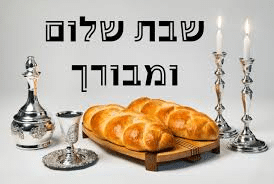
The Chid”a (Rabbi Chayim Yosef David Azulai, 1724-1806) writes that on this Shabbat people should extend to one another the greeting, “Shabbat Hagadol Shalom” and then respond, “Shabbat Hagadol Shalom U'mevorach.”
There is a widespread custom for the Grand Rabbi of the congregation to deliver on this Shabbat a special Derasha (lecture) devoted to the laws of Pesach and discussions of the Haggada in preparation for the holiday. This is another reason for calling this Shabbat “Shabbat Hagadol,” which perhaps means, “the Shabbat of the great person,” referring to the Grand Rabbi. Additionally, the Derasha delivered on Shabbat Hagadol is typically lengthier than the Rabbi's usual lecture. (The late Chief Rabbi of the Sephardic Community in Brooklyn, Chacham Yaakov Kassin A”H, would deliver his Derasha on Shabbat Hagadol in Congregation Shaare Zion for several hours before Mincha.) The term “Shabbat Hagadol” may thus refer to the “great,” or long, lecture that the Rabbi delivers on this Shabbat.
Some Ashkenazim have the practice of reciting the Maggid section of the Haggada on Shabbat Hagadol, in order to familiarize themselves with the Haggada in preparation for the Seder. The Gaon of Vilna (Rabbi Eliyahu of Vilna, 1720-1797) opposed this practice, in light of the emphasis made in the Haggada itself that the obligation to tell the story of the Exodus applies only on the night of Pesach (“Lo Amarti Ela Be'sha'a She'yeish Matza U'marror Munachim Lefanecha”). In any event, even for those of us who do not actually recite the Haggada on Shabbat Hagadol, this Shabbat is an appropriate time to begin reviewing the Haggada and prepare material for the Seder


The Significance of Shabbat Hagadol
Maran, in Shulhan Aruch, discusses the special Shabbatot that precede Pesah and the various Halachot that apply on those days. On Shabbat Shekalim, we take out an extra Sefer Torah and read the section of Shekalim, just as on Shabbat Zachor, the Shabbat before Purim, we read the section of Zachor, and we read special portions from the Torah on Shabbat Para and Shabbat Ha’hodesh. Interestingly, however, Maran also makes mention of the Shabbat immediately preceding Pesah, which is called Shabbat Hagadol (“The Great Shabbat”) because of the miracle that occurred on this Shabbat. Maran makes mention of this Shabbat, even though there are no specific Halachot associated with this Shabbat. There is no special reading from the Sefer Torah on this Shabbat, and there are no special prayers, and yet Maran made a point of mentioning in his Halachic code that this Shabbat is special and is called Shabbat Hagadol.
It is true that there are several customs observed by some communities on this Shabbat. For example, many synagogues read a special Haftara on this Shabbat, but this is not required according to the strict Halacha. Some Ashkenazim read portions of the Haggadah on Shabbat Hagadol, but this, too, is just a custom, and in fact the Vilna Gaon (Rabbi Eliyahu of Vilna, 1720-1797) was opposed to the practice.
The Hida (Rav Haim Yosef David Azulai, 1724-1807) suggested that perhaps the Halachic implications of the status of Shabbat Hagadol relates to greetings extended to one another on this Shabbat. Instead of greeting one another with the usual greeting of “Shabbat Shalom,” the Hida suggested that perhaps one should instead extend the greeting, “Shabbat Hagadol Shalom,” and the other should then respond, “Shabbat Hagadol Shalom U’meborach.” Still, it remains unclear why Maran would make a point of mentioning Shabbat Hagadol if there are no actual Halachot that apply on this Shabbat.
Former Chief Rabbi Eliyahu Bakshi-Doron, in his work Binyan Ab, suggested that the practical significance of Shabbat Hagadol lies in the perspective it gives us on the preparations for Pesah. On the Shabbat before the Exodus, which was the 10th of Nissan, Beneh Yisrael were instructed to prepare a sheep for the Korban Pesah (paschal sacrifice) which was slaughtered four days later, on the 14th of Nissan. In full view of the Egyptians, who worshipped sheep as an Aboda Zara, Beneh Yisrael took a lamb and tied it to their bedpost, and they even explained to the Egyptians what they were doing, that this animal would be sacrificed to G-d. The Egyptians wanted to kill the people for desecrating their deity, but G-d performed a miracle and made them powerless to cause Beneh Yisrael any harm.
Rav Bakshi-Doron noted that this miracle differed fundamentally from the ten plagues. The ten plagues were brought directly by G-d, whereas the miracle of Shabbat Hagadol came about through the people’s courage. It was through their preparations for the Misva that a miracle happened. And the fact that G-d performed a miracle during the preparation for the Misva, four days before the actual performance of the Misva, is very significant. It demonstrates that even the preparatory stages have great value; that even the work we do in preparation for a Misva is laden with significance. And thus Maran made mention of Shabbat Hagadol in Shulhan Aruch, to teach us the importance of preparing for Pesah, by learning and teaching the Halachot and putting ourselves in the proper frame of mind for the holiday. The miracle of Shabbat Hagadol teaches us that it is not only the Misva itself that has value, but also the work we invest beforehand preparing ourselves for the performance of the Misva.

****
Reminder
image.png
Reminder that once the clocks change 
the shabbat morning times will change to:

🕯️SUMMER TIMES FOR SHABBAT MORNING🕯️

שבת

קרבנות

9:00 am
הודו
9:15 am 
********
image.png
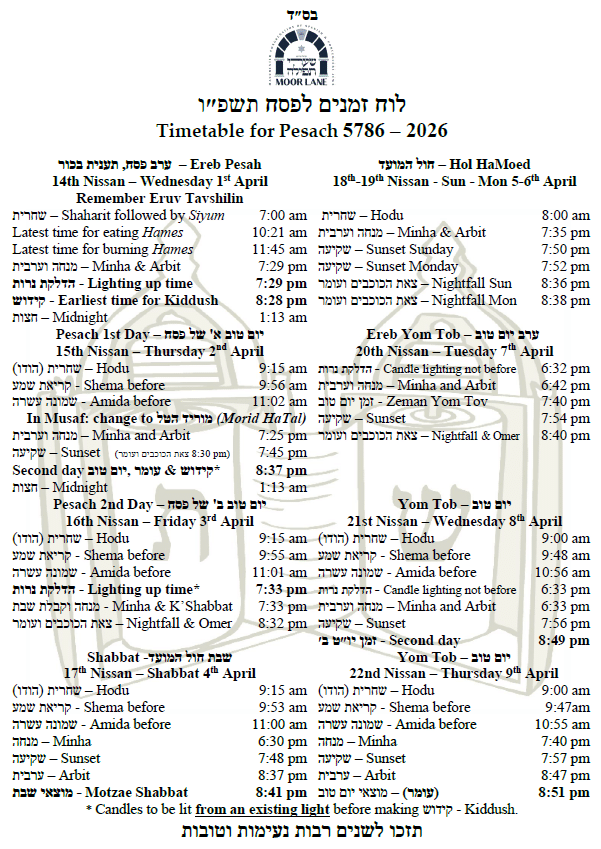
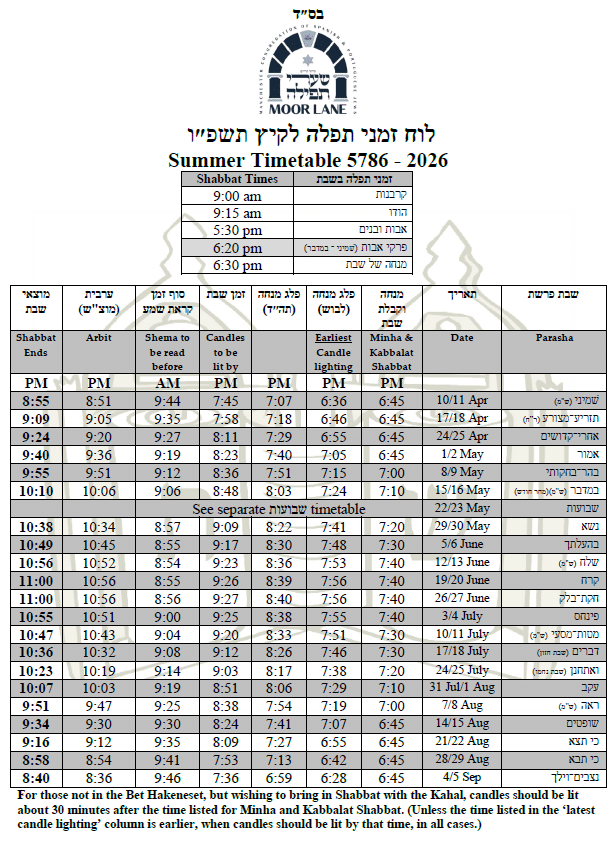
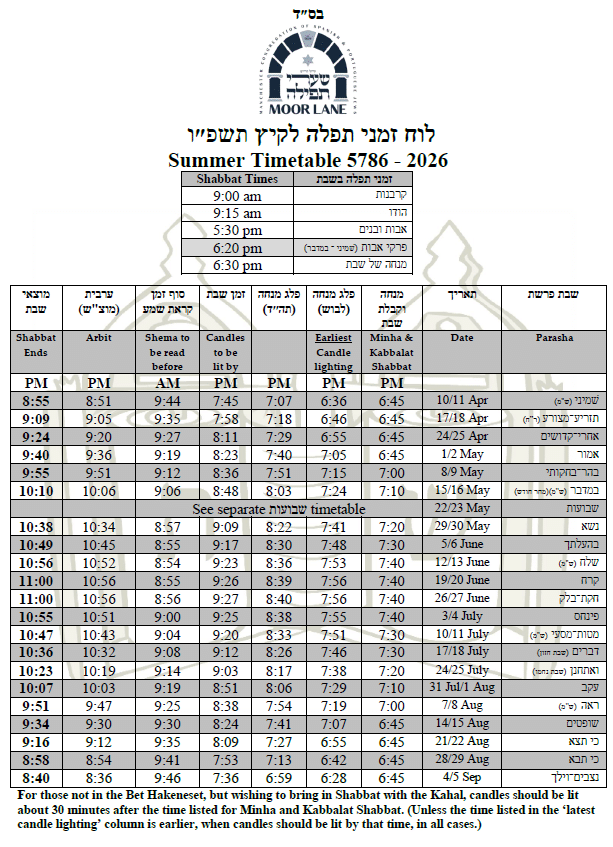
Pesach & Summer 
Timetables 
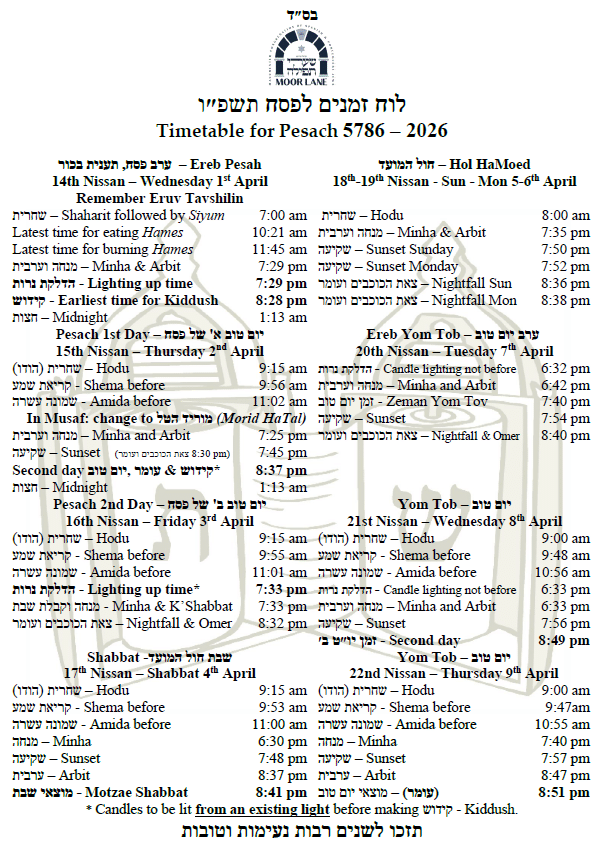
Attached to this email
image.png
image.png

*******
image.png
image.png
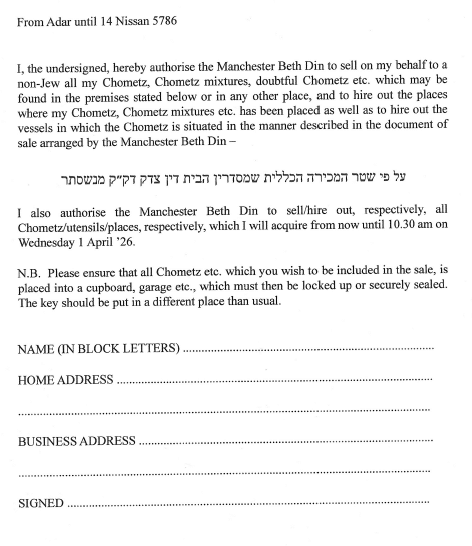
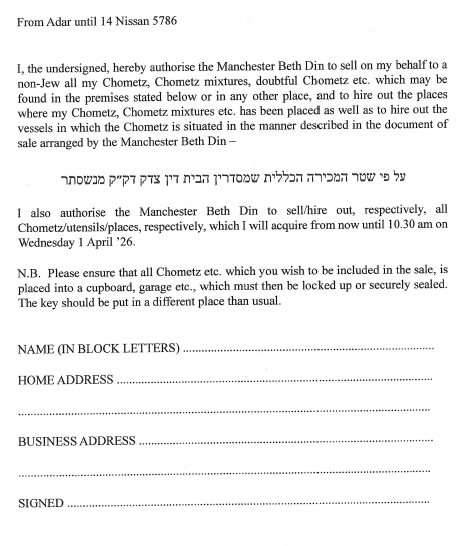
📜Completed forms can be handed directly to 
Mordechai Maman 
by 
Monday 30th March
straight AFTER Arvit 
Alternatively, they can be taken directly to the 
Manchester Bet Din
BEFORE Erev Pesach  – Wednesday  1st April 
Please Note: 
Online signed forms will 
NOT be accepted by the Bet Din 
as they only accept physically signed forms

*********

image.png
We kindly ask members 
who have seat boxes in the
Bet Hakeneset
to clear & clean their boxes
of any possible Chametz 
that may have been left during the year
as they will not be included in the
Bet Hakeneset's mechira
and will still belong to you over Pesach
Thanking you for your cooperation 
Pesach Kasher Vesameach

***

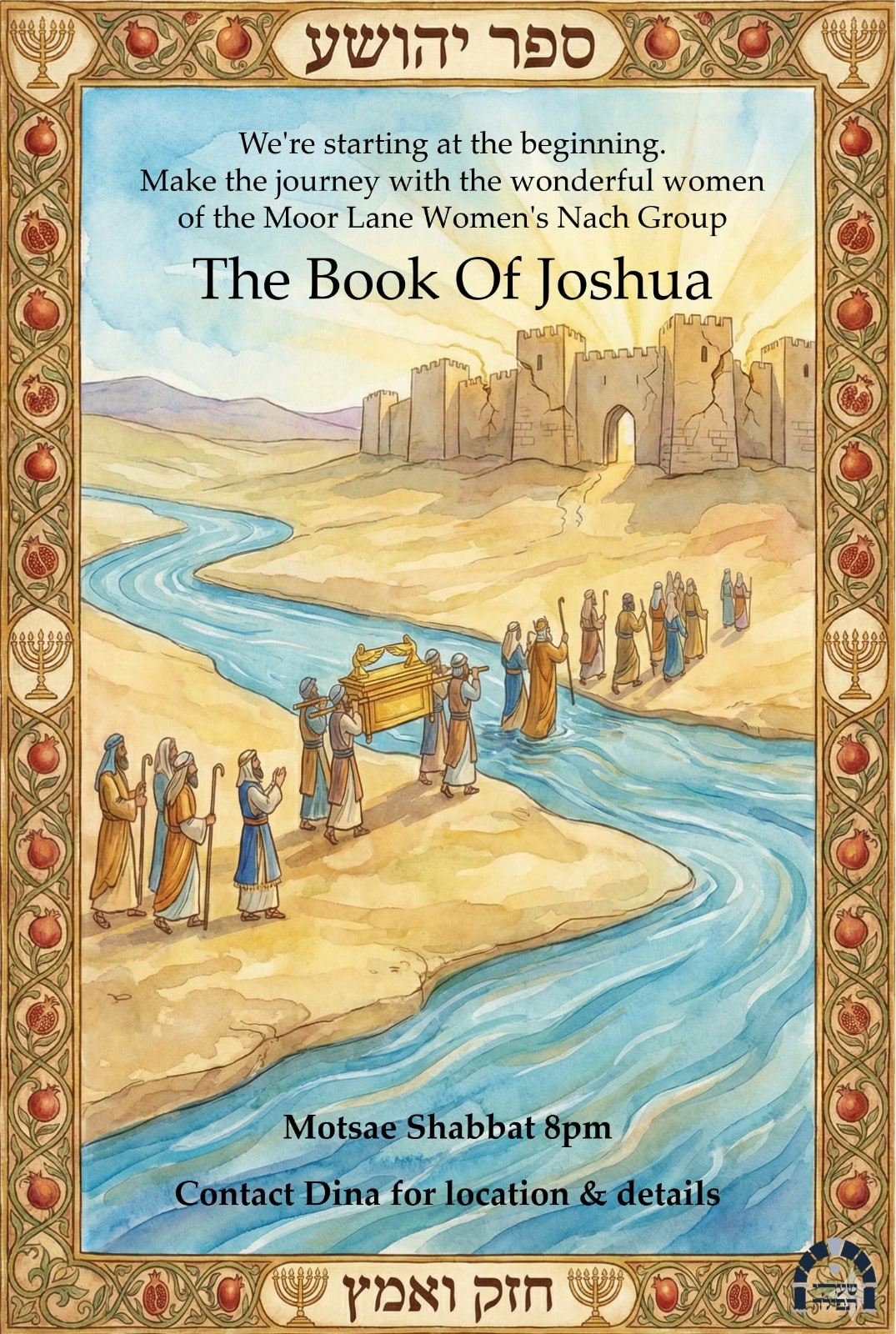
🪉Moor Lane Women’s Nach Group🪉

PHOTO-2026-03-10-21-41-00.jpg

*******

🕯️שבת🕯️

לוח זמני תפלה לחורף  תשפ״ו

Winter Timetable 5786 – 2025/26

מוצאי שבת

ערבית

(מוצ״ש)

שקיעה

מנחה שבת

סוף זמן קריאת שמע

הדלקת נרות

מנחה וקבלת שבת

תאריך

שבת פרשת

Shabbat

Ends

Arbit

Sunset

Minha

Shema before

Candle Lighting

Minha & Kabbalat Shabbat

Date

Parasha

PM

PM

PM

PM

AM

PM

PM


7:27

7:23

6:36

6:00

9:03

6:20

6:20

27/28 Mar

צו (שבת הגדול)

*****

🕯️WINTER TIMES FOR SHABBAT MORNING🕯️

שבת

קרבנות

8:45 am
הודו

9:00 am

********

📜
Parasha Overview

The Torah addresses Aharon and his sons to teach them additional laws relating to their service. The ashes of the korban olah — the offering burned on the Altar throughout the night — are to be removed from the area by the kohen after he changes his special linen clothing. The olah is brought by someone who forgot to perform a positive commandment of the Torah. The kohen retains the skin. The fire on the Altar must be kept constantly ablaze. The korban mincha is a meal-offering of flour, oil and spices. A handful is burned on the Altar and a kohen eats the remainder before it becomes leaven. The Torah portion describes the special korbanot to be offered by the Kohen Gadol each day and by Aharon’s sons and future descendants on the day of their inauguration. The chatat, the korban brought after certain accidental transgressions, is described, as are the laws of slaughtering and sprinkling the blood of the asham guilt-korban. The details of shelamim, various peace korbanot, are described, including the prohibition against leaving uneaten until morning the remains of the todah, the thanksgiving-korban. All sacrifices must be burned after they may no longer be eaten. No sacrifice may be eaten if it was slaughtered with the intention of eating it too late. Once they have become ritually impure, korbanot may not be eaten and should be burned. One may not eat a korban when he is ritually impure. Blood and chelev (certain animal fats) are prohibited to be eaten. Aharon and his sons are granted the breast and shank of every korban shelamim. The inauguration ceremony for Aharon, his sons, the Mishkan and all of its vessels is detailed.

*******
image.png  

Halachot from Maran Rabbi Ovadia Yosef Ztz'l

הכשר הכיורים והמטבח

כבר ביארנו, שכשם שיש לייחד כלים נפרדים למאכלי בשר ולמאכלי חלב, כמו כן בחג הפסח, אסור להשתמש בכלים של כל השנה, אלא יש לייחד כלים כשרים לפסח.

ואמנם יש אופנים בהם ניתן להכשיר כלי שהשתמשו בו בחמץ, ולעשותו כשר לפסח.

כלי פלסטיק, יש להם הכשר לפסח כדרך תשמישן, דהיינו שאם השתמשו בהם בצונן, די להם בשטיפה יסודית, ואם השתמשו בהם בכלי שני, דהיינו שיצקו לתוכם מאכלים חמים מסיר אחר, יש להם הכשר על ידי עירוי מים רותחים מכלי ראשון, וכפי שכבר הסברנו, שניתן לעשות זאת על ידי יציקת מים רותחים מהקומקום החשמלי ישירות על גבי כלי הפלסטיק.

ולפיכך “שעוונית” (שהיא מפה מחומר פלסטי) שהייתה פרושה על גבי השולחן במשך כל השנה, ויש לחוש שנשפכו על גביה מאכלי חמץ רותחים במשך השנה. אפשר להכשירה על ידי ניקיון יסודי, ועירוי מים רותחים מכלי ראשון על גבי השעוונית, וכן ניתן להכשיר את השעוונית, על ידי כיבוס במים רותחים.

ואם אכלו על השלחן בלא הפסק מפה נוהגים להכשירו על ידי ניקיון יסודי ועירוי במים רותחים כנ”ל. ואם אין רוצים לערות מים רותחים על גבי השלחן כדי שלא יתקלקל או מאיזה סיבה שתהיה, מותר לאכול על גביו בחג הפסח על ידי שיפרוש עליו מפה או שעוונית.

דין השיש שבמטבח הרי הוא כדין השלחן, ואפשר להכשירו לפסח על ידי שיערו עליו מים רותחים מכלי ראשון אחרי ניקוי יסודי. וכמו כן יש להכשיר את הכיורים בבית (אף אם הם עשויים חרסינה) על ידי עירוי מים רותחים מכלי ראשון, ודי בזה. ויש המחמירים לצפות את השיש והכיור בנייר אלומיניום. ונכון לעשות כן על ידי נייר חזק ועבה, כדי שלא יקרע בקלות.

כתב רבינו יהודה החסיד, שבהיות ודיני הגעלה מרובים מאד בפרטיהם ובפרטי פרטים, ראוי למנות בעל תורה להשגיח על הגעלת כלים. וכן בכל מקרה שמתעוררת שאלה בדיני פסח, צריך כל אדם לפנות לתלמיד חכם אמיתי שיורה לו הדרך אשר ילך בה ואת המעשה אשר יעשון.

ובזמנינו ברוך ה', לרוב בני האדם יש כלים מיוחדים לימות הפסח, ובזה יוצאים מכל חשש


Koshering Sinks and Kitchen Countertops

We have previously discussed that just as one should designate vessels for milk and meat respectively, likewise, regarding the holiday of Pesach, one should not use one’s regular Chametz vessels that were used all year round; rather, one should designate special kosher for Pesach vessels.

Nevertheless, there are ways to make vessels that were used for Chametz kosher for Pesach use.

Plastic utensils are able to be koshered according to their use, meaning that if they were used with cold items, a thorough washing is sufficient, and if they were used as a “Keli Sheni”, meaning that hot foods were dished into them from a pot boiled on a flame, they may be koshered by pouring boiling water from a “Keli Rishon” (a pot where the water was boiled) onto them. As we have explained in a previous Halacha, this may be performed by pouring boiling water directly from an electric kettle onto the plastic utensil.

Therefore, if a plastic tablecloth (non-disposable) was draped over the table during the course of the year which hot Chametz quite possibly may have spilled onto, it may be koshered with a thorough cleaning followed by pouring boiling water from a “Keli Rishon” onto it. Similarly, it may be koshered through laundering it in boiling water.

If a table was eaten on during the course of the year without the use of a tablecloth, the table may be koshered with a thorough cleaning followed by pouring boiling water from a “Keli Rishon” onto it, as above. If one does not wish to pour boiling water onto the table so as not to ruin it or for any other reason, one may eat on this table during the holiday of Pesach by using a new regular or plastic tablecloth.

Kitchen countertops have the same halachic status as the table and may be koshered through pouring boiling water from a “Keli Rishon” onto them after being thoroughly cleaned. Similarly, kitchen sinks (even if they are made of ceramic) may be koshered through pouring boiling water from a “Keli Rishon” onto them, and this is sufficient. Some act more stringently and cover the countertops and sinks with aluminum foil.

Rabbeinu Yehuda Ha’Chassid writes that since the laws of Hag’ala are tedious and detailed, it is proper to appoint a prominent Torah scholar to oversee the process of Hag’ala of utensils. Similarly, if one encounters a question regarding any Pesach-related issue, one should consult a leading halachic authority to guide him on the true Torah path. 

Nowadays, most people are able to afford a separate set of dishes and silverware fore Pesach and in this way, one avoids all doubt.

Newsletter Parashat Vayikra

בס״ד
Moor Lane - Logo.JPG

image.png
ק׳ ק׳ שׁערי תפילה
Have a look at our website 
*****
ראשׁ חודשׁ טוב ומבורך
image.png
 *****
image.png
Pesach & Summer 
Timetables 
Attached to this email
image.png
image.png

*******
image.png
image.png
📜Completed forms can be handed directly to 
Mordechai Maman 
by 
Monday 30th March
straight AFTER Arvit 
Alternatively, they can be taken directly to the 
Manchester Bet Din
BEFORE Erev Pesach  – Wednesday  1st April 
Please Note: 
Online signed forms will 
NOT be accepted by the Bet Din 
as they only accept physically signed forms

*******

🪉Moor Lane Women’s Nach Group🪉

PHOTO-2026-03-10-21-41-00.jpg

*******

🕯️שבת🕯️

לוח זמני תפלה לחורף  תשפ״ו

Winter Timetable 5786 – 2025/26

מוצאי שבת

ערבית

(מוצ״ש)

שקיעה

מנחה שבת

סוף זמן קריאת שמע

הדלקת נרות

מנחה וקבלת שבת

תאריך

שבת פרשת

Shabbat

Ends

Arbit

Sunset

Minha

Shema before

Candle Lighting

Minha & Kabbalat Shabbat

Date

Parasha

PM

PM

PM

PM

AM

PM

PM


7:13

7:09

6:23

5:50

9:13

6:07

6:07

20/21 Mar

ויקרא

*****

🕯️WINTER TIMES FOR SHABBAT MORNING🕯️

שבת

קרבנות

8:45 am
הודו

9:00 am

********

📜
Parasha Overview

The Book of Vayikra (Leviticus) also known as Torat Kohanim — the Laws of the Priests — deals largely with the korbanot (offerings) brought in the Mishkan (Tent of Meeting). The first type of offering is called a korban olah, a burnt-offering. The animal is brought to the Mishkan's entrance. For cattle, the person bringing the offering sets his hands on the animal. Afterwards, it is slaughtered, and the kohen sprinkles its blood on the Altar. The animal is skinned and cut into pieces. The pieces are arranged, washed and burned on the Altar.
A similar process is described involving burnt-offerings of other animals and birds. The various meal-offerings are described. Part of the meal-offering is burned on the Altar, and the remaining part is eaten by the kohanim. Offering any kind of leaven or honey on the Altar is prohibited. The peace-offering (Shelamim) — parts of which are burned on the Altar and parts of which are eaten by the kohanim and by the owner — can be from cattle, sheep or goats.

The Torah prohibits eating blood or “chelev”, certain fats of the animal. The offerings that atone for inadvertent sins committed by the Kohen Gadol, by the entire community, by the Nasi (“Prince”) and by the average citizen, are detailed. Laws of the guilt-offering, which atones for certain verbal transgressions and for transgressing laws of ritual purity, are listed. The flour-offering for those who cannot afford the normal guilt-offering, the offering to atone for misusing sanctified property, laws of the “questionable guilt” offering, and offerings for dishonesty — are detailed.

*******
image.png  

Halachot from Maran Rabbi Ovadia Yosef Ztz'l

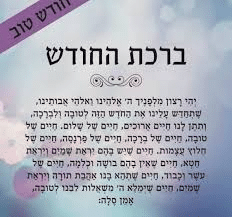
ברכת האילנות – תשפ”ו


היוצא בימי ניסן, ורואה אילנות פרי שמוציאים פרחים, מברך:

“בָּרוּךְ אַתָּה ה', אֱלֹקינוּ מֶלֶךְ הָעוֹלָם, שֶׁלֹּא חִסֵּר בְּעוֹלָמוֹ כְּלוּם, וּבָרָא בוֹ בְּרִיוֹת טוֹבוֹת וְאִילָנוֹת טוֹבוֹת, לֵהָנוֹת בָּהֶם בְּנֵי אָדָם”.

יום א' בניסן יחול השנה (תשפ”ו) השבוע, ביום חמישי, ראש חודש ניסן.

ותיקנו רבותינו ברכה זו, מכיון שהליבלוב באילנות הוא דבר שבא מזמן לזמן באופן מחודש, שאדם רואה עצים יבשים שהפריחם הקדוש ברוך הוא (הרא”ה בספר פקודת הלוים, ברכות מג:). ואין לברך ברכה זו אלא פעם בשנה ולא יותר.

נוסח ארוך

במחזורים לחג הפסח, וכן בחלק מהסידורים ישנו נוסח תפילה מיוחדת (עם נוסח “לשם יחוד”) שאומרים עם ברכת האילנות, וטוב מאד לאומרו, וכן היה נוהג מרן זצ”ל, שהיה יוצא מביתו מיד לאחר תפילת שחרית ביום ראש חודש ניסן, והולך למקום שגדלים בו אילנות, ומברך את הברכה עם הציבור.

אם נסתיימה הפריחה

אם כבר נסתיימה הפריחה, כלומר, הופעת הפרחים באילן נסתיימה מחמת שינויים במזג האויר, והחלו לצאת פירות, כפי שקורה הרבה באילנות של שקדים וכדומה, אי אפשר לברך על אילנות אלה ברכת האילנות. ואפילו אם לא יצאו הפירות, אבל כבר נפלו הפרחים, אי אפשר לברך ברכת האילנות, לפי שאין הברכה אלא על פריחת האילנות, שהיא יציאת הפרח דוקא. ומכל מקום, אילן שהתחילו לגדול חלק מפירותיו, אם יש בו עדיין פרחים וניצנים, מברך עליו ברכת האילנות.

נשים, האם תברכנה ברכת האילנות?

גם הנשים יכולות לברך ברכת האילנות בחודש ניסן, ואף על פי שנשים פטורות ממצוות עשה שהזמן גרמן (דהיינו מצוות שהן בקום עשה ונוהגות רק בזמן מסוים כגון מצות ארבעת המינים בסוכות), מכל מקום ברכת האילנות תברכנה.

והטעם שברכת האילנות אינה נחשבת למצות עשה שהזמן גרמא, מבואר בספר טורי אבן (מגילה כ:) לגבי מצות “הבאת ביכורים לבית המקדש”. שמצות הבאת ביכורים היתה נוהגת רק עד חג החנוכה, ובכל זאת הנשים היו מביאות ביכורים לבית המקדש. והטעם שמצות ביכורים אינה מצות שהזמן גרמא, הוא משום שדוקא מצוה שאינה נוהגת בכל זמן מצד עצם המצוה, כגון ציצית שאינה מתקיימת בלילה, הרי היא נחשבת “מצות עשה שהזמן גרמא”, אבל מצות ביכורים, מצד עצמה היתה ראוייה להתקיים כל השנה, אלא שמחנוכה ואילך לא היו מצויים פירות בפרדסים, ואילו היו מצויים עוד פירות, היו הימים ראויים להבאת ביכורים, ולכן מצוה זו אינה נחשבת למצות עשה שהזמן גרמא.

והוא הדין בנדון ברכת האילנות, שמעצם מצות ברכת האילנות, היה ראוי לברך בכל זמן, אלא שהטעם שמברכים דוקא בימי ניסן הוא משום שאז מלבלבים האילנות, נמצא אם כן שאין הזמן גורם את הברכה, רק הוא תנאי לברכה, ולכן גם נשים תברכנה ברכת האילנות.


The Blessing of the Trees- 5786

One who goes out during the month of Nissan and sees trees starting to blossom recites the blessing: “Baruch Ata Hashem Elokeinu Melech Ha’Olam Shelo Chiser Be’Olamo Kelum U’Vara Vo Beriyot Tovot Ve’Ilanot Tovot Le’hanot Bahem Beneh Adam.”

This year (5786), Rosh Chodesh Nissan will fall out this coming Thursday, G-d-willing.

Our Sages established this blessing because the budding of the trees is an occurrence of renewal that happens once a year when a person sees trees that have already dried up and Hashem revitalizes them and makes them blossom anew (Rabbeinu Aharon Ha’Levi in his Sefer Pekudat Halviyim, Berachot 43b). This blessing is recited once a year and no more.

The Longer Text
In many Siddurim and Pesach Machzorim, there is a longer prayer appendaged to the Blessing of the Trees (including a Leshem Yichud text). It is praiseworthy to recite it, and this was indeed the custom of Maran zt”l. He would walk to a group of trees after Shacharit prayers on the morning of Rosh Chodesh Nissan and recite this blessing with the congregation.

If the Blossoming has Concluded
If the blossoming has already concluded, i.e., buds (or flowers) no longer appear on the tree and the tree has already begun to produce fruits as is common among almond trees and the like, the Blessing of the Trees may not be recited on such trees. Even if fruits have not yet begun to emerge, as long as no buds are present on the tree, the blessing may not be recited, for this blessing was established to be recited on the blossoming of trees which is only when the buds emerge. Nevertheless, if a tree has begun producing some of its fruits but some of its flowers and buds are still present, the Blessing of the Trees may be recited on such a tree.

Women and the Blessing of the Trees
Women should also recite the Blessing of the Trees during the month of Nissan. Although they are exempt from other time-bound Mitzvot, such as the Four Species on the holiday of Sukkot, they should nevertheless recite the Blessing of the Trees.

The reason for this is based on what the Sefer Turei Even (Megillah 20b) has written regarding the Mitzvah of bringing Bikurim (first fruits) to the Bet Hamikdash that women too are commanded to bring Bikurim to the Bet Hamikdash, for although Bikurim are not brought after Chanukah, this Mitzvah is still not considered time-bound because only a Mitzvah that cannot be performed at all times because of the essence of the Mitzvah is considered halachically time-bound. However, the fact that Bikurim are not brought past Chanukah is only because the fields are usually barren of fruits at this time; nevertheless, were there fruits to be found in the field, this would also be an appropriate time to bring Bikurim as well. Thus, this is not considered a time-bound Mitzvah.

The same would apply regarding the Blessing of the Trees, for this blessing could be recited at any time; the reason it is only recited during the month of Nissan is because that is when trees usually begin to blossom. Thus, the time-frame here is not the cause of this blessing and is merely a prerequisite to recite the blessing. Women should therefore recite the Blessing of the Trees as well.


Newsletter Parashat Vayakhel – Pekude – Shabbat Mevarechim – Parashat HaChodesh

בס״ד
Moor Lane - Logo.JPG

image.png
ק׳ ק׳ שׁערי תפילה
Have a look at our website 
******

image.png
שבת מברכים

THIS SHABBAT 

is  

שבת מברכים

Reminder
there will be NO derasha this week
instead we will have the 
kahal recitation of Sefer Tehilim
*******

image.png

THIS SHABBAT

we take out 2 Sefarim

(1) Parashat Vayakhel  – Pekude

(2) Parashat HACHODESH

The haftara THIS week will be the 

Haftara of HACHODESH

********

ראש חודש
image.png
Rosh Chodesh Nisan
Wednesday night / Thursday 19th Mar
***********

🪉Moor Lane Women’s Nach Group🪉

PHOTO-2026-03-10-21-41-00.jpg

*******

🕯️שבת🕯️

לוח זמני תפלה לחורף  תשפ״ו

Winter Timetable 5786 – 2025/26

מוצאי שבת

ערבית

(מוצ״ש)

שקיעה

מנחה שבת

סוף זמן קריאת שמע

הדלקת נרות

מנחה וקבלת שבת

תאריך

שבת פרשת

Shabbat

Ends

Arbit

Sunset

Minha

Shema before

Candle Lighting

Minha & Kabbalat Shabbat

Date

Parasha

PM

PM

PM

PM

AM

PM

PM


7:00

6:56

6:10

5:35

9:22

5:54

5:54

13/14 Mar

ויקהל־פקודי  (ש״מ) (החודש)

*****

🕯️WINTER TIMES FOR SHABBAT MORNING🕯️

שבת

קרבנות

8:45 am
הודו

9:00 am

********

📜
Parasha Overview

Vayakhel

Moshe Rabbeinu exhorts the Bnei Yisrael to keep Shabbat, and requests donations for the materials for making the Mishkan. He collects gold, silver, precious stones, skins and yarn, as well as incense and olive oil for the Menorah and for anointing. The princes of each tribe bring the precious stones for the Kohen Gadol's breastplate and ephod. G-d appoints Betzalel and Oholiav as the master craftsmen. Bnei Yisrael contribute so many resources, such that Moshe begins to refuse donations. Special curtains with two different covers were designed for the Mishkan's roof and door. Gold-covered boards in silver bases were connected, forming the Mishkan's walls. Betzalel made the Holy Ark (which contained the Tablets) from wood covered with gold. On the Ark's cover there were two figures facing each other. The Menorah and the table with the showbreads were also of gold. Two Altars were made: a small incense Altar of wood, overlaid with gold, and a larger Altar for sacrifices, made of wood covered with copper.

Pekude 

The Book of Shemot concludes with this Torah portion. After finishing all the different parts, vessels and garments used in the Mishkan, Moshe gives a complete accounting and enumeration of all the contributions and of the various clothing and vessels that had been fashioned. Bnei Yisrael bring everything to Moshe. He inspects the handiwork and notes that everything was made according to G-d’s specifications. Moshe blesses the people. G-d speaks to Moshe and tells him that the Mishkan should be set up on the first day of the first month, i.e., Nissan. He also tells Moshe the order of assembly for the Mishkan and its vessels. Moshe does everything in the prescribed manner. When the Mishkan is finally complete with every vessel in its place, a cloud descends upon it, indicating that G-d's glory was resting there. Whenever the cloud moved away from the Mishkan, Bnei Yisrael would follow it. At night the cloud was replaced by a pillar of fire.

*******
image.png  

Halachot from Maran Rabbi Ovadia Yosef Ztz'l

חג הפסח התשפ”ו

ההכנות לפסח מעכשיו

נהגו כל ישראל, לנקות את בתיהם היטב היטב זמן רב לפני חג הפסח, כדי שלא יגיעו לידי איסור חמץ, וכדי לכבד את החג בבית נקי, שישבו בליל הסדר כבני מלכים. וכל הנקיונות שעושים לכבוד הפסח, בתוך שלושים יום לחג הפסח, הרי הם בכלל מצות “ביעור חמץ”. וכתב מרן החיד”א בספר עבודת הקודש (אות קצו), בשם רבותינו זכרונם לברכה, שכל אדם הנזהר מחמץ בפסח שלא יכשל בו בשום אופן, בטוח הוא שתעלה לו שנה טובה, כי ימי הפסח הם שורש לכל השנה כולה.

ובפרט זכו במצוה זו נשים צדקניות, שמקפידות הקפדה יתירה בנקיון הבית לכבוד הפסח. ומסופר, שפעם ראה הגאון מבריסק, רבי יצחק זאב הלוי סולובייצ'יק, שאשתו מברישה את אחד הכסאות בבית במאמץ רב, אמר לה, לא צריך כל כך! השיבה לו, אילו הייתי שומעת בקולך, הלא הייתי עלולה להכשל בחמץ בפסח!

אך יש לדעת שיש עיקר ויש טפל, והמקומות שחשוב במיוחד לנקותם בהקפדה רבה, הם המקומות שבאמת יש חשש שיגיע לשם חמץ, ובפרט במטבח ובכלים שעתידים להשתמש בהם לכבוד הפסח, וכן במוצרי המיוחדים לפסח. אבל שאר עניני הנקיון, כמו צביעת הבית וניקוי חלונות בצורה יסודית וכדומה, אינם חשובים כל כך כמו הנקיונות ההכרחיים באמת על פי ההלכה.

איסור אכילת והנאה מן החמץ

נאמר בתורה (שמות יג) לענין ימי חג הפסח “מַצּוֹת יֵאָכֵל אֵת שִׁבְעַת הַיָּמִים וְלֹא יֵרָאֶה לְךָ חָמֵץ וְלֹא יֵרָאֶה לְךָ שְׂאֹר בְּכָל גְּבֻלֶךָ”. (חמץ, הכוונה לבצק מחמשת מיני דגן ששהה די זמן עד שהחמיץ. ושאור, הכוונה לבצק שהחמיץ וטעמו רע, ומשתמשים בו כדי להחמיץ עיסה אחרת, כמו שעושים בזמנינו “מחמצת שאור”).

ובגמרא במסכת פסחים (דף כא: ועוד), למדו רבותינו ממדרש הפסוקים, שהחמץ בפסח אסור באכילה, וכמו כן הוא אסור בהנאה, שאפילו אם הוא אינו אוכל מן החמץ בפסח, אסור לו למכור את החמץ לגוי, מפני שהוא נהנה במכירה זו, וכן הדין שאסור ליהנות בשום צורה מהחמץ. וכל האוכל חמץ בפסח עונשו כרת, שהוא עונש חמור מאד.

חמץ בפסח – אפילו באלף אינו בטל

כל כך חמור איסור חמץ בפסח, עד כדי כך, שחמץ שנתערב עם מאכלים אחרים, אפילו באלף לא בטל, מה שאין כן בשאר איסורים.

ולדוגמא, באיסור אכילת דם, שאם נפל גרם אחד של דם לקדירה עם תבשיל, אם יש בתבשיל ששים גרם של היתר כנגד הדם, הרי הדם בטל בתוכו (“בטל בששים”), והתבשיל מותר. ואילו חמץ בפסח אם יש אלף כנגדו, כגון פירור לחם בתוך סיר גדול עם התבשיל, הכל אסור באכילה מפני אותו פירור של חמץ שנתערב שם.

לכן יש להזהר מאד בעניני חמץ בפסח, לקנות אך ורק מצרכי מזון שאין בהם כל חשש תערובת חמץ, ושנמצאו תחת השגחה אחראית. וכן אין לסמוך על אדם שאינו יהודי שומר תורה ומצוות, כשאומר על מאכל מסוים שאין בו חשש חמץ, וכגון שמעיד על תבלין מסוים שאין בו שום תערובת וכדומה, וכפי שכבר הוכח בעבר, שאנשים נכשלו באיסור חמץ משום שסמכו על החנווני בשעה שאין לו כל נאמנות.

וכתב מרן רבינו עובדיה יוסף זצ”ל, שנכון שלא לקנות שום תוצרת המיועדת לפסח בלי הכשר על כל מוצר לחג הפסח, וכן הדין אף בדברים שנראה שאין בהם חשש, כגון ליקר, אראק, וכדומה. ובזמנינו אפילו במוצרים הנראים הכי “תמימים”, יש חששות רציניים מבחינת כשרות במשך כל ימות השנה, ובפרט בימות הפסח, כי בכל מוצר מעורבים הרבה מאד חומרים מחומרים שונים, והדברים ידועים.

כלים הבלועים מחמץ

אסור להשתמש בפסח בכלים שמשתמשים בהם בכל ימות השנה, שהרי הם בלועים מחמץ, מכיון שבזמן שתבשיל חם נמצא בתוך הכלי, הרי דפנות הכלי בולעות ממנו טעם חמץ, (כשם שהן בולעות טעם בשר או חלב), ולכן יש להשתמש בכלים מיוחדים לפסח, שלא השתמשו בהם למאכלי חמץ, או להכשיר את כלי החמץ לפסח, כל כלי כפי הדינים המיוחדים לו.


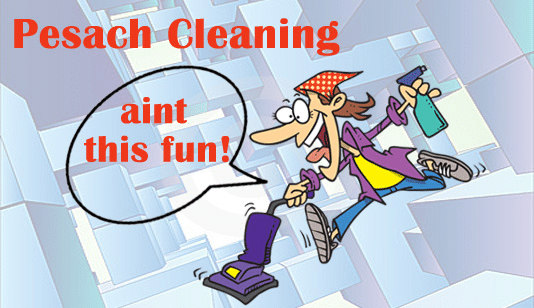
The Holiday of Pesach-5786

Preparations for Pesach Start Now
The entire Jewish nation customarily cleans their houses well for Pesach so as not to encounter the prohibition of Chametz on Pesach and in order to honor this festive holiday with a clean house, so that the family can sit around the Seder table like kings. All Pesach cleaning performed within thirty days of Pesach is included in the Mitzvah of eliminating Chametz. Indeed, Maran Ha’Chida writes in his Sefer Avodat Ha’Kodesh (Section 196) in the name of our Sages that one who is extremely meticulous with regards to not transgressing the prohibitions of Chametz on Pesach is guaranteed to have a good year, for the days of Pesach are the root for the rest of the days of the year.

This Mitzvah especially belongs to righteous Jewish women who take extra care in cleaning the house for Pesach. It is told over that once, the great Brisker Rav, Hagaon Harav Yitzchak Zev Ha’Levi Soloveichik zt”l, once saw his wife exerting herself greatly while brushing a dining room chair. He told her, “You do not need to do that so much!” She replied, “If I would listen to you, I could have transgressed the prohibition of retaining Chametz on Pesach!”

However, one must be able to distinguish between the primary and secondary. The most important places to clean are those where Chametz is actually brought in and used throughout the year, especially the kitchen and dishes meant for Pesach use. On the other hand, other forms of “Pesach cleaning,” such as painting the house or scrubbing the window shades etc., are not as essential as the other forms of cleaning, as we have established.

The Prohibition to Eat and Benefit from Chametz
The Torah (Shemot 13) states regarding the holiday of Pesach: “Matzot shall be eaten for seven days; neither leaven nor sourdough shall be seen in your borders.”

Our Sages taught in Masechet Pesachim (21b among other places) through expounding certain verses that not only is Chametz prohibited for consumption on Pesach, it is also forbidden to benefit from Chametz on Pesach, meaning that even if one does not actually eat Chametz on Pesach, he still may not sell it to a non-Jew and the like on Pesach for this would mean that he is benefitting from this sale. Consumption of Chametz on Pesach is punishable by Karet (severance of one’s soul from the Jewish nation).

Chametz on Pesach Cannot Even be Nullified by a Ratio of One to One Thousand
The prohibition of Chametz on Pesach is so severe that if Chametz gets mixed into other foods, it cannot be nullified even by a ratio of one to one thousand, which is not the case regarding other prohibitions.

For instance, regarding the prohibition of consuming blood, if one gram of blood falls into a pot of food, if there are sixty grams of food present against the one gram of blood that fell into it, the blood is considered nullified, and this food is permitted for consumption. Regarding Chametz on Pesach, however, even if the food present is one thousand times the amount of the Chametz that fell into it, for instance if a tiny crumb of Chametz falls into a large pot of food, the entire pot of food becomes prohibited for consumption because of the crumb of Chametz that became mixed into it.

Therefore, one must be extremely careful regarding Chametz on Pesach to buy only food products that one is completely certain do not contain Chametz mixtures and are certified by a reliable Kashrut organization. Similarly, one should not rely on a non-Torah-observant Jew when he tells him that a certain food does not contain any Chametz, for instance if he says that a certain spice does not have any Chametz mixed into it, for it has already occurred that some people have transgressed the prohibition of Chametz because they had relied on a grocer with no believability. Maran Harav Ovadia Yosef Shlit”a writes that it is proper for one not to purchase any food product designated for Pesach use without a reliable Kosher for Passover certification on every single item. The same applies even to things that do not seem problematic such as liquor, Arack, and the like. Nowadays, even products that look “innocent” pose major Kashrut problems during the rest of the year and especially during Pesach, as all products contain a multitude of ingredients, as we all know.

Dishes Which Have Absorbed Chametz
One may not use the same dishes that he uses during the rest of the year on Pesach, for these dishes have Chametz absorbed in them since when a hot food is inside these dishes, the walls of these dishes absorb its Chametz flavor, just as they absorb dairy or meat flavor. Thus, one must either use dishes that are specially designated for Pesach that have not been used for Chametz or kosher (make kosher for Pesach) his Chametz dishes. This will be better explained in following Halachot.

Newsletter Purim 5786 – Parashat Ki Tisa – Parashat Para

בס״ד
Moor Lane - Logo.JPG

image.png
ק׳ ק׳ שׁערי תפילה
Have a look at our website 
******

image.png

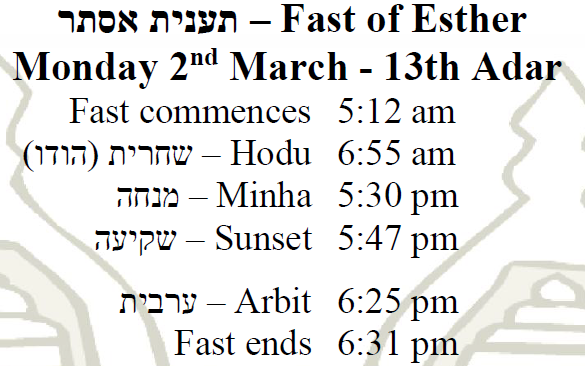
Taanit Esther

image.png

****

image.png
image.png

****

image.png
Purim

image.png
image.png

****
image.png

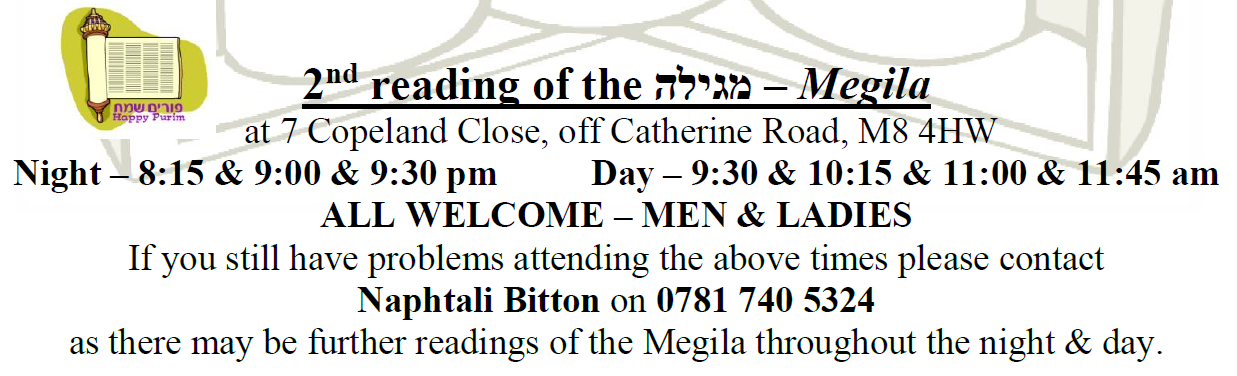
2nd Reading of the Megila

for Men & Ladies

Night 

8:15 – 9:00 – 9:30 PM

Day

9:30 – 10:15 – 11:00 – 11:45 AM

🎉If none of the above times work for you 

Please call Naphtali, as he may still read it again 

during the day just for YOU

image.png

****

image.png

Zecher Lemachatzit Hashekel


 1) One who did not give the Zecher Lemahatzit Hashekel before Purim should give it before the Megila reading. 


2) One should be careful not to refer to the Zecher Lemahatzit Hashekel as mahatzit hashekel. 


3) One should give an amount of money equal to the value of 9 grams, or about 1/3 of an ounce, of pure silver. 


4) Ideally one should give the zecher lemahatzit hashekel using three coins since in Parshat Shekalim it says “terumat Hashem” three times.


 5) Someone who can't afford to give the value of the silver can give an actual half shekel coin. 


6) Anyone over twenty is required to give the zecher lemahatzit hashekel. 


7) Some Poskim maintain that once a child reaches bar mitzvah he is also required to give it. 


8) One should ideally also give a separate one for each child in the household. 

Therefore the father of a family of five should ideally give five times the value of 9 grams of pure silver. 

One for himself, one for his wife, and one for each of the children. 


9) If he is not able to do so he should give the half shekel for himself and he should give a little more (even just a few coins) for the rest of his household. 

The appropriate sum that one should donate in commemoration of the Half-Shekel this year (5786) is approximately $23 (USD) per person(For those residing in Israel, based on the recent USD to ILS conversion rate, the sum this year is approximately 82 ILS per person.)  The great Rishon Le’Zion, Hagaon Rabbeinu Yitzchak Yosef Shlit”a, writes that it is best to add the value of sales tax in order to cover all of the opinions.

The way to calculate this sum is as follows: A troy ounce of silver consists of 31.1 grams. Thus, the price of one troy ounce of silver [recently approximately $78 USD] must be divided by 31.1 and then multiplied by nine in order to find the updated price of nine grams of silver, which is the value of actual Half-Shekel coin, as we have mentioned in past years. There is a disagreement among the Poskim whether the price per ounce of silver should be calculated including applicable sales tax. Halachically speaking, Maran Rabbeinu Ovadia Yosef zt”l has instructed us that one may be lenient and calculate this sum excluding tax. However, if one acts stringently and donates a larger sum to charity, one shall surely be blessed from above.

The minimum amount of the donation for the commemoration of the Half-Shekel for small children is the value of a coin which is half of the local currency. Example: In the United States this would be a half-dollar coin, hence, the donation would equal fifty cents. (In Israel, this would be the Half-Shekel [NIS] coin.)

This Year 5786

Zecher Lemahatzit Hashekel

is around 

£ 20

*******

IMG_5465.JPG

image.png
image.png
Below is the link for our Bet Hakeneset
👇👇👇👇👇click below👇👇👇👇👇

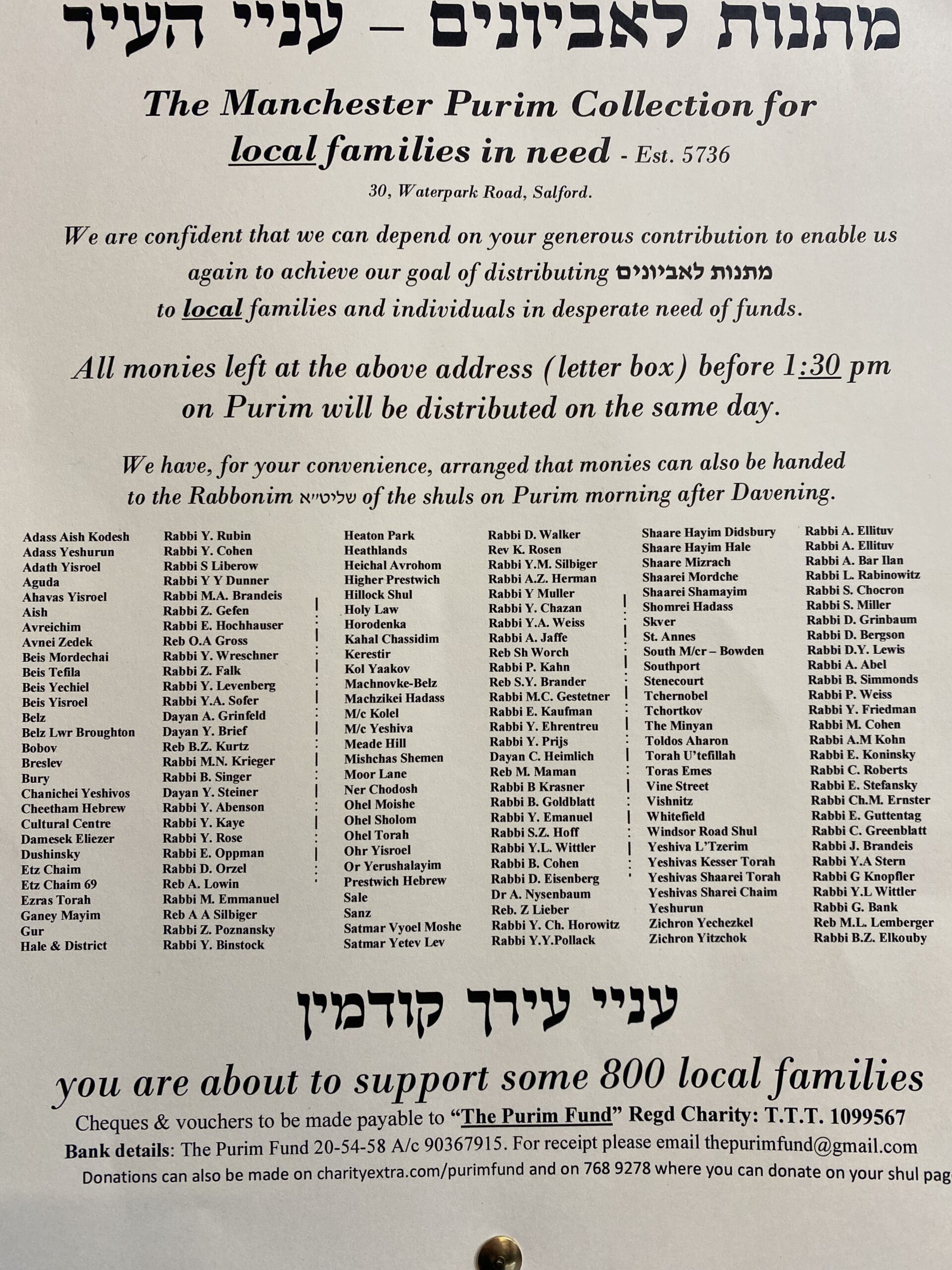
Purim Fund 2026 – Charity Extra

*****

image.png

Mitzvot On Purim

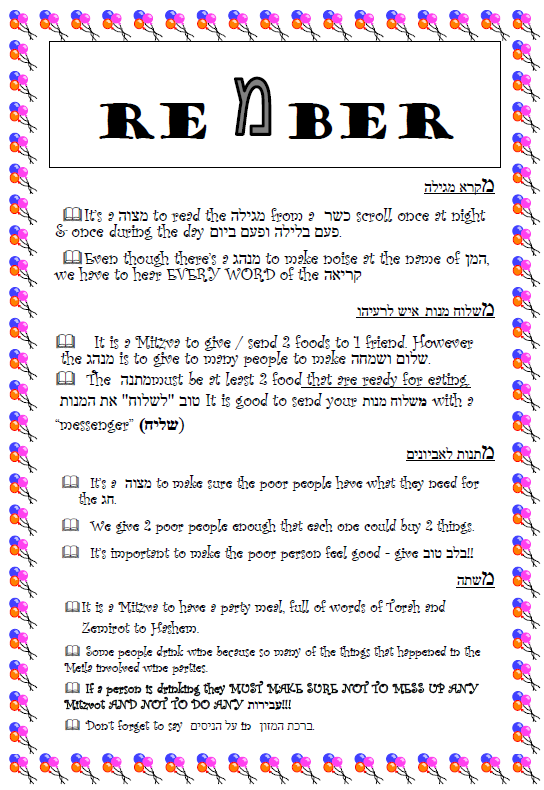
מקרא מגילה

&   It’s aמצוה  to read theמגילה  from a כשר  scroll once at night & once during the day – פעם בלילה ופעם ביום.

&   Even though there’s aמנהג  to make noise at the name of המן, we have to hear EVERY WORD of the קריאה


משלוח מנות  איש לרעיהו


&    It is a מצוה to give / send 2 foods to 1 friend. 

However theמנהג  is to give to many people to make שלום ושמחה.


&   Theמתנה  must be at least 2 types of food that are ready for eating.

טוב “לשלוח” את המנות  – It is good to send your משלוח מנות  with a “messenger” (שליח)

מתנות לאביונים

&   It’s a מצוה  to make sure the poor people have what they need for the חג.

&   We give 2 poor people enough that each one could buy 2 things.

&   It’s important to make the poor person feel good – give בלב טוב!!

משתה

&    It is a מצוה to have a party meal, full of words of תורה and זמירות to ה׳.

&   Some people drink wine because so many of the things that happened in the מגילה  involved wine parties.

&   If a person is drinking they 

MUST MAKE SURE NOT TO MESS UP ANY Mitzvot 

&   Don’t forget to say על הניסים  in  ברכת המזון.

*****

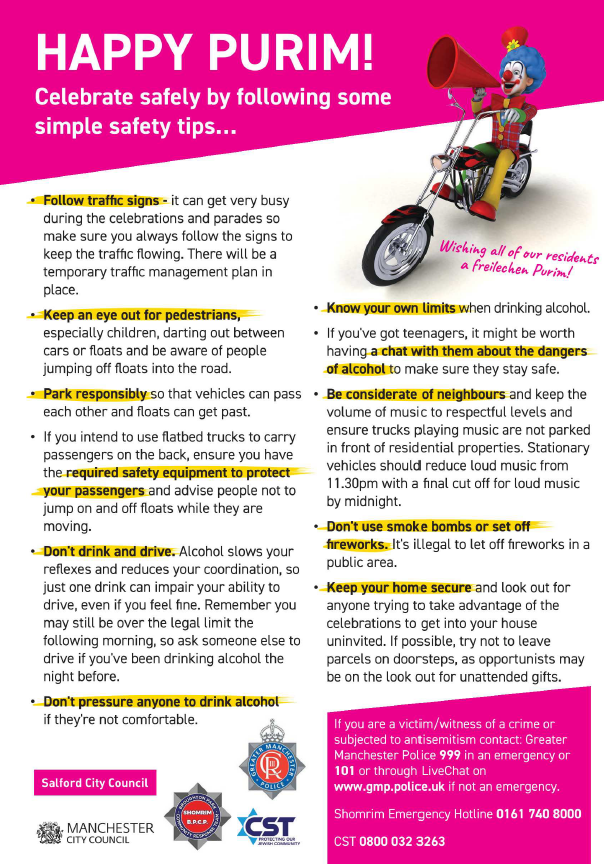
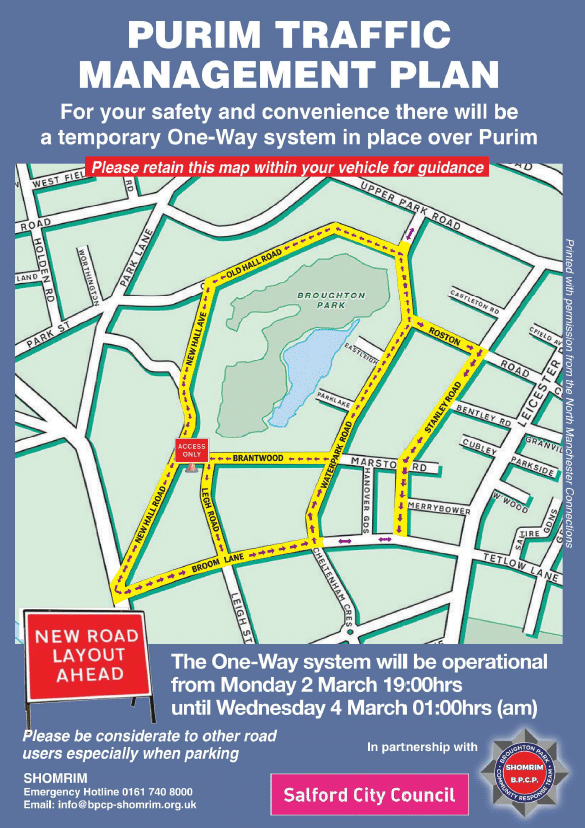
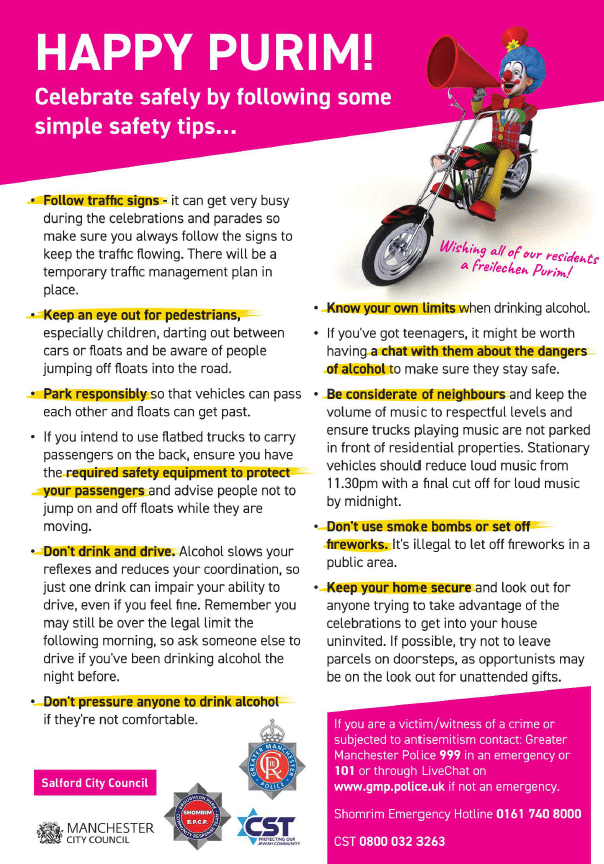
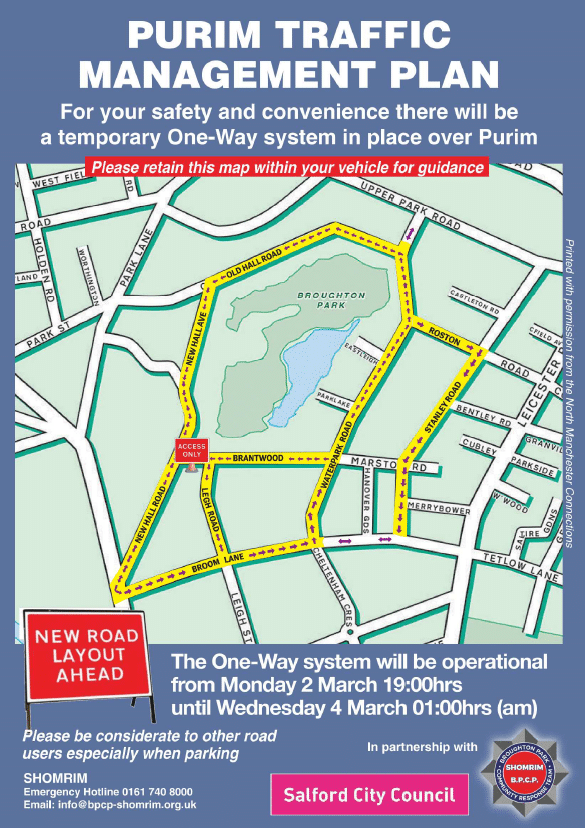
Important Taraffic Information for Purim

image.pngimage.png


*******

🗓️

🕯️שבת🕯️

לוח זמני תפלה לחורף  תשפ״ו

Winter Timetable 5786 – 2025/26

מוצאי שבת

ערבית

(מוצ״ש)

שקיעה

מנחה שבת

סוף זמן קריאת שמע

הדלקת נרות

מנחה וקבלת שבת

תאריך

שבת פרשת

Shabbat

Ends

Arbit

Sunset

Minha

Shema before

Candle Lighting

Minha & Kabbalat Shabbat

Date

Parasha

PM

PM

PM

PM

AM

PM

PM


6:47

6:43

5:57

5:20

9:31

5:41

5:41

6/7 Mar

כי תשא (פרה)  

🕯️WINTER TIMES FOR SHABBAT MORNING🕯️

שבת

קרבנות

8:45 am
הודו

9:00 am

*******

Parasha Overview

Moshe conducts a census by counting each silver half-shekel donated by all men age twenty and over. Moshe is commanded to make a copper laver for the Mishkan. The women donate the necessary metal. The formula of the anointing oil is specified, and G-d instructs Moshe to use this oil only for dedicating the Mishkan, its vessels and Aharon and his sons. G-d selects Betzalel and Oholiav as master craftsmen for the Mishkan and its vessels.

The Jewish People are commanded to keep the Shabbat, an eternal sign that G-d made the world. Moshe receives the two Tablets of Testimony on which are written the Ten Commandments.

The mixed multitude who left Egypt with the Jewish People panic when Moshe's descent seems to be delayed, and so they force Aharon to make a golden calf for them to worship. Aharon stalls, trying to delay them. Hashem tells Moshe to return to the people immediately, threatening to destroy everyone and build a new nation from Moshe. When Moshe sees the camp of idol-worship, he smashes the Tablets and destroys the golden calf. The sons of Levi volunteer to punish the transgressors, executing 3,000 men.

Moshe ascends the mountain again to pray for forgiveness for the people, and G-d accepts his prayer. Moshe sets up the Mishkan and G-d's clouds of glory return. Moshe asks G-d to show him the rules by which he conducts the world, but he is granted only a small portion of this request. G-d tells Moshe to hew new Tablets, and reveals to him the text of the prayer that will invoke Divine mercy.

Idol worship, intermarriage and the combination of milk and meat are prohibited. The laws of Pesach, the first-born, the first-fruits, Shabbat, Shavuot and Succot are taught. When Moshe descends with the second set of Tablets, his face is luminous as a result of contact with the Divine.

Ohr Somayach Institutions www.ohr.edu

*******
image.png

Halachot from Maran Rabbi Ovadia Yosef Ztz'l

משפחה ומשפחה – ימי מלחמה

נאמר במגילת אסתר: “וְהַיָּמִים הָאֵלֶּה נִזְכָּרִים וְנַעֲשִׂים בְּכָל דּוֹר וָדוֹר מִשְׁפָּחָה וּמִשְׁפָּחָה מְדִינָה וּמְדִינָה וְעִיר וָעִיר וִימֵי הַפּוּרִים הָאֵלֶּה לֹא יַעַבְרוּ מִתּוֹךְ הַיְּהוּדִים וְזִכְרָם לֹא יָסוּף מִזַּרְעָם”. ועל מה שנאמר “משפחה ומשפחה” פירש רש”י: “מתאספין יחד ואוכלים ושותין יחד, וכך קבלו עליהם, שימי הפורים לא יעברו”. כלומר, קבלו עליהם היהודים שהיו בזמן מרדכי ואסתר, שבכל הדורות יתכנסו כל בני המשפחה יחד, משום שכאשר יושבים כמה בני משפחה יחד, גדלה השמחה, כפי שעושים במסיבות וסעודות מיוחדות. וביום פורים, מצוה לשמוח.

לכן כתב בספר “סדר היום”, שבסעודת פורים, יתעכב על שולחנו לאכול ולשתות יותר ממה שרגיל, ויקבץ כל אנשי ביתו וחבריו על שלחן אחד, כדרך המסיבה שמתאספים יחד הרבה אנשים לעשות סעודה, ומתוך כך מתרבה השמחה, אבל כאשר אדם יושב יחיד וגלמוד, אי אפשר לשמוח כראוי. והפוסקים הביאו את דברי “סדר היום” הללו. ולכן כל אדם יעשה כפי שיש ביכולתו, להשתדל להזמין חברים וקרובים יראי שמים לסעוד עם בני משפחתו, וישמחו יחד ויודו לה' על נסיו שבכל יום עמנו.

סעודת פורים שנמשכת עד מוצאי פורים

דנו הפוסקים, כאשר אוכלים סעודת פורים, והסעודה נמשכת עד מוצאי פורים, האם יש להזכיר “על הנסים” בברכת המזון, או לא? ודיון זה קיים בכל שבוע ושבוע, כאשר סעודה שלישית של שבת נמשכת עד למוצאי שבת, האם יש להזכיר “רצה והחליצנו” בברכת המזון או לא?

ובארחות חיים (הלכות פורים סימן לה) כתב בשם רבינו יצחק מקורביל, שאפילו אם סעודת פורים נמשכה עד שעה מאוחרת, יש לומר “על הנסים” בברכת המזון. וכן כתב בהגהות מיימוני (פ”ב מהל' מגילה) בשם מהר”ם מרוטנבורג. אולם רבינו הרא”ש בתשובה (כלל כב סי' ו) כתב, שאם יצא כבר יום פורים, אין להזכיר “על הנסים” בברכת המזון. שהרי כעת כבר אין זה פורים, ולא שייך לומר “שעשית לאבותינו בימים ההם בזמן הזה”.

וכדברי הרא”ש פסק רבינו הטור (סימן תרצה). שאם התחיל סעודתו ביום ונמשכה עד הלילה לא יאמר על הנסים בברכת המזון.

ומרן השלחן ערוך, הביא את דברי כל הפוסקים הללו בבית יוסף (סימן קפח), ופסק בשלחן ערוך לגבי שבת, שאם היה אוכל עד שיצאה שבת, מזכיר “רצה והחליצנו” בברכת המזון. וכן פסק לגבי פורים (בסימן תרצה), שאם התחיל סעודת פורים ביום, ונמשכה עד הלילה, אומר על הנסים, כי תמיד הולכים אחרי תחילת הסעודה. וכן הלכה, הן למנהג הספרדים והן למנהג האשכנזים, שאם נמשכה הסעודה עד שעה מאוחרת, יש להזכיר “על הנסים”, אף על פי שאין זה יום פורים ממש. מכל מקום, הסעודה הזו, היא סעודה ששייכת לזמן של פורים. ומי שטעה ולא הזכיר “על הנסים” בפורים, אינו חוזר לברך שוב. וכן אם שכח בתפלה, אינו חוזר להתפלל שוב.

– – – – – – – – – –

ימי מלחמה

מאחר והימים מתוחים מאד, ומעת לעת נשמעות אזעקות.

לכן נבאר את הדינים הנוגעים לקריאת המגילה בזמן אזעקה.
כאשר נשמעת אזעקה, ולא נמצאים במקום מוגן, יש לעזוב את המקום ולפנות למרחב מוגן. יש להשתדל שלא לומר שום דבר שאינו הכרחי. לאחר שניתן, יש לשוב לבית הכנסת ולקרוא את המגילה מתחילת הפסוק שבו עצרו.
במקרה והקורא במגילה, אינו מסוגל להמשיך לקרוא, יש לחזור מתחילת המגילה, ללא ברכות.

מצוות מתנות לאביונים ומשלוח מנות וסעודת פורים ניתן ברוך ה' לקיים ללא בעיה.

וה' יבשרנו בשורות טובות, ומי שעשה נסים לאבותינו בימים ההם, הוא יראנו נסים ונפלאות, ויראנו את קץ הפלאות, נשמע ונתבשר בשורות טובות בנפילת כל אויבינו כמאז, ובנצחון ישראל, והשראת השכינה, בגאולה השלימה, במהרה בימינו אמן.


Every Family – Directions for Purim in Light of the War with Iran

The verse in Megillat Esther states, “Consequently, these days are recalled and observed in every generation, by every family, in every province, and in every city; and these days of Purim shall never cease among the Jews and their memory shall never perish among their descendants.” Rashi comments on the words “By every family”: “They gather together and eat and drink together; this is the manner in which they accepted upon themselves that the days of Purim shall not cease.” This means that the Jews in the times of Mordechai and Esther accepted upon themselves that in every subsequent generation, all family members would gather together in feasting, for when the entire family gathers together, this enhances the joyful occasion, as they would do for special parties and events. It is therefore a Mitzvah to rejoice in this way on Purim day.

Thus, the Sefer Seder Ha’Yom (authored by Rabbeinu Moshe ben Machir, a great Mekubal who lived in the times of the saintly Ari z”l) writes that on Purim, one should stay at one’s table longer than one usually would and eat and drink more that one is generally accustomed to. One should likewise gather all one’s family and friends around one table as one would at special parties, for this greatly enhances one’s joy on Purim day. However, when one sits all alone, one cannot truly rejoice. The Poskim quote these words of the Seder Ha’Yom. Thus, one must do his utmost to invite one’s friends and relatives to partake of the Purim feast along with one’s family and use this opportunity to rejoice and offer thanksgiving to Hashem for His never-ending miracles.

When the Purim Feast Continues into Motza’ei Purim
The Poskim discuss whether or not one should recite “Al Ha’Nissim” in Birkat Hamazon following the Purim feast which continues on into Motza’ei Purim. This is a question that can be posed almost every week when Seudah Shelishit (the third Shabbat meal) continues on into Motza’ei Shabbat. Should “Retzeh Ve’Hachalitzenu” be inserted into Birkat Hamazon or not in such a situation?

The Orchot Chaim (Hilchot Purim, Chapter 35) writes in the name of Rabbeinu Yitzchak of Corbeil that even if the Purim feast extends until several hours after Purim has already ended, one should recite “Al Ha’Nissim” in Birkat Hamazon. The Hagahot Maimoni (Chapter 2 of Hilchot Megillah) rules likewise in the name of his teacher, Maharam of Rottenberg. Nevertheless, the Rosh writes in a response (Chapter 22, Section 6) that if Purim has already ended, one should not recite “Al Ha’Nissim” since it is no longer Purim and it would not make sense to recite “That you have performed for our forefathers in those days, at this time.”

The Tur (Chapter 695) rules in accordance with his father, the Rosh, that if one began the Purim feast on Purim day and the meal continues into the following night, one should not recite “Al Ha’Nissim” in Birkat Hamazon.

Maran quotes all of these Poskim in his commentary, Bet Yosef (Chapter 188), and rules in his Shulchan Aruch (ibid.) regarding Shabbat, “If one was eating and Shabbat has concluded, one should insert ‘Retzeh Ve’Hachalitzenu’ into one’s Birkat Hamazon.” Maran rules likewise regarding Purim (in Chapter 695) that if one began the Purim feast on Purim day and the meal extends into the following night, one should recite ‘Al Ha’Nissim’ in Birkat Hamazon, for the determining factor regarding this law is the beginning of the meal. Thus, this is indeed the Halacha for both Ashkenazi and Sephardic Jews in that even if the meal extends well into the night, one should nevertheless recite “Al Ha’Nissim” in Birkat Hamazon. Although it is technically no longer Purim, this meal is nonetheless connected to Purim day. If one forgets to insert “Al Ha’Nissim” in Birkat Hamazon of Purim, one would not repeat Birkat Hamazon. The same law applies regarding inserting “Al Ha’Nissim” into all Amida prayers of Purim in that if one forgot to do so, one would not repeat one’s Amida prayer.

– – – – – – – – – – – – – – –

Directions for Purim in Light of the War with Iran

During this stressful time when sirens sound every so often, let us discuss the Halacha regarding hearing a siren during Megillah reading. If Megillah reading is being held outside a protected space and a siren sounds, those present should immediately seek shelter in a protected space. One should make an effort not to speak any words that are not absolutely necessary. Whenever possible, the congregation should return to the synagogue and continue the Megillah reading from the beginning of the verse where the Chazzan left off. In the event that the Chazzan cannot continue reading, someone else should repeat from the beginning of the Megillah, but without Berachot.

The Mitzvot of Matanot La'Evyonim, Mishloach Manot, and the Purim feast should be able to be fulfilled without any issue.

May Hashem bring about the downfall of all our enemies and perform miracles for us as He has during those days at this time and proceed to usher in the Ultimate Redemption, Amen!

Newsletter Parashat Tetzave – Shabbat Zachor

בס״ד
Moor Lane - Logo.JPG

image.png
ק׳ ק׳ שׁערי תפילה
Have a look at our website 
******

image.png

 *****

image.png

THIS SHABBAT

we take out 2 Sefarim

(1) Parashat Tetzave

(2) Parashat ZACHOR 

The haftara THIS week will be the 

Haftara of ZACHOR

********

מנהגים

 Liturgy (Piyutim)

On certain occasions piyutim are chanted during pesuqé dezimra:

On Shabat Shira and the Seventh Day of Pesah the piyut “Ashira keShirat Moshé” is sung before Shirat haYam (The Song on the Sea).

On Shabat Zakhor the piyut “Mi Khamokha” is chanted during Nishmat.

On Rosh haShana and Yom Kipur special piyutim are chanted after Shirat haYam, before Yishtabah, and between Yishtabah and the Qadish. 


The minhag of inserting piyutim into the prayers is actually quite ancient, dating back at least to the times of Ribi Yehuda haLevi (c. 1000-1100 CE) who penned the piyut “Mi Khamokha” for Shabat Zakhor and instituted its recital in the middle of Nishmat Kol Hai.

Several Rishonim, among them the Ri miGash (d. 1141), the Rashba (d. 1310), and the Radbaz (d. 1573), attest that this was the custom in their time, showing no sign of disapproval. 

Nevertheless, this custom was met with sharp, repeated critique by later halakhic authorities, all challenging the halakhic basis for this custom, as it constitutes a forbidden interruption (hefseq) in the prayers.

 Though Maran instructs in the Shulhan 'Arukh (O”H §68:1) that it is best to refrain from including liturgy in the Blessings of Qeriat Shema', he makes no mention of adding liturgy in Pesuqé deZimra. The determining factor for allowing liturgy in Pesuqé deZimra is whether or not there exists a prohibition to add praises or Tehilim to those instituted by the Sages as Pesuqé deZimra

The Hida in Tub 'Ayin (§18:35) cites the opinion of Ribi David Hayim Corinaldi in this matter, denouncing the practice of those who reserved the recital of liturgy intended for Pesuqé deZimra (e.g. Ribi Yehuda haLevi's Mi Khamokha) until after the repetition of the 'Amida; arguing that the Tur and Maran only took issue with adding liturgy to the Blessings of Qeriat Shema'. The simple logic behind Ribi Corinaldi's judgment seems to be that, since Pesuqé deZimra were instituted as praises to G-d, additional praises, such as the piyutim, should not be deemed an interruption therein. Still, the Hida rules that liturgy may not be added to Pesuqé deZimra, explaining that these praises were carefully arranged by the Sages in accordance with Qabala and are thus strictly unchangeable

Maghen Abot – e”H Ribi Mordekhai Lebhar s”t 


The Minhag in our Bet Hakeneset, which is the Spanish & Portuguese Minhag, is to say the Piyut Mi Chamoch in the middle of NISHMAT


****

SHABBAT ZACHOR

This Shabbat, (the Shabbat immediately before Purim) is called Shabbat Zachor. שבת זכור.
The Maftir, (additional reading), from Deut. / Devarim, Parshat Ki-Teitze, (25:17-19), deals with the commandment to “Remember what Amalek did to you on the way, upon your departure from Mitzrayim (Egypt)…. … how they perpetrated a cowardly and unprovoked attack… You shall erase the memory of Amalek from the heavens, you shall not forget.”
This commandment, to remember Amalek, is one of the 613 commandments. It is incumbent, therefore, upon every person to attend services on Shabbos Zachor in order to hear this special reading and remember its message. 
What is the connection between erasing the memory of Amalek and Purim? The wicked Haman, who intended to destroy all the Jews in one day and claim their spoils, was the descendant of Agag who was the king of Amalek in the time of King Shaul. Thus we know that Haman was from Amalek. This is why our sages ordained carrying out the commandment of remembering to erase the memory of Amalek before PurimZachor means remember – “Remember… do not forget!”

HAFTARA: (which is read after the ParshaSamuel 1 / Shmuel I 15:2-34

This week's Haftorah takes place 2,873 years ago. In the year 2883 – 878 b.c.e. Shmuel conveys to King Shaul Hashem's command to wage battle against Amalek, and to leave no survivors–neither human nor beast. Shaul mobilizes his military and attacks Amalek. They kill the entire population with the exception of the king, Agag, and they also spare the best of the cattle and sheep.

Hashem reveals Himself to Shmuel. “I regret that I have made Shaul king, for he has turned back from following Me, and he has not fulfilled My words.”

The next morning Shmuel travels to Shaul and confronts him. Shaul defends himself, saying that the cattle were spared to be used as sacrificial offerings for Hashem. Shmuel responds: “Does Hashem have as great a delight in burnt offerings and peace-offerings, as in obeying the voice of Hashem? Behold, to obey is better than a peace-offering; to listen, than the fat of rams. . . . Since you rejected the word of Hashem, He has rejected you from being a king.”

Shaul admits his wrongdoing and invites Shmuel to join him on his return home. Shmuel refuses his offer. “The Lord has torn the kingdom of Israel from you, today; and has given it to your fellow who is better than you.” Shmuel then kills the Amalek king.

The commentaries state that in the interim, Agag was able to marry a maidservant, from which the nation of Amalek would survive.

The connection to Purim is well documented. Haman is called, “the Agagi”. He was a direct descendant of Agag. In ascertaining Hashem's mercy and justice, we are forced to acknowledge our limited understanding. The notion of killing men woman and children is thankfully foreign and abhorrent to us. Nevertheless, Shaul was commanded to eradicate the entire nation.

The Haftorah identifies Shaul's sin in not fulfilling Hashem’s commandment as misplaced mercy. Had he known that, 521 years later, his merciful act would result in the potential extermination of the entire Jewish people, Shaul would not have had mercy on Agag and the cattle. It is the responsibility of a king to think beyond the immediate and do what has to be done to guarantee the future of his nation. Being that no single human can ever guarantee the future, he has no choice but to listen to Hashem's commandments and do as he is told. That ensures the future.

The message of Purim is the story of our Haftorah. Hashem works His miracles through the normal passage of time. Actions done today set in motion ripples in time that radiate far into the future.

*****

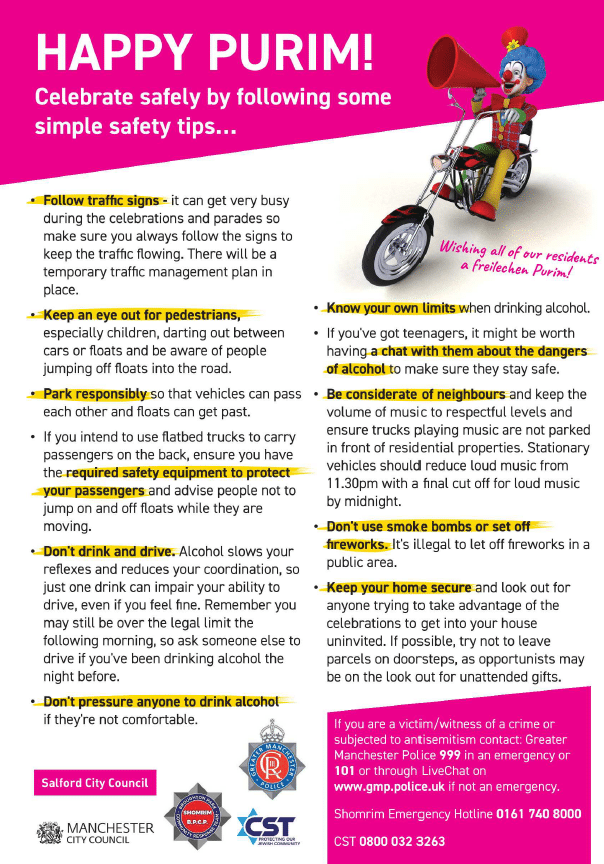
Important Taraffic Information for Purim

image.pngimage.png


*****

CST Security Co-ordinator.jpg

Dear Members,

CST is recruiting a full-time Security Co-ordinator to join the Manchester team.

The current security situation in Manchester has led to a significant increase in the need for CST’s work. The person appointed to this role will play an important part in supporting the safety and security of the Manchester Jewish community.

The role includes:

  • Assisting communal locations with ongoing security measures
  • Working closely with commercial guarding companies on the Home Office Protective Security Grant for the Jewish community
  • Ensuring best practice and emergency procedures are in place at schools and shuls
  • Delivering briefings and training across the Manchester Jewish community
  • Working with police and other key stakeholders, both within and outside the Jewish community

If you are interested in applying, please send your CV directly to CST or request the job pack at careers@cst.org.uk.

***** 

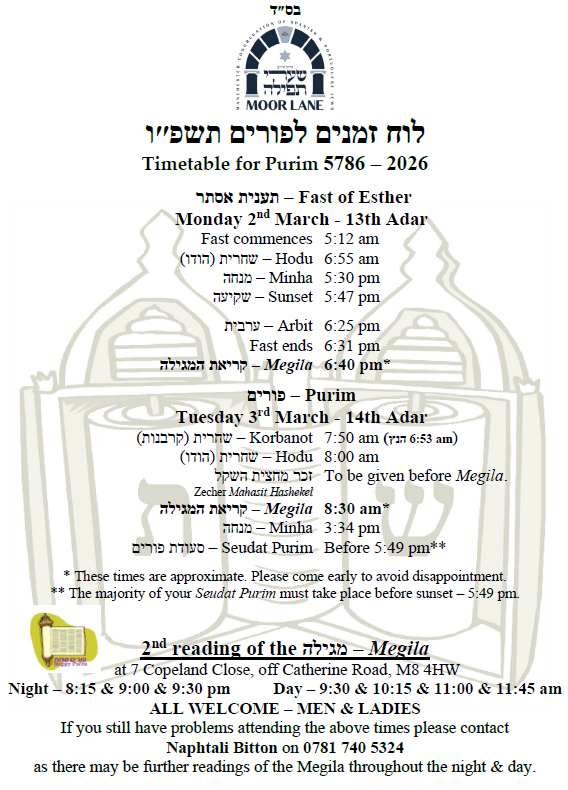
🎭🎺🪊🎷🎸🪘🪇🪈🪉Purim Timetable🪉🪈🪇🪘🎸🪊🎺🎭🎷

image.png

also attached to this email

*****

🕯️שבת🕯️

לוח זמני תפלה לחורף  תשפ״ו

Winter Timetable 5786 – 2025/26


מוצאי שבת

ערבית

(מוצ״ש)

שקיעה

מנחה שבת

סוף זמן קריאת שמע

הדלקת נרות

מנחה וקבלת שבת

תאריך

שבת פרשת

Shabbat

Ends

Arbit

Sunset

Minha

Shema before

Candle Lighting

Minha & Kabbalat Shabbat

Date

Parasha

PM

PM

PM

PM

AM

PM

PM


6:34

6:30

5:43

5:05

9:40

5:27

5:27

27/28 Feb

תצוה (זכור)

*****

🕯️WINTER TIMES FOR SHABBAT MORNING🕯️

שבת

קרבנות

8:45 am
הודו

9:00 am

*****

image.png
Avot Ubanim Winter Season 
has now concluded
Well done to all the participants
watch this space for the return
 of the Summer Season

*********

🪉Moor Lane Women’s Nach Group🪉

✴️👑✴️👑✴️👑✴️

PHOTO-2026-02-17-22-13-15.jpg

******
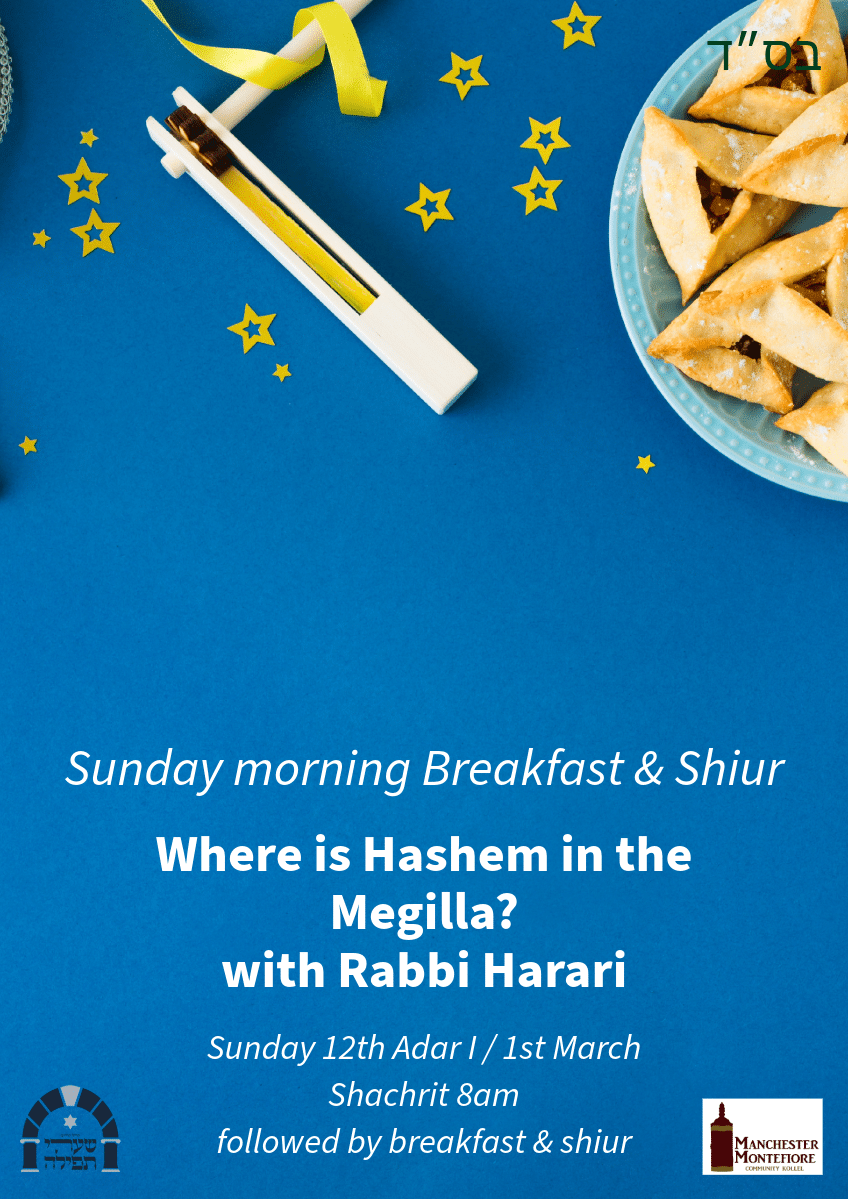
Sunday Morning
Adar 1 Breakfast.png
*******
📜
Parasha Overview

Hashem tells Moshe to command the Jewish People to supply pure olive oil for the Menorah in the Mishkan (Tent of Meeting). He also tells Moshe to organize the making of the Bigdei Kehuna (priestly garments): A breastplate, an ephod, a robe, a checkered tunic, a turban, a sash, a forehead-plate, and linen trousers. Upon their completion, Moshe is to perform a ceremony for seven days to consecrate Aharon and his sons. This includes offering sacrifices, dressing Aharon and his sons in their res ective garments, and anointing Aharon with oil.

Hashem commands that every morning and afternoon a sheep be offered on the Altar in the Mishkan. This offering should be accompanied by a meal-offering and libations of wine and oil. Hashem commands that another Altar for incense be built from acacia wood and covered with gold. Aharon and his descendants should burn incense on this Altar each day.

*******
image.png  

Halachot from Maran Rabbi Ovadia Yosef Ztz'l

נשים בקריאת המגילה – טעימה קודם המגילה

שאלה: מנהגינו שנשים שומעות קריאת המגילה בלילה, אבל לא ביום. האם מנהג זה נכון על פי ההלכה?

תשובה: אין חילוק בין האנשים לנשים לענין חיוב שמיעת קריאת המגילה, כי אף הנשים חייבות בקריאה זו כדין האנשים, שאף הן היו באותו נס ההצלה שבימי מרדכי ואסתר. וטעם מיוחד יש לחייב את הנשים בקריאת המגילה, שהרי הנס נעשה על יד אשה, היא אסתר. ובפרט בקריאת המגילה של היום, שהיא חמורה יותר מקריאת המגילה שבלילה.

ואמנם היו קצת מקומות, שהנשים נהגו שלא לשמוע קריאת המגילה בבוקר יום הפורים. ומרן רבינו עובדיה יוסף זצוק”ל בספרו טבעת המלך (תחילת הלכות מגילה), הביא את דברי שו”ת “מים חיים”, שכתב שמנהגם שלא קוראים מגילה עבור נשים ביום, והביא שרב אחר תמה על זה, ואחר כך מצא סמך להשען עליו בספר “מאורי אור”, שכתב שאין חובה כל כך בקריאת המגילה פעמיים, אלא זכר לנס שהיו צועקים ביום ובלילה בזמן צרתם, כמו שנאמר “אקרא יומם ולא תענה ולילה ולא דומיה לי”, ולכן לא רצו להחמיר כל כך על הנשים שהן טרודות בעניני הפורים שהם גם מצוה, והעוסק במצוה פטור מן המצוה. עד כאן דברי שו”ת “מים חיים” שבא להצדיק את המנהג שנשים לא קוראות מגילה ביום.

ומרן זצ”ל כתב על זה, שכל אלו דברי הבאי, ולא ניתנו להאמר, כי בודאי כל אשה יראת שמים יכולה למצוא זמן במשך היום לקיים מצות קריאת המגילה, שהיא עיקר מצות הפורים. וכמנהג כל נשות ישראל בכל מקומותיהן, ואין ספק שמנהג הנשים שזילזלו בקריאת המגילה ביום, אינו מנהג ותיק, אלא מנהג שעמי הארץ החלו בו, והוא מנהג נגד הגמרא שלנו, ונגד כל דברי הפוסקים. וברור שיש מצוה לבטל מנהג זה שלא יזכר עוד.

לכן למעשה, נשים חייבות במקרא מגילה, הן ביום והן בלילה, כדין האנשים ממש, ואסור לזלזל בזה.

אכילה לפני קריאת המגילה

אסור לאכול לפני קריאת המגילה, ולפיכך, נשים שאינן יכולות לבוא בזמן התפילה לבית הכנסת לשמוע קריאת המגילה, וממתינות עד שיחזרו האנשים מבית הכנסת, ורק אחר כך הן שומעות קריאת המגילה, צריכות להזהר שלא לאכול עד אשר תשמענה בעצמן את קריאת המגילה.

ומכל מקום מותר לשתות קפה או תה או לטעום פירות קודם קריאת המגילה. וכן מותר לאכול עוגה או פת פחות משיעור כביצה (שהוא שיעור חמישים וששה גרמים). והמחמירים שלא לטעום כלום קודם מקרא מגילה, תבוא עליהם הברכה. ואין חילוק בזה בין קריאת המגילה של הלילה לבין קריאת המגילה שביום, שאסור לאכול לפני מקרא מגילה.

ובליל פורים, במקומות שקוראים מגילה מיד בצאת תענית אסתר, והאשה ממתינה בביתה למקרא מגילה, הרי היא רשאית אפילו לכתחילה לאכול פירות או מעט עוגה וקפה או תה, ואינה צריכה להשאר בתענית עד אחר קריאת המגילה. (כן פסק הגאון הראש”ל שליט”א בילקוט יוסף הנד”מ עמוד תקנו).


The Obligation of Women in Hearing the Megillah-Eating Before Megillah Reading

Question: Our custom is that women hear Megillah reading on Purim night but not on Purim day. Is this custom correct according to Halacha?

Answer: There is no distinction between men and women regarding the obligation to hear Megillah reading and women are just as obligated as men in this Mitzvah since they too were included in the miraculous salvation in the days of Mordechai and Esther. There is an especially pertinent reason to obligate women to hear the Megillah being read since this miracle was brought about through a woman, namely Queen Esther. This is especially true regarding the Purim day Megillah reading which is more important than the Purim night Megillah reading.

Nevertheless, there were some places where the custom was for women not to hear the Megillah being read on the morning of Purim. Maran Rabbeinu Ovadia Yosef zt”l, in his Sefer Taba’at Ha’Melech (beginning of Hilchot Megillah), quotes the words of the Responsa Mayim Chaim who writes that their custom was that the Megillah would not be read for women on Purim day and he writes that a different Rav questioned this notion. However, he supported this custom based on the words of the Sefer Me’orei Ohr who writes that there is not such a firm obligation to read the Megillah twice and this is only done in commemoration of the fact that the Jewish nation would cry out day and night during their perilous situation, as the verse states, “I will call out during the day and you do not answer and by night and I have not respite.” Thus, they did not wish to burden women who are busy with the other Mitzvot of Purim and one who is involved with one Mitzvah is absolved from another. All of the above is the opinion of the Mayim Chaim who wished to uphold this custom of women not hearing Megillah being read on Purim day.

Maran zt”l writes that this opinion is completely baseless and should not even be said, for any G-d-fearing woman can certain find some time during Purim day to hear the Megillah being read since this is the primary Mitzvah of Purim. Needless to say, the custom of those women who treated Megillah reading on Purim day lightly is not an ancient custom and is merely a custom instituted by ignorant people and it contradicts the Gemara and all the Poskim. There is certainly a Mitzvah to eradicate this custom completely.

Thus, halachically speaking, women are obligated to hear Megillah reading, both on Purim night and then once again on Purim day, as is the law with regards to men, and this law may not be taken lightly.

Eating Before Megillah Reading
One may not eat before Megillah reading. Therefore, those women who do not come to hear Megillah at the time the congregation is praying in the synagogue and wait for their husbands to come home from synagogue and only then do they go to hear Megillah reading should be careful not to eat anything until they hear Megillah reading themselves.

However, they may drink tea or coffee or taste some fruit before hearing Megillah reading. Similarly, one may also partake of some cake or even less than a Kebeitza (an egg’s volume, approximately 54 grams) of bread. Those who act stringently and abstain from eating anything until the Megillah is read are especially praiseworthy. There is no distinction between the Purim night or Purim day Megillah reading, for one may not eat before Megillah reading in any case.

On Purim night in places where Megillah is read immediately following the Fast of Esther and a woman is waiting at home to hear Megillah reading later, she may eat some fruits or a some cake, tea, or coffee even preferably and she need not remain fasting until after she hears the Megillah. (The great Rishon Le’Zion Shlit”a rules likewise in his Yalkut Yosef-Purim, new edition, page 556.)

Newsletter Parashat Teruma – Rosh Chodesh Adar

בס״ד
Moor Lane - Logo.JPG

image.png
ק׳ ק׳ שׁערי תפילה
Have a look at our website 
******

image.png

 Chodesh Tov

to all our readers

משנכנס אדר מרבין בשמחה

בגמרא במסכת תענית (דף כט.) אמר רבי יהודה בנו של רב שמואל בן שילת משמו של רב, כשם שמשנכנס אב ממעטין בשמחה כך משנכנס אדר מרבים בשמחה. אמר רב פפא, הלכך כל אחד מישראל שיש לו דין (דהיינו משפט) עם נכרי (גוי), ישתמט ממנו בחודש אב, משום רוע מזלם של ישראל בחודש אב, וישתדל שיצא הדין בחודש אדר משום שאז מזלם של ישראל הוא טוב מאד.

ומקור הדברים, הוא כמו שנאמר במגילת אסתר, “והחודש אשר נהפך להם מיגון לשמחה”, ללמדנו, שמזל החודש גורם הצלה וטובה לישראל, שבחודש זה מזלם הוא טוב.

אולם הגאון החתם סופר (סימן קס) העיר, שמרן השלחן ערוך בהלכות תשעה באב (סימן תקנא) הביא את דברי חז”ל שמשנכנס אב ממעטין בשמחה, אבל את מאמר חז”ל שמשנכנס אדר מרבין בשמחה, לא הביא בשלחן ערוך. גם רבינו הרמב”ם לא הזכיר בכלל את דברי חז”ל הללו.

וכתב החתם סופר ליישב, שיתכן שהרמב”ם ומרן השמיטו את הדין שיש לשמוח בחודש אדר, משום שרב פפא, שאמר שיש להשתדל ולכוין את הדין (המשפט) עם הגוי דוקא בחודש אדר, זהו משום שהוא סובר שיש מזל לישראל, כלומר, שגם עם ישראל כפופים למזלות, ולכן בחודש אדר מזלם הוא טוב מאד ועליהם לשמוח. אבל אנחנו פוסקים כדעת האומרים (בסוף מסכת שבת) שאין מזל לישראל, כי ישראל אינם כפופים למזלות, ולכן הרמב”ם ומרן כלל לא הזכירו את הדין הזה לגבי חודש אדר.

אולם רבים מהפוסקים כתבו שיש לקיים את דברי רב פפא ש”משנכנס אדר מרבין בשמחה”, ויש מקומות שאף מציינים זאת בכתובת בולטת. וגם אם אנו סבורים ש”אין מזל לישראל”, עדיין יש לשמוח בימים הללו, משום שחודש זה כולו נהפך לשמחה בימי אבותינו, וכולו ראוי לשמחה. ומה שמרן השלחן ערוך לא הזכיר את הדברים, הוא משום שכבר כתב בפירוש (בסימן תרפח) שיש אומרים שאפשר לקרוא מגילה כבר מראש חודש. ואם כן בודאי מובן שכל ימי חודש אדר הם ימי שמחה. וכן הסביר בספר התעוררות תשובה (סימן תעג). ובשנים קודמות הסברנו את הדברים עוד על פי דברי הריטב”א ועוד, על פי מה שכתב בזה מרן רבינו זצ”ל.

ובטעם השמחה בחודש אדר, האריך הגאון הראשון לציון רבינו יצחק יוסף שליט”א בספרו ילקוט יוסף (עמוד קצב), וכתב שיש בשמחת חודש אדר משום הודאה לה' יתברך על הנסים שנעשו לישראל בימים אלה. וכן יש בזה משום ציון וסימן שהימים הללו מסוגלים לטובה ולברכה.

ועוד הוסיף, שכשם שבימי חודש אב, ממעטין בשמחה עוד ועוד עד לשיא האבלות ביום תשעה באב, כמו כן בחודש אדר, מרבין בשמחה כדי להתכונן לקראת השמחה הגדולה שיש ביום הפורים עצמו.

ועוד הביא בשם ספר שפת אמת (על מסכת תענית), שבימי חודש אדר מתעוררת שמחה גדולה בעולם, משום שבימים הללו היו רגילים עם ישראל להביא את תרומותיהם במחצית השקל לבית המקדש, ובאותם הימים היו עם ישראל נותנים את התרומה בשמחה גדולה כמו שמבואר בכמה מקומות, וכן היה גם בימי המקדש השני, שהיו מתנדבים בשמחה, ועדיין עד היום הזה השמחה נמצאת בחודש אדר והיא מתעוררת על ידי כך שקוראים בבית הכנסת בפרשת שקלים.

When Adar Begins, We Increase Our Joy”

The Gemara in Masechet Ta’anit (29a) tells us, “Rabbi Yehuda son of Rav Shmuel ben Shilat taught in the name of Rav: Just as when the month of Av begins we diminish our happiness, so too, when Adar begins we increase our happiness. Rav Papa says, therefore, if a Jew has a court case with a non-Jew pending, he should avoid having it during the month of Av when the Jewish nation’s fortune is bad and try to have it held during the month of Adar when the Jewish nation’s fortune is good.”The source for this is based on a verse in Megillat Esther which states, “And the month which was switched for them from tragedy to joy,” which teaches us that the good fortune of this month brings about salvation and goodness for Israel since their fortune is optimal during this month. Nevertheless, Hagaon Chatam Sofer (Chapter 160) points out the distinction in the words of Maran Ha’Shulchan Aruch in that whereas in the laws of Tisha Be’av (Chapter 551), Maran quotes the words of the Sages that when Av begins, we decrease our joy, Maran does not quote the corresponding teaching that when the month of Adar begins, we increase our joy. Furthermore, the Rambam does not quote this teaching of our Sages at all. The Chatam Sofer explain that it is possible that the reason why the Rambam and Shulchan Aruch omitted this law of rejoicing during Adar is because Rav Papa who maintained that one should try to schedule a court case with a non-Jew to be held specifically during the month of Adar is because he is of the opinion that the Jewish nation is subject to the influence of the constellation and during Adar when their fortune is good, this is cause for celebration. On the other hand, we maintain that the Jewish nation is not subject to the influence of the stars (based on the Gemara, end of Shabbat) and thus, the Rambam and Maran did not mention this law regarding the month of Adar at all. However, many Poskim defend the ruling of Rav Papa that when Adar begins, our joy increases; some actually post animated signs during the month of Adar to that effect. Although we maintain that the Jewish nation is not subject to the influence of the constellations, there is still room to rejoice during these days because this entire month has been switched from mourning to rejoicing in the times of our forefathers. The reason why Maran omits this law is because he had already written (in Chapter 688) that some rule that one may read the Megillah from the beginning of the month of Adar. Thus, the entire month of Adar is certainly a time for rejoicing. The Sefer Hitorerut Teshuva (Chapter 473) resolves this issue likewise. In previous years, we have explained this matter further based on the words of the Ritba and as discussed in the works of Maran zt”lThe great Rishon Le’Zion, Hagaon Rabbeinu Yitzchak Yosef Shlit”a, explains (in his Yalkut Yosef- Purim, page 192) that the reason for rejoicing during the month of Adar is out of thanksgiving to Hashem for all the miracles he performed for us during this period. It is also an indication that these days are auspicious for goodness and blessings. He adds that just as during the month of Av, we progressively decrease our joy until the epitome of mourning on the Ninth of Av, during the month of Adar, we progressively increase our joy in preparation for the most joyous day of the month, the day of Purim. He quotes the Sefer Sefat Emet (on Ta’anit ibid.) who explains that it is possible that since during the month of Adar during the eras of the Mishkan (Tabernacle) and the first and second Bet Hamikdash the Half-Shekel coins were collected in the Bet Hamikdash and the Jewish nation donated them joyously, there was a spirit of great joy in the world. Until this very day, from the time Parashat Shekalim is read in the synagogue (on the Shabbat of or preceding Rosh Chodesh Adar), a great joy is awakened in the world.

*****

Important Taraffic Information for Purim

image.pngimage.png


****

🕯️שבת🕯️

לוח זמני תפלה לחורף  תשפ״ו

Winter Timetable 5786 – 2025/26

מוצאי שבת

ערבית

(מוצ״ש)

שקיעה

מנחה שבת

סוף זמן קריאת שמע

הדלקת נרות

מנחה וקבלת שבת

תאריך

שבת פרשת

Shabbat

Ends

Arbit

Sunset

Minha

Shema before

Candle Lighting

Minha & Kabbalat Shabbat

Date

Parasha

PM

PM

PM

PM

AM

PM

PM


6:21

6:17

5:30

4:55

9:48

5:14

5:14

20/21 Feb

תרומה

*****

🕯️WINTER TIMES FOR SHABBAT MORNING🕯️

שבת

קרבנות

8:45 am
הודו

9:00 am

*****

image.png
Avot Ubanim 
Winter Season 
1hr 15 min after 
Motzae Shabbat
THIS week @ 7:36 pm

*********

🪉Moor Lane Women’s Nach Group🪉

✴️👑✴️👑✴️👑✴️

PHOTO-2026-02-17-22-13-15.jpg

*******
📜
Parasha Overview

Hashem commands Moshe to build a Mishkan (Sanctuary) and supplies him with detailed instructions. The Jewish People are asked to contribute precious metals and stones, fabrics, skins, oil and spices. In the Mishkan's outer courtyard there is an Altar for the burnt offerings and a Laver for washing. The Tent of Meeting is divided by a curtain into two chambers. The outer chamber is accessible only to the Kohanim, the descendants of Aharon. This contains the Table of showbreads, the Menorah, and the Golden Altar for incense. Entrance to the innermost chamber, the Holy of Holies, was permitted only for the Kohen Gadol, and only once a year, on Yom Kippur. Here is the Ark that held the Ten Commandments inscribed on the two tablets of stone which Hashem gave to the Jewish nation on Mount Sinai. All of the utensils and vessels, as well as the instructions for the construction of the Mishkan, are described in great detail.

*******
image.png  

Halachot from Maran Rabbi Ovadia Yosef Ztz'l

אריזות כדורים בשבת

שאלה: האם מותר לפתוח בשבת אריזת גלולות?

תשובה: גלולות המצויות בזמנינו, רגילים בבתי החרושת לעוטפן בנייר פלסטיק מצדן האחד, ואילו מצדן השני הן סגורות באמצעות נייר אלומיניום שכתוב עליו שם התרופה. וכשרוצים להוציא את הגלולה, יש לקרוע את נייר האלומיניום העוטף אותה.

והנה אחת המלאכות האסורות בשבת (שנשנו במשנה במסכת שבת פרק שביעי), היא מלאכת “מוחק”. ומאחר ושם התרופה רשום על נייר האלומיניום, נמצא שמי שקורע את הנייר, גורם לכך שלא ניתן לקרוא את מה שהיה רשום עליו. ויש כאן חשש של איסור “מחיקה” בשבת. לכן עלינו לדון, האם מותר לקרוע בשבת את הנייר העוטף את הגלולה, או לא.

והנה באמת, איסור מחיקת כתב בשבת, הוא איסור מן התורה, אבל אין זה אלא כאשר המחיקה היא מחיקה על מנת לכתוב, כגון אדם המוחק כתב שבמחברת, שהמחיקה מאפשרת לכתוב שוב על הנייר, אבל כאשר אין המחיקה באה בכדי לכתוב, אין האיסור במחיקה זו אלא מדרבנן (מדברי רבותינו), שגזרו אף על מחיקה כזו שתהיה אסורה ביום השבת.

ומחיקת הכתב שמאחורי אריזת הגלולות, בודאי אינה נחשבת למחיקה על מנת לכתוב. ומעתה מבואר שאין הנדון בשאלתנו, אלא לגבי איסור מחיקה שהוא מדרבנן, אבל מצד איסור מחיקה ממש שהיא מן התורה, אין כאן חשש כלל.

ומעתה יש לנו לדון בזה מצד מה שכתב מרן רבינו זצ”ל בכמה מקומות בספריו, שכל איסור מלאכה (האסורה מדרבנן) שנעשית בשבת, כאשר אין האדם מתכוין לאותה המלאכה (ובלשון הפוסקים: “לא מתכוין”), וגם לא איכפת לו בתוצאה שיוצאת ממנה (“לא איכפת ליה”), אין איסור בעשיית אותה המלאכה.

ודוגמא לדבר, אדם שהולך על גבי שלג בשבת, אף על פי שהוא מרסק את השלג בהליכתו, מאחר ואין איסור בריסוק השלג (ברגליו) אלא מדרבנן, מותר ללכת עליו בשבת. שהרי ההליכה גורמת לאיסור דרבנן, “דלא ניחא ליה”, ו”דלא איכפת ליה”, והדבר מותר בשבת. (חזון עובדיה שבת חלק ד עמוד קעא).

וכן לענין קריעת אריזת הכדורים, מכיון שהאדם הקורע את אריזת הכדורים אינו מתכוין במלאכתו למחיקת האותיות, וגם לא איכפת לו ממחיקתם כלל וכלל, נראה שיש להקל בקריעת אריזת הכדורים בכדי שיוכל להשתמש בהן בשבת.

וכן פסק הגאון רבי שלמה זלמן אוירבך זצ”ל בספר שמירת שבת כהלכתה (עמ' תקיט), והוסיף, שאף לפי דברי האחרונים שהחמירו בנדון קרוב לנדון זה, מכל מקום במקום חולי, שהגלולות הן לרפואה, העיקר שיש להקל בזה.

ומכל מקום, המחמיר לקרוע את אריזת הכדורים מערב שבת ולהכין לו כמה כדורים שיצטרך לשבת, תבא עליו הברכה. ובפרט כאשר הכדורים אינם עשויים לצורך חולה, שאז יש מקום יותר להחמיר בזה.

ולסיכום: מותר מעיקר הדין לקרוע אריזת כדורים, אף על פי שעל ידי קריעת האריזה נמחק הכתב שעל גביה. והמחמיר לקרוע את האריזה מערב שבת, תבא עליו ברכה.


Opening Medication Packaging on Shabbat

Question: Is it permissible to open the packaging of medication tablets on Shabbat?

Answer: It is common nowadays that many pharmaceutical companies manufacture their medication tablets in a packaging of which one side is made of plastic and the other side is made of foil with the name of the company and medication imprinted on it. In order to remove the tablets, one must tear the foil in which the tablet is encased.

One of the thirty-nine forbidden works on Shabbat (listed in the Mishnah in the seventh chapter of Masechet Shabbat) is “erasing.” Since the name (and company) of the medication is printed on the foil, by tearing the foil, the words printed on it will no longer be legible which constitutes a concern of the forbidden work of “erasing” on Shabbat. We must therefore discuss whether or not it is permissible to tear the foil encasing around the tablets on Shabbat.

Although the act of erasing writing on Shabbat is certainly a Torah prohibition, this only applies when one erases in order to write, for instance, if one erases writing in a notebook which then allows him to once again write on the paper. However, if one is not erasing in order to write, this kind of erasing constitutes only a rabbinic prohibition.

If so, erasing the words on the back of a package of tablets is certainly not considered “erasing in order to write.” Thus, our discussion involves a form of erasing which is only a rabbinic prohibition and there is no concern for a Torah prohibition of erasing whatsoever.

We must now discuss what Maran Rabbeinu zt”l writes in several of his works that when any rabbinic prohibition is being performed on Shabbat, if one does not intend to perform this forbidden work and one does not care about that outcome that ensues as a result of it, there is not prohibition to perform such a work.

For example, if one walks on snow on Shabbat, although one is crushing the snow as he is walking, since crushing snow with one’s feet is only a rabbinic prohibition, one may walk on it on Shabbat, for this walking causes only a rabbinic prohibition the result of which (the crushed snow) one does not care about. This is therefore permissible (see Chazon Ovadia-Shabbat, Part 4, page 171).

The same would apply to tearing the packaging of the medication. Since the one tearing the packaging does not intend to perform the forbidden work of erasing letters and does not care about this outcome whatsoever, it seems that there is room for leniency to tear such packaging on Shabbat so that one may use the pills on Shabbat.

Indeed, the Sefer Shemirat Shabbat Ke’Hilchata (page 519) quotes Hagaon Harav Shlomo Zalman Auerbach zt”l as ruling leniently on this matter and adds that although some Acharonim rule stringently regarding a similar case, in our situation where the pills are meant to heal some sort of illness, there is certainly room to permit doing so.

Nevertheless, one who acts stringently and tears the packaging on Erev Shabbat and prepares the necessary amount of tablets for Shabbat before the onset of Shabbat shall certainly be blessed. This is especially true when the tablets are not meant for an ill individual in which case there is more room to act stringently.

Summary: According to the letter of the law, one may tear the packaging of medication tablets on Shabbat although by doing so, the letters on the back of the packaging are being torn. One who acts stringently and tears the packaging before the onset of Shabbat shall be blessed.

Newsletter Parashat Mishpatim – Shabbat Mevarechim – Shabbat Shekalim

בס״ד
Moor Lane - Logo.JPG

image.png
ק׳ ק׳ שׁערי תפילה
Have a look at our website 
********

image.png
שבת מברכים

THIS SHABBAT 

is  

שבת מברכים

Reminder
there will be NO derasha this week
instead we will have the 
kahal recitation of Sefer Tehilim
******
image.png

THIS SHABBAT

we take out 2 Sefarim

(1) Parashat Mishpatim (7 Aliyot)

(2) Parashat Shekalim (Maftir)

The haftara THIS week will be the 

Haftara of Shekalim

*********

🕯️שבת🕯️

לוח זמני תפלה לחורף  תשפ״ו

Winter Timetable 5786 – 2025/26

מוצאי שבת

ערבית

(מוצ״ש)

שקיעה

מנחה שבת

סוף זמן קריאת שמע

הדלקת נרות

מנחה וקבלת שבת

תאריך

שבת פרשת

Shabbat

Ends

Arbit

Sunset

Minha

Shema before

Candle Lighting

Minha & Kabbalat Shabbat

Date

Parasha

PM

PM

PM

PM

AM

PM

PM


6:08

6:04

5:16

4:40

9:56

5:00

5:00

13/14 Feb

משפטים (ש״מ) (שקלים)

*****

🕯️WINTER TIMES FOR SHABBAT MORNING🕯️

שבת

קרבנות

8:45 am
הודו

9:00 am

*****

image.png
Avot Ubanim 
Winter Season 
1hr 15 min after 
Motzae Shabbat
THIS week @ 7:25 pm

*********

🪉Moor Lane Women’s Nach Group🪉

PHOTO-2026-01-21-10-51-45.jpg

*******

📜
Parasha Overview

The Jewish People receive a series of laws concerning social justice. Topics include: Proper treatment of Jewish servants; a husband's obligations to his wife; penalties for hitting people and for cursing parents, judges, and leaders; financial responsibilities for damaging people or their property, either by oneself or by one's animate or inanimate property, or by pitfalls that one created; payments for theft; not returning an object that one accepted responsibility to guard; the right to self-defense of a person being robbed.

Other topics include: Prohibitions against seduction; witchcraft, bestiality and sacrifices to idols. The Torah warns us to treat the convert, widow and orphan with dignity, and to avoid lying. Usury is forbidden and the rights over collateral are limited. Payment of obligations to the Temple should not be delayed, and the Jewish People must be Holy, even concerning food. The Torah teaches the proper conduct for judges in court proceedings. The commandments of Shabbat and the Sabbatical year are outlined. Three times a year — for Pesach, Shavuot and Succot — we are to come to the Temple. The Torah concludes this listing of laws with a law of kashrut to not cook or mix meat and milk.

*******
image.png  

Halachot from Maran Rabbi Ovadia Yosef Ztz'l

לקיחת תרופות בשבת

דין נטילת תרופות בשבת

בדברי רבותינו במסכת שבת, מבואר שכל מיני רפואות, אסור לעשותן בשבת. ובכלל זה, לקיחת תרופה המרפא איזה חולי וכדומה. וטעם האיסור בזה, הוא מחמת גזירת חכמים, משום “שחיקת סממנים”. שראו רבותינו חכמי התלמוד, שהאדם מחמת הבהלה שיש לו במקום חולי שלו או של קרובו, עלול לבא לידי איסור תורה בהכנת התרופה לחולה, למשל על ידי שחיקת הסמננים לתרופה, (דהיינו טחינת העשבים לתרופות שהיו נוהגים בימים ההם), ועל כן אסרו להשתמש בשבת בכל סוג שהוא של תרופה. (אך לפי מה שיבואר, יש אופנים שמותר להתרפאות בשבת).

יש אומרים שבזמנינו שלא רגילים לייצר תרופות בבית, לא שייכת גזירה זו. ולדעת מרן רבינו עובדיה יוסף זצ”ל, יש לצרף דיעה זו להקל בכמה מקרים.

תרופה של הצלת נפשות

כתב מרן הבית יוסף (סימן שכח) בשם רבותינו הראשונים, כי ברור הדבר שלא אסרו רבותינו שום דבר, במקום פיקוח נפש ממש, כלומר, כאשר יש חשש שמחמת החולי יבא החולה לידי מיתה, שהרי אין לך דבר העומד בפני פיקוח נפש, ואפילו במקום ספק פיקוח נפש, חובה לחלל את השבת, ואפילו אם יש כמה ספקות לומר שאין מדובר בפיקוח נפש, לעולם מחללין את השבת עבור חולה כל שיש צד שיוכל לבא מתוך חוליו לידי סכנה. ואפילו במלאכות האסורות מן התורה, כגון נסיעה ברכב וכדומה, חייבים לעשותן עבור פיקוח נפש. ולא גזרו רבותינו על איסור נטילת תרופות בשבת, אלא לחולה שיש לו איזה מיחוש (כאב או חוסר נוחות), אבל הוא מתהלך כבריא, שאז אסור לו לקחת תרופה לחוליו.

למי מותר ליטול תרופות בשבת?

אדם הסובל מעט מחוסר נוחות בבטנו ביום השבת, אסור לו לקחת תרופה שמרפא את החולי ממנו הוא סובל. וכן אדם הסובל מצינון או משיעול בשבת, אסור לו לקחת תרופה לרפא את החולי ממנו הוא סובל. אבל אם גדול הסבל שלו עד כדי כך שהוא חולה בכל גופו או שהוא צריך כבר לשכב במיטה, אף על פי שלא נשקפת סכנה לחייו של החולה, מכל מקום מותר לו לקחת תרופה לרפא את חוליו, כי בחולה כזה לא גזרו רבותינו איסור משום שחיקת סממנים. וכל שכן במקום פיקוח נפש ממש, שאז מותר לעשות עבור החולה כל מה שיצטרכו עבורו לרפואתו.

דין ילד קטן

ילדים, עד גיל תשע שנים, לא שייכת בהם גזירת רבותינו בענין רפואות בשבת. ולכן מותר לתת להם תרופות, וכל כיוצא בזה בשבת. (חזון עובדיה שבת, חלק ג, עמוד שסא).

ולסיכום: אדם שאינו חולה ממש, רק הוא סובל מאיזה מיחוש, כגון שיעול או כאב בטן, והוא הולך כבריא, אסור לו ליטול בשבת תרופות המרפאות את החולי שלו. אבל אם חלה כל כך עד שכל גופו דואב בחוליו, או שהוא נאלץ לשכב במיטה, מותר לו ליטול תרופות לרפואתו. וילד עד גיל תשע, מותר לו ליטול תרופה בשבת.

ויש בזה עוד פרטי דינים מרובים, וכפי שיבואר בהלכה הבאה.


Taking Medicine on Shabbat

The Laws of Taking Medicine on Shabbat
Our Sages teach us in Masechet Shabbat that performing any sort of healing, including taking medication to heal any sort of illness, is forbidden on Shabbat. The reason for this prohibition is because the Sages of the Talmud understood that when one was in distress as a result of his own illness or a family member’s, one could possibly transgress Torah law by preparing the medicine, such as grinding herbs and other ingredients (which was common in those times) for the medicine. Our Sages therefore forbade making use of any type of medicine on Shabbat. (Nevertheless, there are situations where one may heal one’s self on Shabbat, as we shall soon discuss.)

Some say that this edict no longer applies nowadays when medicines are not usually home-made. Indeed, Maran Rabbeinu Ovadia Yosef zt”l utilizes this opinion in order to rule leniently in certain situations.

Life-Saving Medication
Maran Ha’Bet Yosef (Chapter 328) writes in the name of several Rishonim that it is clear that our Sages prohibited nothing in a life-threatening circumstance, i.e. when there is a concern that one’s illness may bring him to the verge of death. Shabbat must even be desecrated when there is even a doubtful life-threatening circumstance; even if there are several doubts pointing to the fact that the situation is non-life-threatening, Shabbat is nevertheless desecrated if there is even a slight chance that an individual’s illness can prove life-threatening. Even works forbidden by Torah law, such as driving a car and the like, must be performed in a life-threatening circumstance. Our Sages forbade taking medication on Shabbat only for an individual with pain or discomfort who continues to walk around like a healthy person.

Who May Take Medicine on Shabbat?

If one suffers from minor abdominal discomfort on Shabbat, one may not take medicine to alleviate this pain. Similarly, one who suffers from a cold or cough on Shabbat may not take medication to alleviate his symptoms. However, if one’s pain or discomfort is so great that one feels ill all over his body or if one must lay down in bed as a result of the pain, although the individual’s life is not in danger, one may take medicine to relieve his pain, for our Sages did not establish the edict regarding concern for grinding herbs in such a situation. This is certainly true regarding in a life-threatening situation in which case anything necessary to heal the ill individual may be done.

The Law Regarding Children
The edict of our Sages regarding healing on Shabbat does not apply to children under nine years of age. One may therefore give them medicine and the like on Shabbat (see Chazon Ovadia-Shabbat, Part 3, page 361).

Summary: If one is not actually ill and is merely suffering from some aches and pains, such as a stomach ache or a cough, and continues to walk around like a healthy person (as usual), one may not take medication to relieve his symptoms. However, if one becomes so ill that his entire body is in pain or if one must lie down in a bed, one may take medicine to relieve his pain and discomfort. A child under the age of nine may take medicine on Shabbat.

There are many other details pertaining to these laws, such as the law regarding taking antibiotics on Shabbat, as we shall discuss in the following Halacha.

Newletter Parashat Vaera – Shabbat Mevarechim

בס״ד
Moor Lane - Logo.JPG

image.png
ק׳ ק׳ שׁערי תפילה
Have a look at our website 
*********

image.png
שבת מברכים

THIS SHABBAT 

is  

שבת מברכים

Reminder
there will be NO derasha this week
instead we will have the 
kahal recitation of Sefer Tehilim

****

image.png

Below are the elected members of the 

Executive & the Mahamad

Wishing them much Hatzlacha for the upcoming year

 MEMBERS OF THE MAHAMAD 5786

a)      Parnas PresidenteMordechai Maman

b)      Parnas Vice PresidenteBenjamin Hassan

c)      Treasurer: Yehoshua Jacobs

d)      Gabbai: Eli Shoshana

e)      Hon. SecretaryYehoshua Lewis 

f)       Ladies Committee ChairMrs. Elaine Marshall

g)      Mahamad: 

           Paul Delmonte, Yehuda Marshall, David Bitan, Rafi Marshall, 

 
 Delegate Jewish Rep Council: Fabian Borocin (MM)

Delegate Manchester Shechita Board: Fabian Borocin (MM)

****

🕯️שבת🕯️

לוח זמני תפלה לחורף  תשפ״ו

Winter Timetable 5786 – 2025/26

מוצאי שבת

ערבית

(מוצ״ש)

שקיעה

מנחה שבת

סוף זמן קריאת שמע

הדלקת נרות

מנחה וקבלת שבת

תאריך

שבת פרשת

Shabbat

Ends

Arbit

Sunset

Minha

Shema before

Candle Lighting

Minha & Kabbalat Shabbat

Date

Parasha

PM

PM

PM

PM

AM

PM

PM


5:20

5:16

4:22

3:45

10:17

4:06

4:06

16/17 Jan

וארא (ש״מ)

*****

🕯️WINTER TIMES FOR SHABBAT MORNING🕯️

שבת

קרבנות

8:45 am
הודו

9:00 am

*****

image.png
Avot Ubanim 
Winter Season 
1hr 15 min after 
Motzae Shabbat
THIS week 
@ 6:35 pm

********

📜
Parasha Overview

Hashem tells Moshe to inform the Jewish People that He is going to take them out of Egypt. However, the Jewish People do not listen. Hashem commands Moshe to go to Pharaoh and ask him to free the Jewish People. Although Aharon shows Pharaoh a sign by turning a staff into a snake, Pharaoh's magicians copy the sign, emboldening Pharaoh to refuse the request. Hashem punishes the Egyptians, sending plagues of blood and frogs, but the magicians copy these miracles on a smaller scale, again encouraging Pharaoh to be obstinate. After the plague of lice, Pharaoh's magicians concede that only Hashem could be performing these miracles.

Only the Egyptians, and not the Jews in Goshen, suffer during the plagues. The onslaught continues with wild animals, pestilence, boils and fiery hail. However, despite Moshe's offers to end the plagues if Pharaoh will let the Jewish People leave, Pharaoh continues to harden his heart and refuses.

*******
image.png  

Halachot from Maran Rabbi Ovadia Yosef Ztz'l

שאלה: האם יכול כל אדם לשבח את הקדוש ברוך, בתפילה או בשירות ותשבחות?

תשובה: בברכת “אבות” שבתחילת תפילת העמידה, תיקנו אנשי כנסת הגדולה לומר, “האל הגדול הגיבור והנורא”, שהם שבחים להשם יתברך. ואמרו רבותינו (בברכות לג:) שאלמלא שמשה רבינו עצמו שיבח את הקדוש ברוך הוא בתארים אלה, לא היינו יכולים אנו לאמרם, שהרי כל השבחים שנאמרו על ה', הם כאין וכאפס לעומת גדולתו שאין לה חקר. אולם מאחר שמשה רבינו שיבח את ה' בשבחים אלה, ובודאי עשה כן בדיבורו של ה' יתברך, נמצא שמותרים אנו לשבח את ה' יתברך בשבחים אלה. ומבואר עוד בגמרא (מגילה יח.) שגנאי הוא להאריך בשבחי ה' יתברך, וכמו שנאמר “מי ימלל גבורות ה', ישמיע כל תהלתו”, כלומר, למי נאה למלל גבורות ה', למי שיכול להשמיע כל שבחיו. ואין זה ביד האדם להשמיע כל שבחי ה' יתברך. ועל כן אמרו, כל המספר שבחו של הקדוש ברוך הוא יותר מדי, נעקר מן העולם, שנאמר, “היסופר לו כי אדבר אם אמר איש כי יבלע”. עד כאן.

ואמרו עוד בגמרא, מעשה באחד שעלה להתפלל בפני רבי חנינא, אמר “האל הגדול הגבור והנורא האדיר העיזוז האמיץ החזק”, אמר לו רבי חנינא, סיימתיה לשבחי דמרך. כלומר, סיימת לומר את השבחים של ה' יתברך? רצונו לומר, בלאו הכי לא תוכל לומר את כל שבחי ה', ואם כן גנאי הוא שאתה מוסיף על השבחים שנזכרו בתפילה כתקנת חז”ל.

וכל נוסח הברכות שתיקנו לנו אנשי כנסת הגדולה, כולו נעשה בחכמה מיד ה' עליהם השכיל, בידיעת שרשי הדברים, ופעולת כל תיבה ותיבה (מילה ומילה) בעולמות העליונים. וכפי שמבואר בגמרא (שם), כיצד למדו רבותינו מן הפסוקים את כל סדר הברכות. מנין שמזכירים את האבות בתחילת התפילה (אלהי אברהם אלהי יצחק ואלהי יעקב), שנאמר “הבו לה' בני אלים”, ומנין שאומרים את גבורותיו (האל הגדול הגיבור והנורא), שנאמר “הבו לה' כבוד שמו”. ושמו של ה' יתברך, הן גבורותיו הנראות בעינינו בהנהגת העולם. וכן על זה הדרך כמבואר בגמרא שם.

ולפיכך, אסור בהחלט לשנות מן המטבע (מהלשון הקבועה) שתיקנו חכמים בלשונות הברכות. ולכן, כל הברכות כולן, אסור לשנות בהן ולו מילה אחת, אלא יש לאמרן כפי תקנת חז”ל.

ומן האמור מבואר, שפשוט מאד שאסור לאדם להוסיף על שבחי ה' יתברך בלשון התפילה. שמלבד מה שמוסיף בחנם על שבחי ה' יתברך, שהוא דבר מגונה כמו שביארנו, עוד גרע בזה, שהרי הוא משנה מן המטבע שטבעו חכמים בלשונות הברכות.

ובהלכה הבאה נדון אם מותר להוסיף בשבחי ה' בשירות ותשבחות שאינן בלשון התפילה.

Praising Hashem Copiously Through Prayer

Question: May anyone praise Hashem through prayer or song?

Answer: In the first blessing of the Amida, the blessing of the “Fathers,” the Sages of Great Assembly enacted that one use the words “The great, mighty, and awesome G-d” in praise of Hashem. Our Sages taught (Berachot 33b) that were it not for the fact that the Moshe Rabbeinu himself used these phrases to praise Hashem, we would not be able to say so ourselves, for any praise we can offer to Hashem pale in comparison to his immeasurable greatness. However, since Moshe Rabbeinu used these phrases and he certainly did so by the word of Hashem, we may also use these same phrases to praise Hashem. The Gemara (Megillah 18a) states that it is inappropriate to lengthily speak the praises of Hashem, as the verse states, “Who shall speak the might of Hashem, shall proclaim all of His praises?” This means that only one who can proclaim all of Hashem’s praises may speak of Hashem’s might. This is a feat no human being can ever accomplish. Therefore, our Sages taught that one who speaks too lengthily about the praises of Hashem will be eradicated from the world, as the verse states, “Is anything conveyed when I speak? Can a person say anything while confused?”

The Gemara (ibid) recounts how once, someone served as Chazzan before Rabbi Chanina and exclaimed, “The great, mighty, awesome, powerful, vast, awe-inspiring, strong, fearless, steadfast, and honored G-d” to which Rabbi Chanina replied, “Have you concluded all the praises of your master?” He meant to chastise this individual for adding onto the praises the Sages incorporated into the prayer.

The text of the Amida prayer was enacted by the Members of the Great Assembly using the holy spirit and understanding the impact every word would have on the Upper Realms. Indeed, our Sages derived the words in the prayer from various verses in the Torah: “From where do we derive that one mentions the Patriarchs at the beginning of the prayer? As the verse states, ‘Ascribe to Hashem, children of the divine.’ From where do we derive that one mentions the might of Hashem? As the verse states, ‘Ascribe to Hashem the glory of His name.’”

It is therefore forbidden to deviate from the standardized text of prayer prescribed by our Sages; rather, one should recite the blessings of the Amida exactly as enacted by our Sages and not add even one more word.

Thus, one may not add to the praises of Hashem within the context of the blessings of the Amida, for doing so not only adds to the praises of Hashem unnecessarily, but it also deviates from the text minted by our Sages.

In the next Halacha, we shall, G-d-willing, discuss whether or not it is permissible to praise Hashem copiously outside the standard text of prayer.

Newsletter Parashat Shemot – AGM 2026

בס״ד
Moor Lane - Logo.JPG

image.png
ק׳ ק׳ שׁערי תפילה
Have a look at our website 
*********************
FOR MEMBERS ONLY
image.png

🗓️ Save the date 📝

Annual General Meeting 2026

 Motzae Shabbat 10th January 2026 at 7:45 pm

AGENDA

1.      Minutes of the 2025 Annual General Meeting

2.      Matters arising from the Minutes

3.      Parnas Presidente’s Report

4.      Adoption of the Report

5.      Treasurer’s Report and Presentation of Accounts

6.      Discussion and Adoption of Report

7.      *Election of Hon Officers and Members of the Mahamad

a)      Parnas Presidente

b)      Parnas Vice Presidente

c)      Treasurer

d)      Gabbai

e)      Hon. Secretary

f)       Ladies Committee Chair

g)      Mahamad (6 members – sub-group duties to be defined)

8.       Election of delegates to:

a)       Manchester Shechita Board      b)      Manchester Jewish Rep Council

9.       A.O.B.

 CURRENT MEMBERS OF THE MAHAMAD 5785

a)      Parnas PresidenteMordechai Maman

b)      Parnas Vice PresidenteBenjamin Hassan

c)      Treasurer: Yehoshua Jacobs

d)      Gabbai: Eli Shoshana

e)      Hon. SecretaryYehoshua Lewis

f)       Ladies Committee ChairMrs. Elaine Marshall

g)      Mahamad: Mrs Loretta Hodari 

                            Raphi Marshall

                            Paul Delmonte


Thank you in advance for attending – your support for this meeting is important.

On behalf of the Mahamad

*Nominations should reach the Hon. Secretary before Thursday, 8th January 2026.

YOU ARE RESPECTFULLY REMINDED THAT UNDER THE PROVISION OF ASCAMA 28 YEHIDIM BEING ARREARS IN THE PAYMENT OF THEIR ACCOUNT FOR A LONGER PERIOD THAN SIX MONTHS SHALL FORFEIT THE RIGHT OF VOTING AT ALL MEETINGS

PLEASE NOTE: VOTING IS BY ATTENDANCE ONLY –  PROXY VOTES ARE NOT VALID FOR AGM’s


📝AGM Nominations form attached to this email

*****

image.png
Would you like to do some Keriat Hatorah – Torah reading?
Committed to doing a reading and finding it hard?
Need to cancel or make a change?
Want to be added to the Keriat HaTorah roster?
Please contact Yehoshua Jacobs
******
image.png
Please support our minyanim whenever possible
Updates will appear on the WhatsApp group image.png
If anyone needs any help getting to or from the minyanim 
please contact one of the members of the Mahamad
****
🕯️שבת🕯️

לוח זמני תפלה לחורף  תשפ״ו

Winter Timetable 5786 – 2025/26

מוצאי שבת

ערבית

(מוצ״ש)

שקיעה

מנחה שבת

סוף זמן קריאת שמע

הדלקת נרות

מנחה וקבלת שבת

תאריך

שבת פרשת

Shabbat

Ends

Arbit

Sunset

Minha

Shema before

Candle Lighting

Minha & Kabbalat Shabbat

Date

Parasha

PM

PM

PM

PM

AM

PM

PM


5:10

5:06

4:11

3:35

10:19

3:55

3:55

9/10 Jan

שמות  

*****

🕯️WINTER TIMES FOR SHABBAT MORNING🕯️

שבת

קרבנות

8:45 am
הודו

9:00 am

*****

image.png
Avot Ubanim 
Winter Season 
1hr 15 min after 
Motzae Shabbat
THIS week 
@ 6:25 pm

********

📜
Parasha Overview

With the death of Yosef, the Book of Bereishet (Genesis) comes to an end. The Book of Shemot (Exodus) chronicles the creation of the nation of Israel from the descendants of Yaakov. At the beginning of this week's Torah portion, Pharaoh, fearing the population explosion of Jews, enslaves them. However, when their birthrate increases, he orders the Jewish midwives to kill all newborn males.

Yocheved gives birth to Moshe and hides him in the reeds by the Nile. Pharaoh's daughter finds and adopts him, although she knows he is probably a Hebrew. Miriam, Moshe's sister, offers to find a nursemaid for Moshe and arranges for his mother Yocheved to be his nursemaid.

Years later, Moshe witnesses an Egyptian beating a Hebrew and Moshe kills the Egyptian. Realizing his life is in danger, Moshe flees to Midian where he rescues Tzipporah, whose father Yitro approves their subsequent marriage. On Chorev (Mount Sinai), Moshe witnesses the burning bush where G-d commands him to lead the Jewish People from Egypt to Eretz Yisrael, the Land promised to their ancestors.

Moshe protests that the Jewish People will doubt his being G-d's agent, so G-d enables Moshe to perform three miraculous transformations to validate himself in the people's eyes: transforming his staff into a snake, his healthy hand into a leprous one, and water into blood. When Moshe declares that he is not a good public speaker, G-d tells him that his brother Aharon will be his spokesman. Aharon greets Moshe on his return to Egypt and they petition Pharaoh to release the Jews. Pharaoh responds with even harsher decrees, declaring that the Jews must produce the same quota of bricks as before but without being given supplies. The people become dispirited, but G-d assures Moshe that He will force Pharaoh to let the Jews go.

*******
image.png  

Halachot from Maran Rabbi Ovadia Yosef Ztz'l

בגדי לבן

בגדי שבת

למדנו בשבוע שעבר, שיש מצוה ללבוש בגדים נאים ומיוחדים לכבוד שבת. וכן אמרו במסכת שבת (דף קיג.), על מה שנאמר לגבי יום השבת, “וכבדתו”, ופירשו רבותינו: “שלא יהא מלבושך של שבת כמלבושך ביום חול”. לכן יש לייחד בגדים נאים לכבוד שבת, שלא לובשים אותם בימות החול.

ובדורות הקודמים היו מקומות שאנשים, לא היו לובשים בגדי שבת, אלא ביום השבת, בבוקר, אבל בליל שבת היו מגיעים לבית הכנסת עם בגדי החול. ומרן החיד”א בספר ברית עולם (עמוד נז), כתב על הנוהגים כן, שהם מחללים עוז והדר קדושת השבת, והוסיף דברים בגנות ההנהגה הזו. ומרן זצ”ל בספר חזון עובדיה (ח”א עמוד כו) הביא עוד מרבותינו הפוסקים שהעירו על המנהג הגרוע הזה שחובה קדושה לבטלו.

בגדי לבן

לגבי צבע הבגדים בשבת, כתב בספר באר היטב (סימן רסב) בשם רבינו האר”י, שיש ללבוש בגדים לבנים דוקא בשבת. שכן נכון על פי הקבלה. אבל המחבר “באר היטב” כתב על זה, שבמקומות שלא נוהגים ללכת עם בגדי לבן, מי שרוצה להחמיר ולנהוג כדברי רבינו האר”י, אינו רשאי לעשות כן, משום שנראה הדבר כיוהרא, כלומר, דרך גאווה, כאילו הוא מתחסד בדברים שאף אחד לא מחמיר בהם.

ומרן זצ”ל השמיענו בזה את דברי הרב המאירי (בבא קמא דף פא:), שכתב להוכיח מדברי הגמרא, שכל דבר שההיתר שלו פשוט בהלכה, ורצה אחד להחמיר על עצמו, יזהר שלא לעשות כן בפני מי שגדול ממנו בתורה, שזה מראה גדולתו בפניו, וכמתחסד יותר ממה שאינו חובה עליו. והוסיף המאירי, שאין לנהוג כן, אלא למי שהוא נודע ומפורסם בחסידות ובשלימות.

וכן כתב בשו”ת פנים מאירות (ח”ב סימן קנב), לגבי בגדי לבן בשבת, שכיון שבזמנינו נוהגים כולם ללבוש בגדים בצבע שחור או בצבעים אחרים, ולא לבן, אם איזה אחד רוצה להחמיר וללבוש בגדי לבן, אינו רשאי לנהוג כן. והוסיף, שגם המקובלים לא כתבו שילבשו לבן, אלא דוקא במקומותיהם שהיו אנשים שלובשים לבן, אבל בזמנינו שכולם לא לובשים לבן, יש בזה יוהרא וזחיחות הלב.

ולכן גם מרן זצ”ל כתב, שרק מי שהוא שלם בשלימות בכל הדברים ומפורסם בחסידות, רשאי ללבוש בגדי לבן.

והמקובל הרה”ג רבי בניהו שמואלי שליט”א, היה בא לעתים קרובות למרן זצ”ל במוצאי שבת, בבגדי לבן, ומרן זצ”ל לא העיר על זה כלום, כי המקובל רבי בניהו, הוא מפורסם לטובה בחסידות, והוא ראש ישיבת מקובלים, ועושה מעשיו לשם שמים. ולכן במקרה כזה אין בזה יוהרא.

ובדור הקודם היו הרבה חכמים גדולים שהלכו בבגדי לבן, ובימים הנוראים היו גם יחידי סגולה שהלכו בבגד בהיר מאד שעשוי כולו מפשתן, שיש בבגד כזה תועלת מרובה על פי הקבלה, בפרט בימים הנוראים, וכן נהג הגאון רבי מרדכי עזראן זצ”ל, שהיה מחכמי פורת יוסף, ועוד יחידי סגולה.

והגאון רבי משה צדקה שליט”א, בשיעור שנשא בערב ראש השנה (שנת התשפ”ו), הביא את דברי רבינו יוסף חיים, בבן איש חי (פרשת נצבים אות ג), שבראש השנה לובשים בגדי לבן. והגאון רבי משה הסביר, שבימות החול יש נוהגים ללבוש דוקא בגד שחור, שהוא מכניע את הדינים, מפני שהוא בגד שמסמל עצבות ושברון לב. ולכן בראש השנה הולכים בבגדי לבן, להורות על השמחה והבטחון שלנו בה' יתברך. אבל בזמנינו שבגדים כהים אינם מסמלים עצבות, אלא רבים מאד הולכים כך, אין מניעה ללכת בבגדים שחורים, אפילו בשבת, ואמר, שגם על פי הקבלה אין חסרון בדבר, מאחר ובזמנינו אין בלבוש שחור חוסר כבוד. אמנם הביא שיש חולקים על זה, ובכללם הגאון המקובל רבי ששון מזרחי זצ”ל. אך למעשה כך היה מנהג מרן זצ”ל, ללבוש בגדי שבת שחורים, ורק החולצה היתה לבנה. וכן נוהג הגאון רבי משה צדקה שליט”א. וכן נוהג הגאון המקובל רבי מנשה שוע שליט”א ועוד.

בגד של תלמידי חכמים

בפרק המוכר פירות (דף צח.), אמרו חז”ל, שכל מי שמתגאה בטלית (בבגד) של תלמיד חכם, והוא אינו תלמיד חכם, אין מכניסין אותו במחיצתו של הקדוש ברוך הוא. ופירש רשב”ם, שכוונת רבותינו לבגד העליון שהיו תלמידי חכמים לובשים, שהיה ארוך מאד עד הרצפה, כי אז היו רגילים כולם ללבוש חלוק אחד תחתון, ועל גביו חלוק עליון, ואצל כל בני האדם, היו רואים סמוך ממש לכפות הרגליים את החלוק התחתון, כי החלוק העליון לא היה ארוך עד הרצפה. ואילו תלמידי חכמים נהגו, שלובשים בגד עליון ארוך מאד, ואז לא היו נראה בכלל החלוק שהיו לובשים מלמטה. וזו צניעות גדולה שראוייה רק לתלמידי חכמים. ואדם רגיל שינהג בה עושה מעשה פסול. ולכן היו בדור שלפנינו כמה אנשים צדיקים ובעלי תורה, שהראו את עצמם ממש כאנשים פשוטים, כדי שלא יבואו לחשוב שהם תלמידי חכמים.

White Clothing on Shabbat

Shabbat Clothes
We learned last week that there is a Mitzvah to wear nice, specially-designated clothes for Shabbat. Indeed, the Gemara (Shabbat 113a) expounds the phrase “And you shall honor it” the Navi uses in reference to Shabbat to mean that one’s clothing on Shabbat should not be like one’s weekday clothing. One should therefore designate special clothing for Shabbat that one does not wear on weekdays.

In prior generations, there were places where people would only wear Shabbat clothes on Shabbat morning; however, on Shabbat night, they would show up to the synagogue still wearing weekday clothes. Maran Ha’Chida decries this custom in his Sefer Berit Olam (p. 57) and writes that people who do so desecrate the splendor and honor of Shabbat. Maran zt”l (Chazon Ovadia- Shabbat, Vol. 1, p. 26) quotes the words of the Poskim on this matter and explains that this custom should be abolished.

White Clothing
The Ba’er Hetev (Ch. 262) quotes the saintly Ari z”l who said that one should wear specifically white clothing on Shabbat according to Kabbalah. The Ba’er Hetev adds that in places where wearing white clothing is not the norm, one may not follow the directive of the Ari, for doing so would be perceived as arrogance, i.e., observing a stringency no one else is.

Maran zt”l complimented this with the words of the Meiri (Baba Kama 81b) who writes that if something is clearly permitted by Halacha and one wishes to act more stringently, one must make sure not to do so in front of those who are greater than him in Torah knowledge, for this would constitute a show of arrogance. One may only do so if one is known for his piety and sincerity in the service of Hashem.

Thus, Maran zt”l rules that only one who is truly well-known for his piety and near-perfection in all other matters of Judaism may wear white garments on Shabbat.

Indeed, the great Mekubal, Hagaon Harav Benayahu Shmueli Shlit”a, would come visit Maran zt”l every so often on Motza’ei Shabbat while still bedecked in his white Shabbat clothing and Maran never pointed anything out to him about this behavior because Harav Shmueli is well-known for his piety, stands at the helm of a Yeshiva of Mekubalim, and his actions are for the sake of Heaven. Thus, in this scenario, such behavior does not constitute arrogance.

In the previous generation, there were several great sages that wore white clothing on Shabbat. There were others who wore a very lightly-colored linen robe specifically during the Days of Awe, as prescribed by Kaballah. This was the practice of Hagaon Harav Mordechai Azran zt”l, one of the sages of Porat Yosef, among others.

Hagaon Harav Moshe Tzadka Shlit”a, Rosh Yeshivat Porat Yosef, in a lecture delivered on Erev Rosh Hashanah 5786 quoted the words of the Ben Ish Hai (Parashat Nitzavim, Section 3) who writes that one should wear white garments on Rosh Hashanah. Harav Tzadka explained that there are those who are particular to wear specifically black garments during the week in order to quell Heavenly judgment since these garments are symbols of sadness and broken-heartedness. For such people, it behooves them to wear white garments on Rosh Hashanah as a symbol of joy and trust in Hashem. Nevertheless, nowadays when dark-colored garments do not symbolize sadness at all and many people commonly wear black garments throughout the week, there is no issue to wear black clothing on Shabbat either. He added that even according to Kabbalah, there is no problem with wearing black garments on Shabbat since nowadays, black garments are not seen as a lack of respect to Shabbat. Although, he explained, there are those who disagreed with this premise, such as Hagaon Harav Sasson Mizrahi zt”l, nevertheless, the custom of Maran zt”l was to wear black garments on Shabbat and only his shirt was white. This is also the custom of the great Mekubal, Hagaon Harav Menashe Shua Shlit”a.

The Garb of Torah Scholars
The Gemara (Baba Batra 98a) states that one who adorns himself in the garb of Torah scholars when one is not a Torah scholar will not be brought into the inner sanctum of Hashem. The Rashbam (ibid.) explains that this refers to the long, outer robe that is unique to Torah scholars. In those times, laymen would wear a long inner robe on the body and on top of it, a shorter outer robe that did not reach the floor, which would allow the inner robe that did to be seen. Torah scholars, on the other hand, would wear a long outer robe as well such that their inner robe was fully covered by the outer one and could not be seen. This was an overly modest behavior that was appropriate only for Torah scholars, but laymen were expected not to behave that way. It is for this reason that in the previous generation, there were several great Torah scholars who dressed like real simpletons because they did not want to be perceived as Torah scholars.