



All references are to the verses and Rashi's commentary, unless otherwise stated
- Why were heaven and earth specifically chosen as witnesses?
32:1 – They endure forever. - How is the Torah like rain?
32:2 – The Torah gives life and promotes growth like rain. - How is G-d "faithful without injustice"?
32:4 – He is "faithful" by rewarding the righteous, and "without injustice" by rewarding even the wicked for any good deeds. - Why is G-d called "tzaddik"?
32:4 – All will agree that His judgments are righteous. - How many major floods did G-d bring upon the world?
32:7 – Two. One in the time of Adam's grandson Enosh and one in the time of Noach. - What group of people does the Torah call "fathers"? Cite an example.
32:7 – The Prophets. Elisha called the Prophet Eliyahu "My Father." (Melachim II 2:12). - Why did G-d separate the world's nations into exactly 70?
32:8 – To correspond to the 70 Bnei Yisrael who entered Egypt. - Why is the merit of the Jewish People's ancestry called a "rope"?
32:9 – Their merit is "woven from" the merits of the Avot. - How is G-d's behavior toward the Jewish People like an eagle's behavior toward its offspring?
32:12 – He mercifully wakes them gently, hovering over them, and carrying them on His "wings". - Regarding the Jewish People's punishment, G-d says, "I will spend my arrows on them." What is the positive aspect of this phrase?
32:23 – "The arrows will be spent" implies that the afflictions will cease but the Jewish People will not. - How does the idea of "chillul Hashem" prevent the nations from destroying the Jewish People?
32:27 – The nations would attribute their success to their might and the might of their gods. G-d would not let His name be desecrated like this. - What will happen to the nations that conquer the Jewish People?
32:35 – They will eventually be punished. - When G-d overturns a nation that persecutes the Jewish People, His attribute of Mercy is "replaced" by which attribute?
32:41 – His attribute of Justice. - When G-d punishes the heathen nations, for whose sins does He exact punishment?
32:42 – For their sins and the sins of their ancestors. - How will G-d's punishment change the way the nations view the Jewish People?
32:43 – They will view the Jewish People as praiseworthy for cleaving to G-d. - On what day was Ha'azinu taught to the Jewish People?
32:44 – The Shabbat upon which Moshe died. - Verse 32:44 calls Yehoshua "Hoshea." Why?
32:44 – To indicate that although he was the Jewish People's leader, he still maintained a humble bearing. - In verse 32:47, what does "it is not empty from you" mean?
32:47 – That you will receive reward for studying Torah and that there is nothing meaningless in the Torah. - Why did G-d tell Moshe that he would die a similar death to that of Aharon?
32:50 – Because Moshe wanted this. - If Moshe had spoken to the rock rather than striking it, what would the Jewish People have learned?
32:51 – The Jewish People would have reasoned as follows: If a rock, which receives neither reward nor punishment, obeys G-d's commands, all the more so should they.
אכילה ורחיצה ביום הכפורים
מדיני יום הכפורים
הכל
חייבים להתענות ביום הכפורים, ובכלל החיוב גם נשים מעוברות ומניקות שחייבות
להתענות בו. וכל אשה שיש חשש לבריאותה מחמת התענית, תעשה שאלת חכם הבקיא בדינים
אלו, שיורה לה אם תתענה. ואסור לשום אדם להחמיר על עצמו, ולהתענות כאשר מצב בריאותו אינו מאפשר זאת. שהרי
התורה הקדושה אמרה, "וחי בהם", ולא שימות בהם. ואסור לאדם להמית עצמו או
אפילו להכניס עצמו לספק סכנה בשביל תענית יום הכפורים. וכאשר מרן רבינו הגדול
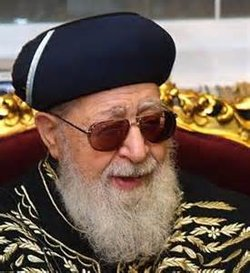
שליט"א היה רבה הראשי של תל אביב, וכן בשנים שאחר כך, היה מטריח עצמו ונוסע
בכל ערב יום כפור, בשעות
יקרות אלו, לבית החולים, בכדי לדבר על לבם של החולים שהתענית מסוכנת להם, לבל
יתענו, והיה מזכיר את דברי הרדב"ז, שמי שאינו שומע לרופאים מפני שאומר שהוא
בוטח בה', הרי זה חסיד שוטה, שהרי התורה אמרה שניתנה רשות לרופא לרפאות, וממילא
אדם חייב להתנהג בכל דבר על פי כללי הרפואה, לאחר התייעצות עם מורה הוראה.
חולה שעצם החולי אינו מביאו
לסכנה
ויש
לציין, שגם חולה שעצם החולי שלו אינו סכנה ממש, מכל מקום לפעמים מחמת תרופות שהוא
נוטל, הרי הוא חייב לשתות. ואם לא ישתה עלול הוא להכנס בחשש סכנה. וגם באופן כזה
יש להתייעץ עם רופא ומורה הוראה בכדי לדעת כיצד לנהוג. ומצוי מצב זה בחולים הנוטלים תרופות פסיכיאטריות,
ואצלם לעתים גם עצם החולי מוגדר חולי שיש בו סכנה.
מי שהוצרך לאכול ביום הכפורים
ומי
שהוצרך לאכול ביום הכפורים מחמת מחלה, אם הוא מוכרח לאכול ולשתות כדרכו ממש, הרי
שהוא רשאי לעשות כן. שאין לך דבר העומד בפני פיקוח נפש. אולם בדרך כלל, אין הדבר
כן, אלא הוא יכול להסתפק באכילה ושתיה באופן שאינו אוכל או שותה בבת אחת כמות
גדולה, אלא יעשה הפסקות בין אכילה לאכילה, ובכל פעם לא יאכל יותר משיעור של כשלשים
גרם מאכל, או ארבעים גרם משקה. ולאחר כעשר דקות יאכל או ישתה שוב כמות זהה. ולפני
יום הכפורים יכין לעצמו מאכלים מסודרים ושקולים בשיעור של כשלשים גרם. ויכין לעצמו
כלי המכיל כארבעים גרם משקה, ובכל
פעם ימלא אותו וישתה ממנו (כמו בקבוק של תינוקות וכדומה).
רחיצה וטבילה ביום הכפורים
אסור
לרחוץ במים ביום הכפורים, ואפילו להושיט אצבעו במים אסור, ולא אסרו אלא רחיצה של
תענוג, אבל אם היו ידיו או שאר גופו מלוכלכים בטיט וכדומה, מותר לרחצם, כיון שאינה
רחיצה של תענוג . וטבילה במקוה טהרה, אסורה גם היא ביום הכפורים.
ביום הכפורים שחרית יטול ידיו
עד סוף קשרי אצבעותיו בלבד, ויטול שלוש פעמים לסירוגין כדרכו בכל ימות השנה, ומברך
על נטילת ידיים.
לא
ירחוץ פניו במים ביום הכפורים בבוקר, ואם היו פניו מלוכלכות, כגון שיש לו לכלוך
ליד עיניו, מותר לרחוץ המקום המלוכלך. ומי שהוא מפונק, ואין דעתו מיושבת עליו
כשאינו רוחץ פניו בשחרית, מותר לו לרחוץ פניו בשחרית. והאשכנזים מחמירים בזה שלא לרחוץ הפנים ביום הכפורים
אפילו מי שהוא איסטניס, אלא אם כן להעביר הלכלוך סביב עיניו וכיוצא בזה
אסור לצחצח שיניים בתשעה באב. ואפילו מי שמיקל בדבר
בזהירות ביום תשעה באב, לא יעשה כן ביום הכפורים.
Eating and Washing One’s Self Yom Kippur
Some Laws of Yom Kippur
All are obligated to fast on Yom Kippur, including pregnant and nursing women.
Any woman whose health is at risk due to the fast should consult a prominent
Torah scholar who is well-versed in these laws and he should render his ruling
whether or not she must fast. One whose medical condition does not allow him to
fast may not be stringent and fast, for our holy Torah writes, “That he shall
live by them,” and not that he should die by them. One may not cause himself to
die or even place himself in a possibly dangerous situation because of the fast
of Yom Kippur. When Maran Shlit”a served as Chief Rabbi of Tel Aviv and for
several years after this as well, he would spend the precious hours of every
Erev Yom Kippur by travelling to the hospital in order to convince patients
whom the fast of Yom Kippur posed a danger to not to fast. He would quote the
words of the Radbaz who writes that one who does not listen to doctors claiming
that he places his complete trust in Hashem is a pious fool, for the Torah
gives doctors permission to heal and by default, one must follow the rules of
medicine after consulting with a prominent halachic authority.
One Suffering from an Illness which in Essence does not Pose any Danger
We should point out that even if one suffers from an ailment which in essence
is not necessarily life-threatening, nevertheless, sometimes the medications he
takes make it necessary for him to drink, and if he does not, this may pose a
danger to him. In such a situation, the patient should consult his doctor and a
prominent halachic authority to discern the proper course of action. This
situation is common in patients taking medications for mental illnesses;
indeed, sometimes, some of these illnesses can be considered life-threatening
in and of themselves.
One who Must Eat on Yom Kippur
If one must eat on Yom Kippur due to an illness, if he must eat and drink in a
regular manner, he may do so, as the is nothing that stands in the way of a
life-threatening situation. Nevertheless, usually this is not the case and one
can make do with eating or drinking in a way that he does not consume large
amount of food or beverage in one shot. Rather, one should take breaks between
eating and every time he eats or drinks, he should consume no more than thirty
grams of food or forty grams of beverage. After approximately ten minutes have
elapsed he should eat or drink a similar amount. One should prepare organized
and measured portions of food of approximately thirty grams before Yom Kippur.
One should prepare himself a utensil that holds approximately forty grams of
liquid (such as a baby bottle and the like) and every time one needs to, he
should fill it up and drink from it.
Washing and Immersing One’s Self on Yom Kippur
One may not wash himself with water on Yom Kippur. Even to place one’s finger
into water is prohibited. Nevertheless, only a pleasurable washing is
prohibited; however, if one’s hands or any other body part were soiled from
mortar and the like, one may wash them, as this does not constitute a
pleasurable washing. Immersing one’s self in a Mikveh is also forbidden on Yom
Kippur.
On the morning of Yom Kippur, one should wash his hands only until his knuckles.
One should wash each hand three times while switching off hands and recite the
“Al Netilat Yadayim” blessing, as he would any other day of the year.
One should not wash his face on the morning of Yom Kippur; if one’s face is
dirty due to eye residue and the like, one may wash the dirty place. If one is
finicky and cannot relax until he has washed his face in the morning, he may do
so on the morning of Yom Kippur. Ashkenazim are stringent in this matter and
rule that even one who is finicky cannot wash his face; rather, he can only
wash off the dirt around his eyes and the like
One may not brush one’s teeth on Yom
Kippur. Even one who acts leniently and bushes one’s teeth carefully on Tisha
Be’av may not do so on Yom Kippur at all.
 1-Rosh-Hashana-Yom-Kippur-Succot-5781-2020.pdf